








Sign up to see the future, today
Can’t-miss innovations from the bleeding edge of science and tech
In 2022, billionaire entrepreneur Jared Isaacman announced that he was willing to foot the bill for a daring rescue mission to fix NASA’s aging Hubble Space Telescope.
Isaacman, who would go on to become the first private astronaut to perform a spacewalk, said at the time that he was giddy with excitement over the “possibility of extending the life and capabilities of one of our greatest explorers.”
NASA officials were less impressed with the plan, which would involve a heavily modified SpaceX Crew Dragon spacecraft docking with the Hubble and boosting its orbit. In 2024, they dealt the mission a fatal blow, arguing that the risks outweighed the “long-term science return.”
“I acknowledge this is not my telescope to touch and a lot of time has passed from the study till now,” Isaacman tweeted in response. “Government priorities change, budgets become tight, regardless of who is funding the mission, it does require contributions of resources from a lot of parties to ensure success.”
Roughly two years and a massive twist later — let’s just say he got a massive push into the role from SpaceX CEO Elon Musk — Isaacman is now the head of NASA.
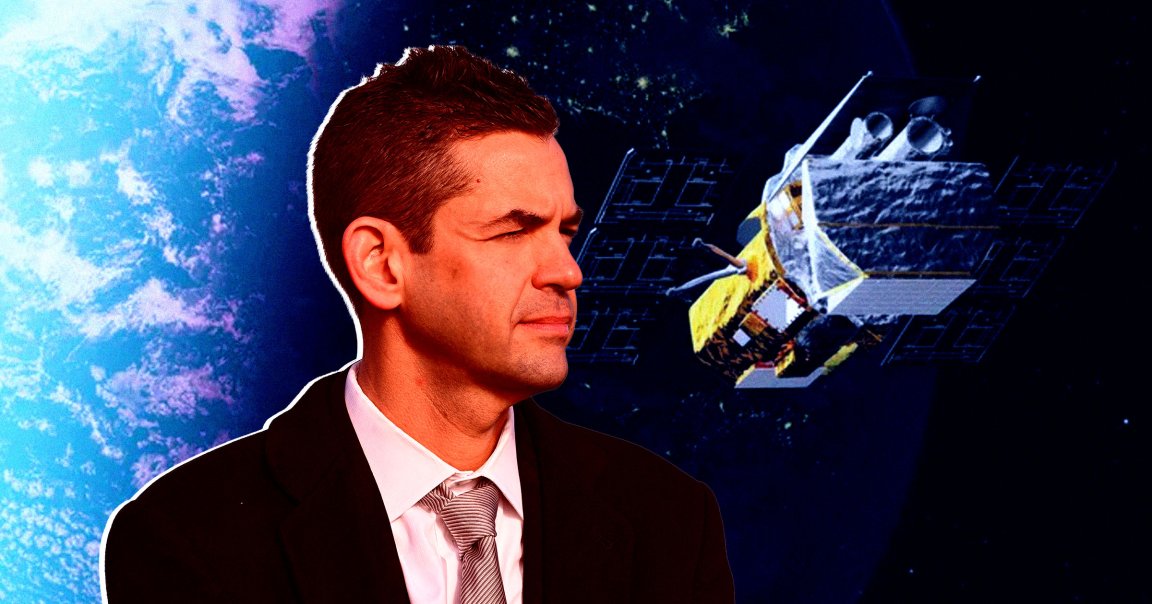
And now that he’s pulling the strings, Isaacman has been eager to try out his plan for saving an endangered space telescope. In June, just over six months after he was sworn in, news emerged that NASA had signed a contract with Katalyst Space Technologies to launch an autonomous robotic spacecraft, dubbed “LINK.” The plan was to have it rendezvous with the agency’s 21-year-old Swift observatory and give it a much-needed push back into a stable orbit — efforts closely echoing Isaacman’s abandoned plans to help prolong the Hubble’s life.
Katalyst officials conceded that it was a “high risk high reward” attempt that came together in record time. And it didn’t take long for the mission to spiral into crisis — quite literally. The spacecraft started tumbling uncontrolled after launch, forcing NASA to abandon the mission.
As a result, the Swift observatory is doomed to burn up in the Earth’s atmosphere later this year.
The saga highlights a dramatic change in how NASA operates, from a slow and contemplative approach that critics say leads to massive budget overruns and delays to a far more nimble — yet seemingly less deliberate — strategy under Isaacman’s leadership.
In many ways, it’s echoing the philosophy of the NASA administrator’s long-term business partner SpaceX, a firm known for its iterative — and explosive — “fly, fail, fix” design process.
“NASA should be willing to move quickly and take smart risks when the potential return is worth it, and that is exactly what we did with this mission,” Isaacman said in a statement following the LINK mission failure. “This is not the outcome we were working toward, but it does not change why this mission was worth attempting.”
“The team moved with extraordinary speed to give Swift a chance to carry out more science while advancing capabilities America will need for satellite servicing in the future,” he added.
Meanwhile, instead of doubling down on pushing the frontiers of space science, NASA has pushed hard to gut the agency’s science budget for several years now.
Fortunately, NASA’s flagship Nancy Grace Roman Space Telescope, long seen as the next “great” observatory, has evaded those efforts.
The telescope is still progressing toward a scheduled August 30 launch. Its tasks include researching dark energy, exoplanets, and the physics of distant stars in ways that even NASA’s groundbreaking James Webb Space Telescope isn’t capable of.
The Roman telescope has a mission lifetime of approximately five years. Hopefully, NASA has thought of contingency plans in case it’s ever in need of repairs or a boost to a higher orbit many years from now.
More on the rescue mission: NASA Rescue Mission Spirals Into Crisis