




惯性聚合 高效追踪和阅读你感兴趣的博客、新闻、科技资讯
阅读原文 在惯性聚合中打开

推荐订阅源

N
Netflix TechBlog - Medium
博客园 - 三生石上(FineUI控件)
Martin Fowler
Martin Fowler
博客园 - 【当耐特】
雷峰网
雷峰网
宝玉的分享
宝玉的分享
IT之家
IT之家
J
Java Code Geeks
freeCodeCamp Programming Tutorials: Python, JavaScript, Git & More
Jina AI
Jina AI
博客园 - 叶小钗
V
Visual Studio Blog
Engineering at Meta
Engineering at Meta
钛媒体:引领未来商业与生活新知
钛媒体:引领未来商业与生活新知
月光博客
月光博客
OSCHINA 社区最新新闻
OSCHINA 社区最新新闻
云风的 BLOG
云风的 BLOG
美团技术团队
爱范儿
爱范儿
T
The Blog of Author Tim Ferriss
L
LangChain Blog
U
Unit 42
有赞技术团队
有赞技术团队
博客园_首页

Futurism

China Deploys Rare Type of Space Junk That Pollutes Orbit for Hundreds of Years Researchers Alarmed as GPS Readings Suddenly Veer Off by 33 Feet, Enough to Crash Self-Driving Cars Scientists Baffled by Bizarre "Anomaly" Deep Beneath the Surface of Mars NASA's Powerful New Space Telescope, Just Cleared for Launch, Was Developed by an Intelligence Agency to "Spy on America's Adversaries" NASA Set Up a Major Test of Its New Strategy Under Trump by Hiring a Startup to Launch a Daring Mission to Rescue a Dying Space Telescope in Orbit. The Unfortunate Result Will Have Long-Ranging Repercussions. Scientists Warn That New Satellites Could Cause Eye Damage for People on the Ground Scientist Reveals Plan to Save Earth From Destruction by the Sun NASA Rescue Mission Spirals Into Crisis Incredible Video Shows Chinese Rocket Get Hit by Lightning Mid-Launch SpaceX Plunges to All-Time Low After Competitor Makes Major Leap China Is Catching Up With SpaceX Fast, Landing First Reusable Rocket Booster on Offshore Platform Scientists Test New Spacecraft Thruster That Uses No Fuel, Just Earth's Magnetic Field, in Orbit Anybody Who Thinks Orbital Data Centers are a Good Idea Is Suffering from AI Psychosis, Experts Argue NASA Prepping to Launch Extremely Risky Rescue Mission Boeing's Starliner Is Such a Disaster That We Don't Even Have Words NASA Has a Major Problem Threatening Its Entire Moon Plans NASA Rover Finds "Complex Organic Matter" on Mars SpaceX Launches Secretive New Spacecraft Shaped Like Flying Saucer Saturn's Icy Moon Is the Perfect Place to Settle, NASA Scientist Argues Scientists Building World's Most Powerful Radio Telescope Deep in the Nevada Desert NASA Loads Moon Rocket onto Giant Trump-Branded Train NASA’s Next Moon Mission Is a Rube Goldberg Machine of Corporate Failure Points Scientists Release Results After Scanning 3I/ATLAS for Alien Signals NASA’s James Webb Discovers That 3I/ATLAS Let One Rip as It Passed Through Solar System Scientists Find Chunk of Lost Planet in Desert ISS Astronauts Ordered to Enter Evacuation Mode Paper Claims the “Asteroid” Japan’s Probe Is Approaching Is Actually a Derelict Spacecraft Scientists Say They’ve Found Fungi That Turn Dead Martian Soil Into Fertile Cropland Jeff Bezos’ Rocket Explodes Into Mushroom Cloud, Dealing Massive Blow to NASA’s Moon Plans NASA Releases Sweeping Plans for Moon Base
Experts Say Mysterious Metallic Orbs Appear to Have Falle...
Victor Tangermann · 2026-07-06 · via Futurism

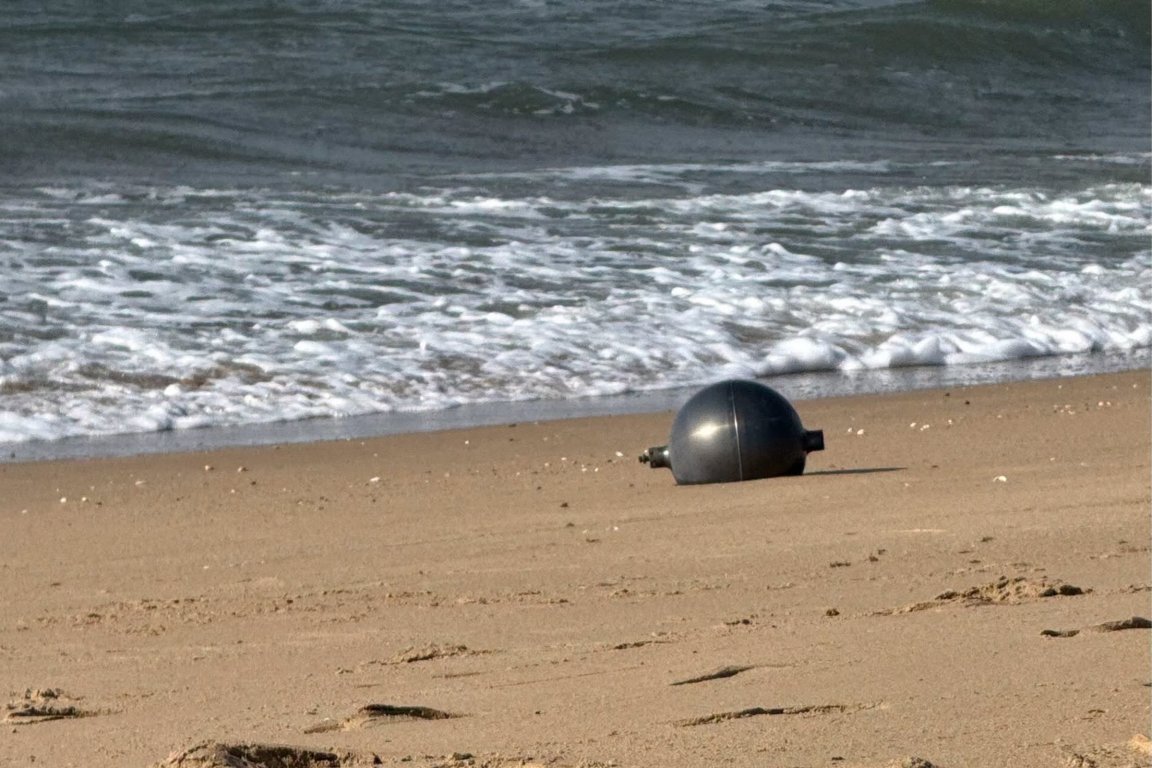
A photo from the Queensland Fire Department shows a metallic orb washed up on a beach.

Queensland Fire Department via Facebook

Sign up to see the future, today

Can’t-miss innovations from the bleeding edge of science and tech

Mysterious metallic orbs washed up on a secluded beach in Australia, and experts say they likely fell from a spacecraft.

Locals called the police after discovering three large metal orbs on Friday. A total of six were eventually found, with local news outlet 7 News reporting that police warned the public that the items may contain hazardous chemicals. Emergency responders approached the orbs in hazmat suits, establishing a 164-foot safety perimeter around them before eventually declaring them “safe.”

Meanwhile, the Australian Space Agency confirmed to The Guardian that it’s helping to determine where the strange orbs may have come from. Experts say they could’ve been shed by a launching rocket or spacecraft.

“So the fact that there’s reportedly three tanks means it’s either a very large satellite or indeed the upper stage of a rocket Australian National University astrophysicist Brad Tucker told 7 News.

While we await confirmation that the orbs did indeed come from space, the discovery highlights how sightings of space junk crashing back down to Earth are ticking up as the number of launches increases. Just last year, over 300 rockets attempted to make it into orbit, with SpaceX accounting for roughly half of them.

Rocket parts being jettisoned on their way into orbit are frequently being recovered in remote areas of the world, particularly from non-reusable launch systems, whose parts don’t tumble back down along a predetermined path.

Flinders University space junk expert and space archaeologist Alice Gorman pointed out to The Guardian that the orbs lacked the usual scorch marks of objects that survived a fiery reentry through the Earth’s atmosphere.

“This suggests they might be from a rocket stage — perhaps a first or second stage — that has fallen back to Earth while the rest of the stage goes on to deliver a payload into space,” she told the newspaper.

“They look to be consistent with what you find as part of a fuel system,” Gorman explained. “They are pressurised fuel vessels made of titanium alloys with a very high melting point.”

Best of all, these kinds of objects already have an established nickname in the space science community.

“They’re actually known as space balls and they can be found years after a launch,” Gorman said. “It is perhaps not something that anyone would have seen [landing].”

Australia also happens to be very large land mass, making it a statistically likely place to attract falling space junk, the astrophysicist pointed out.

“We’ve had more space launches in the last five years than in the whole of history,” she said. “That means there are more re-entries happening.”

More on space junk: Earth’s Lower Orbit Could Rapidly Collapse, Scientists Warn, Raining Deadly Missiles Onto Planet Below