









NOTE: If you are short on time, watch the video and complete this See, Think, Wonder activity: What did you notice? What did the story make you think? What would you want to learn more about?
All eyes are on Cuba as the world waits to see what will happen to its leaders and people. President Trump says he wants to take action as Cuba defies his sanctions. Two tankers carrying crude oil are on their way to the island after Russia declared its "unwavering solidarity." Amna Nawaz discussed more with Lillian Guerra of the University of Florida.
View the transcript of the story.
News alternative: Check out recent segments from the News Hour, and choose the story you’re most interested in watching. You can make a Google doc copy of discussion questions that work for any of the stories here.
When asked if she expects change in Cuba, Lillian Guerra says that there may be armed conflict in Cuba, and if so, "that would be devastating, I think, because nobody has weapons in Cuba. All they have are their ideals."
Media literacy: What else would you like to know about Cuba to understand the crisis it currently faces?
Watch the News Hour segmenton the so-called "Trump Doctrine" on foreign policy. Then discuss —
The News: Then & Now section of the Daily News Lessons allows students to see connections between current and past news events. The activity provides historical context using primary sources from the Library of Congress.
See also PBS News Hour Classroom's Journalism in Action website for interactive examples of how journalists covered key events in U.S. history while honing your primary source, civics and digital news literacy skills.
Spain colonized the island of Cuba in 1511 and it remained a Spanish colony until the Spanish-American War of 1898. The United States claimed to be fighting the Spanish to help free Cuba from Spanish oppression, though not all Americans supported the effort or saw it in that way.
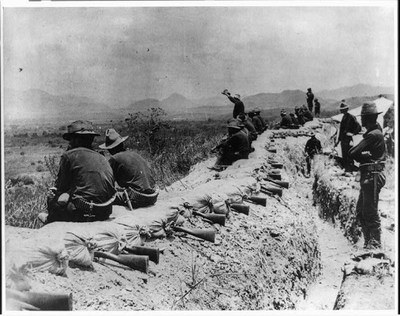
Dinwiddie, William, photographer. In the American trenches before Santiago during a truce. Cuba, 1898. Photograph. https://www.loc.gov/item/2013651493/.
Cuba was occupied by the United States until 1902. However, the U.S. intervened in Cuba at other points over the next two decades. In 1959, after three years of fighting, Fidel Castro established a communist government in Cuba, which continues to control the country.
During that period when the U.S. intervened in Cuba in the early 20th century, an island off of Cuba’s southwest coast that became known as the Isle of Pines became the target of land speculators who planned to establish a colony there. Mary Estelle Franklin produced a cookbook that included this fact sheet about the Isle of Pines. See the image below or click on this Library of Congress link to view the text version.
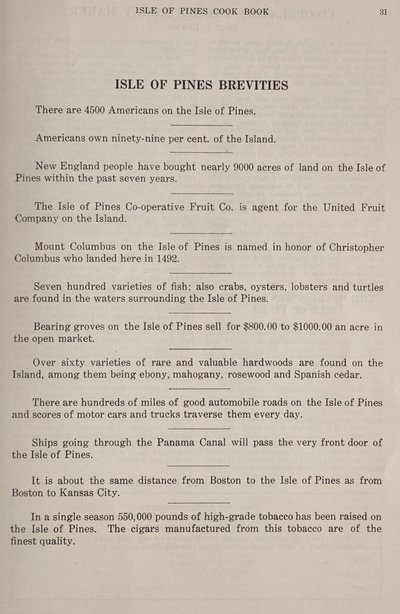
Franklin, Mary Estelle. Isle of Pines cook book. Boston, Isle of Pines co-operative fruit co, 1914. Pdf. https://www.loc.gov/item/14019857/.
NOW
President Donald Trump is currently sanctioning Cuba by blocking oil imports to the island in an effort to pressure Cuba’s government to make changes or possibly even to abdicate. The U.S. was able to do this after using military force to extricate Venezuela’s president Nicolas Maduro in January. Venezuela had been Cuba’s main supplier of oil. This has caused electricity blackouts and other challenges in Cuba.
Discussion questions:
Sign up to receive our weekly newsletter with Daily News Lessons and community events.
To provide feedback on News Hour Classroom's resources, including this lesson, click here.
此内容由惯性聚合(RSS阅读器)自动聚合整理,仅供阅读参考。 原文来自 — 版权归原作者所有。