
惯性聚合 高效追踪和阅读你感兴趣的博客、新闻、科技资讯
阅读原文 在惯性聚合中打开

推荐订阅源

Hacker News: Ask HN
Hacker News: Ask HN
H
Help Net Security
Microsoft Azure Blog
B
Blog RSS Feed
Jina AI
Jina AI
Stack Overflow Blog
Stack Overflow Blog
量子位
博客园_首页
Vercel News
Vercel News
CTFtime.org: upcoming CTF events
Forbes - Security
Forbes - Security
IT之家
IT之家
N
News and Events Feed by Topic
S
Security Affairs
Recent Commits to openclaw:main
Webroot Blog
Webroot Blog
Recorded Future
Recorded Future
L
LangChain Blog
Y
Y Combinator Blog
AI
AI
MyScale Blog
MyScale Blog
大猫的无限游戏
大猫的无限游戏
小众软件
小众软件
Know Your Adversary
Know Your Adversary
AWS News Blog
AWS News Blog
Help Net Security
Help Net Security
Cyberwarzone
Cyberwarzone
L
Lohrmann on Cybersecurity
OSCHINA 社区最新新闻
OSCHINA 社区最新新闻
Google Online Security Blog
V2EX - 技术
V2EX - 技术
奇客Solidot–传递最新科技情报
奇客Solidot–传递最新科技情报
PCI Perspectives
PCI Perspectives
I
Intezer
T
Tenable Blog
G
Google Developers Blog
Application and Cybersecurity Blog
T
Troy Hunt's Blog
L
LINUX DO - 最新话题
云风的 BLOG
云风的 BLOG
C
CXSECURITY Database RSS Feed - CXSecurity.com
有赞技术团队
有赞技术团队
O
OpenAI News
P
Proofpoint News Feed
TaoSecurity Blog
TaoSecurity Blog
C
Check Point Blog
Last Week in AI
Last Week in AI
S
Schneier on Security
Simon Willison's Weblog
Blog — PlanetScale
Blog — PlanetScale

JPost.com - Archaeology Around the World

Second century CE Roman military fort found north of Hadrian's Wall in Scotland | The Jerusalem Post Ancient mosaic with Greek inscription discovered in Turkey | The Jerusalem Post Collection of pre-revolution coins found under house in Russia | The Jerusalem Post Handgun fragments found in Germany may be oldest in Europe | The Jerusalem Post Archaeologists find gold, ceramic in pre-Hispanic tomb in Panama | The Jerusalem Post Ancient Egyptians used 'Wite-Out' to fix mistakes in sacred texts | The Jerusalem Post Cambridge students find 9th century burial pit on dig | The Jerusalem Post Mexico discovers Zapotec tomb from 600 CE | The Jerusalem Post Medieval tunnel system discovered in Germany | The Jerusalem Post Roman carriage ornament found in Essex deemed 'Treasure' | The Jerusalem Post Humans, not glaciers, brought stones to Stonehenge | The Jerusalem Post Indonesia human hand outline may be world's oldest rock art | The Jerusalem Post New human species found, challenges story of 'Lucy' fossil | The Jerusalem Post Ancient Scottish burial site reveals Bronze Age devastation | The Jerusalem Post Louvre shuts fragile wing with Greek masterpieces | The Jerusalem Post Israeli team finds 12,000-year myths in clay figurine | The Jerusalem Post 800-year-old gilded Christ found near lost church | The Jerusalem Post Archaeologists uncover long-lost Temple of Zeus at Limyra | The Jerusalem Post Study shows dogs diversified before modern breeding | The Jerusalem Post Medieval Muslim sunken city discovered in Kyrgyzstan | The Jerusalem Post Archaeologists uncover finds at birthplace of Menander | The Jerusalem Post Ancient tools uncovered in China shed new light on early human diet | The Jerusalem Post ‘This is from Moses’: Newly imaged Sinai inscriptions revive Exodus-era | The Jerusalem Post Ancient inscriptions reveal identity of Great Pyramid builders | The Jerusalem Post Atlantis ruins near Cadiz found, archaeologist blames giant tsunami | The Jerusalem Post 5,000-year-old manuscript with eerie message found in Saqqara tomb | The Jerusalem Post Study: Leprosy existed in the Americas long before Europeans arrived | The Jerusalem Post Original architecture of ancient Roman fountain revealed in Perre Ancien | The Jerusalem Post Museum: Artifact shows playful, serious sides of 19th-century sexuality | The Jerusalem Post
Archaeologists find evidence to legendary African king in Sudan | The Jerusalem Post
MIRIAM SELA-EITAM · 2026-03-21 · via JPost.com - Archaeology Around the World

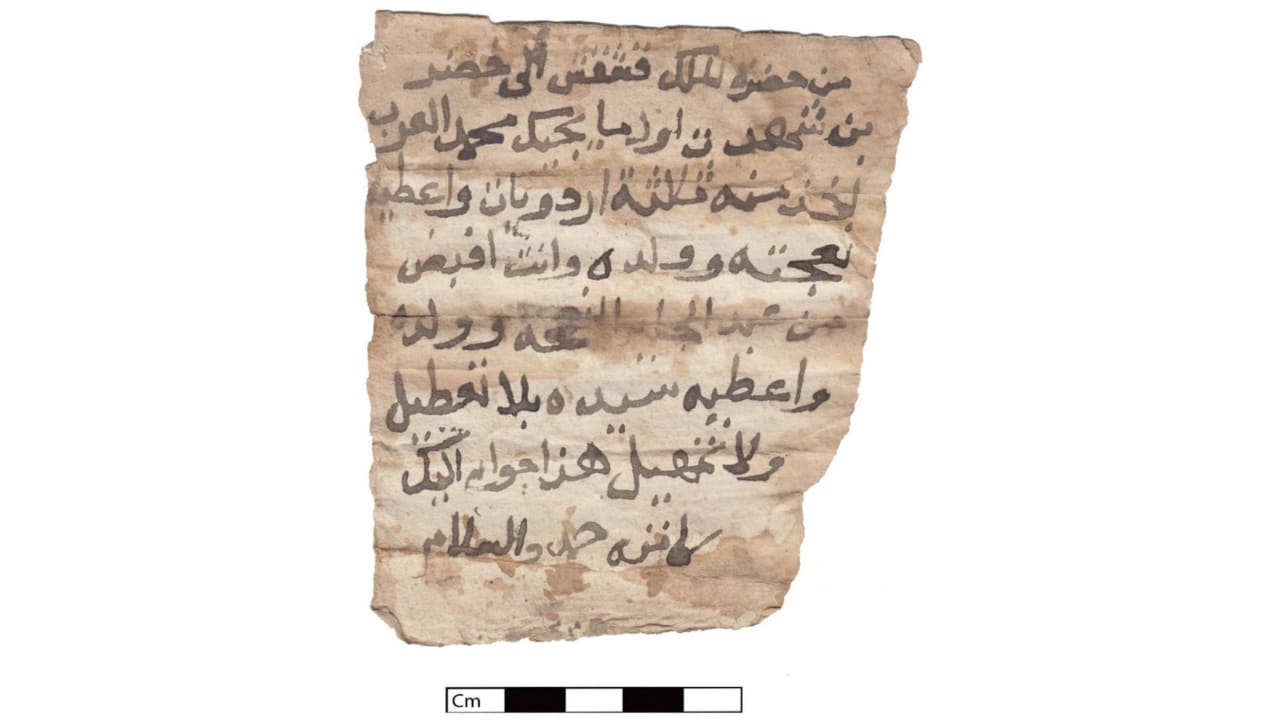
Despite its origin, the decree is seemingly ordinary. Written by a royal scribe named Hamad, it instructs an individual named Khidr to exchange textiles for livestock.
Follow us on Google
Dongola. Qashqash Manuscript.
(photo credit: Tomasz Barański)
ByMIRIAM SELA-EITAM

A royal decree written in Arabic, signed by King Qashqash, who had previously been dismissed as little more than legend, similar to Britain’s King Arthur, has been found by archaeologists from the University of Warsaw during excavations in northern Sudan.

The decree has been dated to the late 16th or early 17th centuries, making it the earliest archaeological evidence of Qashqash during the time, and offers a “rare glimpse into Sudanic kingship during one of the least-documented periods in Sudanese history," according to the study published by the researchers.

Prior, Qashqash had only been known in passing references in a biographical dictionary of Islamic holy men published after his death, titled Kitāb al-T abaqātfī Khusūs al-Awliyāʾ wa-l-S ālih īn wa-l-ʿUlamāʾ wa-l-Shuʿarāʾ fī al-Sūdān by Muhammad al-Nūr. 

The page was found in an area located near the eastern bank of the Nile, known as the House of the Mekk (“House of the King”) within layers of medieval garbage in Sudan’s Old Dongola.

The city had once the capital of the Christian kingdom of Makuria, and later a trading hub between the Ottoman Empire to the north and the Funj Sultanate to the south.

House of the Mekk, Old Dongola, Sudan, March 20, 2026.
House of the Mekk, Old Dongola, Sudan, March 20, 2026. (credit: Maciej Wyzgol)

Alongside the page, archaeologists found several other document fragments, bits of silk, linen, and blue-dyed cloth, as well as a gold ring, a dagger handle made of ivory or rhino horn, and what appear to be musket balls and a gunpowder flask. 

At the time, firearms were primarily symbols of prestige rather than weapons of war, the study explained, marking their owners as members of a powerful circle.

Decree gives glance into micropolitics of the community

Despite its origin, the decree is seemingly ordinary. Written by a royal scribe named Hamad, it instructs an individual named Khidr to exchange textiles for livestock and to hand everything to its rightful owner without delay.

The note ends with a reminder of “do not hesitate!”

These transactions, archaeologists argued, may have been less about turning a profit and more about micropolitics and governence in these societies, as textiles acted as a form of currency in the region.

“Examining the king’s order alongside its archaeological context offers insights into rulership, social interactions, and literacy,” the study noted. “To borrow and modify Leo Africanus’ phrase, we want to present the King of Nubia at work, not at war, but in everyday management.”

The complete findings are detailed in a paper titled “The King of Nubia at work: archaeological context and text edition of a sixteenth/seventeenth-century Arabic document from Old Dongola” published in Azania: Archaeological Research in Africa in February.

Follow us on Google
