
惯性聚合 高效追踪和阅读你感兴趣的博客、新闻、科技资讯
阅读原文 在惯性聚合中打开

推荐订阅源

Martin Fowler
Martin Fowler
Threat Intelligence Blog | Flashpoint
博客园 - 聂微东
IT之家
IT之家
GbyAI
GbyAI
奇客Solidot–传递最新科技情报
奇客Solidot–传递最新科技情报
Y
Y Combinator Blog
博客园 - 【当耐特】
The Cloudflare Blog
宝玉的分享
宝玉的分享
罗磊的独立博客
钛媒体:引领未来商业与生活新知
钛媒体:引领未来商业与生活新知
让小产品的独立变现更简单 - ezindie.com
V
Visual Studio Blog
小众软件
小众软件
博客园_首页
Last Week in AI
Last Week in AI
J
Java Code Geeks
V
V2EX
雷峰网
雷峰网
Apple Machine Learning Research
阮一峰的网络日志
阮一峰的网络日志
腾讯CDC
博客园 - 司徒正美
Engineering at Meta
Engineering at Meta
The GitHub Blog
The GitHub Blog
H
Hackread – Cybersecurity News, Data Breaches, AI and More
D
DataBreaches.Net
博客园 - 三生石上(FineUI控件)
MyScale Blog
MyScale Blog
云风的 BLOG
云风的 BLOG
The Register - Security
M
MIT News - Artificial intelligence
Microsoft Azure Blog
T
The Blog of Author Tim Ferriss
N
Netflix TechBlog - Medium
F
Full Disclosure
B
Blog
H
Help Net Security
C
Check Point Blog
WordPress大学
WordPress大学
人人都是产品经理
人人都是产品经理
Cyber Security Advisories - MS-ISAC
Jina AI
Jina AI
酷 壳 – CoolShell
酷 壳 – CoolShell
Blog — PlanetScale
Blog — PlanetScale
L
LangChain Blog
P
Proofpoint News Feed
D
Docker
Microsoft Security Blog

JPost.com - Archaeology Around the World

Ancient mosaic with Greek inscription discovered in Turkey | The Jerusalem Post Collection of pre-revolution coins found under house in Russia | The Jerusalem Post Handgun fragments found in Germany may be oldest in Europe | The Jerusalem Post Archaeologists find evidence to legendary African king in Sudan | The Jerusalem Post Archaeologists find gold, ceramic in pre-Hispanic tomb in Panama | The Jerusalem Post Ancient Egyptians used 'Wite-Out' to fix mistakes in sacred texts | The Jerusalem Post Cambridge students find 9th century burial pit on dig | The Jerusalem Post Mexico discovers Zapotec tomb from 600 CE | The Jerusalem Post Medieval tunnel system discovered in Germany | The Jerusalem Post Roman carriage ornament found in Essex deemed 'Treasure' | The Jerusalem Post Humans, not glaciers, brought stones to Stonehenge | The Jerusalem Post Indonesia human hand outline may be world's oldest rock art | The Jerusalem Post New human species found, challenges story of 'Lucy' fossil | The Jerusalem Post Ancient Scottish burial site reveals Bronze Age devastation | The Jerusalem Post Louvre shuts fragile wing with Greek masterpieces | The Jerusalem Post Israeli team finds 12,000-year myths in clay figurine | The Jerusalem Post 800-year-old gilded Christ found near lost church | The Jerusalem Post Archaeologists uncover long-lost Temple of Zeus at Limyra | The Jerusalem Post Study shows dogs diversified before modern breeding | The Jerusalem Post Medieval Muslim sunken city discovered in Kyrgyzstan | The Jerusalem Post Archaeologists uncover finds at birthplace of Menander | The Jerusalem Post Ancient tools uncovered in China shed new light on early human diet | The Jerusalem Post ‘This is from Moses’: Newly imaged Sinai inscriptions revive Exodus-era | The Jerusalem Post Ancient inscriptions reveal identity of Great Pyramid builders | The Jerusalem Post Atlantis ruins near Cadiz found, archaeologist blames giant tsunami | The Jerusalem Post 5,000-year-old manuscript with eerie message found in Saqqara tomb | The Jerusalem Post Study: Leprosy existed in the Americas long before Europeans arrived | The Jerusalem Post Original architecture of ancient Roman fountain revealed in Perre Ancien | The Jerusalem Post Museum: Artifact shows playful, serious sides of 19th-century sexuality | The Jerusalem Post
Second century CE Roman military fort found north of Hadrian's Wall in Scotland | The Jerusalem Post
MIRIAM SELA-EITAM · 2026-03-27 · via JPost.com - Archaeology Around the World

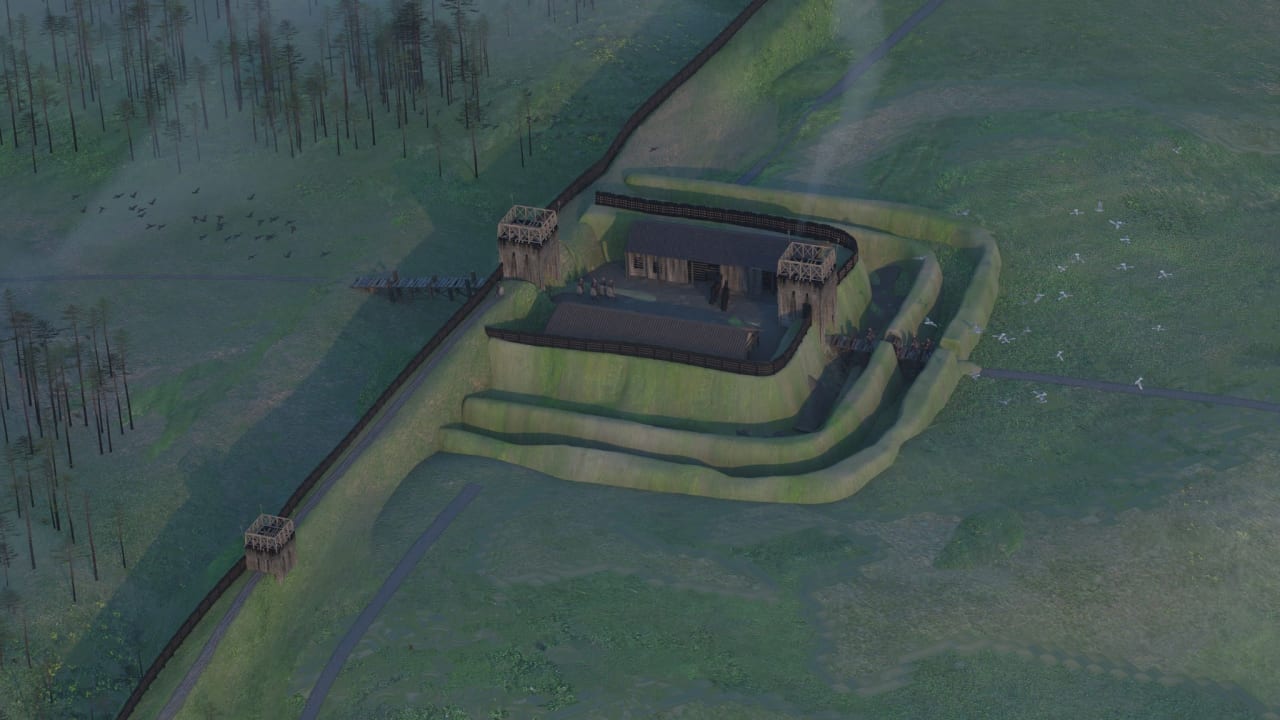
According to GUARD, the fort was constructed on high ground along the Antonine Wall, granting it an unobstructed view of the surrounding area, and intervisible with a much larger fort to the west.

Follow us on Google
The Boclair Road Roman Fortlet as it may once have been, March 25, 2026.
(photo credit: Screenshot/Facebook/GUARD Archaeology Ltd/Eduardo Pérez-Fernández)
ByMIRIAM SELA-EITAM

Ruins of a Roman “fortlet” built along the Antonine Wall may have been used as part of the empire’s defense against the unconquered Scottish lands to the north, according to a March statement from GUARD Archaeology. 

While the fortlet was originally discovered in the back gardens of three homes in Bearsden, Scotland during 2017 excavations ahead of various property development projects, the complete findings were recently published in Archaeology Reports Online. 

The Antonine Wall, constructed on the orders of Roman Emperor Antoninus Pius in the second century CE, was a defensive border built to separate the conquered southern Scotland from the unconquered lands to the north. 

However, about 20 years after its construction, the wall and its fortifications were abandoned by  the Romans during their retreat south to Hadrian’s Wall.

According to GUARD, the fort was constructed on high ground along the Antonine Wall, granting it an unobstructed view of the surrounding area, and intervisible with a much larger fort discovered to the west.
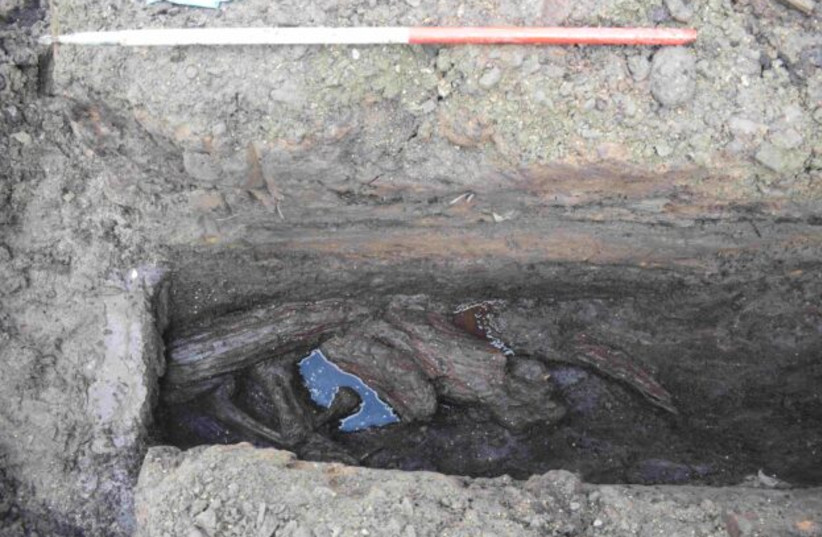
In situ wood discovered in a ditch surrounding a Roman fortlet in Bearsden, Scotland, March 25, 2026.
In situ wood discovered in a ditch surrounding a Roman fortlet in Bearsden, Scotland, March 25, 2026. (credit: GUARD Archaeology Ltd)

Additional finds discovered at the fortlet

Following the fortlet’s discovery, Historic Environment Scotland commissioned further excavations of the area, the statement said, which revealed a ditch dug parallel to the structure containing peat deposits, wood and vegetation.

Two Roman pottery shards were also discovered.

Archaeologists radiocarbon-dated the wood to approximately 127–247 CE, lining up with historical record of the Roman’s use of the wall and the years following their departure.

Additional analysis of the vegetation and fossil evidence from the ditch revealed that when the fort was built, “the surrounding landscape was open pasture with areas of partially cleared woodland, mainly alder, hazel and willow, with lesser amounts of oak and birch,” GUARD added.

Further surveys of the area revealed additional stone structures believed to have belonged to the Antonine Wall itself. 

Follow us on Google
