








AI sped up your deployments, while Day 2 stayed in the wild west. The moment you hit apply, the rigor stops. What happens next, the alerts, the provisioning requests, the incident response, the cleanup, runs on whatever anyone could glue together: a Lambda function nobody remembers deploying, a Slack bot only two people know how to restart. Scattered automation nobody can see, and knowledge that walked out the door with whoever built it last. That’s Day 2 operations as it exists today.
Spacelift Flows is built to close that gap. As of September 8, Spacelift Flows is live and ready to use.
Flows runs on a visual canvas. You wire blocks together, HTTP calls, data transforms, conditions, and schedules, then connect them into a flow you can actually read. Every run is logged and audited from the first execution, with a step-by-step trail.
When something breaks, you open the flow and see exactly where it stopped. You stop finding out from production.
Building an automation used to mean a project, with hosting to stand up and a sprint to wait for. Flows skips past all that.
Describe what you want to an AI assistant, or start from one of 40+ pre-built templates: incident enrichment, drift alerts, environment vending, certificate expiry monitoring, and self-service provisioning through Jira or ServiceNow.
Either way, you have a production-grade workflow before lunch.
Every team is connecting agents to infrastructure right now, and most are doing it on a shared credential or a person’s login. Flows gives agents their own governed path in: a Model Context Protocol (MCP) server, approval gates, and a complete audit trail. A flow can expose itself as a tool an agent calls, or call an agent directly. Either way, you can trace exactly what ran, and who, or what, asked for it.
A request form that lands in a queue isn’t self-service. Flows lets developers describe what they need, an environment, a namespace, and get it provisioned automatically, inside the guardrails you already set. The platform team stops being the approval bottleneck for routine requests, without losing the approval itself.
If you already run Spacelift Deploy, Flows isn’t bolted on next to it.
It reacts natively to your stacks, runs, and drift, the events a generic automation tool never sees, because it was never inside your infrastructure platform to begin with. Route a Slack approval to the right channel the moment a stack drifts, or stage a rollout across dev, staging, and production with a sign-off at each gate.
Deployment and Day 2 trigger each other, under the same governance and the same audit trail.
Flows now has its own place in the app switcher in Spacelift. Open it, describe what you want to automate, or pick a template, and connect your first app.
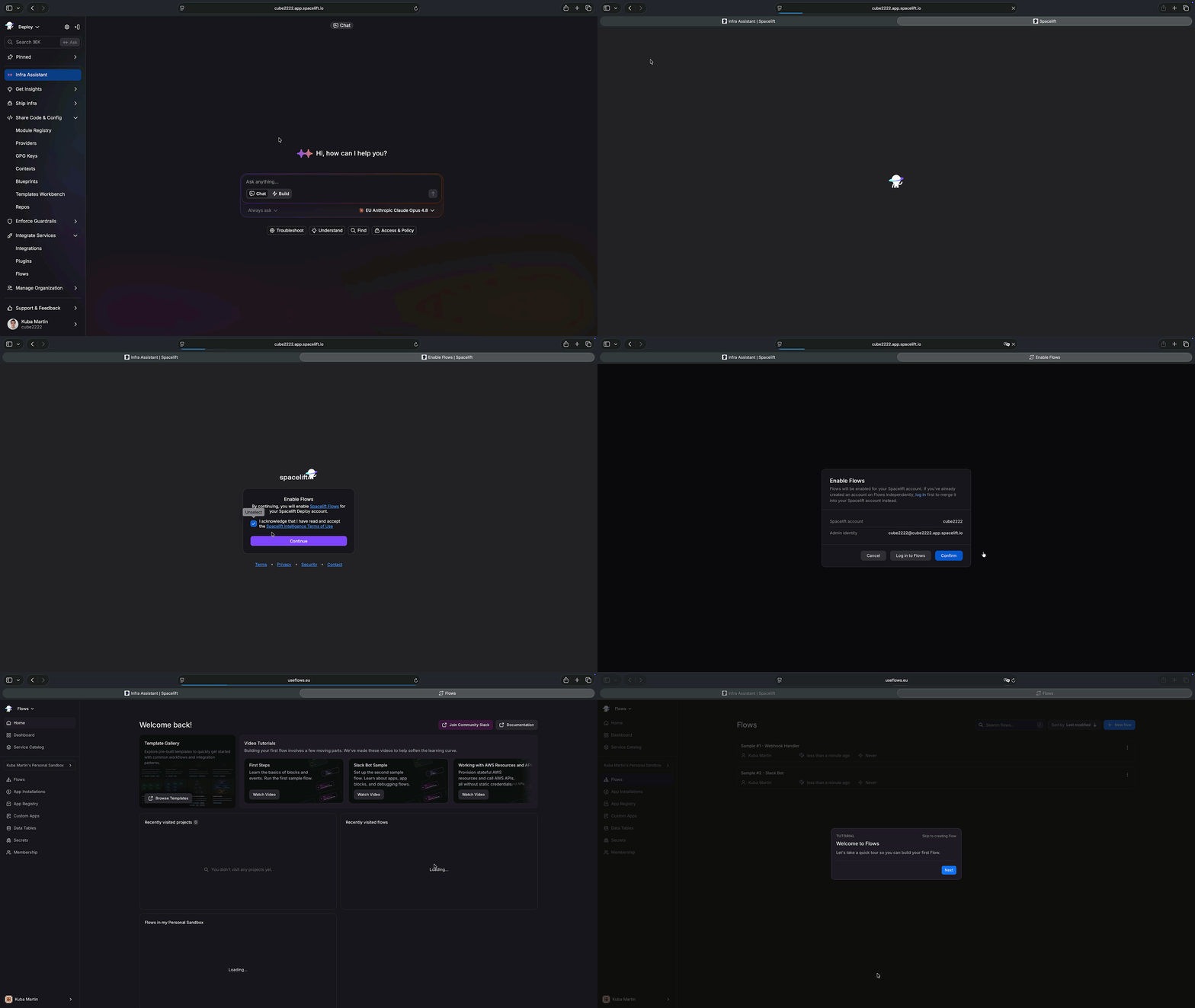
Feel free to browse the template gallery or read the Flows docs to see what tech debt you can retire first.
Tim is the Technical Product Marketing Manager for Spacelift. He has years of experience in infrastructure, operations, and automation. He has been a speaker at numerous global conferences, created and managed technical communities, and created a large array of technical content over the years.
此内容由惯性聚合(RSS阅读器)自动聚合整理,仅供阅读参考。 原文来自 — 版权归原作者所有。
