


惯性聚合 高效追踪和阅读你感兴趣的博客、新闻、科技资讯
阅读原文 在惯性聚合中打开

推荐订阅源

WordPress大学
WordPress大学
博客园 - 司徒正美
小众软件
小众软件
H
Help Net Security
博客园 - 聂微东
宝玉的分享
宝玉的分享
Jina AI
Jina AI
酷 壳 – CoolShell
酷 壳 – CoolShell
阮一峰的网络日志
阮一峰的网络日志
M
MIT News - Artificial intelligence
博客园 - 【当耐特】
U
Unit 42
大猫的无限游戏
大猫的无限游戏
Apple Machine Learning Research
S
SegmentFault 最新的问题
腾讯CDC
MongoDB | Blog
MongoDB | Blog
云风的 BLOG
云风的 BLOG
J
Java Code Geeks
I
InfoQ
钛媒体:引领未来商业与生活新知
钛媒体:引领未来商业与生活新知
Martin Fowler
Martin Fowler
博客园 - 三生石上(FineUI控件)
Vercel News
Vercel News

CIFAR

Three inaugural Horizon Networks selected by CIFAR to advance interdisciplinary research in early childhood and youth development - CIFAR Young innovators build AI for social good - CIFAR Pathways, prompts and pedagogy: Educating Gen Alpha - CIFAR In Memoriam: Patricia Baird - CIFAR CIFAR researcher uncovers hidden order in the chaotic psychedelic brain - CIFAR CIFAR selects 4 Discovery Programs to pursue bold, high-risk research on the Future of Food - CIFAR CIFAR announces inaugural Azrieli Chair for Next Generation Initiatives - CIFAR Cohere co-founder Nick Frosst on sovereign AI and building the future in Canada - CIFAR Beyond the magic toolbox - CIFAR CIFAR researchers Pablo Jarillo-Herrero and Allan MacDonald awarded 2026 Kavli Prize in Nanoscience CIFAR researchers win prestigious sustainability award for study on climate-resilient farming Statement on Canada’s National AI Strategy Government of Canada and CIFAR announce $24M investment in top AI Talent De-risking and de-mystifying large-scale AI CIFAR earns national and global recognition for impact storytelling - CIFAR The next generation of research leaders starts here: Meet CIFAR’s newest Global Scholars “the House that Pigs built:” CIFAR researchers unveil how pig-derived materials shape everyday life The new frontier of AI and neurology CIFAR awards over $1M to support sociotechnical challenges in AI safety Advancing lifelong health: How CIFAR’s partnership with Manulife drives breakthrough research CIFAR’s Gilles Brassard and Charles H. Bennett receive 2025 ACM A.M. Turing Award for pioneering quantum information science Privacy by Design CIFAR announces research program decisions for 2025-2026 CIFAR and Mitacs partner to attract top next-gen talent to Canada CIFAR commits $1M to global AI safety initiative
CIFAR report charts bold research directions for the futu...
Alison Rutka · 2026-06-02 · via CIFAR

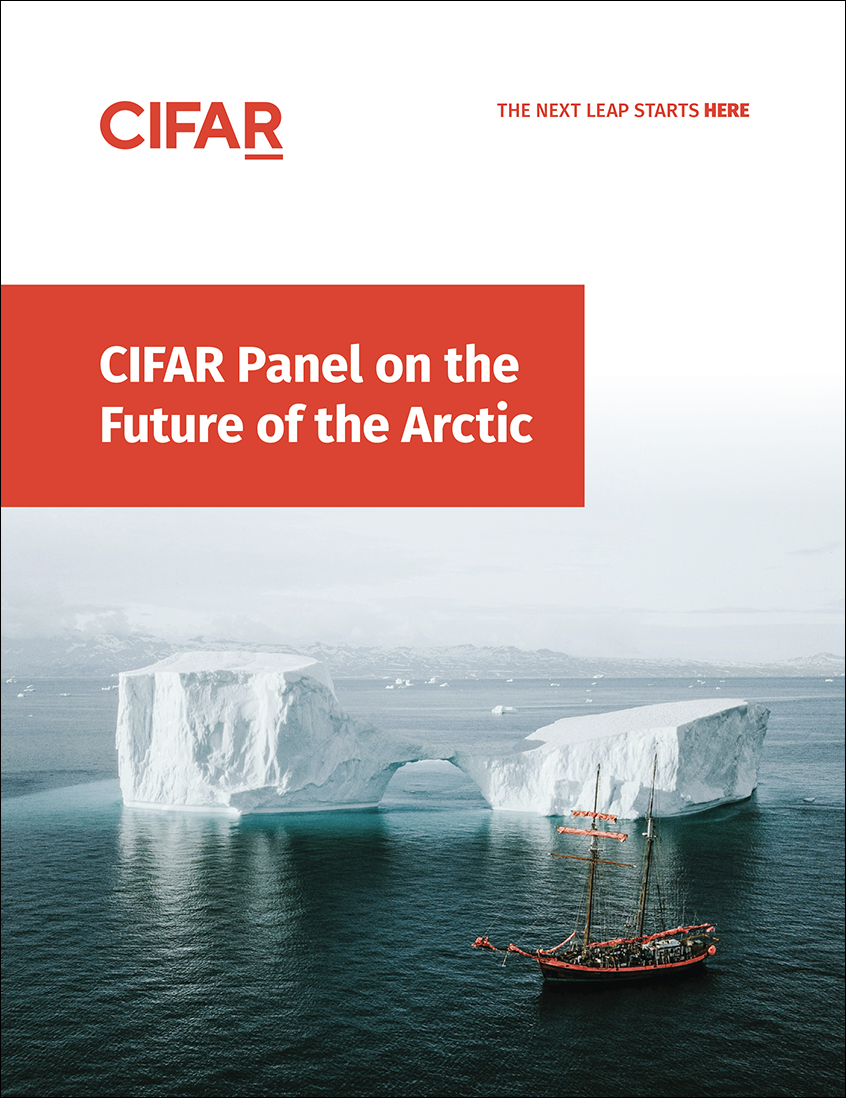
Drawing on diverse disciplines and ways of knowing, CIFAR panel proposes new approaches to understanding the Arctic’s future

A new report released today by CIFAR offers a provocative roadmap for the next 20 years of Arctic inquiry, challenging scholars to move toward a model of responsible, relational operation within one of the world’s most rapidly changing regions.

The CIFAR Panel on the Future of the Arctic Report is the culmination of an interdisciplinary effort to identify research pathways that can support environmental, economic and socio-cultural prosperity. The report emphasizes that the region’s future lies in transdisciplinary partnerships that bridge research and the lived experiences of those who call the Arctic home.

A Multi-Lens Exploration

The findings emerged from the CIFAR Discovery Panel, hosted in Geneva in February 2026 in partnership with the Swiss National Science Foundation and made possible through the CIFAR Ralph M. Barford Discovery Initiative. Through roundtable discussions and collaborative sessions, the forum brought together a highly diverse group of 14 international experts, ranging from backgrounds in oceanography and geology to Indigenous Arts and speculative fiction, including many early-career researchers. 

Top 3 High-Level Research Findings

The report identifies three transformative research themes designed to shift existing scientific and social paradigms:

  • Mobility as Place: This theme challenges static, colonial definitions of geography by framing the Arctic as a dynamic field of movement. It recognizes that shifting ice, migrating species and ocean currents are not just “changes” to a place, but are the very elements that define it.
  • Arctic ‘Kinfrastructures’: Drawing on Indigenous epistemologies, this concept proposes applying human relationality — specifically kinship — to the region’s infrastructure. It asks how governance and development might change if a mine, a bridge or the permafrost itself were treated as kin deserving of care and reciprocity.
  • Knowledge Integration Modelling: The panel calls for a “holistic modelling paradigm” that integrates environmental and socio-economic data to better inform governance and identify critical vulnerabilities and tipping points. This “digital twin” approach aims to provide Arctic nations with a stronger evidence base for international climate negotiations.

Looking Ahead

CIFAR’s commitment to foresight work ensures that the global community remains prepared for the complex challenges of tomorrow by proactively identifying emerging frontiers.

 “The transformative ideas presented in this report are a testament to the power of bringing together diverse, global minds,” says Kate Geddie, Executive Director of Research at CIFAR. “The work of this Panel helps us define a new, responsible path for research and collaboration in a region that is vital to the entire world.”