









In Denmark, pigs outnumber people nearly five to one. But their presence extends far beyond farms, shaping everyday lives in surprising ways through the materials they leave behind.
On March 19 at the Museum for Art in Public Spaces (MAPS) Museum, CIFAR researchers Daniel Fernández Pascual, Hannah Landecker and Alon Schwabe, all Fellows in the Future Flourishing program, unveiled the House that Pigs built.
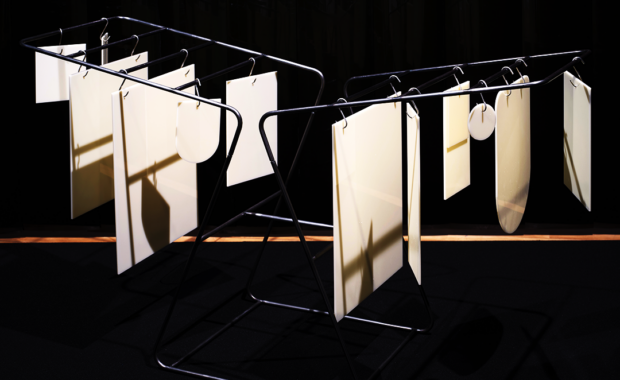
The exhibition transforms familiar domestic objects – a chair, a toilet, a door – into sites of inquiry, revealing how substances derived from animal bodies, such as gelatin, glycerin, fatty acids and calcium, have shaped modern environments for over a century.
“The project grew out of long-term research into industrial food systems and their material afterlives. We were interested in how these substances move beyond farms and slaughterhouses,” said Fernández Pascual, “and how they become part of architecture, design and the textures of everyday life.”
The exhibition, supported by a CIFAR Catalyst Grant funded by the British Academy, was developed by Cooking Sections – a decade-long artistic collaboration between Fernández Pascual and Schwabe that investigates how food systems shape the world, from their spatial and ecological impacts to the political legacies of extractivism – the large-scale extraction of raw and natural resources for export.
Inside the installation, visitors move through a spare apartment furnished with objects that tell a story of “animals becoming chemicals and chemicals becoming animals.” Through sound and material detail, the exhibition draws attention to the hidden processes behind everyday surfaces.
“These materials often appear neutral or convenient,” says Schwabe. “But they are tied to ecological damage and territorial conflict, and to systems that extend far beyond what we see.”
The exhibit was conceptualized in partnership with Landecker. Schwabe notes how her expertise in biopolitics and ultraprocessing further shaped their concept for the House that Pigs built.
“Her research contributed scientific insight into metabolism, material transformation and the long temporal scales of industrial production,” said Schwabe. “It helped us better frame the exhibition as an inquiry into how flourishing is unevenly distributed across species, territories and economies.”
This line of inquiry is central to the Future Flourishing program, which brings together philosophers, historians, curators, conservators, artists and anthropologists to imagine what it will take to create a better world for all of the entities that make up humans and live with us.
For Landecker, a historian of science, the collaboration offered a way to translate scientific insight into a spatial and sensory experience. “It was a stretch – a really exciting one! – for me to go beyond the academic text and think about how people would be immersed in the research, rather than read it,” Landecker commented. “CIFAR and the British Academy’s support meant we could also work with Richy Carey, a composer and sound artist, to realize the vision.”
The project draws on research into metabolism, material transformation and industrial production to show how animal bodies shape not only products, but also the conditions under which they are produced: how pigs are fed, housed and bred in response to global markets for these materials.
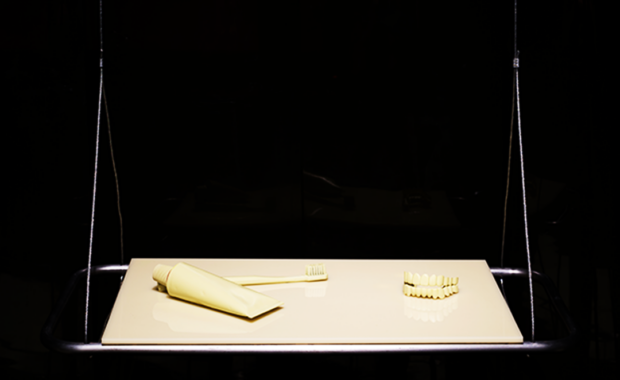
The exhibition situates these materials within a broader environmental context. In Denmark, which produces 30 million pigs annually, industrial farming has reshaped land use, water systems and rural economies. By tracing how animal bodies are transformed into everyday substances, the installation reveals how environmental costs are often redistributed rather than eliminated.
At the same time, the work looks forward. Embedded within the exhibition is a digital civic tool that tracks the expansion of pig megafarms, giving visitors access to planning processes and opportunities to participate in environmental decision-making. The exhibit opened just a few days before a national election in Denmark in which industrial pig farming and its future was a key topic of debate.
Ultimately, the House that Pigs built asks what it means to live in a world shaped by systems we rarely see. “Before we can change those systems, we need to understand how deeply they are embedded in everyday life,” said Fernández Pascual.
The exhibition runs until August 2, 2026.
此内容由惯性聚合(RSS阅读器)自动聚合整理,仅供阅读参考。 原文来自 — 版权归原作者所有。