







The debate around artificial intelligence often focuses on future threats and systems controlled outside Canada, but what about the immediate opportunity to build a resilient domestic digital future?
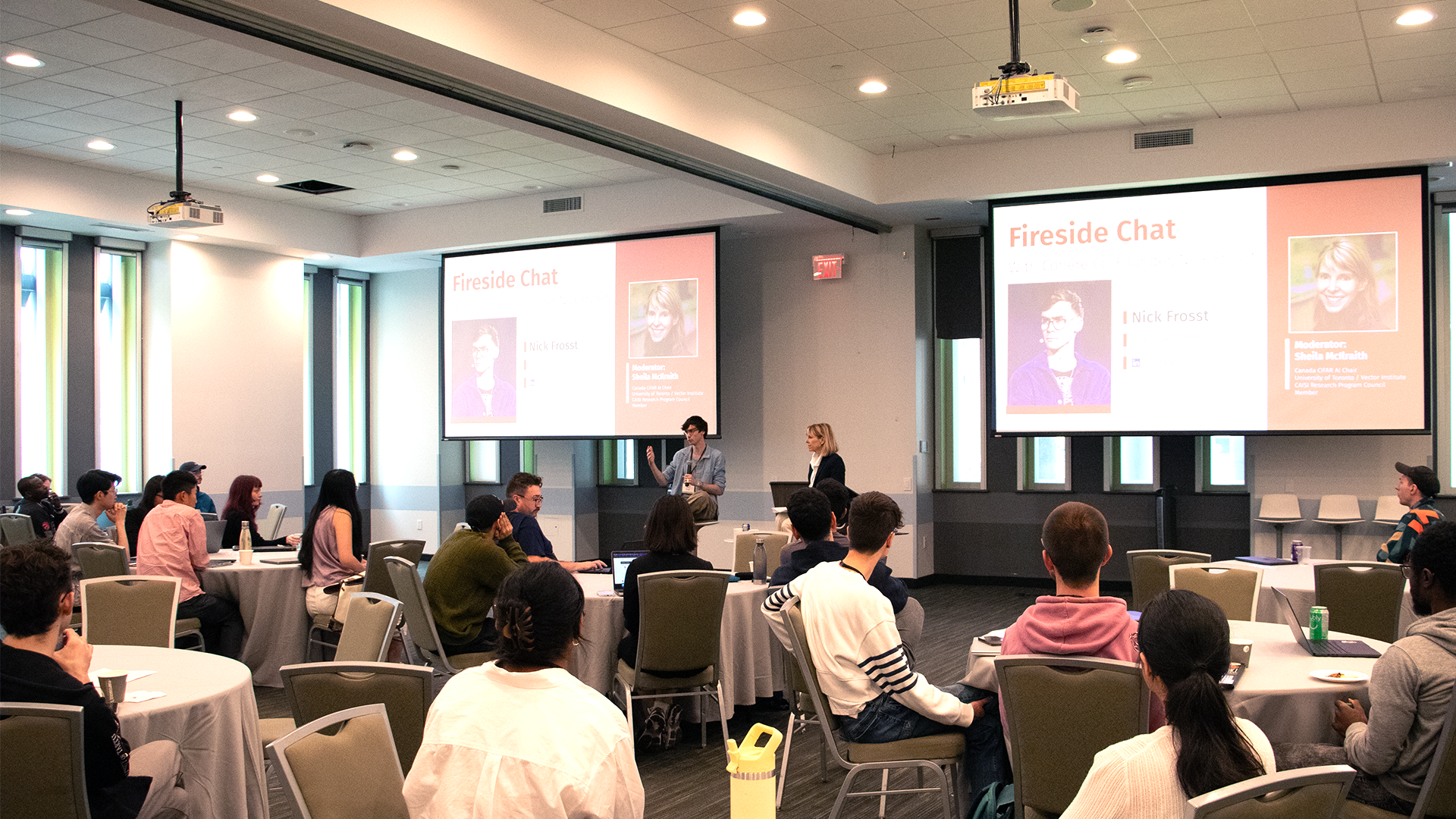
Speaking to trainees at the CIFAR AI Frontiers School: AI Safety Edition, Nick Frosst shared how this perspective drives his work as co-founder of Cohere, the Canadian-founded enterprise AI company and a global leader in sovereign AI.
Unlike consumer chatbots like ChatGPT or Gemini, Cohere builds enterprise-grade large language models and trusted AI solutions for businesses and public-sector organizations. Since the company was founded in 2019, Frosst and his team have already made a mark, including signing a memorandum of understanding with the Government of Canada to help build its internal AI services, alongside several other notable partnerships.
This is part of Canada’s pursuit to achieve sovereign AI, which as Frosst describes, centres on autonomy, agency and control over technology within domestic borders rather than depending exclusively on external technology providers.
For him, the question is, “Does the technology empower us under our own control, or does it disempower us under the control of somebody else?”
He believes that now is the moment for Canada to choose whether to follow the path of past digital breakthroughs or try something new.
“We are at another moment of grand technological revolution and it is an opportunity to ask ourselves: Are we going to repeat what we built with the internet, social media and phone networks, where centralized control led to widespread disempowerment? Or are we going to build something better, where people are largely in control of the technology they use and feel empowered by it?”
He explained that sovereignty does not mean working in isolation, pointing to Canada’s nuclear industry as a model. Much like a power plant that operates under domestic oversight but relies on imported components, a nation requires a diversified, locally controlled AI ecosystem. Relying entirely on a limited number of external providers introduces a single point of failure, meaning that if an external provider cuts off access due to corporate or political shifts, domestic digital infrastructure risks disruption.
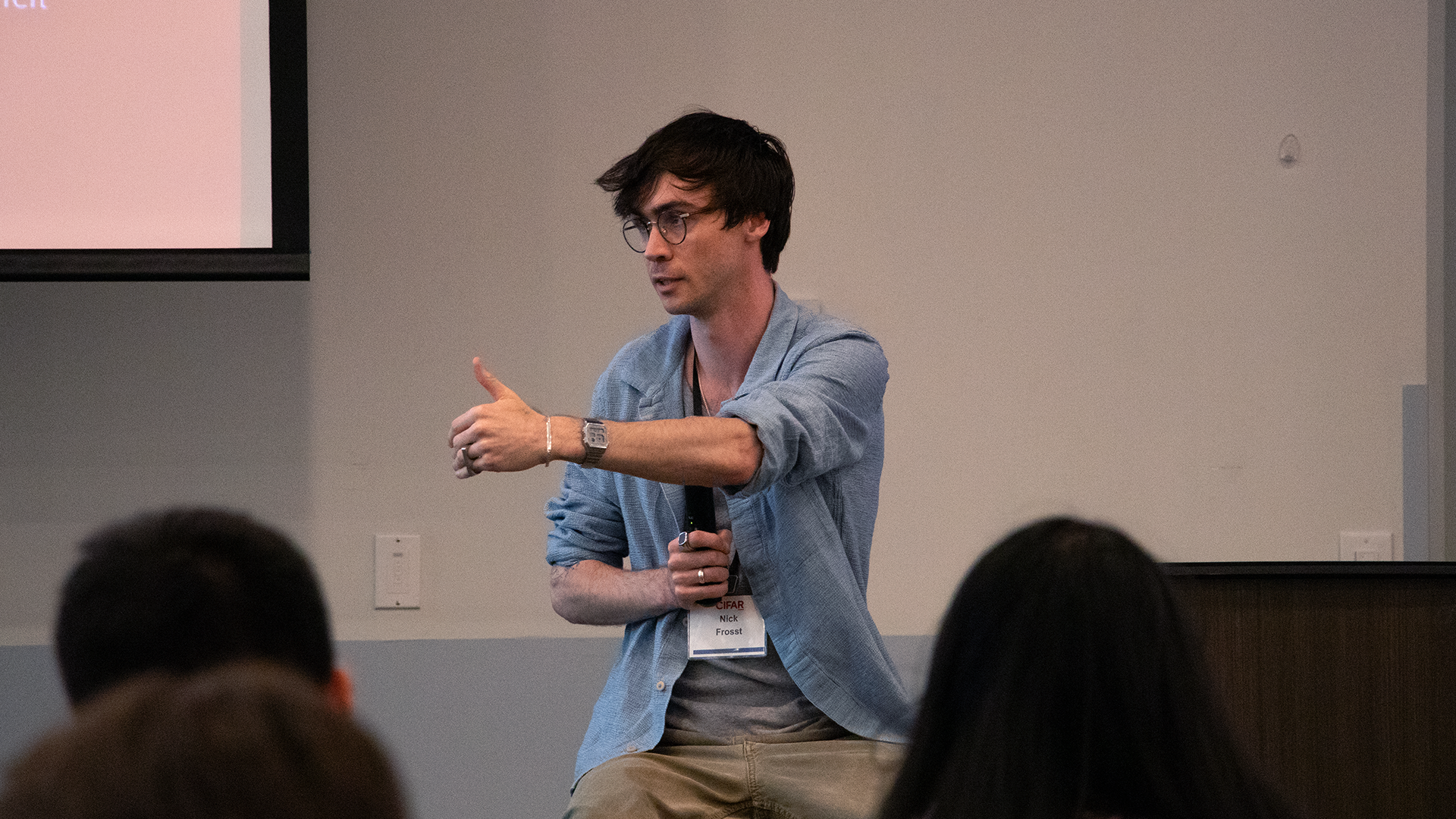
While it is clear that AI will require safeguards, Frosst views much of the existential risk discourse, such as scenarios of machines escaping servers or becoming self-aware, as unrealistic.
Instead, he points to the more immediate areas, including AI’s growing energy demands and the need for responsible deployment.
Left unchecked, AI tools risk widening existing wealth gaps, echoing the uneven effects of the early Industrial Revolution. Mass-generated misinformation also threatens online integrity, requiring social media platforms to verify human users while protecting individual privacy.
In his work, Frosst said safety centers on execution, rule-following and clarity. It is not achieved by permanently embedding specific cultural beliefs into the software.
“Models should do what they’re told in the preamble. And that’s it. I don’t think the idea of safety is addressed by building our norms into training. You want to bake those into the preamble and train the model to follow the preamble as much as possible.”
This approach should accommodate changing cultural norms and varying business requirements. For example, while a private business needs to block software hacking capabilities within its internal networks, a national security agency might require those features to test its own vulnerabilities. Safety would therefore be achieved when a model executes exactly what its specific deployer commands.
While Frosst explained that he is normally hesitant to give advice in such a fast-moving industry, he suggested that trainees follow their hearts. “Work on whatever you’re interested in. The probability of a good outcome for your life, if you’re doing something you’re passionate about, is much higher.”
Further, for those weighing whether to build a career locally or move elsewhere, Frosst enthusiastically advocates for the Canadian ecosystem.
“There’s great stuff going on outside of the tech ecosystem, and there is so much opportunity within it, so you can build a good career here while living a diversified life. I would encourage people to stay. It’s better than it’s ever been before: there’s more investment, more Canadian venture capital and better schools. The AI institutes [Amii, Mila and Vector Institute] and industry are growing, all while maintaining a multicultural, diverse and multidisciplinary environment that offers a robust, full human experience.”
此内容由惯性聚合(RSS阅读器)自动聚合整理,仅供阅读参考。 原文来自 — 版权归原作者所有。