

惯性聚合 高效追踪和阅读你感兴趣的博客、新闻、科技资讯
阅读原文 在惯性聚合中打开

推荐订阅源

D
DataBreaches.Net
GbyAI
GbyAI
aimingoo的专栏
aimingoo的专栏
freeCodeCamp Programming Tutorials: Python, JavaScript, Git & More
月光博客
月光博客
大猫的无限游戏
大猫的无限游戏
M
MIT News - Artificial intelligence
腾讯CDC
博客园 - Franky
Engineering at Meta
Engineering at Meta
C
Check Point Blog
T
The Blog of Author Tim Ferriss
有赞技术团队
有赞技术团队
Microsoft Azure Blog
MyScale Blog
MyScale Blog
I
InfoQ
Blog — PlanetScale
Blog — PlanetScale
P
Proofpoint News Feed
The GitHub Blog
The GitHub Blog
N
Netflix TechBlog - Medium
Last Week in AI
Last Week in AI
S
SegmentFault 最新的问题
Cyber Security Advisories - MS-ISAC
WordPress大学
WordPress大学

Futurism

China Deploys Rare Type of Space Junk That Pollutes Orbit for Hundreds of Years Researchers Alarmed as GPS Readings Suddenly Veer Off by 33 Feet, Enough to Crash Self-Driving Cars Scientists Baffled by Bizarre "Anomaly" Deep Beneath the Surface of Mars NASA's Powerful New Space Telescope, Just Cleared for Launch, Was Developed by an Intelligence Agency to "Spy on America's Adversaries" NASA Set Up a Major Test of Its New Strategy Under Trump by Hiring a Startup to Launch a Daring Mission to Rescue a Dying Space Telescope in Orbit. The Unfortunate Result Will Have Long-Ranging Repercussions. Scientists Warn That New Satellites Could Cause Eye Damage for People on the Ground Scientist Reveals Plan to Save Earth From Destruction by the Sun NASA Rescue Mission Spirals Into Crisis Incredible Video Shows Chinese Rocket Get Hit by Lightning Mid-Launch SpaceX Plunges to All-Time Low After Competitor Makes Major Leap China Is Catching Up With SpaceX Fast, Landing First Reusable Rocket Booster on Offshore Platform Scientists Test New Spacecraft Thruster That Uses No Fuel, Just Earth's Magnetic Field, in Orbit Experts Say Mysterious Metallic Orbs Appear to Have Fallen From the Sky Anybody Who Thinks Orbital Data Centers are a Good Idea Is Suffering from AI Psychosis, Experts Argue NASA Prepping to Launch Extremely Risky Rescue Mission Boeing's Starliner Is Such a Disaster That We Don't Even Have Words NASA Has a Major Problem Threatening Its Entire Moon Plans NASA Rover Finds "Complex Organic Matter" on Mars SpaceX Launches Secretive New Spacecraft Shaped Like Flying Saucer Saturn's Icy Moon Is the Perfect Place to Settle, NASA Scientist Argues Scientists Building World's Most Powerful Radio Telescope Deep in the Nevada Desert NASA Loads Moon Rocket onto Giant Trump-Branded Train NASA’s Next Moon Mission Is a Rube Goldberg Machine of Corporate Failure Points Scientists Release Results After Scanning 3I/ATLAS for Alien Signals NASA’s James Webb Discovers That 3I/ATLAS Let One Rip as It Passed Through Solar System Scientists Find Chunk of Lost Planet in Desert ISS Astronauts Ordered to Enter Evacuation Mode Paper Claims the “Asteroid” Japan’s Probe Is Approaching Is Actually a Derelict Spacecraft Scientists Say They’ve Found Fungi That Turn Dead Martian Soil Into Fertile Cropland Jeff Bezos’ Rocket Explodes Into Mushroom Cloud, Dealing Massive Blow to NASA’s Moon Plans
Moon Astronaut Captures Shot of Earth That Lets You See I...
2026-04-08 · via Futurism

NASA astronaut and Artemis 2 mission commander Reid Wiseman took a moment to snap a breathtaking photo of the full Earth.

NASA

Sign up to see the future, today

Can’t-miss innovations from the bleeding edge of science and tech

On December 7, 1972, NASA astronaut and Apollo 17 crew member Harrison Schmitt took a stunning photo of the entirety of the Earth, an image later dubbed “The Blue Marble.”

The iconic shot was made possible by the mission’s unusual trajectory, which brought much of our world’s south pole into view. The astonishing perspective changed the “way we look at our home planet,” as the space agency notes on its website.

And while Apollo 17 was the last time we set foot on the Moon’s surface, we finally have a non-satellite-image-based update to the photo over half a century later.

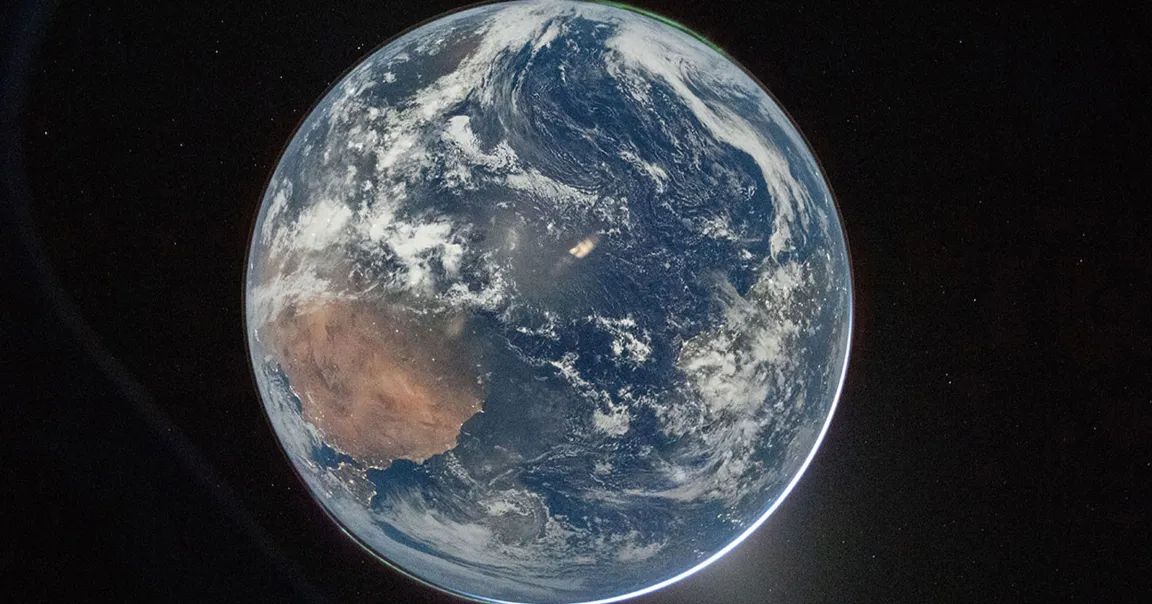
After their Orion spacecraft fired its thrusters to take the crew of NASA’s ongoing Artemis 2 mission away from Earth on April 2, NASA astronaut and commander Reid Wiseman took a moment to snap a breathtaking photo of our world .

The image, titled “Hello, World,” even shows the boundary of Earth’s atmosphere in remarkable detail — including not just one but two auroras visible in the top right and bottom left, they appear as faint green hues.

It’s a stark reminder of the frail layer of gases that allows life to exist on Earth, a feature that may — or may not — make us unique in the universe.
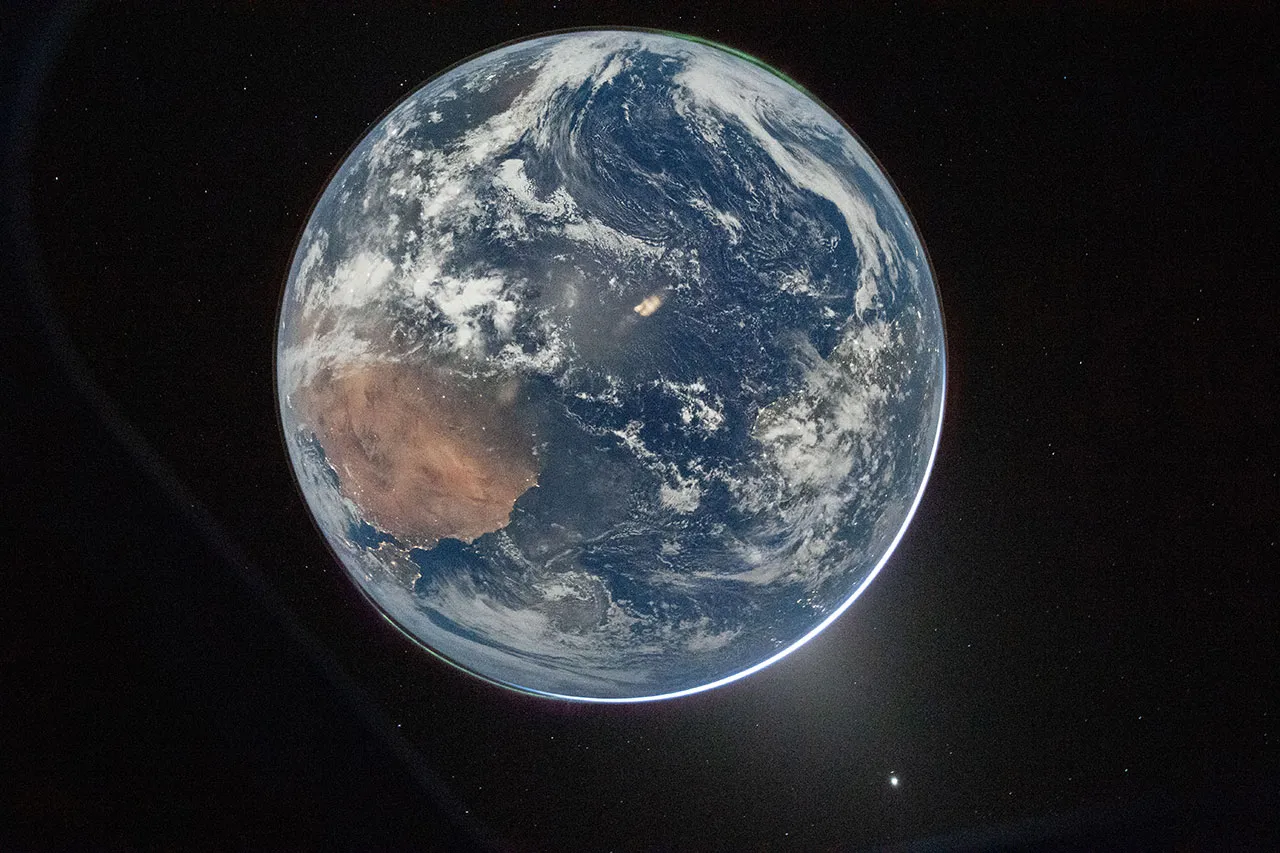
The image, titled "Hello, World," shows the Earth's atmosphere in remarkable detail, including not just one, but two auroras, visible in the top right and bottom left, appearing as faint green hues.

The glow on the bottom right of the image is “zodiacal light,” a faint glow also referred to as “false dawn,” that appears due to rays of light being scattered by interplanetary dust as the Earth eclipses the Sun.

The photo, alongside another stunning image showing the Earth peeking through one of the Orion spacecraft’s windows after completing the translunar injection burn, were the two first images the Artemis 2 astronauts sent back to Earth.

Since then, the team has sent back a treasure chest of astonishing views from their lunar flyby, including dramatic scenes of the lunar surface and the Earth setting and rising behind it.

Considering the amazing photos we’ve already seen, there’s no doubt the memory cards they’ll be bringing back to Earth on Friday evening will contain an even greater collection of out-of-this-world views.

More on Artemis photos: We’re In Utter Disbelief About the Photos the Moon Astronauts Just Sent Back