


惯性聚合 高效追踪和阅读你感兴趣的博客、新闻、科技资讯
阅读原文 在惯性聚合中打开

推荐订阅源

Google DeepMind News
WordPress大学
WordPress大学
S
SegmentFault 最新的问题
小众软件
小众软件
爱范儿
爱范儿
freeCodeCamp Programming Tutorials: Python, JavaScript, Git & More
量子位
博客园_首页
T
Tailwind CSS Blog
The Cloudflare Blog
J
Java Code Geeks
奇客Solidot–传递最新科技情报
奇客Solidot–传递最新科技情报
U
Unit 42
OSCHINA 社区最新新闻
OSCHINA 社区最新新闻
人人都是产品经理
人人都是产品经理
N
Netflix TechBlog - Medium
Cyber Security Advisories - MS-ISAC
腾讯CDC
P
Proofpoint News Feed
aimingoo的专栏
aimingoo的专栏
Recent Announcements
T
The Blog of Author Tim Ferriss
D
Docker
Microsoft Azure Blog

Futurism

China Deploys Rare Type of Space Junk That Pollutes Orbit for Hundreds of Years Researchers Alarmed as GPS Readings Suddenly Veer Off by 33 Feet, Enough to Crash Self-Driving Cars Scientists Baffled by Bizarre "Anomaly" Deep Beneath the Surface of Mars NASA's Powerful New Space Telescope, Just Cleared for Launch, Was Developed by an Intelligence Agency to "Spy on America's Adversaries" NASA Set Up a Major Test of Its New Strategy Under Trump by Hiring a Startup to Launch a Daring Mission to Rescue a Dying Space Telescope in Orbit. The Unfortunate Result Will Have Long-Ranging Repercussions. Scientists Warn That New Satellites Could Cause Eye Damage for People on the Ground Scientist Reveals Plan to Save Earth From Destruction by the Sun NASA Rescue Mission Spirals Into Crisis Incredible Video Shows Chinese Rocket Get Hit by Lightning Mid-Launch SpaceX Plunges to All-Time Low After Competitor Makes Major Leap China Is Catching Up With SpaceX Fast, Landing First Reusable Rocket Booster on Offshore Platform Experts Say Mysterious Metallic Orbs Appear to Have Fallen From the Sky Anybody Who Thinks Orbital Data Centers are a Good Idea Is Suffering from AI Psychosis, Experts Argue NASA Prepping to Launch Extremely Risky Rescue Mission Boeing's Starliner Is Such a Disaster That We Don't Even Have Words NASA Has a Major Problem Threatening Its Entire Moon Plans NASA Rover Finds "Complex Organic Matter" on Mars SpaceX Launches Secretive New Spacecraft Shaped Like Flying Saucer Saturn's Icy Moon Is the Perfect Place to Settle, NASA Scientist Argues Scientists Building World's Most Powerful Radio Telescope Deep in the Nevada Desert NASA Loads Moon Rocket onto Giant Trump-Branded Train NASA’s Next Moon Mission Is a Rube Goldberg Machine of Corporate Failure Points Scientists Release Results After Scanning 3I/ATLAS for Alien Signals NASA’s James Webb Discovers That 3I/ATLAS Let One Rip as It Passed Through Solar System Scientists Find Chunk of Lost Planet in Desert ISS Astronauts Ordered to Enter Evacuation Mode Paper Claims the “Asteroid” Japan’s Probe Is Approaching Is Actually a Derelict Spacecraft Scientists Say They’ve Found Fungi That Turn Dead Martian Soil Into Fertile Cropland Jeff Bezos’ Rocket Explodes Into Mushroom Cloud, Dealing Massive Blow to NASA’s Moon Plans NASA Releases Sweeping Plans for Moon Base
Scientists Test New Spacecraft Thruster That Uses No Fuel...
Victor Tangermann · 2026-07-10 · via Futurism

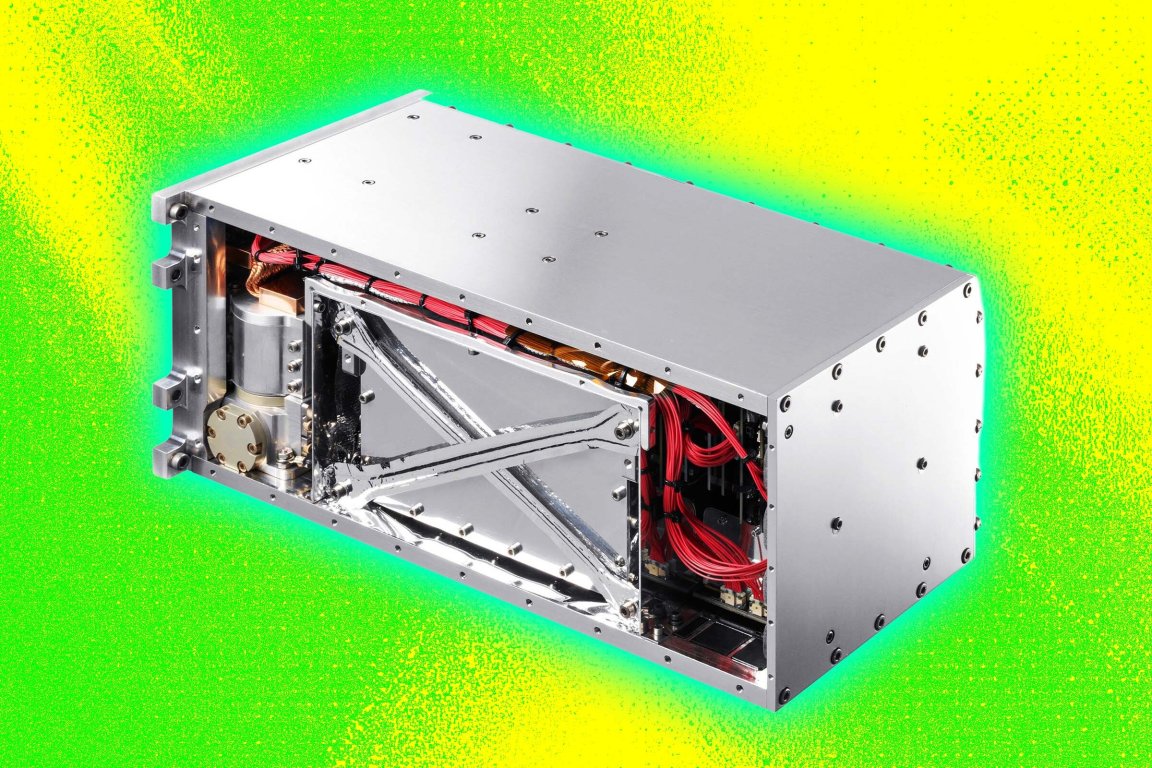
A photo illustration featuring the Supertorquer.

Zenno Astronautics / Shutterstock / Futurism

Sign up to see the future, today

Can’t-miss innovations from the bleeding edge of science and tech

Satellites perform a delicate dance to maintain their orbit, by locking themselves to a speed just fast enough to counteract the downward pull of gravity.

To stop their orbit from decaying too much, satellites use small in-space thrusters, which broadly speaking, fall into two categories: chemical or electric. The former uses a combustible fuel source that gets accelerated through a nozzle, while the latter uses electrical energy to convert propellant into kinetic energy.

Now, New Zealand space startup Zenno Astronautics says it’s tested an entirely new type of thruster that, unlike either of those conventional technologies, uses superconducting magnets to maintain a satellite’s orbit and orientation. As Space.com reports, the magnets convert solar energy directly into momentum, effectively harnessing the Earth’s magnetic field itself.

“Energy is the one thing that is abundant in space, and you can use it to energize the magnet to create a magnetic acceleration device,” Zenno Astronautics CEO and founder Max Arshavsky told the site. “It gives you acceleration without fuel.”

The company’s “Supertorquer” system, attached to a Mira satellite developed by Impulse Space, was launched into space as part of a SpaceX rideshare mission in November.

“It’s a technology that allows a spacecraft to not tumble violently in space and point in the right direction,” Arshavsky told Space.com.

When the spacecraft needs to move, superconducting coils draw energy from a solar powered battery.

“The unit has multiple superconducting magnets that are positioned in different axes,” Arshavsky added. “When we power up the magnets, they generate a magnetic field, which interacts with Earth’s magnetic field, and because we can control the magnetic field on the satellite, we can control the way in which it turns with respect to Earth.”

During its test last fall, the Supertorquer successfully altered the Mira satellite’s orientation on command, just as designed.

For superconducting magnets to work, they have to be cooled to extremely low temperatures. On Earth, that requires cryogenic liquids, which are ill-suited for a satellite. Even in space, the satellite is warmed up to around 68 degrees Fahrenheit by the Sun’s rays, which meant that Zenno had to get creative.

Using a heat pump, the extensively insulated magnet system expels heat to allow the coils to power up at temperatures as low as 77 kelvin, or -321 degrees Fahrenheit. Zenno claims its cooling system is highly efficient, drawing only up to 48 watts at peak.

The startup has some ambitious plans and is hoping to scale up the system to enable future spacecraft to perform docking maneuvers or even help propel them to the Moon or Mars by exclusively relying on solar power. How feasible those lofty plans will turn out to be remains to be seen, but the startup is optimistic.

Arshavsky even suggested that superconducting magnets could create “umbrellas of magnetic fields” that could “shield people in space” from harmful levels of radiation.

More on satellite thrusters: NASA Fires Up Futuristic Plasma Thruster Designed to Take Us to Mars