

惯性聚合 高效追踪和阅读你感兴趣的博客、新闻、科技资讯
阅读原文 在惯性聚合中打开

推荐订阅源

S
Security Affairs
S
Schneier on Security
T
Tenable Blog
G
GRAHAM CLULEY
Latest news
Latest news
D
Darknet – Hacking Tools, Hacker News & Cyber Security
A
Arctic Wolf
I
Intezer
Cyberwarzone
Cyberwarzone
T
The Exploit Database - CXSecurity.com
T
Tailwind CSS Blog
K
Kaspersky official blog
Blog — PlanetScale
Blog — PlanetScale
C
Cyber Attacks, Cyber Crime and Cyber Security
T
Threat Research - Cisco Blogs
爱范儿
爱范儿
Exploit-DB.com RSS Feed
博客园 - 叶小钗
让小产品的独立变现更简单 - ezindie.com
Recent Commits to openclaw:main
P
Palo Alto Networks Blog
WordPress大学
WordPress大学
freeCodeCamp Programming Tutorials: Python, JavaScript, Git & More
博客园 - 司徒正美
The Cloudflare Blog
Help Net Security
Help Net Security
罗磊的独立博客
博客园 - 聂微东
Jina AI
Jina AI
Project Zero
Project Zero
钛媒体:引领未来商业与生活新知
钛媒体:引领未来商业与生活新知
L
LINUX DO - 最新话题
V
V2EX
人人都是产品经理
人人都是产品经理
美团技术团队
博客园 - 【当耐特】
Spread Privacy
Spread Privacy
J
Java Code Geeks
Threat Intelligence Blog | Flashpoint
Security Latest
Security Latest
The Last Watchdog
The Last Watchdog
Stack Overflow Blog
Stack Overflow Blog
雷峰网
雷峰网
S
Securelist
Forbes - Security
Forbes - Security
博客园 - 三生石上(FineUI控件)
Microsoft Azure Blog
P
Privacy International News Feed
宝玉的分享
宝玉的分享
C
CERT Recently Published Vulnerability Notes

Futurism

SpaceX Plunges to All-Time Low After Competitor Makes Major Leap China Is Catching Up With SpaceX Fast, Landing First Reusable Rocket Booster on Offshore Platform Scientists Test New Spacecraft Thruster That Uses No Fuel, Just Earth's Magnetic Field, in Orbit Experts Say Mysterious Metallic Orbs Appear to Have Fallen From the Sky Anybody Who Thinks Orbital Data Centers are a Good Idea Is Suffering from AI Psychosis, Experts Argue NASA Prepping to Launch Extremely Risky Rescue Mission Boeing's Starliner Is Such a Disaster That We Don't Even Have Words NASA Has a Major Problem Threatening Its Entire Moon Plans NASA Rover Finds "Complex Organic Matter" on Mars SpaceX Launches Secretive New Spacecraft Shaped Like Flying Saucer Saturn's Icy Moon Is the Perfect Place to Settle, NASA Scientist Argues Scientists Building World's Most Powerful Radio Telescope Deep in the Nevada Desert NASA Loads Moon Rocket onto Giant Trump-Branded Train NASA’s Next Moon Mission Is a Rube Goldberg Machine of Corporate Failure Points Scientists Release Results After Scanning 3I/ATLAS for Alien Signals NASA’s James Webb Discovers That 3I/ATLAS Let One Rip as It Passed Through Solar System Scientists Find Chunk of Lost Planet in Desert ISS Astronauts Ordered to Enter Evacuation Mode Paper Claims the “Asteroid” Japan’s Probe Is Approaching Is Actually a Derelict Spacecraft Scientists Say They’ve Found Fungi That Turn Dead Martian Soil Into Fertile Cropland Jeff Bezos’ Rocket Explodes Into Mushroom Cloud, Dealing Massive Blow to NASA’s Moon Plans NASA Releases Sweeping Plans for Moon Base Scientist Suggests That 3I/ATLAS May Have Seeded Life as It Careened Through Our Solar System SpaceX Announces Plans to Put Billionaire on First Rocket to Mars Elon Musk’s Ex Says He Bragged About 10,000 Lasers in Orbit That Are “Not a Piece They’ll See on the Chess Board” Visitor Approaches From the Edge of the Solar System Government Releases UFO Files Containing Photos of “Anomalies” During Apollo 12 and 17 Scientists Detect Atmosphere on Planet-Like Object Beyond Pluto NASA’s Moon Landing Schedule Slipping Horrendously Under Trump NASA Fires Up Futuristic Plasma Thruster Designed to Take Us to Mars There’s a Hidden Shortcut to Mars, Scientific Paper Finds Another Military UFO Guy Just Died Scientists Scan Gigantic Structure Hiding Behind Our Galaxy Video Shows NASA Astronaut Struggling to Walk After Journey Around the Moon Scientists Say They’ve Tested a Way to Get to Alpha Centauri in Just 20 Years FBI Investigating Series of Deaths Among Top Scientists With Very Specific Specialties SpaceX Admits AI Data Centers in Space May Be a Really Terrible Idea Jeff Bezos’ Botched Space Launch Was So Bad It Could Threaten NASA’s Entire Moon Program Guess What This Creepy Underwater Thing Is That Was Photographed by US Navy Divers for NASA Jeff Bezos’ Space Company Just Screwed Up Very, Very Badly NASA’s Mars Rover Comes Across Formation That Looks Like the Scales of a Massive Cosmic Reptile Physicists Have a Major Problem With the Universe There’s Something Extremely Shady About Trump’s Disastrous New NASA Budget Moon Denialists Are So Pathetic That They’re Using AI to Fake Artemis Footage Trump Hires Orbital Towing Company to Build Space Interceptors Space Scientists Wince as Astronauts’ Lives Depend on Artemis 2’s Controversial Heat Shield During Plunge Back to Earth The Moon Astronauts Have Been Working Out With a NASA Rowing Machine in Space As Astronauts Visit the Moon, NASA Insider Says Agency Is in Shambles Behind the Scenes Moon Astronaut Captures Shot of Earth That Lets You See Its Razor-Thin Atmosphere Perfectly The Moon Spacecraft’s $30 Million Toilet Has Been a Bit of a Disaster We’re In Utter Disbelief About the Photos the Moon Astronauts Just Sent Back Lone Jar of Nutella Drifts Around Cabin of Moon Spacecraft The Moon Astronauts Just Broke the Record for the Farthest Any Human Has Ever Traveled From Earth Moon Astronauts Forced to Do It in Bags as “Burning Odor” Emanates From Toilet The White House Is Still Desperately Trying to Slash NASA’s Budget Trump Fans Furious That NASA Is Allowing a Canadian on the Moon Mission NASA Spacecraft’s Toilet Fails Hours Into Ten-Day Journey to Moon Conspiracy Theorists Are Going to Have a Field Day as NASA Gears Up to Launch Historic Moon Mission on April Fools’ Day
NASA Scientists Screamed With Delight When They Saw Something Smashing Into the Moon
2026-04-09 · via Futurism

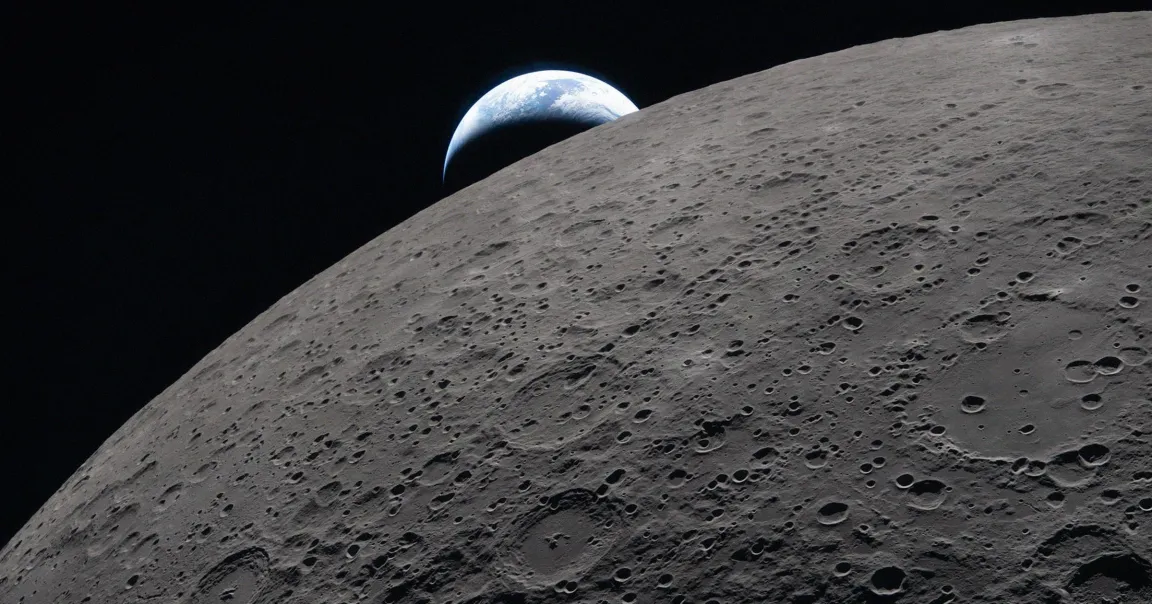
NASA scientists let loose "screams of delight" amazement as they saw micrometeorites impact the far side of the Moon.

NASA

Sign up to see the future, today

Can’t-miss innovations from the bleeding edge of science and tech

As NASA’s Artemis 2 crew careened around the far side of the Moon earlier this week — breaking the record for how far humans have ever traveled from Earth in the process — they were treated to an incredible view.

As they cruised past the Moon’s heavily-crated far side, the astronauts watched in amazement as micrometeorites impacted the lunar surface, catching both them and mission control off guard. The mission’s crew said they witnessed at least six impacts on the lunar far side during the almost-one-hour-long total solar eclipse as the Sun went out of view behind the Earth from their perspective.

There were “audible screams of delight” at Mission Control in Houston, as mission science lead Kelsey Young recalled during a Tuesday press conference.

“There was a little giddiness,” NASA astronaut and commander Reid Wiseman told Houston during the observation period. “We have seen three impact flashes so far. I saw two, and [mission specialist Jeremy Hansen] has seen one.”

“Undoubtedly quick impact flashes,” he said, adding that “it was not Sun glint off a particulate from the thrusters or the burns tanks.”

“And Jeremy just saw another one,” Wiseman added.

The face on Young said it all. The livestream showed her jaw hitting the floor as she looked around the room at Mission Control in disbelief.

“I don’t know if I expected to have the crew see any on this mission, so you probably saw the surprise and shock on my face,” she later recalled.

While the team said that they already got what they came for — astonishing close-up views of the lunar surface and its unusual geographical features — the constant bombardment of tiny meteorites was unexpected.

“This is absolutely everything we hoped for by integrating science into flight operations,” Young told reporters. “Science enables exploration, and exploration enables science.”

“They were really high-priority science for us, so the fact that they saw four or five was just outstanding,” Canadian backup astronaut Jenni Gibbons told Agence France-Presse.

Micrometeorites are already a major point of discussion as the United States continues to push for the establishment of a permanent settlement on the Moon. Besides “moonquakes” and massive amounts of space radiation, future astronauts will need to have sufficient shelter to protect them from these errant space rocks.

Without a protective atmosphere like the Earth’s, which acts as a shield and causes most meteorites to burn up, the Moon is largely exposed, as evidenced in its crater-riddled appearance.

Even if the fragments are extremely small, they can still impact the surface with a huge amount of force while traveling tens of miles per second. In other words, future lunar habitats will quite literally be bulletproof.

In a 2025 study, scientists used NASA’s Meteoroid Engineering Model to calculate impact rates for a hypothetical lunar base the size of the International Space Station. They found that between 15,000 and 23,000 particles, ranging from a millionth of a gram to ten grams, could strike such a habitat per year. (It’s unclear whether the latest first-hand observations could influence their findings.)

However, the researchers identified some areas — including the lunar south pole, which NASA is eyeing for its first Artemis base — as being less battered.

Another possibility is to seek shelter inside deeper craters or caves left behind by lava tubes to shield both from meteorites and space radiation, an idea we’ve only begun to explore.

More on the mission: We’re In Utter Disbelief About the Photos the Moon Astronauts Just Sent Back