


惯性聚合 高效追踪和阅读你感兴趣的博客、新闻、科技资讯
阅读原文 在惯性聚合中打开

推荐订阅源

博客园 - 叶小钗
D
Docker
Google DeepMind News
Y
Y Combinator Blog
钛媒体:引领未来商业与生活新知
钛媒体:引领未来商业与生活新知
Blog — PlanetScale
Blog — PlanetScale
OSCHINA 社区最新新闻
OSCHINA 社区最新新闻
U
Unit 42
博客园 - 【当耐特】
N
Netflix TechBlog - Medium
V
Visual Studio Blog
Microsoft Azure Blog
博客园_首页
Recent Announcements
GbyAI
GbyAI
T
Tailwind CSS Blog
S
SegmentFault 最新的问题
WordPress大学
WordPress大学
T
The Blog of Author Tim Ferriss
Engineering at Meta
Engineering at Meta
L
LangChain Blog
A
About on SuperTechFans
M
MIT News - Artificial intelligence
B
Blog

Futurism

China Deploys Rare Type of Space Junk That Pollutes Orbit for Hundreds of Years Researchers Alarmed as GPS Readings Suddenly Veer Off by 33 Feet, Enough to Crash Self-Driving Cars Scientists Baffled by Bizarre "Anomaly" Deep Beneath the Surface of Mars NASA's Powerful New Space Telescope, Just Cleared for Launch, Was Developed by an Intelligence Agency to "Spy on America's Adversaries" NASA Set Up a Major Test of Its New Strategy Under Trump by Hiring a Startup to Launch a Daring Mission to Rescue a Dying Space Telescope in Orbit. The Unfortunate Result Will Have Long-Ranging Repercussions. Scientists Warn That New Satellites Could Cause Eye Damage for People on the Ground Scientist Reveals Plan to Save Earth From Destruction by the Sun NASA Rescue Mission Spirals Into Crisis Incredible Video Shows Chinese Rocket Get Hit by Lightning Mid-Launch SpaceX Plunges to All-Time Low After Competitor Makes Major Leap China Is Catching Up With SpaceX Fast, Landing First Reusable Rocket Booster on Offshore Platform Scientists Test New Spacecraft Thruster That Uses No Fuel, Just Earth's Magnetic Field, in Orbit Experts Say Mysterious Metallic Orbs Appear to Have Fallen From the Sky Anybody Who Thinks Orbital Data Centers are a Good Idea Is Suffering from AI Psychosis, Experts Argue NASA Prepping to Launch Extremely Risky Rescue Mission Boeing's Starliner Is Such a Disaster That We Don't Even Have Words NASA Has a Major Problem Threatening Its Entire Moon Plans NASA Rover Finds "Complex Organic Matter" on Mars SpaceX Launches Secretive New Spacecraft Shaped Like Flying Saucer Saturn's Icy Moon Is the Perfect Place to Settle, NASA Scientist Argues Scientists Building World's Most Powerful Radio Telescope Deep in the Nevada Desert NASA Loads Moon Rocket onto Giant Trump-Branded Train NASA’s Next Moon Mission Is a Rube Goldberg Machine of Corporate Failure Points Scientists Release Results After Scanning 3I/ATLAS for Alien Signals NASA’s James Webb Discovers That 3I/ATLAS Let One Rip as It Passed Through Solar System Scientists Find Chunk of Lost Planet in Desert ISS Astronauts Ordered to Enter Evacuation Mode Paper Claims the “Asteroid” Japan’s Probe Is Approaching Is Actually a Derelict Spacecraft Scientists Say They’ve Found Fungi That Turn Dead Martian Soil Into Fertile Cropland Jeff Bezos’ Rocket Explodes Into Mushroom Cloud, Dealing Massive Blow to NASA’s Moon Plans
Guess What This Creepy Underwater Thing Is That Was Photo...
Victor Tangermann · 2026-04-21 · via Futurism

An intriguing photo shows the charred heat shield of NASA's Artemis 2 Orion capsule right after splashdown in the Pacific on April 10.

NASA

Sign up to see the future, today

Can’t-miss innovations from the bleeding edge of science and tech

It may look like the underwater remains of a church that’s been submerged for hundreds of years following a dam break, or a tunnel boring machine that just broke through a mound of rubble.

But if those were your guesses, you’d be sorely mistaken. An intriguing photo taken by US Navy divers and shared by NASA on Monday shows the charred heat shield of the space agency’s Artemis 2 Orion capsule, right after it took a plunge in the Pacific Ocean upon landing on April 10.

While the subsequent post flight analysis may drag on for quite some time, it’s an intriguing first glimpse at one of the more controversial aspects of NASA’s triumphant crewed return to the Moon. The tiled heat shield is designed to keep astronauts safe as their spacecraft slams into the Earth’s atmosphere at over 23,000 mph, a maneuver that causes it to heat up to thousands of degrees Fahrenheit.

A photo taken by US Navy divers and shared by NASA on Monday, showing the charred heat shield of the space agency's Artemis 2 Orion capsule right after it took a plunge in the Pacific Ocean upon landing on April 10.

During NASA’s inaugural 2022 Artemis 1 mission, which saw the Orion spacecraft travel around the Moon and back without a crew on board, the heat shield endured major damage upon reentry, including cracking and pieces of charred remains breaking off.

For comparison, the photo embedded below shows the significant damage the heat shield received following the Artemis 1 mission in 2022.
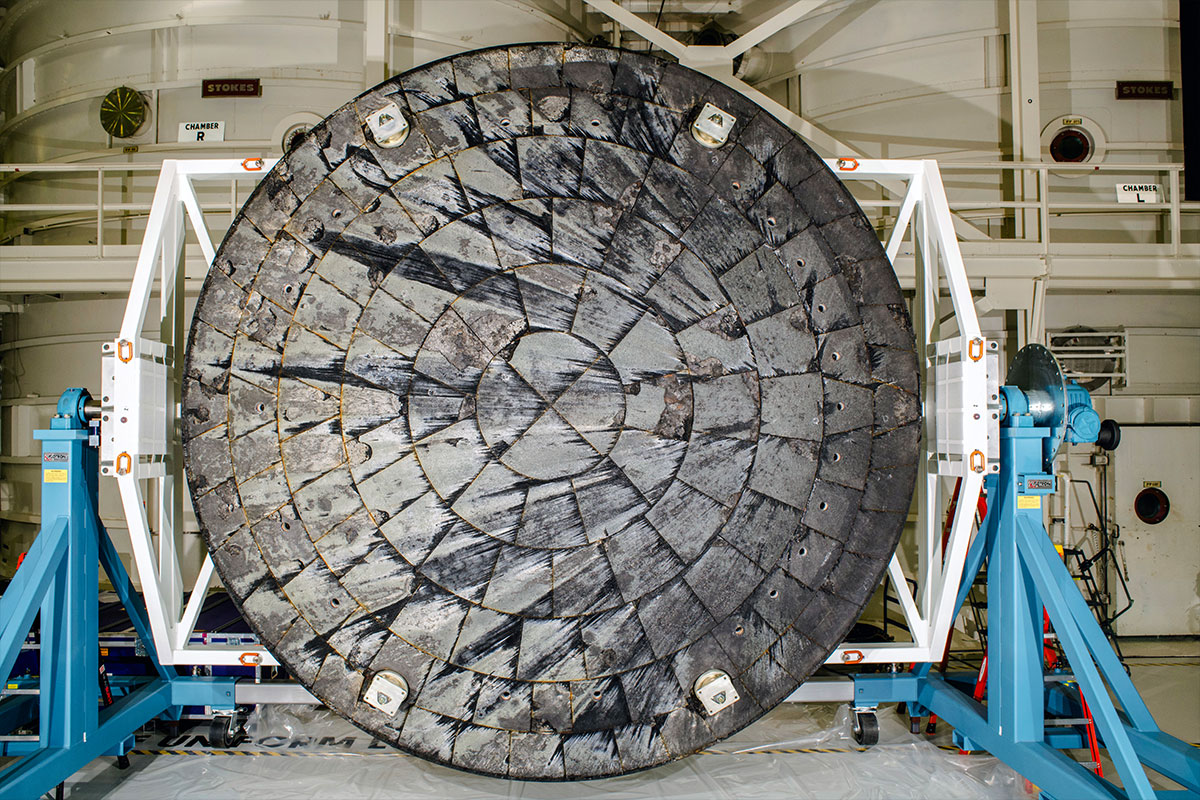
This photo shows the charred heat shield of the Orion capsule after NASA's uncrewed Artemis 1 mission.

Ahead of the mission’s launch, several experts warned that flying the same design, albeit with an adjusted trajectory to minimize the amount of heat build-up, could put the crew of the Artemis 2 mission in danger. (The Artemis 2 heat shield was installed on the Orion capsule even before NASA launched Artemis 1.)

However, early impressions suggest the heat shield appears to have done a tremendous job in keeping the four astronauts safe this month. In other words, NASA’s plans to adjust the reentry path may have paid off, which bodes well for future Artemis missions, including Artemis 4, the first planned mission to the lunar surface, tentatively scheduled for 2028.

According to NASA, “the crew and spacecraft were safeguarded by Orion’s thermal protection system as they traveled nearly 35 times the speed of sound during reentry.”

“Initial inspections of the system found it performed as expected, with no unusual conditions identified,” the agency noted. “Diver imagery of the spacecraft’s heat shield initially taken after splashdown and further inspections on the recovery ship found the char loss behavior observed on Artemis I was significantly reduced, both in terms of quantity and size.”

Even reflective tape, designed to control vehicle temperatures in space, survived reentry in “numerous locations,” NASA noted.

The entire crew module will be returned to NASA’s Kennedy Space Center before the end of the month for “additional examination of the heat shield.” It will then be taken to the Marshall Space Flight Center for further testing, including “sample extraction and internal x-ray scans.”

Beyond the heat shield, NASA also noted that it would be carefully examining the capsule’s space toilet — which turned out to be a major pain point throughout the astronauts’ ten-day adventure around the Moon after frozen urine clogged up the commode’s vent lines.

“Teams will work to identify root cause and initiate corrective action for Artemis 3,” NASA vowed.

More on the heat shield: Space Scientists Wince as Astronauts’ Lives Depend on Artemis 2’s Controversial Heat Shield During Plunge Back to Earth