



惯性聚合 高效追踪和阅读你感兴趣的博客、新闻、科技资讯
阅读原文 在惯性聚合中打开

推荐订阅源

Google DeepMind News
freeCodeCamp Programming Tutorials: Python, JavaScript, Git & More
酷 壳 – CoolShell
酷 壳 – CoolShell
WordPress大学
WordPress大学
小众软件
小众软件
博客园 - 司徒正美
OSCHINA 社区最新新闻
OSCHINA 社区最新新闻
Jina AI
Jina AI
Hugging Face - Blog
Hugging Face - Blog
博客园 - Franky
奇客Solidot–传递最新科技情报
奇客Solidot–传递最新科技情报
量子位
钛媒体:引领未来商业与生活新知
钛媒体:引领未来商业与生活新知
雷峰网
雷峰网
云风的 BLOG
云风的 BLOG
M
MIT News - Artificial intelligence
F
Fortinet All Blogs
T
Tailwind CSS Blog
Martin Fowler
Martin Fowler
I
InfoQ
The GitHub Blog
The GitHub Blog
有赞技术团队
有赞技术团队
The Cloudflare Blog
罗磊的独立博客

Futurism

Earth May Have Had a Larger Cousin that the Sun Devoured Scientists Baffled by Bizarre "Anomaly" Deep Beneath the Surface of Mars NASA's Powerful New Space Telescope, Just Cleared for Launch, Was Developed by an Intelligence Agency to "Spy on America's Adversaries" Scientists Warn That New Satellites Could Cause Eye Damage for People on the Ground SpaceX Achieves Its First Moon Landing by Accidentally Crashing Into It at 5,400 Miles Per Hour, Causing Huge Explosion and 60-Foot Crater NASA Mars Rover Discovers Field of Mesmerizing Polygons Scientists Discover Massive Alien "Exosatellite" Astronomers Thrilled After Discovering Best Spot Yet to Look for Alien Life You'll Never Guess What Tasty Molecule Astronomers Just Detected In Space Astronomers Horrified by Enormous Mirror Satellite That Reflects Sunlight Back Down to Earth at Night Scientists Say They've Identified an Earth-Like Planet Right Next Door NASA Prepping to Launch Extremely Risky Rescue Mission NASA Has a Major Problem Threatening Its Entire Moon Plans NASA Rover Finds "Complex Organic Matter" on Mars Saturn's Icy Moon Is the Perfect Place to Settle, NASA Scientist Argues Scientists Building World's Most Powerful Radio Telescope Deep in the Nevada Desert NASA Loads Moon Rocket onto Giant Trump-Branded Train NASA’s Next Moon Mission Is a Rube Goldberg Machine of Corporate Failure Points Scientists Release Results After Scanning 3I/ATLAS for Alien Signals Catholic Church Boots Exorcist After He Said UFOs Are Demons NASA’s James Webb Discovers That 3I/ATLAS Let One Rip as It Passed Through Solar System Scientists Find Chunk of Lost Planet in Desert Paper Claims the “Asteroid” Japan’s Probe Is Approaching Is Actually a Derelict Spacecraft Scientists Say They’ve Cracked Mystery Behind a Dozen Strange Signals From Deep Space Scientists Say They’ve Found Fungi That Turn Dead Martian Soil Into Fertile Cropland The Blue Moon Is Fake. You Are Being Deceived Jeff Bezos’ Rocket Explodes Into Mushroom Cloud, Dealing Massive Blow to NASA’s Moon Plans NASA Releases Sweeping Plans for Moon Base SpaceX Announces Plans to Put Billionaire on First Rocket to Mars James Webb Spots Strange Structure at Core of Distant Galaxy
Scientists Say There’s Something Huge Buried Inside Our G...
Frank Landym · 2026-05-03 · via Futurism

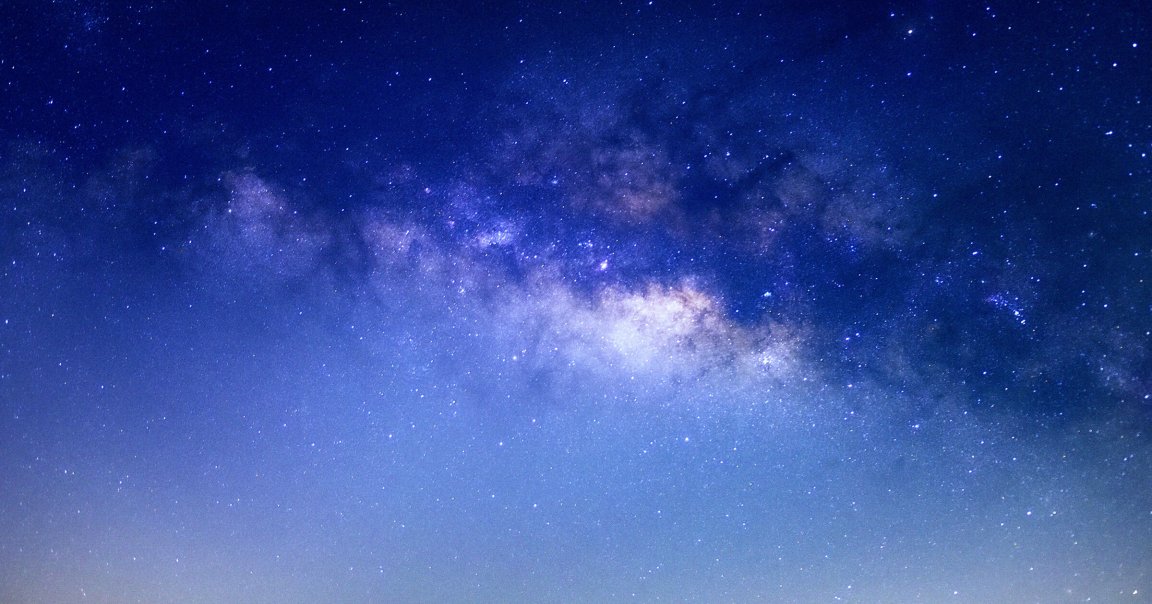
A clear night sky filled with numerous stars and a visible section of the Milky Way galaxy, showing a dense cluster of stars and cosmic dust with a gradient from deep blue at the top to a lighter blue near the horizon.

Getty / Futurism

Sign up to see the future, today

Can’t-miss innovations from the bleeding edge of science and tech

An ancient galaxy appears to be buried inside the Milky Way, new research suggests. 

That’s right: a galaxy inside a galaxy. The lost realm, which the astronomers have dubbed “Loki” after the Norse trickster god, was consumed by our galaxy billions of years ago as it was growing in size, they report in a new study published in the journal the Monthly Notices of the Royal Astronomical Society

Loki, if its existence is borne out, would have been a dwarf galaxy. These contain no more than a few billion stars — which is peanuts compared to the hundreds of billions that fully-fledged galaxies like our own contain — and often orbit a larger galaxy. Astronomers are interesting in the formation of dwarf galaxies, which tend to have irregular shapes. Are they smashed together during the gravitational interactions that form a larger one, or brought together by the intervention of invisible dark matter?

Moreover, dwarf galaxies tend to be made of stars that are “metal-poor,” similar to the first stars that first formed in the universe, before later generations fused heavier elements. It was this facet that the astronomers used to divine the presence of the hidden relic.

In the study, they analyzed a group of 20 metal-poor stars in the Milky Way’s galactic plane, the flat disc-shaped region along which most of its stars reside. When they compared their chemical composition to objects in the galaxy’s outskirts, including stars and other dwarf galaxies, they found the chemical traces of numerous cosmic explosions that let off heavy elements, including supernovas and neutron star mergers.

But crucially, they found no traces of a white dwarf explosion. White dwarfs are the dense exposed cores of a medium-mass star like our Sun that shed off all its outer layers. Because it takes billions of years before a white dwarf forms, that suggests that the 20 stars came from an extreme dwarf galaxy that was too short-lived to birth white dwarfs.

Another curious aspect of the suspected dwarf galaxy is that the stars don’t all orbit in the same direction. Eleven are on a prograde orbit, meaning they orbit in the same direction our galaxy rotates, and nine are on a retrograde orbit, which is in the opposite direction. The astronomers’ explanation is an “early accretion”; Loki was merged with the Milky Way when it was still very young and when its own orbits were chaotic, jumbling the stars the dwarf galaxy contained.

More on space: Scientists Scan Gigantic Structure Hiding Behind Our Galaxy