
惯性聚合 高效追踪和阅读你感兴趣的博客、新闻、科技资讯
阅读原文 在惯性聚合中打开

推荐订阅源

W
WeLiveSecurity
博客园 - 【当耐特】
Microsoft Azure Blog
WordPress大学
WordPress大学
Stack Overflow Blog
Stack Overflow Blog
cs.AI updates on arXiv.org
IT之家
IT之家
Cloudbric
Cloudbric
The Register - Security
小众软件
小众软件
PCI Perspectives
PCI Perspectives
G
Google Developers Blog
AI
AI
OSCHINA 社区最新新闻
OSCHINA 社区最新新闻
Google DeepMind News
宝玉的分享
宝玉的分享
Recent Commits to openclaw:main
量子位
TaoSecurity Blog
TaoSecurity Blog
cs.CV updates on arXiv.org
F
Full Disclosure
N
Netflix TechBlog - Medium
博客园_首页
Last Week in AI
Last Week in AI
A
Arctic Wolf
B
Blog RSS Feed
J
Java Code Geeks
C
Cybersecurity and Infrastructure Security Agency CISA
I
InfoQ
aimingoo的专栏
aimingoo的专栏
云风的 BLOG
云风的 BLOG
NISL@THU
NISL@THU
MyScale Blog
MyScale Blog
H
Hackread – Cybersecurity News, Data Breaches, AI and More
Jina AI
Jina AI
有赞技术团队
有赞技术团队
S
Schneier on Security
L
Lohrmann on Cybersecurity
P
Privacy & Cybersecurity Law Blog
T
Threat Research - Cisco Blogs
P
Palo Alto Networks Blog
S
Security @ Cisco Blogs
Security Archives - TechRepublic
Security Latest
Security Latest
Vercel News
Vercel News
博客园 - 司徒正美
Webroot Blog
Webroot Blog
Hacker News: Ask HN
Hacker News: Ask HN
A
About on SuperTechFans

JPost.com - Archaeology Around the World

Second century CE Roman military fort found north of Hadrian's Wall in Scotland | The Jerusalem Post Ancient mosaic with Greek inscription discovered in Turkey | The Jerusalem Post Collection of pre-revolution coins found under house in Russia | The Jerusalem Post Handgun fragments found in Germany may be oldest in Europe | The Jerusalem Post Archaeologists find evidence to legendary African king in Sudan | The Jerusalem Post Archaeologists find gold, ceramic in pre-Hispanic tomb in Panama | The Jerusalem Post Ancient Egyptians used 'Wite-Out' to fix mistakes in sacred texts | The Jerusalem Post Cambridge students find 9th century burial pit on dig | The Jerusalem Post Mexico discovers Zapotec tomb from 600 CE | The Jerusalem Post Roman carriage ornament found in Essex deemed 'Treasure' | The Jerusalem Post Humans, not glaciers, brought stones to Stonehenge | The Jerusalem Post Indonesia human hand outline may be world's oldest rock art | The Jerusalem Post New human species found, challenges story of 'Lucy' fossil | The Jerusalem Post Ancient Scottish burial site reveals Bronze Age devastation | The Jerusalem Post Louvre shuts fragile wing with Greek masterpieces | The Jerusalem Post Israeli team finds 12,000-year myths in clay figurine | The Jerusalem Post 800-year-old gilded Christ found near lost church | The Jerusalem Post Archaeologists uncover long-lost Temple of Zeus at Limyra | The Jerusalem Post Study shows dogs diversified before modern breeding | The Jerusalem Post Medieval Muslim sunken city discovered in Kyrgyzstan | The Jerusalem Post Archaeologists uncover finds at birthplace of Menander | The Jerusalem Post Ancient tools uncovered in China shed new light on early human diet | The Jerusalem Post ‘This is from Moses’: Newly imaged Sinai inscriptions revive Exodus-era | The Jerusalem Post Ancient inscriptions reveal identity of Great Pyramid builders | The Jerusalem Post Atlantis ruins near Cadiz found, archaeologist blames giant tsunami | The Jerusalem Post 5,000-year-old manuscript with eerie message found in Saqqara tomb | The Jerusalem Post Study: Leprosy existed in the Americas long before Europeans arrived | The Jerusalem Post Original architecture of ancient Roman fountain revealed in Perre Ancien | The Jerusalem Post Museum: Artifact shows playful, serious sides of 19th-century sexuality | The Jerusalem Post
Medieval tunnel system discovered in Germany | The Jerusalem Post
MIRIAM SELA-EITAM · 2026-02-15 · via JPost.com - Archaeology Around the World

Thousands of similar tunnel systems have been discovered across Europe and despite this, their purpose has been subject to decades of theory and debate. 
Follow us on Google
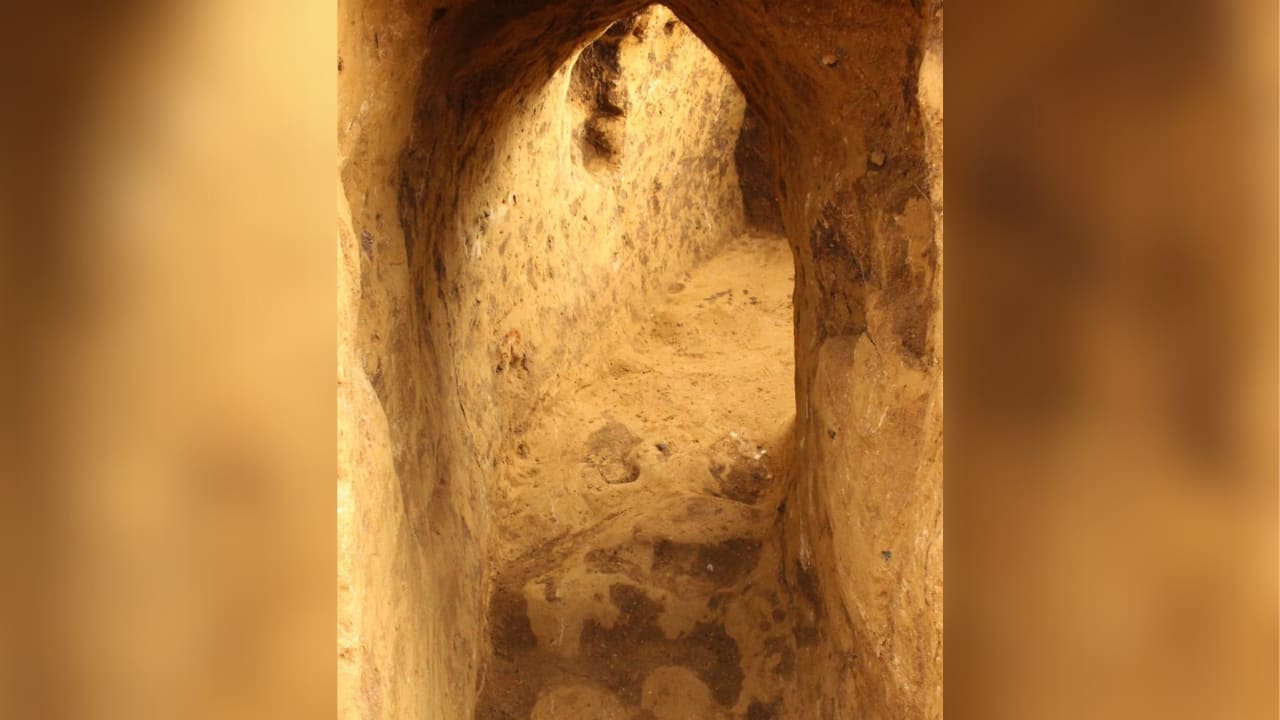
Erdstall discovered in late 2025 by the Saxony-Anhalt State Office for Heritage Management and Archaeology (LDA) during excavations near Reinstedt in Saxony-Anhalt, Germany, February 14, 2026.
(photo credit: Screenshot/Instagram/@lda_sachsenanhalt)
ByMIRIAM SELA-EITAM

A medieval tunnel system, formally known as an “erdstall,” was discovered by the Saxony-Anhalt State Office for Heritage Management and Archaeology (LDA) during excavations near Reinstedt in Saxony-Anhalt, Germany.

The discovery was announced in a January social media post saying that “a very special discovery was documented at the end of 2025 in the area of a Middle Neolithic burial site.”

Erdstalls, a combination of Middle High German’s erde (“earth”) and stelle (“place”), are tunnel systems believed by researchers to have been constructed in the Middle Ages, though their precise dating is a challenge, as they are commonly found empty. 

Even so, a horseshoe, a fox skeleton, and the bones of several other small mammals were unearthed in Reinstedt, according to the LDA.

The Spanish-language publication La Brújula Verde (LBV) added that archaeologists had also discovered a layer of charcoal in the erdstall’s lower levels, believing that the fire was “short-lived, perhaps merely a source of light.”

A pile of large stones found by archaeologists near one of the tunnel’s entrances may have been stacked there as a way to seal off the entrance, LBV said.

LBV further noted that the Reinstedt erdstall’s height ranged between “one and 1.25 meters, with a width of between 50 and 70 centimeters, and in some stretches, it featured a gabled, vaulted ceiling.”

According to the LBV, archaeologists also discovered the remains of a possible Bronze Age burial mound near the erdstall and Neolithic tomb.

What were erdstalls used for?

Thousands of similar tunnel systems have been discovered across Europe. Nevertheless, their purpose has been subject to decades of theory and debate.

Some researchers believed that these tunnels were used as temporary hideouts or escape routes, like those used by Jewish rebels during the Bar Kochba revolt.

LBV, however, explained that the late archaeologist Lambert Karner disregarded this theory in his 1903 book “Künstliche Höhlen aus alter Zeit,” claiming that, based on the tunnels’ design, such a use was impractical.

According to LBV, Historian Anton Haschner proposed that the tunnels may have been “empty symbolic tombs, erected by medieval settlers in their new settlements as dwellings for the souls of their ancestors, awaiting the Final Judgment.”

“Other interpretations insist on their possible use for initiation rituals, as places of spiritual retreat, or simply as temporary hideouts for people and valuable goods during periods of instability, although the absence of a second exit complicates this last explanation,” LBV went on.

“Their location, often in the basements of old farmhouses, near churches, cemeteries, or in remote forests, adds further layers of mystery to their original purpose.”

Follow us on Google

