



惯性聚合 高效追踪和阅读你感兴趣的博客、新闻、科技资讯
阅读原文 在惯性聚合中打开

推荐订阅源

Microsoft Azure Blog
Google Online Security Blog
D
Darknet – Hacking Tools, Hacker News & Cyber Security
Threat Intelligence Blog | Flashpoint
Simon Willison's Weblog
T
Threat Research - Cisco Blogs
C
CXSECURITY Database RSS Feed - CXSecurity.com
L
Lohrmann on Cybersecurity
www.infosecurity-magazine.com
Forbes - Security
Forbes - Security
P
Palo Alto Networks Blog
Schneier on Security
S
Schneier on Security
T
Tor Project blog
cs.CL updates on arXiv.org
WordPress大学
WordPress大学
The Hacker News
The Hacker News
Hacker News - Newest:
Hacker News - Newest: "LLM"
罗磊的独立博客
Application and Cybersecurity Blog
F
Fortinet All Blogs
博客园 - 三生石上(FineUI控件)
小众软件
小众软件
C
Check Point Blog
Stack Overflow Blog
Stack Overflow Blog
Blog — PlanetScale
Blog — PlanetScale
雷峰网
雷峰网
S
Security @ Cisco Blogs
PCI Perspectives
PCI Perspectives
Spread Privacy
Spread Privacy
W
WeLiveSecurity
SecWiki News
SecWiki News
A
About on SuperTechFans
H
Help Net Security
博客园 - 司徒正美
Recent Commits to openclaw:main
爱范儿
爱范儿
S
Securelist
M
MIT News - Artificial intelligence
云风的 BLOG
云风的 BLOG
月光博客
月光博客
Jina AI
Jina AI
博客园 - 叶小钗
Vercel News
Vercel News
阮一峰的网络日志
阮一峰的网络日志
Recent Announcements
S
Secure Thoughts
The Cloudflare Blog
美团技术团队
freeCodeCamp Programming Tutorials: Python, JavaScript, Git & More

Analytics Vidhya

Handling Imbalanced Classification: What Works Better Than SMOTE GPT-5.6 Is Here: Sol, Terra, and Luna Loop Engineering for AI Agents: How /loop is Changing AI Workflows DeepSeek DSpark: The Speculative Decoding Trick Behind 400% Faster LLM OKF: Redefining Knowledge Bases for AI Agents Modern VLMs Explained: How GPT-4o, Gemini, Claude Vision, and Qwen-VL Work YOLO26 Tutorial: Object Detection, Pose Estimation & More Large Action Models (LAMs) vs Agentic LLMs: What's the Real Difference? Claude Sonnet 5: The Fable 5 at Home The Best $20 AI Plan: ChatGPT Plus vs Claude Pro vs Gemini Pro GraphRAG vs Vector RAG: Which Retrieval Method is Best? Using AI When You Don’t Trust AI The Self-Improving Loop in AI Agents: Architecture, Benefits, and How it Outperforms Traditional Agent Workflows Harness-1: The 20B Retrieval Subagent That Beats GPT-5.4 at Search Sakana Fugu: Multi-Agent System as a Model Claude's Hidden Art Skill: Making Illustrations With Code System Design for ML Interviews: 10 Real Problems Walked Through Most People Use ChatGPT Wrong: 10 Features and Tips That Changed How I Work OpenAI Just Launched 3 Free AI Courses with Certificates Autoregressive Models: Predicting the Future Using the Past Gemini Omni: AI Video Generation Inside Gemini DiffusionGemma: Google’s Diffusion-Based Open Model for Faster Text Generation Top 10 AI Engineering Tools Everyone is Using in 2026 I Tested Claude Fable 5: Can Anthropic’s Newest AI Deliver on the Hype? Prophet vs NeuralProphet vs TimeGPT vs Chronos: A Practical Comparison Build an Emergency Helpline Voice Agent with LangChain Choosing the Right Vector Database for RAG and AI Applications Google Gemma 4 12B: Architecture, Benchmarks, Access, and Hands-on Guide for Developers How to Choose the Right AI Model for Your Needs Agent Observability with LangSmith, Langfuse, and Arize: A Hands-On Comparison How to Use Claude Managed Agents? Google AI Studio vs Gemini App: What’s the Difference? AI Workflows for Sales Teams: Prospect Research, Lead Qualification, and CRM Updates on Autopilot Using LangGraph 25 Most Influential AI Pioneers to Meet at DataHack Summit 2026 Claude Opus 4.8: A Smarter Model in the Right Direction PySpark Optimization: 12 Proven Techniques to Speed Up Your Spark Jobs 10 Everyday Tasks You Can Automate with AI Today (With n8n Templates) Google Antigravity 2.0: The Full Developer Guide (I/O 2026) Build a Claude Cowork-Like Browser Agent Using Playwright MCP and Claude Desktop Pandas vs Polars vs DuckDB: Which Library Should You Choose? Qwen3.7-Max: Alibaba’s New Agent-First LLM for Coding, Reasoning, and Long-Horizon AI Workflows The Biggest Announcements from Google I/O 2026 Top 9 AI Events and Conferences in 2026 that you Must Attend Gemini 3.5 Flash: Frontier Intelligence with Speed Kimi WebBridge: Hands-on Guide to Kimi’s Browser Extension for AI Agents 40 Advanced SQL Window Functions Every Data Scientist Must Know(with examples) Top 10 AI Research Papers of 2025 6 Steps to Crack GenAI Case Study Interviews (With Real Examples) OpenAI Omni Moderation: How to Filter Text & Images for Free DataHack Summit 2026: You Just Cannot Skip This AI Event of the Year OpenAI’s New API Voice Models Will Change the Way You Use AI Hermes Agent Guide: What is it and How to Use it? Top 10 LLM Research Papers of 2026 Agent Memory Patterns in Cognitive Science and AI Systems 10 AI Agents Every AI Engineer Must Build (with GitHub Samples) 23 Tips for Smart Claude Code Token Saving and Workflow Optimization Feature Engineering with LLMs: Techniques & Python Examples ChatGPT is Now Inside Excel and Google Sheets: Here is How to Use it Gemini API File Search: The Easy Way to Build RAG Top 10 Open-Source Libraries to Fine-Tune LLMs Locally ML Intern in Practice: From Prompt to a Shipped Hugging Face Model 15+ Solved Agentic AI Projects with Github Links How People are Figuring Out Life With Claude MemPalace Explained: Building Long-Term Memory for AI Agents Beyond RAG Grok Voice Think Fast 1.0: Build Voice AI Agents That Actually Think Compressing LSTM Models for Retail Edge Deployment: A Practical Comparison MCP vs Agent Skills: Different Altogether GPT 5.5 vs Opus 4.7: Which is the Best AI Model Today? What is Agentic AI? Claude Code vs Codex: A Detailed Terminal Agent Comparison Google Deep Research Max: Build Autonomous AI Research Agents in Minutes Meta Muse Spark Review: Is It Worth the Hype? ChatGPT Images 2.0 vs Nano Banana 2: Which is Better? Cursor V3 Explained: The AI Coding Agent That’s Replacing Traditional IDEs in 2026 DeepSeek-V4: The Most Powerful Open-Source Model Ever Is GPT Image 2 the Best Image Generation Model? From Idea to Output: Claude Does the Design Work Opus 4.7 vs Opus 4.6: Should You Switch? Build Human-Like AI Voice App with Gemini 3.1 Flash TTS How to Structure a Claude Code Project that Thinks Like an Engineer Gemma 4 Tool Calling Explained: Build AI Agents with Function Calling (Step-by-Step Guide) Anthropic Launches Claude Opus 4.7 For “Most Difficult Tasks” Top 28 Claude Shortcuts that will 10X your Speed GPT-5.4-Cyber: Why OpenAI is Keeping its Most Powerful Model Under Lock and Key Google AI Studio Guide: Every Feature Explained Mastering Deep Agents: Context Engineering that Actually Works 21 Computer Vision Projects from Beginner to Advanced (2026 Guide) Excel 101: Excel Agent Mode Explained MiniMax M2.7 Goes Open-Weight to Let You Run Agents Locally Top 10 Gemma 4 Projects That Will Blow Your Mind GLM-5.1: Architecture, Benchmarks, Capabilities & How to Use It Understanding BERTopic: From Raw Text to Interpretable Topics From Karpathy’s LLM Wiki to Graphify: AI Memory Layers are Here 10 Most Important AI Concepts Explained Simply Project Glasswing is World’s Most Powerful AI in Action How to Run Gemma 4 on Your Phone Without Internet: A Hands-On Guide Running Claude Code for Free with Gemma 4 and Ollama LLM Wiki Revolution: How Andrej Karpathy’s Idea is Changing AI Rethinking Enterprise Search: How Cortex Search Turns Data into Business Impact Google’s Gemma 4: Is it the Best Open-Source Model of 2026?
Token Economics: Why AI is Getting “Cheaper”
Vasu Deo San · 2026-04-22 · via Analytics Vidhya

A year or two ago, using advanced AI models felt expensive enough that you had to think twice before asking anything. Today, using those same models feels cheap enough that you don’t even notice the cost.

This isn’t just because “technology improved” in a vague sense. There are specific reasons behind it, and it comes down to how AI systems spend computation. That’s what people mean when they talk about token economics.

Tokens: The Fundamental Unit

AI doesn’t read words the way we do. It chops text into smaller building blocks called tokens.

A token isn’t always a full word. It can be a whole word (like apple), part of a word (like un and believable), or even just a comma.
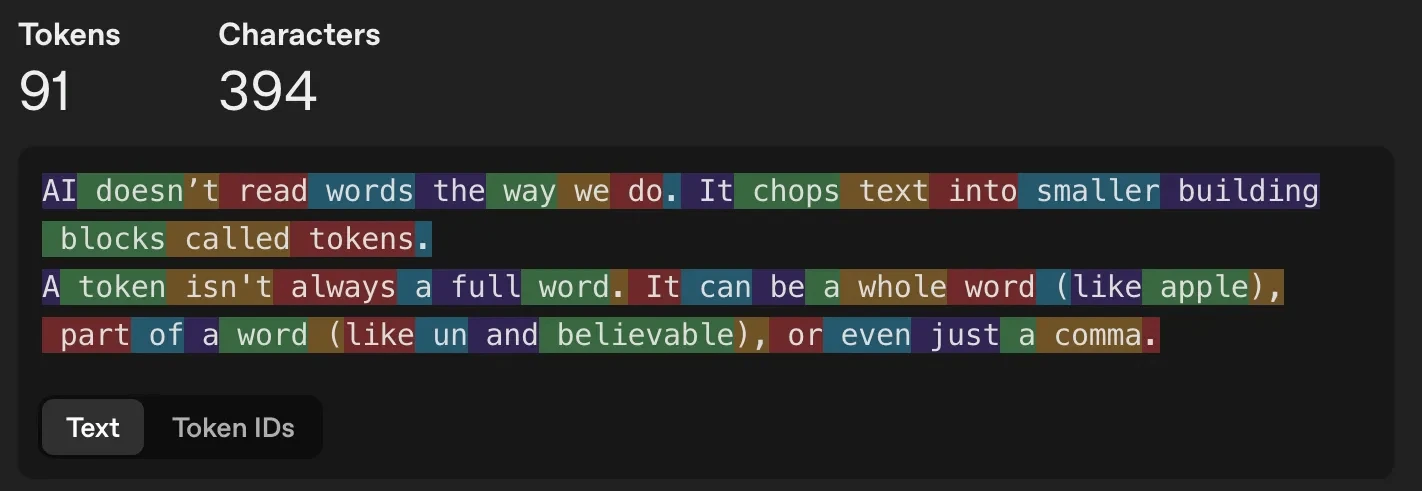
What are Tokens in LLM
GPT 5.2 token count for this section of the article

Each token generated requires a certain amount of computation. So if you zoom out, the cost of using AI comes down to a simple relationship:

AI token cost

Since AI token costs are per million tokens, the equation evaluates to:

Cost of LLM tokens
Click here to see how the cost is calculated for a model

We’d be doing the math on Gemini 3.1 Pro Preview.
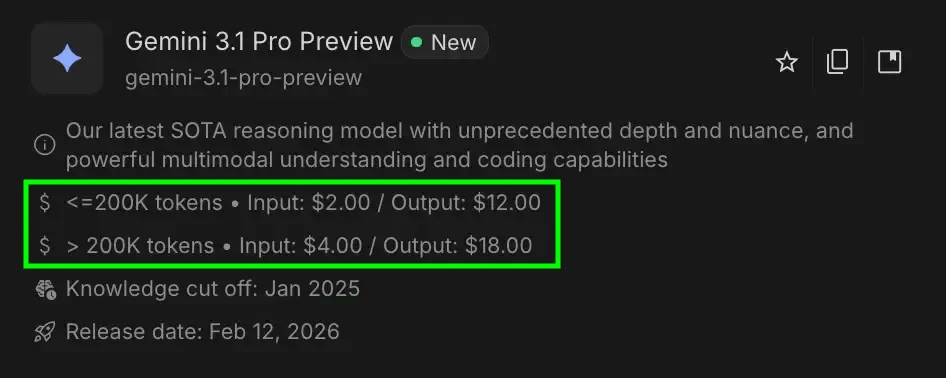
This cost is calculated per million tokens

Let’s say you send a prompt that is 50,000 tokens (Input Tokens) and the AI writes back 2,000 tokens (Output Tokens).


Cost of LLM tokens
Calculating the Cost of LLM tokens

Since tokens are the currency of AI. If you control tokens, you control costs. 

If AI is getting cheaper, it means we’re doing one of two things:

  1. Reducing how much compute each token needs (Input/Output tokens)
  2. Making that compute cheaper (Token price)

In reality, we did both!

Using less compute per token

The first wave of improvements came from a simple realization:

We were using more computation than necessary.

Early models treated every request the same way. Small or large query, text or image inputs, run the full model at full precision every time. That works, but it’s wasteful.

So the question became: where can we cut compute without hurting output quality?

Quantization: Making each operation lighter

The most direct improvement came from quantization. Models originally used high-precision numbers for calculations. But it turns out you can reduce that precision significantly without degrading performance in most cases.
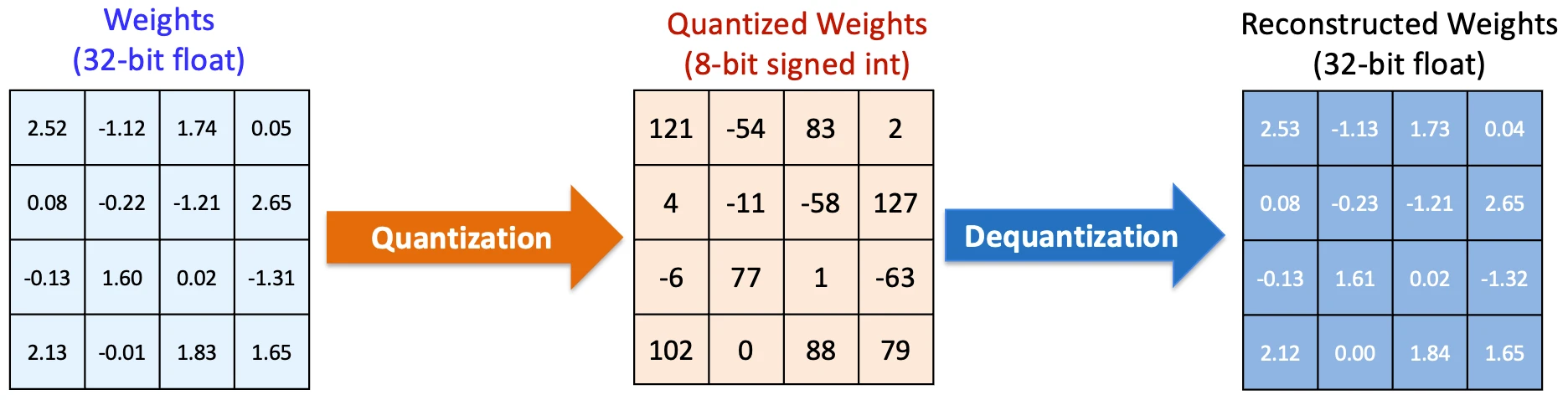
Token Quantization
Instead of 16-bit or 32-bit numbers, you use 8-bit (or even lower). The math stays the same in structure, but becomes cheaper to execute.

This effect compounds quickly. Every token passes through thousands of such operations, so even a small reduction per operation leads to a meaningful drop in cost per token.

Note: Full-precision quantization constants (a scale and a zero point) must be stored for every block. This storage is essential so the AI can later de-quantize the data.

MoE Architecture: Not using the whole model every time

The next realization was even more impactful:

Maybe we don’t need the entire model to work for every response.

This led to architectures like Mixture of Experts (MoE).

Instead of one large network handling everything, the model is split into smaller “experts,” and only a few of them are activated for a given input. A routing mechanism decides which ones matter.
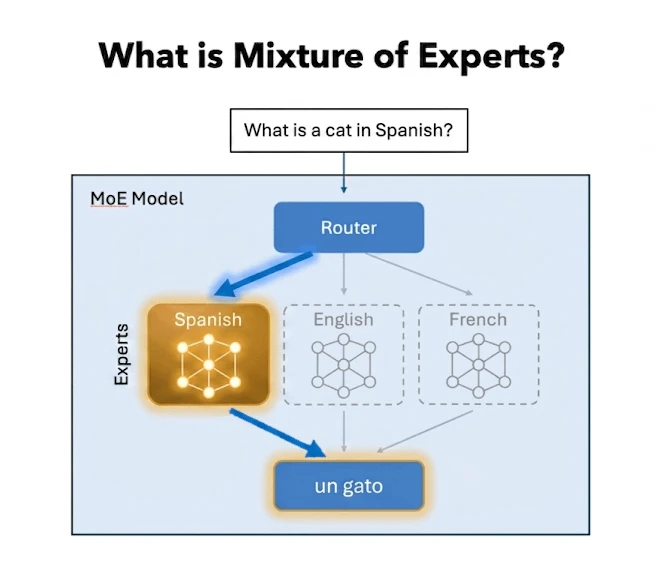
Mixture of Experts (MoE) Models
A MOE language model activating only its spanish nodes and not the whole model

So the model can still be large and capable overall, but for any query, only a fraction of it is actually doing work.

That directly reduces compute per token without shrinking the model’s overall intelligence.

SLM: Choosing the right model size

Then came a more practical observation.

Most real-world tasks aren’t that complex. A lot of what we ask AI to do is repetitive or straightforward: summarizing text, formatting output, answering simple questions.

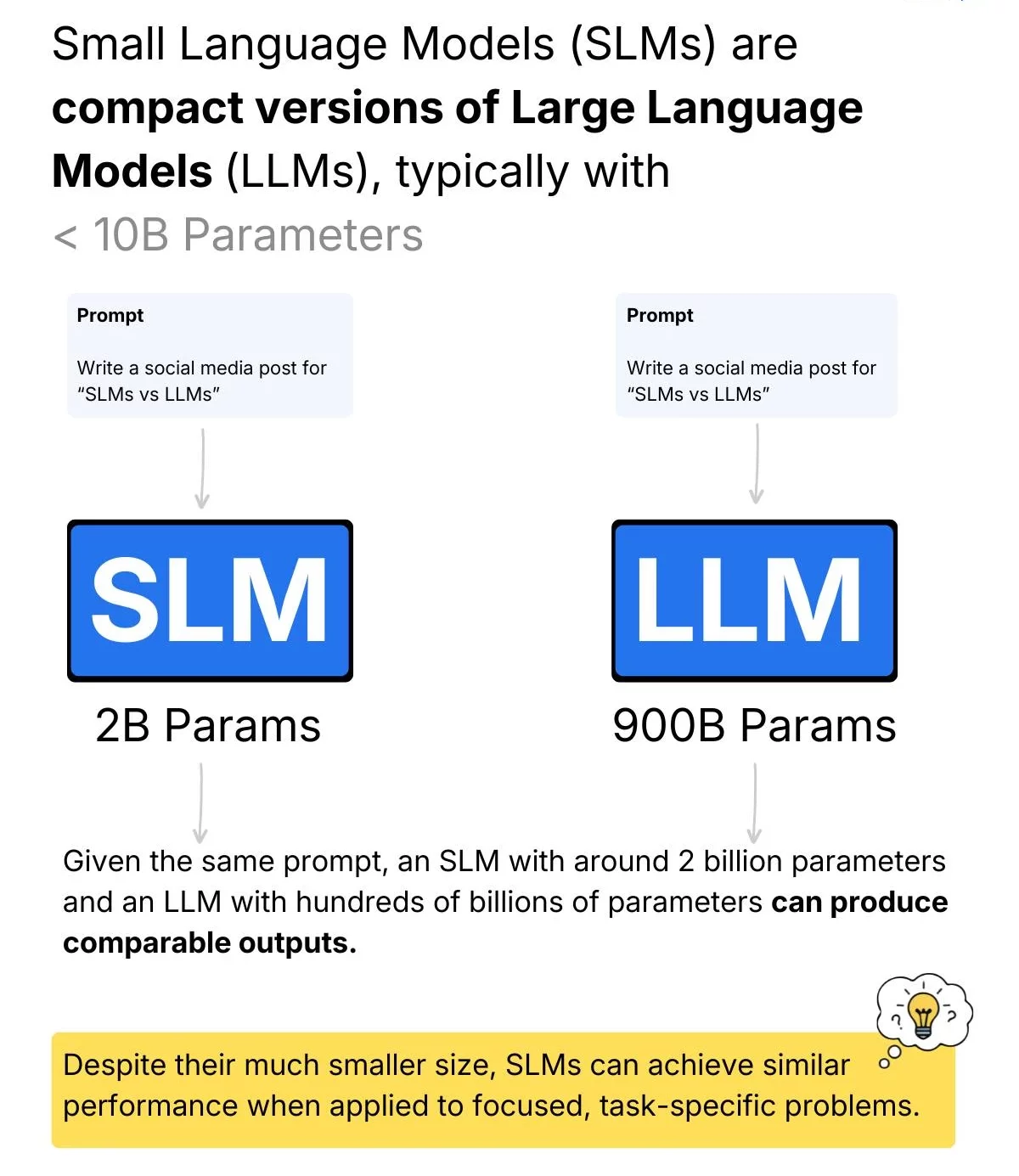
That’s where Small Language Models (SLMs) come in. These are lighter models designed to handle simpler tasks efficiently. In modern systems, they often handle the bulk of the workload, while larger models are reserved for harder problems.
Small Language Models

So instead of optimizing one model endlessly, use a much smaller model that fits your purpose. 

Distillation: Compressing large models into smaller ones

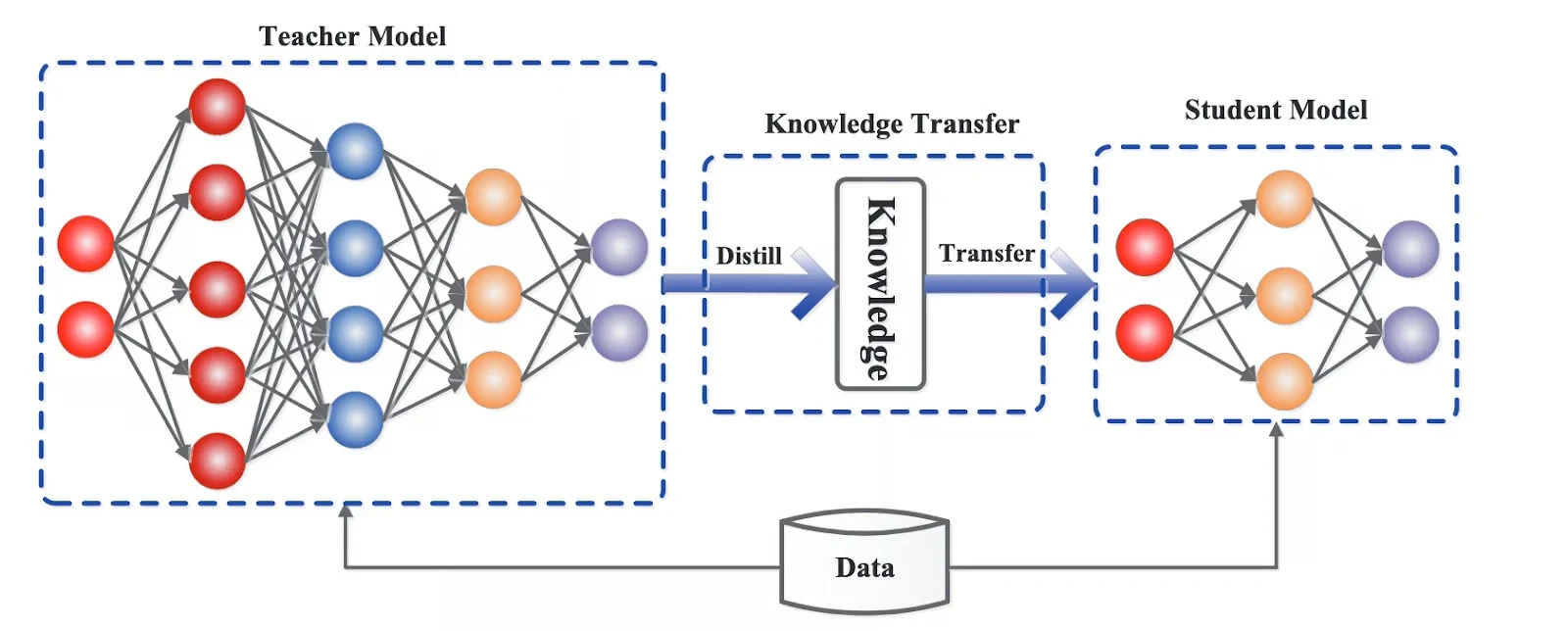
Distillation is when a large model is used to train a smaller one, transferring its behavior in a compressed form. The smaller model won’t match the original in every scenario, but for many tasks, it gets surprisingly close.
Distillation in LLMs
An Overview of How LLM Distillation Works

This means you can serve a much cheaper model while preserving most of the useful behavior.

Again, the theme is the same: reduce how much computation is needed per token.

KV Caching: Avoiding repeated work

Finally, there’s the realization that not every computation needs to be done from scratch.

In real systems, inputs overlap. Conversations repeat patterns. Prompts share structure.

Modern implementations take advantage of this through caching which is reusing intermediate states from previous computations. Instead of recalculating everything, the model picks up from where it left off.

This doesn’t change the model at all. It just removes redundant work.

Note: There are modern caching techniques like TurboQuant which offers extreme compression in KV caching technique. Leading to even higher savings.

Making compute itself cheaper

Once the amount of compute per token was reduced, the next step was obvious:

Make the remaining compute cheaper to run.

Executing the same model more efficiently

A lot of progress here comes from optimizing inference itself.
Even with the same model, how you execute it matters. Improvements in batching, memory access, and parallelization mean that the same computation can now be done faster and with fewer resources.

You can see this in practice with models like GPT-4 Turbo or Claude 4 Haiku. These are entirely new intelligence layers which are engineered to be faster and cheaper to run compared to earlier versions.

This is what often shows up as “optimized” or “turbo” variants. The intelligence hasn’t changed: the execution has simply become tighter and more efficient.

Hardware that amplifies all of this

All these improvements benefit from hardware that’s designed for this kind of workload.

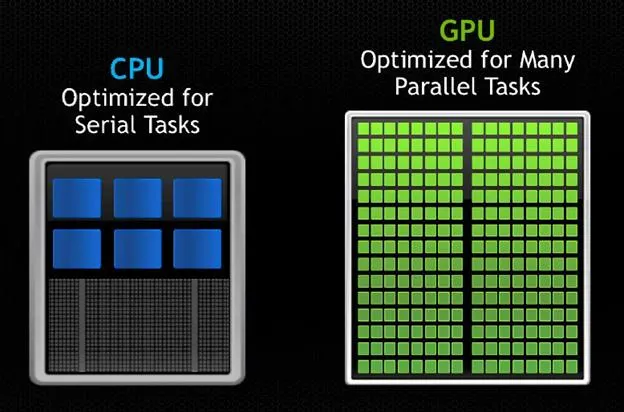
Companies like NVIDIA and Google have built chips specifically optimized for the kinds of operations AI models rely on, especially large-scale matrix multiplications.
Specialized Hardware

These chips are better at:

  • handling lower-precision computations (important for quantization)
  • moving data efficiently
  • processing many operations in parallel

Hardware doesn’t reduce costs on its own. But it makes every other optimization more effective.

Putting it all together

Early AI systems were wasteful. Every token used the full model, full precision, every time.

Then things shifted. We started cutting unnecessary work:

  • lighter operations
  • partial model usage
  • smaller models for simpler tasks
  • avoiding recomputation

Once the workload shrank, the next step was making it cheaper to run:

  • better execution
  • smarter batching
  • hardware built for these exact operations.

That’s why costs dropped faster than expected.

There isn’t just a single factor leading this change. Instead it is a steady shift toward using only the compute that’s actually needed.

Frequently Asked Questions

Q1. What are tokens in AI and why do they matter?

A. Tokens are chunks of text AI processes. More tokens mean more computation, directly impacting cost and performance.

Q2. Why is AI getting cheaper over time?

A. AI is cheaper because systems reduce compute per token and make computation more efficient through optimization techniques and better hardware.

Q3. How is AI cost calculated using tokens?

A. AI cost is based on input and output tokens, priced per million tokens, combining usage and per-token rates.

I specialize in reviewing and refining AI-driven research, technical documentation, and content related to emerging AI technologies. My experience spans AI model training, data analysis, and information retrieval, allowing me to craft content that is both technically accurate and accessible.