惯性聚合 高效追踪和阅读你感兴趣的博客、新闻、科技资讯
阅读原文 在惯性聚合中打开

推荐订阅源

S
Security @ Cisco Blogs
The Last Watchdog
The Last Watchdog
Application and Cybersecurity Blog
aimingoo的专栏
aimingoo的专栏
奇客Solidot–传递最新科技情报
奇客Solidot–传递最新科技情报
PCI Perspectives
PCI Perspectives
钛媒体:引领未来商业与生活新知
钛媒体:引领未来商业与生活新知
月光博客
月光博客
V
Visual Studio Blog
让小产品的独立变现更简单 - ezindie.com
T
Tailwind CSS Blog
H
Hackread – Cybersecurity News, Data Breaches, AI and More
L
LangChain Blog
B
Blog RSS Feed
小众软件
小众软件
N
News | PayPal Newsroom
Attack and Defense Labs
Microsoft Azure Blog
V
Vulnerabilities – Threatpost
The Hacker News
The Hacker News
T
Tor Project blog
A
Arctic Wolf
Jina AI
Jina AI
Hacker News: Ask HN
Hacker News: Ask HN
F
Fortinet All Blogs
Cloudbric
Cloudbric
S
Secure Thoughts
L
LINUX DO - 热门话题
博客园 - 司徒正美
Exploit-DB.com RSS Feed
S
Security Affairs
OSCHINA 社区最新新闻
OSCHINA 社区最新新闻
J
Java Code Geeks
P
Privacy International News Feed
AWS News Blog
AWS News Blog
S
Securelist
TaoSecurity Blog
TaoSecurity Blog
AI
AI
O
OpenAI News
C
Cyber Attacks, Cyber Crime and Cyber Security
K
Kaspersky official blog
T
The Blog of Author Tim Ferriss
大猫的无限游戏
大猫的无限游戏
Google DeepMind News
Know Your Adversary
Know Your Adversary
P
Palo Alto Networks Blog
T
Tenable Blog
Last Week in AI
Last Week in AI
WordPress大学
WordPress大学
S
SegmentFault 最新的问题

Analytics Vidhya

Handling Imbalanced Classification: What Works Better Than SMOTE GPT-5.6 Is Here: Sol, Terra, and Luna Loop Engineering for AI Agents: How /loop is Changing AI Workflows DeepSeek DSpark: The Speculative Decoding Trick Behind 400% Faster LLM OKF: Redefining Knowledge Bases for AI Agents Modern VLMs Explained: How GPT-4o, Gemini, Claude Vision, and Qwen-VL Work YOLO26 Tutorial: Object Detection, Pose Estimation & More Large Action Models (LAMs) vs Agentic LLMs: What's the Real Difference? Claude Sonnet 5: The Fable 5 at Home The Best $20 AI Plan: ChatGPT Plus vs Claude Pro vs Gemini Pro GraphRAG vs Vector RAG: Which Retrieval Method is Best? Using AI When You Don’t Trust AI The Self-Improving Loop in AI Agents: Architecture, Benefits, and How it Outperforms Traditional Agent Workflows Harness-1: The 20B Retrieval Subagent That Beats GPT-5.4 at Search Sakana Fugu: Multi-Agent System as a Model Claude's Hidden Art Skill: Making Illustrations With Code System Design for ML Interviews: 10 Real Problems Walked Through Most People Use ChatGPT Wrong: 10 Features and Tips That Changed How I Work OpenAI Just Launched 3 Free AI Courses with Certificates Autoregressive Models: Predicting the Future Using the Past Gemini Omni: AI Video Generation Inside Gemini DiffusionGemma: Google’s Diffusion-Based Open Model for Faster Text Generation Top 10 AI Engineering Tools Everyone is Using in 2026 I Tested Claude Fable 5: Can Anthropic’s Newest AI Deliver on the Hype? Prophet vs NeuralProphet vs TimeGPT vs Chronos: A Practical Comparison Build an Emergency Helpline Voice Agent with LangChain Choosing the Right Vector Database for RAG and AI Applications Google Gemma 4 12B: Architecture, Benchmarks, Access, and Hands-on Guide for Developers How to Choose the Right AI Model for Your Needs Agent Observability with LangSmith, Langfuse, and Arize: A Hands-On Comparison How to Use Claude Managed Agents? Google AI Studio vs Gemini App: What’s the Difference? AI Workflows for Sales Teams: Prospect Research, Lead Qualification, and CRM Updates on Autopilot Using LangGraph 25 Most Influential AI Pioneers to Meet at DataHack Summit 2026 Claude Opus 4.8: A Smarter Model in the Right Direction PySpark Optimization: 12 Proven Techniques to Speed Up Your Spark Jobs 10 Everyday Tasks You Can Automate with AI Today (With n8n Templates) Google Antigravity 2.0: The Full Developer Guide (I/O 2026) Build a Claude Cowork-Like Browser Agent Using Playwright MCP and Claude Desktop Pandas vs Polars vs DuckDB: Which Library Should You Choose? The Biggest Announcements from Google I/O 2026 Top 9 AI Events and Conferences in 2026 that you Must Attend Gemini 3.5 Flash: Frontier Intelligence with Speed Kimi WebBridge: Hands-on Guide to Kimi’s Browser Extension for AI Agents 40 Advanced SQL Window Functions Every Data Scientist Must Know(with examples) Top 10 AI Research Papers of 2025 6 Steps to Crack GenAI Case Study Interviews (With Real Examples) OpenAI Omni Moderation: How to Filter Text & Images for Free DataHack Summit 2026: You Just Cannot Skip This AI Event of the Year OpenAI’s New API Voice Models Will Change the Way You Use AI Hermes Agent Guide: What is it and How to Use it? Top 10 LLM Research Papers of 2026 Agent Memory Patterns in Cognitive Science and AI Systems 10 AI Agents Every AI Engineer Must Build (with GitHub Samples) 23 Tips for Smart Claude Code Token Saving and Workflow Optimization Feature Engineering with LLMs: Techniques & Python Examples ChatGPT is Now Inside Excel and Google Sheets: Here is How to Use it Gemini API File Search: The Easy Way to Build RAG Top 10 Open-Source Libraries to Fine-Tune LLMs Locally ML Intern in Practice: From Prompt to a Shipped Hugging Face Model 15+ Solved Agentic AI Projects with Github Links How People are Figuring Out Life With Claude MemPalace Explained: Building Long-Term Memory for AI Agents Beyond RAG Grok Voice Think Fast 1.0: Build Voice AI Agents That Actually Think Compressing LSTM Models for Retail Edge Deployment: A Practical Comparison MCP vs Agent Skills: Different Altogether GPT 5.5 vs Opus 4.7: Which is the Best AI Model Today? What is Agentic AI? Claude Code vs Codex: A Detailed Terminal Agent Comparison Google Deep Research Max: Build Autonomous AI Research Agents in Minutes Meta Muse Spark Review: Is It Worth the Hype? ChatGPT Images 2.0 vs Nano Banana 2: Which is Better? Cursor V3 Explained: The AI Coding Agent That’s Replacing Traditional IDEs in 2026 DeepSeek-V4: The Most Powerful Open-Source Model Ever Is GPT Image 2 the Best Image Generation Model? Token Economics: Why AI is Getting “Cheaper” From Idea to Output: Claude Does the Design Work Opus 4.7 vs Opus 4.6: Should You Switch? Build Human-Like AI Voice App with Gemini 3.1 Flash TTS How to Structure a Claude Code Project that Thinks Like an Engineer Gemma 4 Tool Calling Explained: Build AI Agents with Function Calling (Step-by-Step Guide) Anthropic Launches Claude Opus 4.7 For “Most Difficult Tasks” Top 28 Claude Shortcuts that will 10X your Speed GPT-5.4-Cyber: Why OpenAI is Keeping its Most Powerful Model Under Lock and Key Google AI Studio Guide: Every Feature Explained Mastering Deep Agents: Context Engineering that Actually Works 21 Computer Vision Projects from Beginner to Advanced (2026 Guide) Excel 101: Excel Agent Mode Explained MiniMax M2.7 Goes Open-Weight to Let You Run Agents Locally Top 10 Gemma 4 Projects That Will Blow Your Mind GLM-5.1: Architecture, Benchmarks, Capabilities & How to Use It Understanding BERTopic: From Raw Text to Interpretable Topics From Karpathy’s LLM Wiki to Graphify: AI Memory Layers are Here 10 Most Important AI Concepts Explained Simply Project Glasswing is World’s Most Powerful AI in Action How to Run Gemma 4 on Your Phone Without Internet: A Hands-On Guide Running Claude Code for Free with Gemma 4 and Ollama LLM Wiki Revolution: How Andrej Karpathy’s Idea is Changing AI Rethinking Enterprise Search: How Cortex Search Turns Data into Business Impact Google’s Gemma 4: Is it the Best Open-Source Model of 2026?
Qwen3.7-Max: Alibaba’s New Agent-First LLM for Coding, Reasoning, and Long-Horizon AI Workflows
Harsh Mishra · 2026-05-23 · via Analytics Vidhya

Alibaba’s Qwen team has unveiled Qwen3.7-Max, a flagship model built for the agent era. Unlike conventional chatbot-focused LLMs, it is designed as a foundation for autonomous AI agents that can code, debug, use tools, manage workflows, and execute long-running enterprise tasks.

Alibaba claims the model can operate autonomously for up to 35 hours without performance degradation while supporting over 1,000 consecutive tool calls. In this article, we explore Qwen3.7-Max’s architecture, benchmarks, APIs, agent workflows, and its place in the evolving LLM ecosystem.

Table of contents

  • What is Qwen3.7-Max? 
  • Why Qwen3.7-Max Matters for AI Agents 
  • Qwen3.7-Max Architecture 
  • How to Access Qwen3.7-Max 
  • Hands-on: Using Qwen3.7-Max 
  • Conclusion 

What is Qwen3.7-Max? 

Qwen3.7-Max is the newest member added to Alibaba’s Qwen line-up of proprietary models. It is meant for high-level agentic coding, intricate reasoning, tools usage, office workflow automation and long horizon task execution. Developers and enterprises around the world will be able to access Alibaba via Alibaba Cloud Model Studio, the company announced.  

The key takeaway is that as of now, Qwen3.7-Max is not an open weight model. Unlike many previous open-weight versions of Qwen, it is a hosted proprietary model. This does not imply that it’s meant to be compared to downloadable local models like GPT, Claude, Gemini or DeepSeek’s hosted flagship models.  

Key Capabilities of Qwen3.7-Max

  • Agentic coding: Supports frontend prototyping, code generation, debugging, multi-file development, terminal commands, test writing, and GitHub-style issue fixing.
  • Long-horizon task execution: Designed to handle extended agent workflows with many tool calls, making it useful for complex engineering tasks that require persistence.
  • Tool calling and MCP workflows: Performs well in tool-heavy environments where agents interact with file systems, browsers, databases, APIs, and enterprise apps.
  • Office workflow automation: Helps with document creation, spreadsheet analysis, reporting, planning, research synthesis, and business workflow automation.
  • Cowork productivity assistant: Works as more than a coding or Q&A tool by supporting multi-step operational tasks for business and productivity teams.

Why Qwen3.7-Max Matters for AI Agents 

Most LLM releases have been on a variety of fronts, such as improved chat, improved maths capabilities, improved coding capabilities, or lower inference costs. The message of Qwen3.7-Max is entirely different, its primary message is agent reliability.  

The AI agent isn’t just a question answerer. It must plan, invoke tools, read the results, recover from errors, patch code, view files, cross turns and, in a task that may involve hundreds of steps, do it all! According to Alibaba, the Qwen3.7-Max can handle long-chained autonomous tasks, such as a thousand or more actions long.   

This is the reason why agent products will fall apart for various reasons in production that chatbots won’t. An agent of this type can be effective with just one response. An agent should know all four variables of a loop: 

User goal → Plan → Tool call → Observation → Debugging → Retry → Validation → Final output 
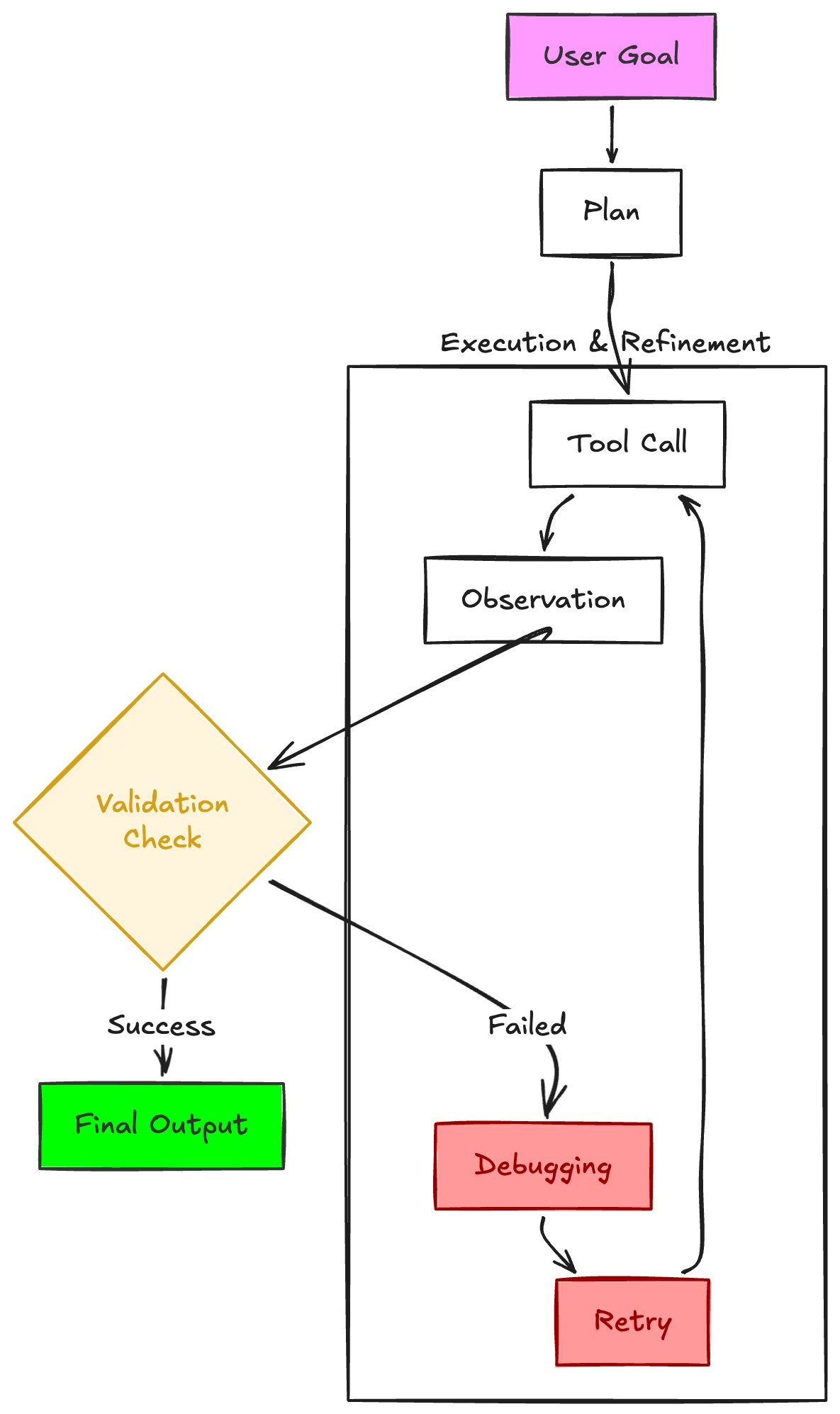
User Goal Flowchart

Qwen3.7-Max is built around this loop. 

Qwen3.7-Max Architecture 

Alibaba hasn’t revealed the complete details of the architecture of Qwen3.7-Max, including number of parameters, number of experts, activation size, attention design, or actual context window length. So it is best to describe its architecture in terms of its published agent-system design, training strategy, and runtime behaviour. 
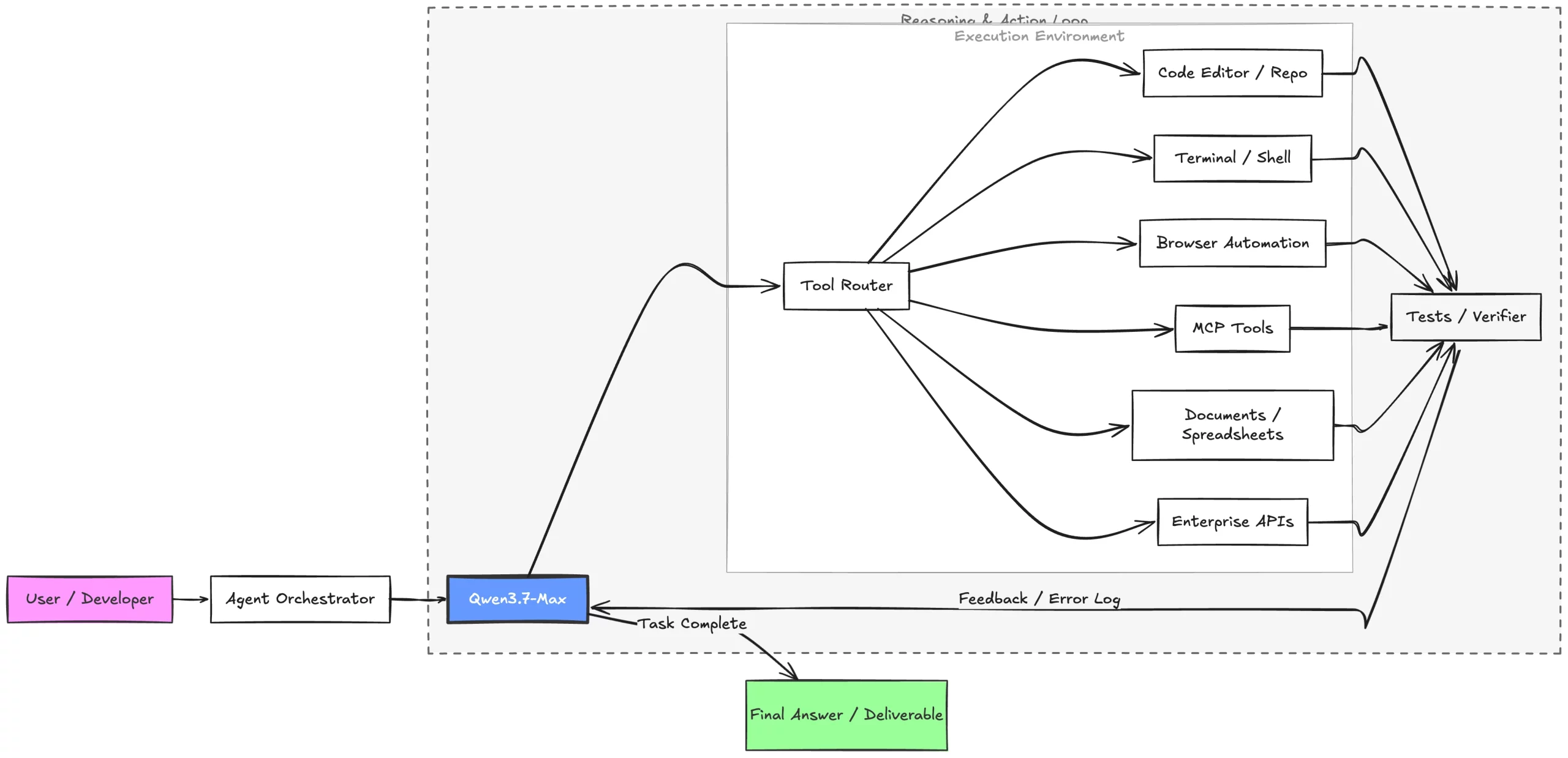
High-Level Agent Architecture 

High Level Architecture of Qwen 3.7 Max

Agent Training Architecture: Environment Scaling 

The point of architecture behind Qwen3.7-Max is environment scaling. In fact, according to Alibaba’s publish materials, the model has been educated over a variety of agent surroundings, and the duties, harnesses, and verifiers have been separated so it is able to learn general problem-solving approaches and not succumb to overfitting any benchmark or framework.   

This implies that the model is not taught to generate accurate text, but it should also be trained to generate adequate text. It is taught to function in evolving environments in which it has to decide what to do next.  

How to Access Qwen3.7-Max 

Option 1: Qwen Studio 

Qwen Studio is the easiest way to test Qwen models in a browser. Qwen describes Qwen Studio as a free AI assistant powered by the Qwen model series. 

Right now, Qwen Studio has support for Qwen3.7-Max Preview and Qwen3.7-Plus Preview
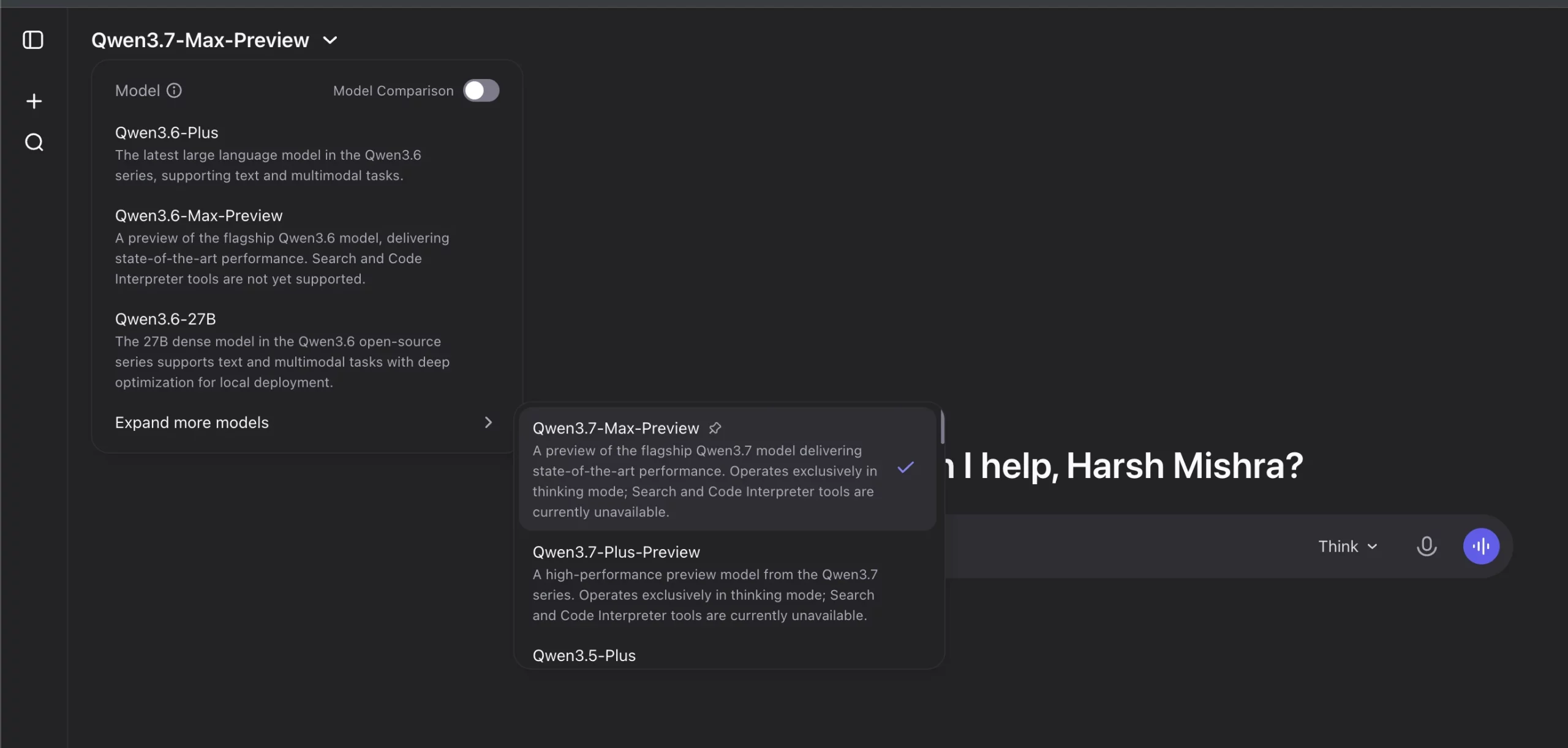
Qwen Studio

Option 2: Alibaba Cloud Model Studio API 

Alibaba says Qwen3.7-Max will be available through Alibaba Cloud Model Studio. Model Studio supports OpenAI-compatible API usage, and Alibaba’s documentation provides examples using the OpenAI Python SDK with the DashScope-compatible endpoint.  

Hands-on: Using Qwen3.7-Max 

I’d be using Qwen Studio for this part.

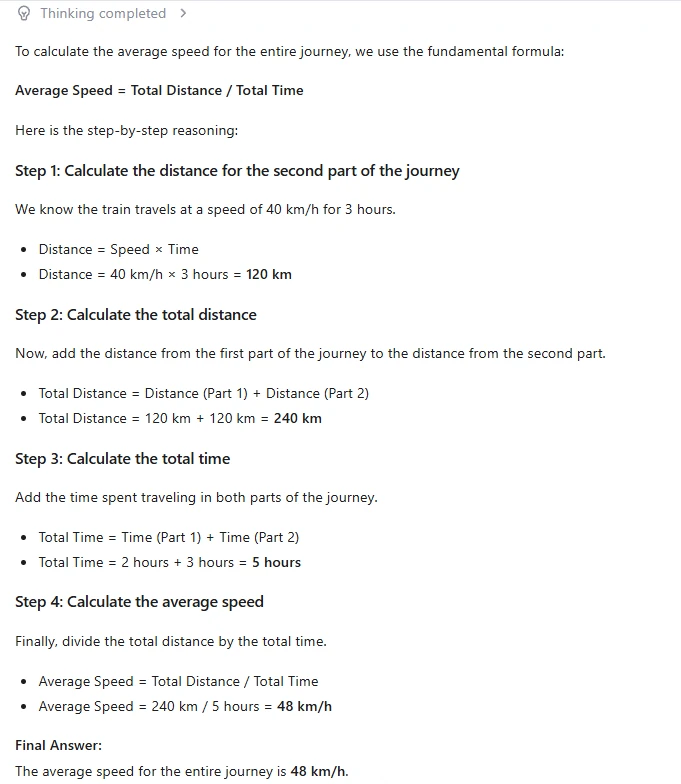
Task 1: Reasoning

Prompt: “A train travels 120 km in 2 hours and then slows down to 40 km/h for the next 3 hours. Calculate the average speed for the entire journey and explain the reasoning step-by-step.

Reasoning Qwen3.7 Max

Task 2: Image & VIdeo Generation

Prompt: “Generate a cinematic futuristic control room operated entirely by AI agents coordinating global business operations in real time. The scene should include holographic workflow maps, autonomous AI systems communicating with each other, dynamic dashboards, and a cyberpunk-inspired atmosphere with realistic lighting and high visual detail.

Image & Video Qwen3.7 Max

A good enough image. But I wanted to test it more. So to test the new video generation capabilities of Qwen3.7 Max I used the same image as an input for the video, and got the following video in return:

This was a complete AI generation. From the prompt, to the initial image response, to the following video generation. Now imagine if we were to give it our own images and/or prompts that are tailored to getting the best responses. 

Task 3: Coding

Prompt: “Write a Python script that monitors a folder for newly added CSV files, automatically cleans missing values, merges the files into a single dataset, and generates a summary report containing:

– Total rows processed
– Missing value statistics
– Duplicate detection
– Basic column-wise analytics

Then explain the logic of the script step-by-step and suggest possible optimizations for handling very large datasets.” 

The response is technically strong and demonstrates good understanding of scalable data processing concepts like chunked execution, Parquet storage, and out-of-core frameworks such as Dask and Polars. However, it is somewhat over-engineered and overly verbose for the original task, making parts of it feel slightly AI-generated rather than naturally concise.

Conclusion 

Qwen3.7-Max could be valuable for AI coders and developers working on coding-agent pipelines, tool-calling, spreadsheet automation, and multilingual workflows. Technical leaders should evaluate it as part of a broader agent platform strategy, especially if their organization already uses Alibaba Cloud or needs strong multilingual and coding capabilities.

The main concern is that Qwen3.7-Max is proprietary, so vendor benchmark results should be verified internally. The best approach is to test it against your current model on real tasks, measuring success rate, task cost, latency, retries, and required human effort.

Harsh Mishra is an AI/ML Engineer who spends more time talking to Large Language Models than actual humans. Passionate about GenAI, NLP, and making machines smarter (so they don’t replace him just yet). When not optimizing models, he’s probably optimizing his coffee intake. 🚀☕