


惯性聚合 高效追踪和阅读你感兴趣的博客、新闻、科技资讯
阅读原文 在惯性聚合中打开

推荐订阅源

cs.AI updates on arXiv.org
C
CERT Recently Published Vulnerability Notes
Know Your Adversary
Know Your Adversary
Security Archives - TechRepublic
Security Latest
Security Latest
P
Privacy & Cybersecurity Law Blog
P
Privacy International News Feed
月光博客
月光博客
Stack Overflow Blog
Stack Overflow Blog
H
Hackread – Cybersecurity News, Data Breaches, AI and More
H
Help Net Security
Recent Commits to openclaw:main
AI
AI
O
OpenAI News
M
MIT News - Artificial intelligence
Scott Helme
Scott Helme
U
Unit 42
P
Proofpoint News Feed
罗磊的独立博客
C
Check Point Blog
MongoDB | Blog
MongoDB | Blog
Engineering at Meta
Engineering at Meta
博客园 - 三生石上(FineUI控件)
阮一峰的网络日志
阮一峰的网络日志
Apple Machine Learning Research
T
The Exploit Database - CXSecurity.com
I
InfoQ
云风的 BLOG
云风的 BLOG
aimingoo的专栏
aimingoo的专栏
Google DeepMind News
W
WeLiveSecurity
Webroot Blog
Webroot Blog
P
Palo Alto Networks Blog
C
Cybersecurity and Infrastructure Security Agency CISA
N
News and Events Feed by Topic
Cisco Talos Blog
Cisco Talos Blog
钛媒体:引领未来商业与生活新知
钛媒体:引领未来商业与生活新知
博客园 - Franky
A
About on SuperTechFans
美团技术团队
J
Java Code Geeks
T
Tenable Blog
L
LINUX DO - 最新话题
NISL@THU
NISL@THU
G
Google Developers Blog
Forbes - Security
Forbes - Security
爱范儿
爱范儿
S
Security @ Cisco Blogs
Project Zero
Project Zero
有赞技术团队
有赞技术团队

Analytics Vidhya

Handling Imbalanced Classification: What Works Better Than SMOTE GPT-5.6 Is Here: Sol, Terra, and Luna Loop Engineering for AI Agents: How /loop is Changing AI Workflows DeepSeek DSpark: The Speculative Decoding Trick Behind 400% Faster LLM OKF: Redefining Knowledge Bases for AI Agents Modern VLMs Explained: How GPT-4o, Gemini, Claude Vision, and Qwen-VL Work YOLO26 Tutorial: Object Detection, Pose Estimation & More Large Action Models (LAMs) vs Agentic LLMs: What's the Real Difference? Claude Sonnet 5: The Fable 5 at Home The Best $20 AI Plan: ChatGPT Plus vs Claude Pro vs Gemini Pro GraphRAG vs Vector RAG: Which Retrieval Method is Best? Using AI When You Don’t Trust AI The Self-Improving Loop in AI Agents: Architecture, Benefits, and How it Outperforms Traditional Agent Workflows Harness-1: The 20B Retrieval Subagent That Beats GPT-5.4 at Search Sakana Fugu: Multi-Agent System as a Model Claude's Hidden Art Skill: Making Illustrations With Code System Design for ML Interviews: 10 Real Problems Walked Through Most People Use ChatGPT Wrong: 10 Features and Tips That Changed How I Work OpenAI Just Launched 3 Free AI Courses with Certificates Autoregressive Models: Predicting the Future Using the Past DiffusionGemma: Google’s Diffusion-Based Open Model for Faster Text Generation Top 10 AI Engineering Tools Everyone is Using in 2026 I Tested Claude Fable 5: Can Anthropic’s Newest AI Deliver on the Hype? Prophet vs NeuralProphet vs TimeGPT vs Chronos: A Practical Comparison Build an Emergency Helpline Voice Agent with LangChain Choosing the Right Vector Database for RAG and AI Applications Google Gemma 4 12B: Architecture, Benchmarks, Access, and Hands-on Guide for Developers How to Choose the Right AI Model for Your Needs Agent Observability with LangSmith, Langfuse, and Arize: A Hands-On Comparison How to Use Claude Managed Agents? Google AI Studio vs Gemini App: What’s the Difference? AI Workflows for Sales Teams: Prospect Research, Lead Qualification, and CRM Updates on Autopilot Using LangGraph 25 Most Influential AI Pioneers to Meet at DataHack Summit 2026 Claude Opus 4.8: A Smarter Model in the Right Direction PySpark Optimization: 12 Proven Techniques to Speed Up Your Spark Jobs 10 Everyday Tasks You Can Automate with AI Today (With n8n Templates) Google Antigravity 2.0: The Full Developer Guide (I/O 2026) Build a Claude Cowork-Like Browser Agent Using Playwright MCP and Claude Desktop Pandas vs Polars vs DuckDB: Which Library Should You Choose? Qwen3.7-Max: Alibaba’s New Agent-First LLM for Coding, Reasoning, and Long-Horizon AI Workflows The Biggest Announcements from Google I/O 2026 Top 9 AI Events and Conferences in 2026 that you Must Attend Gemini 3.5 Flash: Frontier Intelligence with Speed Kimi WebBridge: Hands-on Guide to Kimi’s Browser Extension for AI Agents 40 Advanced SQL Window Functions Every Data Scientist Must Know(with examples) Top 10 AI Research Papers of 2025 6 Steps to Crack GenAI Case Study Interviews (With Real Examples) OpenAI Omni Moderation: How to Filter Text & Images for Free DataHack Summit 2026: You Just Cannot Skip This AI Event of the Year OpenAI’s New API Voice Models Will Change the Way You Use AI Hermes Agent Guide: What is it and How to Use it? Top 10 LLM Research Papers of 2026 Agent Memory Patterns in Cognitive Science and AI Systems 10 AI Agents Every AI Engineer Must Build (with GitHub Samples) 23 Tips for Smart Claude Code Token Saving and Workflow Optimization Feature Engineering with LLMs: Techniques & Python Examples ChatGPT is Now Inside Excel and Google Sheets: Here is How to Use it Gemini API File Search: The Easy Way to Build RAG Top 10 Open-Source Libraries to Fine-Tune LLMs Locally ML Intern in Practice: From Prompt to a Shipped Hugging Face Model 15+ Solved Agentic AI Projects with Github Links How People are Figuring Out Life With Claude MemPalace Explained: Building Long-Term Memory for AI Agents Beyond RAG Grok Voice Think Fast 1.0: Build Voice AI Agents That Actually Think Compressing LSTM Models for Retail Edge Deployment: A Practical Comparison MCP vs Agent Skills: Different Altogether GPT 5.5 vs Opus 4.7: Which is the Best AI Model Today? What is Agentic AI? Claude Code vs Codex: A Detailed Terminal Agent Comparison Google Deep Research Max: Build Autonomous AI Research Agents in Minutes Meta Muse Spark Review: Is It Worth the Hype? ChatGPT Images 2.0 vs Nano Banana 2: Which is Better? Cursor V3 Explained: The AI Coding Agent That’s Replacing Traditional IDEs in 2026 DeepSeek-V4: The Most Powerful Open-Source Model Ever Is GPT Image 2 the Best Image Generation Model? Token Economics: Why AI is Getting “Cheaper” From Idea to Output: Claude Does the Design Work Opus 4.7 vs Opus 4.6: Should You Switch? Build Human-Like AI Voice App with Gemini 3.1 Flash TTS How to Structure a Claude Code Project that Thinks Like an Engineer Gemma 4 Tool Calling Explained: Build AI Agents with Function Calling (Step-by-Step Guide) Anthropic Launches Claude Opus 4.7 For “Most Difficult Tasks” Top 28 Claude Shortcuts that will 10X your Speed GPT-5.4-Cyber: Why OpenAI is Keeping its Most Powerful Model Under Lock and Key Google AI Studio Guide: Every Feature Explained Mastering Deep Agents: Context Engineering that Actually Works 21 Computer Vision Projects from Beginner to Advanced (2026 Guide) Excel 101: Excel Agent Mode Explained MiniMax M2.7 Goes Open-Weight to Let You Run Agents Locally Top 10 Gemma 4 Projects That Will Blow Your Mind GLM-5.1: Architecture, Benchmarks, Capabilities & How to Use It Understanding BERTopic: From Raw Text to Interpretable Topics From Karpathy’s LLM Wiki to Graphify: AI Memory Layers are Here 10 Most Important AI Concepts Explained Simply Project Glasswing is World’s Most Powerful AI in Action How to Run Gemma 4 on Your Phone Without Internet: A Hands-On Guide Running Claude Code for Free with Gemma 4 and Ollama LLM Wiki Revolution: How Andrej Karpathy’s Idea is Changing AI Rethinking Enterprise Search: How Cortex Search Turns Data into Business Impact Google’s Gemma 4: Is it the Best Open-Source Model of 2026?
Gemini Omni: AI Video Generation Inside Gemini
Vasu Deo Sankrityayan · 2026-06-12 · via Analytics Vidhya

Gemini models have always kept up with AI advancements. From text-based chatbots in 2023, Gemini has evolved into a multimodal system capable of understanding and generating text, audio, images… and now videos. 

AI video generation is no longer a standalone tool. With Gemini Omni, video creation becomes mainstream. 

Gemini Omni isn’t important because it generates videos.

It’s important because video generation is becoming just another capability of an AI assistant

When used correctly, the use cases for it can actually be very creative (if you can look past the guardrails).

Table of contents

  • Sentence or Image → Video
  • Use cases of Gemini Omni
    • 1. Image-to-Video Generation
    • 2. Text-to-Video Generation
    • 3. Editing Videos
  • Where Gemini Omni Still Falls Short
  • How to Access Gemini Omni
  • Conclusion

Sentence or Image → Video

Yeah your read it right. At the bare minimum, Gemini Omni can work with a single image or a line of text to create an entire video! 
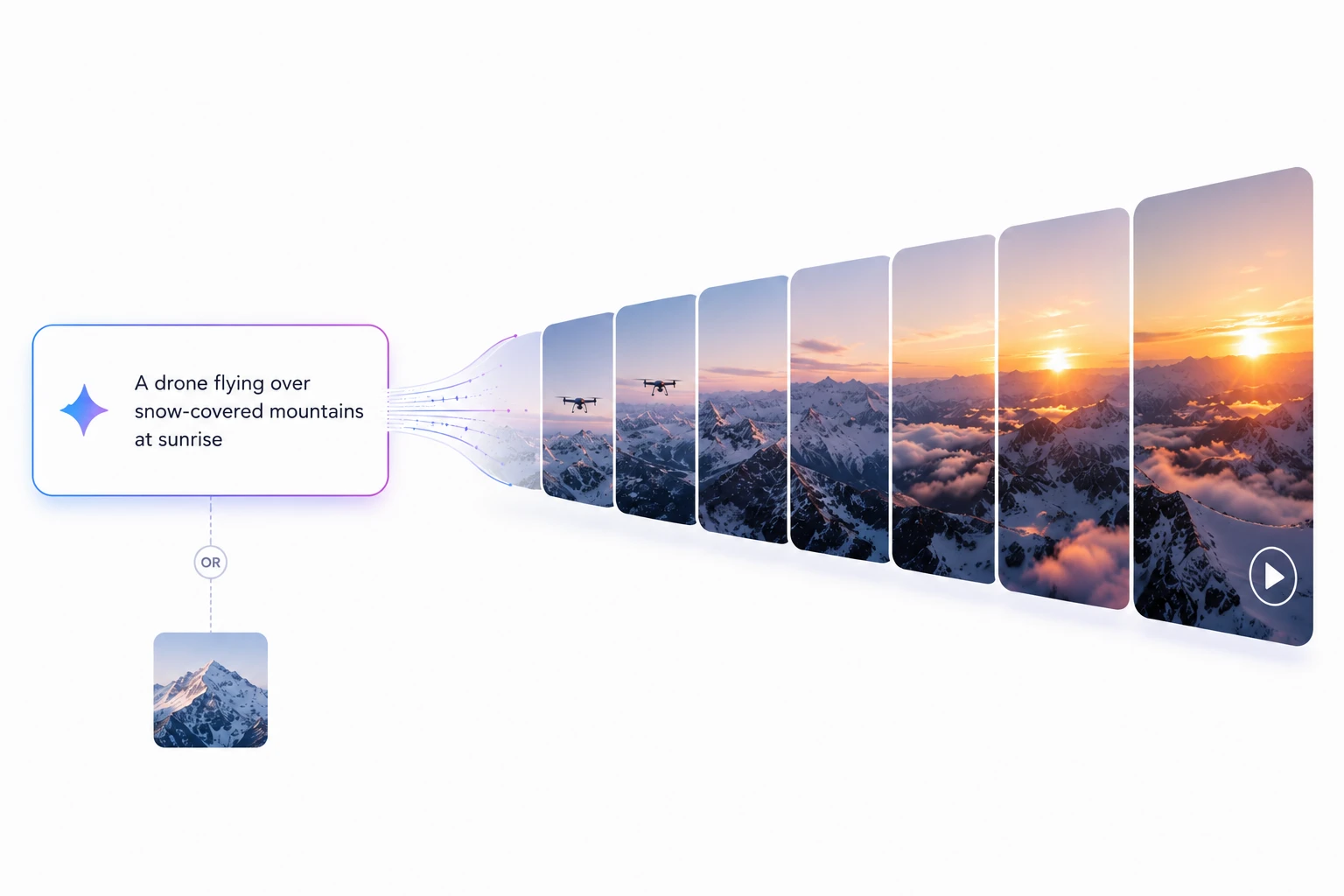
Gemini Omni Google AI Video Generation

This is possible because Gemini Omni doesn’t treat text, images, audio, and video as separate tasks. 

Instead, it understands them as different forms of information. As a result, a simple prompt like “A drone flying over snow-covered mountains at sunrise” can be expanded into a complete video sequence with motion, scene transitions, and cinematic details.

Similarly, users can provide a static image and ask Gemini Omni to animate it, generating natural camera movement, object motion, and environmental effects from a single visual input.

Use cases of Gemini Omni

Here are the 3 main use cases for Gemini Omni:

1. Image-to-Video Generation

Test: Upload an image and animate it into a video.

Input image to Gemini Omni

Prompt: “This is a silhouette of a fictional killer-like character (like the main character in American Psyc*o). I want you to animate it in a way that conveys a stealthy, dangerous personality while keeping the video’s style consistent with the image.”

Result: 

Aside from the  BGM, the video was amazing. The style was somewhat retained from the input image (albeit I wanted everything to be 2D coded). 

Note: Even though this task was supposed to use just an image for the video generation, a supplementary prompt had to be provided for some context.

2. Text-to-Video Generation

Test: Generate a cinematic scene using only a text prompt.

Prompt:

TITLE: The Cloud Painter

STYLE: Whimsical animated short film. Charming, lighthearted, visually polished. Soft storybook aesthetic. High-quality animation. Consistent character design throughout the entire video.

PROMPT:

A small, round white rabbit wearing a yellow raincoat stands alone in a vast green meadow beneath an overcast sky.
The rabbit remains the same size, appearance, clothing, and proportions throughout the entire video.
In its paw, the rabbit holds a tiny paintbrush that glows with soft golden light.
Curious, the rabbit reaches upward and gently paints a streak across a low-hanging cloud.
Wherever the brush touches, the gray cloud transforms into colorful shapes.
The rabbit paints a small fish-shaped cloud. The fish lazily swims through the sky.
The rabbit laughs and paints a bird-shaped cloud. The cloud bird flaps its wings and joins the fish.
Excited, the rabbit continues painting. The sky gradually fills with playful cloud creatures: whales, turtles, foxes, and dragons, all made entirely from soft fluffy clouds.
The rabbit never changes clothing, never changes species, and always remains a small white rabbit in a yellow raincoat.
A gentle breeze carries the cloud creatures across the sky. The rabbit watches proudly from the meadow below.
Golden sunlight slowly breaks through the clouds, illuminating the scene with warm afternoon light.
The cloud animals gather overhead and form a giant heart shape in the sky.
The rabbit sits quietly in the grass and admires its work.

Final shot: a wide cinematic view of the meadow, the rabbit sitting peacefully beneath a sky filled with beautiful living cloud creatures drifting into the sunset.

VISUAL REQUIREMENTS:

• One character only
• Consistent rabbit appearance in every shot
• Consistent yellow raincoat
• Soft pastel color palette
• Gentle camera movements
• Storybook-quality visuals
• Cute but elegant design
• No dialogue
• High visual coherence
• Smooth animation
• Strong character consistency

NEGATIVE PROMPT:

Character changing appearance, changing clothing, extra limbs, missing limbs, human hands, realistic humans, multiple rabbits, duplicated characters, distorted anatomy, flickering objects, inconsistent proportions, text, subtitles, watermark, logo, horror, darkness, aggressive action, chaotic motion.

Result:

A great video for the prompt that was provided. The animation was consistent with the prompt. 

Note: A negative prompt is basically a list of things you’re telling the model:

Please don’t do this.

Think of the main prompt as the accelerator and the negative prompt as the guardrails.

3. Editing Videos

Test: Use a video as input and edit it according to the prompt.

Prompt: Turn this video of my gameplay in anime style. Black and white panels and all that good stuff.”

Result: 

Final Verdict

These three tests cover the majority of real-world use cases: creating videos from scratch, animating existing images, and maintaining consistency using reference images. Together, they provide a clear picture of where Gemini Omni excels and where its current limitations become apparent.

Where Gemini Omni Still Falls Short

Here are some of the limitations of Gemini Omni: 
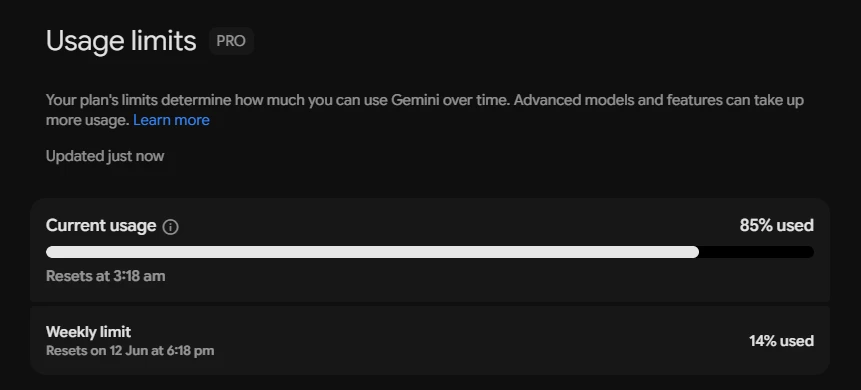
  • Usage limit gets exhausted upon generating 3-5 videos at max. A single 10 second video for this article consumed ~22% of usage limit.
Usage limits in Gemini Pro
  • Video duration is capped at around 10 seconds at max.
  • Generated videos include AI watermarking via SynthID.
  • Access requires a paid Google AI plan: Plus, Pro, or Ultra.
  • You can upload only one video as an input/reference.
  • Some features are region-restricted, especially avatars and video-to-video editing.
  • Usage limits depend on the user’s plan and can be hit quickly because video generation uses more compute.
  • Certain likeness/avatar features may not work with all personal or human images, depending on policy and availability.

The biggest problem of Gemini Omni is its copyright policy and third party guardrails. You could almost never work with a piece of content that shows that either:

  1. Consists of a celeb
  2. Is sourced from a reputable place on the internet

Even if you’re uploading something completely novel, you might be greeted with this:

Gemini unable to generate videos

The duration it takes for video generation (< a minute in most cases) and the usage limits are secondary problems. To me, the constant denial of generation due to varying reasons, was the most annoying part of my experience with Gemini Omni. 

How to Access Gemini Omni

There are 2 ways of accessing Gemini Omni: 

  • Gemini subscriptions: Using the following paid subscriptions:
    • Google AI Plus
    • Google AI Pro
    • Google AI Ultra
  • Developer access: Developers can access it via:

Access limits and availability may vary by plan and region. Gemini uses compute-based limits which vary based on the complexity of the video, its size and other such factors. 

Conclusion

Gemini Omni makes one thing clear: AI video generation is no longer a separate novelty. Across image-to-video, text-to-video, and video editing, it shows how a simple prompt or reference can turn into a usable visual sequence with surprising speed, style, and creative range.

But the experience is not frictionless. Short durations, usage limits, watermarking, regional restrictions, and strict content guardrails still hold it back. For now, Gemini Omni feels like a powerful glimpse of what seamless video generation would be like in the future.

I specialize in reviewing and refining AI-driven research, technical documentation, and content related to emerging AI technologies. My experience spans AI model training, data analysis, and information retrieval, allowing me to craft content that is both technically accurate and accessible.