惯性聚合 高效追踪和阅读你感兴趣的博客、新闻、科技资讯
阅读原文 在惯性聚合中打开

推荐订阅源

Help Net Security
Help Net Security
Latest news
Latest news
G
GRAHAM CLULEY
C
CXSECURITY Database RSS Feed - CXSecurity.com
T
The Exploit Database - CXSecurity.com
WordPress大学
WordPress大学
Cyber Security Advisories - MS-ISAC
奇客Solidot–传递最新科技情报
奇客Solidot–传递最新科技情报
Jina AI
Jina AI
U
Unit 42
人人都是产品经理
人人都是产品经理
小众软件
小众软件
Microsoft Security Blog
C
CERT Recently Published Vulnerability Notes
V
Vulnerabilities – Threatpost
Threat Intelligence Blog | Flashpoint
NISL@THU
NISL@THU
AWS News Blog
AWS News Blog
C
Cyber Attacks, Cyber Crime and Cyber Security
C
Cisco Blogs
Google DeepMind News
阮一峰的网络日志
阮一峰的网络日志
Project Zero
Project Zero
D
Darknet – Hacking Tools, Hacker News & Cyber Security
Know Your Adversary
Know Your Adversary
Cyberwarzone
Cyberwarzone
Y
Y Combinator Blog
cs.AI updates on arXiv.org
L
LINUX DO - 热门话题
The Hacker News
The Hacker News
Application and Cybersecurity Blog
GbyAI
GbyAI
酷 壳 – CoolShell
酷 壳 – CoolShell
Blog — PlanetScale
Blog — PlanetScale
T
Threat Research - Cisco Blogs
The GitHub Blog
The GitHub Blog
N
News and Events Feed by Topic
N
News | PayPal Newsroom
Attack and Defense Labs
Cloudbric
Cloudbric
Scott Helme
Scott Helme
J
Java Code Geeks
H
Hacker News: Front Page
N
News and Events Feed by Topic
Recorded Future
Recorded Future
Martin Fowler
Martin Fowler
W
WeLiveSecurity
cs.CV updates on arXiv.org
量子位
有赞技术团队
有赞技术团队

Analytics Vidhya

Handling Imbalanced Classification: What Works Better Than SMOTE GPT-5.6 Is Here: Sol, Terra, and Luna Loop Engineering for AI Agents: How /loop is Changing AI Workflows DeepSeek DSpark: The Speculative Decoding Trick Behind 400% Faster LLM OKF: Redefining Knowledge Bases for AI Agents Modern VLMs Explained: How GPT-4o, Gemini, Claude Vision, and Qwen-VL Work YOLO26 Tutorial: Object Detection, Pose Estimation & More Large Action Models (LAMs) vs Agentic LLMs: What's the Real Difference? Claude Sonnet 5: The Fable 5 at Home The Best $20 AI Plan: ChatGPT Plus vs Claude Pro vs Gemini Pro GraphRAG vs Vector RAG: Which Retrieval Method is Best? Using AI When You Don’t Trust AI The Self-Improving Loop in AI Agents: Architecture, Benefits, and How it Outperforms Traditional Agent Workflows Harness-1: The 20B Retrieval Subagent That Beats GPT-5.4 at Search Sakana Fugu: Multi-Agent System as a Model Claude's Hidden Art Skill: Making Illustrations With Code System Design for ML Interviews: 10 Real Problems Walked Through Most People Use ChatGPT Wrong: 10 Features and Tips That Changed How I Work OpenAI Just Launched 3 Free AI Courses with Certificates Autoregressive Models: Predicting the Future Using the Past Gemini Omni: AI Video Generation Inside Gemini DiffusionGemma: Google’s Diffusion-Based Open Model for Faster Text Generation Top 10 AI Engineering Tools Everyone is Using in 2026 I Tested Claude Fable 5: Can Anthropic’s Newest AI Deliver on the Hype? Prophet vs NeuralProphet vs TimeGPT vs Chronos: A Practical Comparison Build an Emergency Helpline Voice Agent with LangChain Choosing the Right Vector Database for RAG and AI Applications Google Gemma 4 12B: Architecture, Benchmarks, Access, and Hands-on Guide for Developers How to Choose the Right AI Model for Your Needs Agent Observability with LangSmith, Langfuse, and Arize: A Hands-On Comparison How to Use Claude Managed Agents? Google AI Studio vs Gemini App: What’s the Difference? AI Workflows for Sales Teams: Prospect Research, Lead Qualification, and CRM Updates on Autopilot Using LangGraph 25 Most Influential AI Pioneers to Meet at DataHack Summit 2026 Claude Opus 4.8: A Smarter Model in the Right Direction PySpark Optimization: 12 Proven Techniques to Speed Up Your Spark Jobs 10 Everyday Tasks You Can Automate with AI Today (With n8n Templates) Google Antigravity 2.0: The Full Developer Guide (I/O 2026) Build a Claude Cowork-Like Browser Agent Using Playwright MCP and Claude Desktop Pandas vs Polars vs DuckDB: Which Library Should You Choose? Qwen3.7-Max: Alibaba’s New Agent-First LLM for Coding, Reasoning, and Long-Horizon AI Workflows The Biggest Announcements from Google I/O 2026 Top 9 AI Events and Conferences in 2026 that you Must Attend Gemini 3.5 Flash: Frontier Intelligence with Speed Kimi WebBridge: Hands-on Guide to Kimi’s Browser Extension for AI Agents 40 Advanced SQL Window Functions Every Data Scientist Must Know(with examples) Top 10 AI Research Papers of 2025 6 Steps to Crack GenAI Case Study Interviews (With Real Examples) OpenAI Omni Moderation: How to Filter Text & Images for Free DataHack Summit 2026: You Just Cannot Skip This AI Event of the Year OpenAI’s New API Voice Models Will Change the Way You Use AI Hermes Agent Guide: What is it and How to Use it? Top 10 LLM Research Papers of 2026 Agent Memory Patterns in Cognitive Science and AI Systems 10 AI Agents Every AI Engineer Must Build (with GitHub Samples) 23 Tips for Smart Claude Code Token Saving and Workflow Optimization Feature Engineering with LLMs: Techniques & Python Examples ChatGPT is Now Inside Excel and Google Sheets: Here is How to Use it Gemini API File Search: The Easy Way to Build RAG Top 10 Open-Source Libraries to Fine-Tune LLMs Locally ML Intern in Practice: From Prompt to a Shipped Hugging Face Model 15+ Solved Agentic AI Projects with Github Links How People are Figuring Out Life With Claude MemPalace Explained: Building Long-Term Memory for AI Agents Beyond RAG Grok Voice Think Fast 1.0: Build Voice AI Agents That Actually Think Compressing LSTM Models for Retail Edge Deployment: A Practical Comparison MCP vs Agent Skills: Different Altogether GPT 5.5 vs Opus 4.7: Which is the Best AI Model Today? Claude Code vs Codex: A Detailed Terminal Agent Comparison Google Deep Research Max: Build Autonomous AI Research Agents in Minutes Meta Muse Spark Review: Is It Worth the Hype? ChatGPT Images 2.0 vs Nano Banana 2: Which is Better? Cursor V3 Explained: The AI Coding Agent That’s Replacing Traditional IDEs in 2026 DeepSeek-V4: The Most Powerful Open-Source Model Ever Is GPT Image 2 the Best Image Generation Model? Token Economics: Why AI is Getting “Cheaper” From Idea to Output: Claude Does the Design Work Opus 4.7 vs Opus 4.6: Should You Switch? Build Human-Like AI Voice App with Gemini 3.1 Flash TTS How to Structure a Claude Code Project that Thinks Like an Engineer Gemma 4 Tool Calling Explained: Build AI Agents with Function Calling (Step-by-Step Guide) Anthropic Launches Claude Opus 4.7 For “Most Difficult Tasks” Top 28 Claude Shortcuts that will 10X your Speed GPT-5.4-Cyber: Why OpenAI is Keeping its Most Powerful Model Under Lock and Key Google AI Studio Guide: Every Feature Explained Mastering Deep Agents: Context Engineering that Actually Works 21 Computer Vision Projects from Beginner to Advanced (2026 Guide) Excel 101: Excel Agent Mode Explained MiniMax M2.7 Goes Open-Weight to Let You Run Agents Locally Top 10 Gemma 4 Projects That Will Blow Your Mind GLM-5.1: Architecture, Benchmarks, Capabilities & How to Use It Understanding BERTopic: From Raw Text to Interpretable Topics From Karpathy’s LLM Wiki to Graphify: AI Memory Layers are Here 10 Most Important AI Concepts Explained Simply Project Glasswing is World’s Most Powerful AI in Action How to Run Gemma 4 on Your Phone Without Internet: A Hands-On Guide Running Claude Code for Free with Gemma 4 and Ollama LLM Wiki Revolution: How Andrej Karpathy’s Idea is Changing AI Rethinking Enterprise Search: How Cortex Search Turns Data into Business Impact Google’s Gemma 4: Is it the Best Open-Source Model of 2026?
What is Agentic AI?
Vasu Deo San · 2026-04-28 · via Analytics Vidhya

Agentic AI refers to autonomous AI systems that can accomplish complex tasks with minimal human supervision. Unlike traditional AI, which reacts to prompts, agentic AI can plan, adapt, and execute actions toward a goal, making decisions throughout the process.

These systems are made up of AI agents, each handling a specific part of the task, working together in a coordinated way to achieve the overall objective. This ability to perform multi-step, goal-driven tasks with autonomy and adaptability sets Agentic AI apart from traditional AI models.

This shift from answeringacting is what defines agentic AI.

The Easiest Way to Understand Agentic AI

Think about the difference between answering a question and owning a task.

A traditional AI system answers the question:
“What are some good hotels in Bangalore?”

Click here to see the response
Traditional AI vs Agentic AI

An agentic AI system takes on the task:
“Plan my Bangalore trip for three days, keep it under budget, prioritize places near the office, and adjust if my meeting time changes.”

Click here to see the response

This isn’t a single response. Agentic systems execute a task over time and produce evolving results. This is because the AI agent would adapt to the changes in the meeting timings. You might see a log file similar to this:
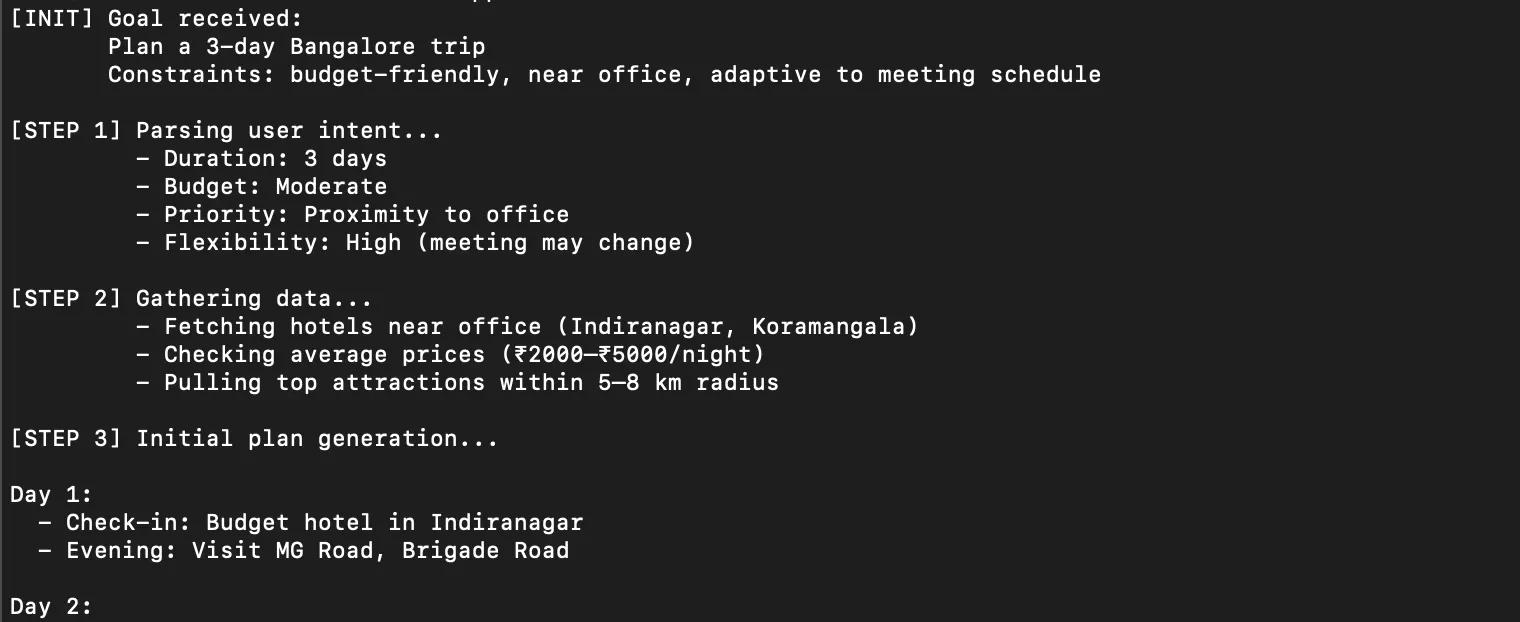
  • The first system gives information.
  • The second system has to manage a moving objective.

As for the definition, Agentic AI is an artificial intelligence system that can accomplish a specific goal with limited supervision. A lot of its functionality is derived from AI Agents

How does AI Agent Relate to Agentic AI?

AI Agent workflow
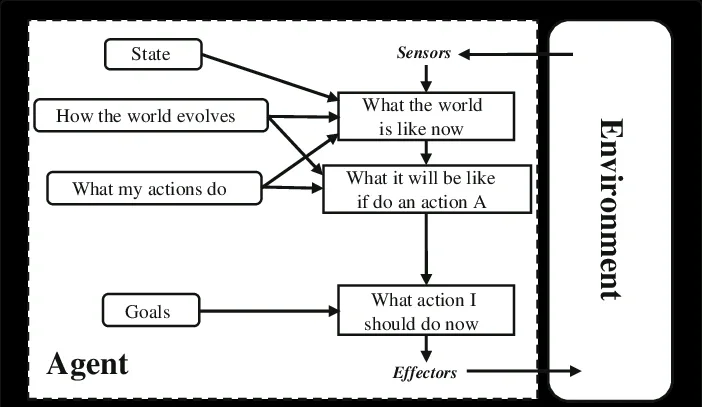
Working of a Goal-Based AI Agent

An AI agent is a single, autonomous entity that performs a specific task. It reacts to inputs and completes one job at a time.
Example: A chatbot answering a query.

In Agentic AI, multiple AI agents may handle specific parts of a task (data gathering, decision-making, and final execution) acting as collaborators to complete a larger process. Each agent is specialized, but they all coordinate to move the task forward efficiently.
Example: An AI managing a research task, gathering data, analyzing it, and generating a report.
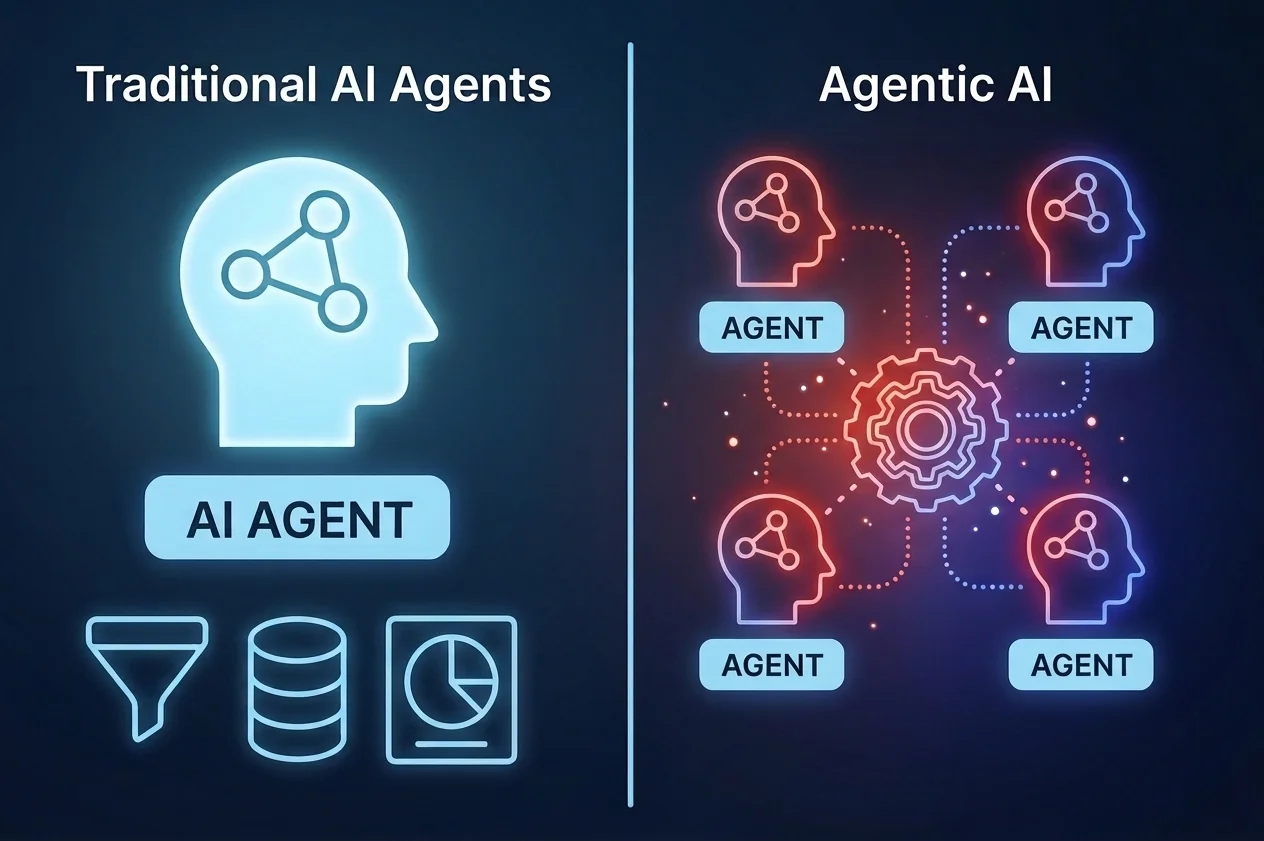
Traditional AI Agents vs Agentic AI

Here are the primary differences between AI agent and Agentic AI:

Aspect AI Agent Agentic AI
Scope Handles single or simple tasks. Manages complex tasks with multiple agents.
Collaboration Works independently on isolated tasks. Multiple agents collaborate to complete a goal.
Task Handling Reactive, responds to inputs. Proactive, plans and executes multi-step tasks.

What makes an AI System Agentic?

Not every AI tool with a fancy interface is agentic. And not every chatbot becomes agentic just because it can call an API. 

An AI system starts to feel agentic when it can do the following:
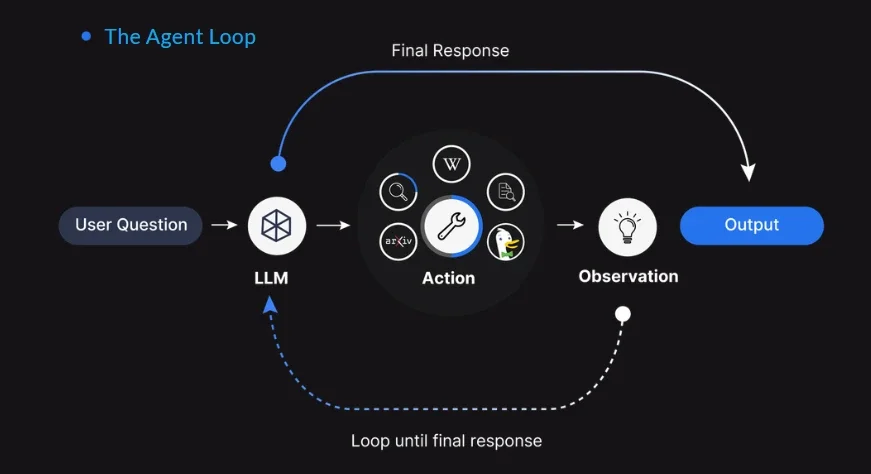
  • take a goal, not just a prompt.
  • break that goal into smaller steps.
  • decide which action makes sense at each stage.
  • use tools or outside information when needed.
  • track progress across a workflow.
  • revise its path when new information shows up.
The Agent loop of Agentic AI Systems

These aren’t hardcoded steps every agentic system needs to follow. The important thing here is not any single feature. It is the behavior that emerges when these features are combined.

A calculator uses a tool. That does not make it agentic.
A chatbot can retrieve data. That alone does not make it agentic either.

What makes a system agentic is that it is trying to move from instruction to outcome, not just from prompt to response

In other words, it doesn’t stop at answering what you asked. It figures out what needs to be done to complete the task, takes intermediate steps on its own, checks its progress, and adjusts along the way until it actually delivers a usable result.

How Does Agentic AI Work?

Agentic AI relies on a clear goal-setting process, where the system uses a sequence of steps to get from input to output. Here’s how it works:
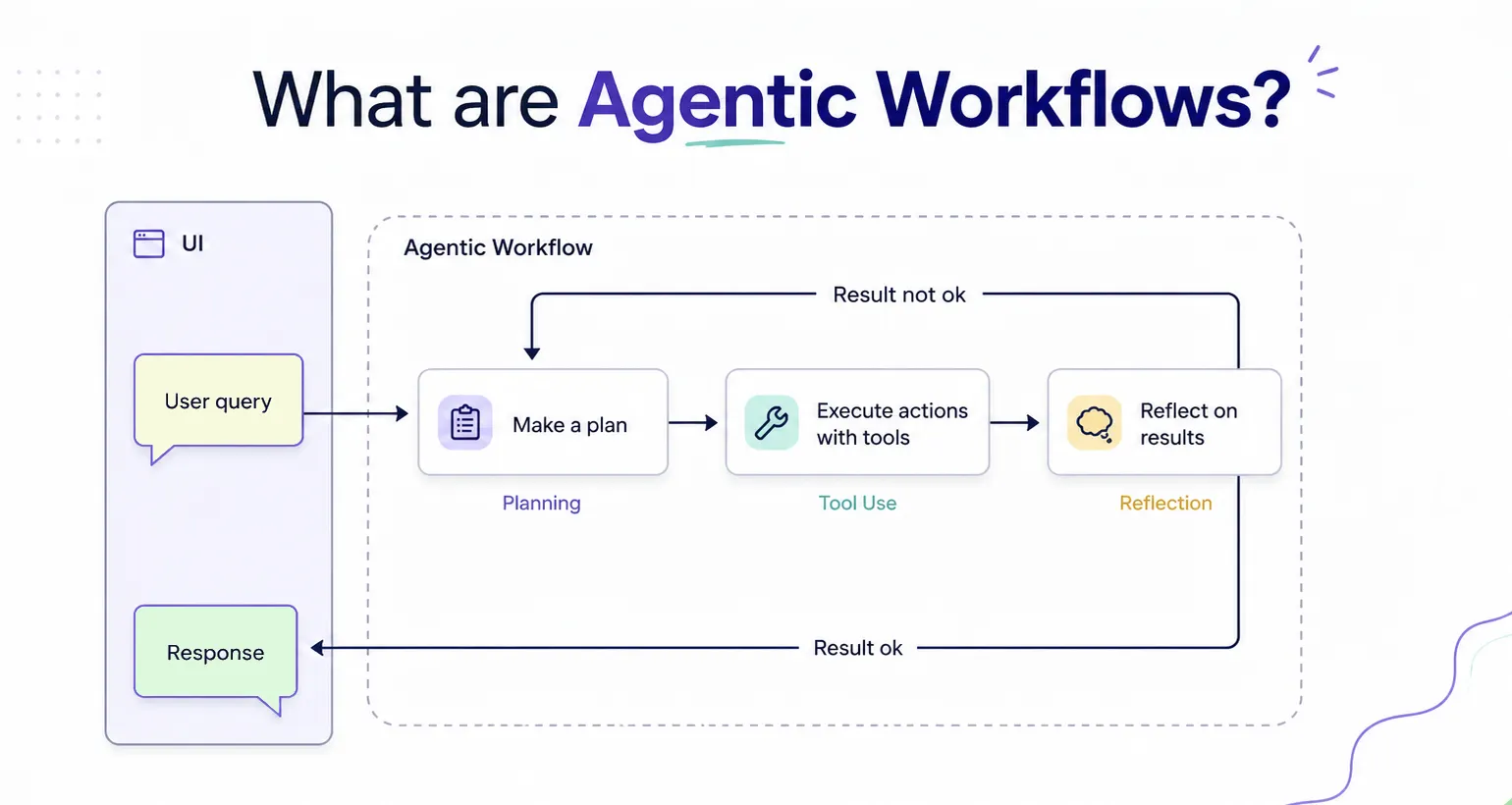
  1. Perception: The AI gathers data from various sources (APIs, user input, external systems).
  2. Reasoning: The system processes the data to identify patterns and context, forming a plan for execution.
  3. Goal Setting: The AI sets objectives based on user input or predefined goals and breaks down the task into actionable steps.
  4. Decision-Making: It evaluates multiple paths and selects the most efficient or accurate course of action.
  5. Execution: The AI then acts, executing the chosen action, such as interacting with external systems or providing responses to users.
  6. Learning & Adaptation: After completing tasks, the AI analyzes the results, learns from feedback, and adjusts to improve future actions.
What are Agentic Workflows?

Advantages of using Agentic AI

Agentic AI offers several advantages over traditional AI systems:
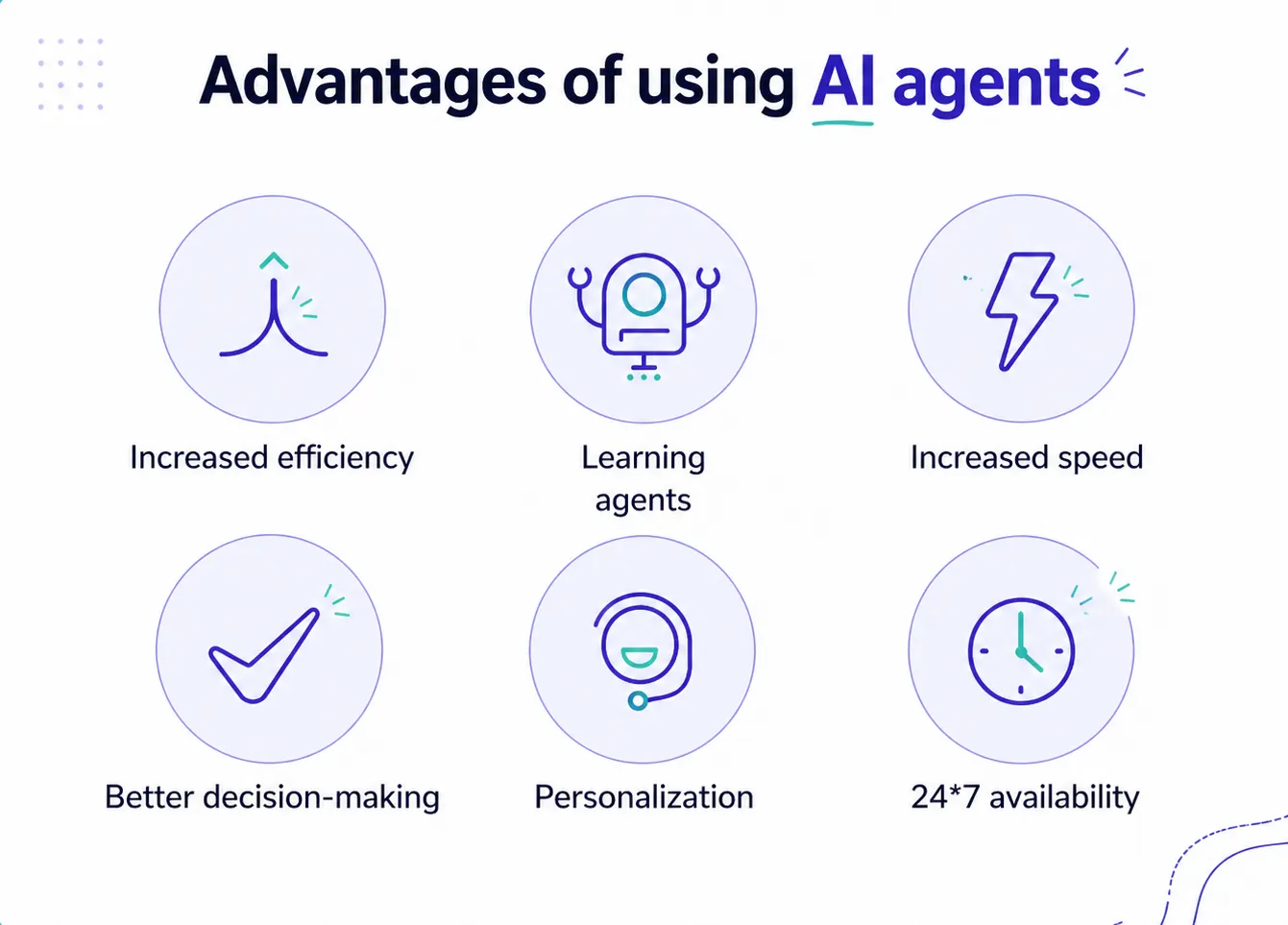
  • Autonomy: Can perform tasks independently, reducing the need for human oversight.
  • Proactivity: Moves from being reactive to proactive, handling complex tasks from start to finish.
  • Specialization: Agents can specialize in specific tasks, making them efficient in solving complex problems.
  • Adaptability: Agents improve over time by learning from experience, refining their approach to tasks.

Types of AI Agents

Here are the different types of AI Agents: 
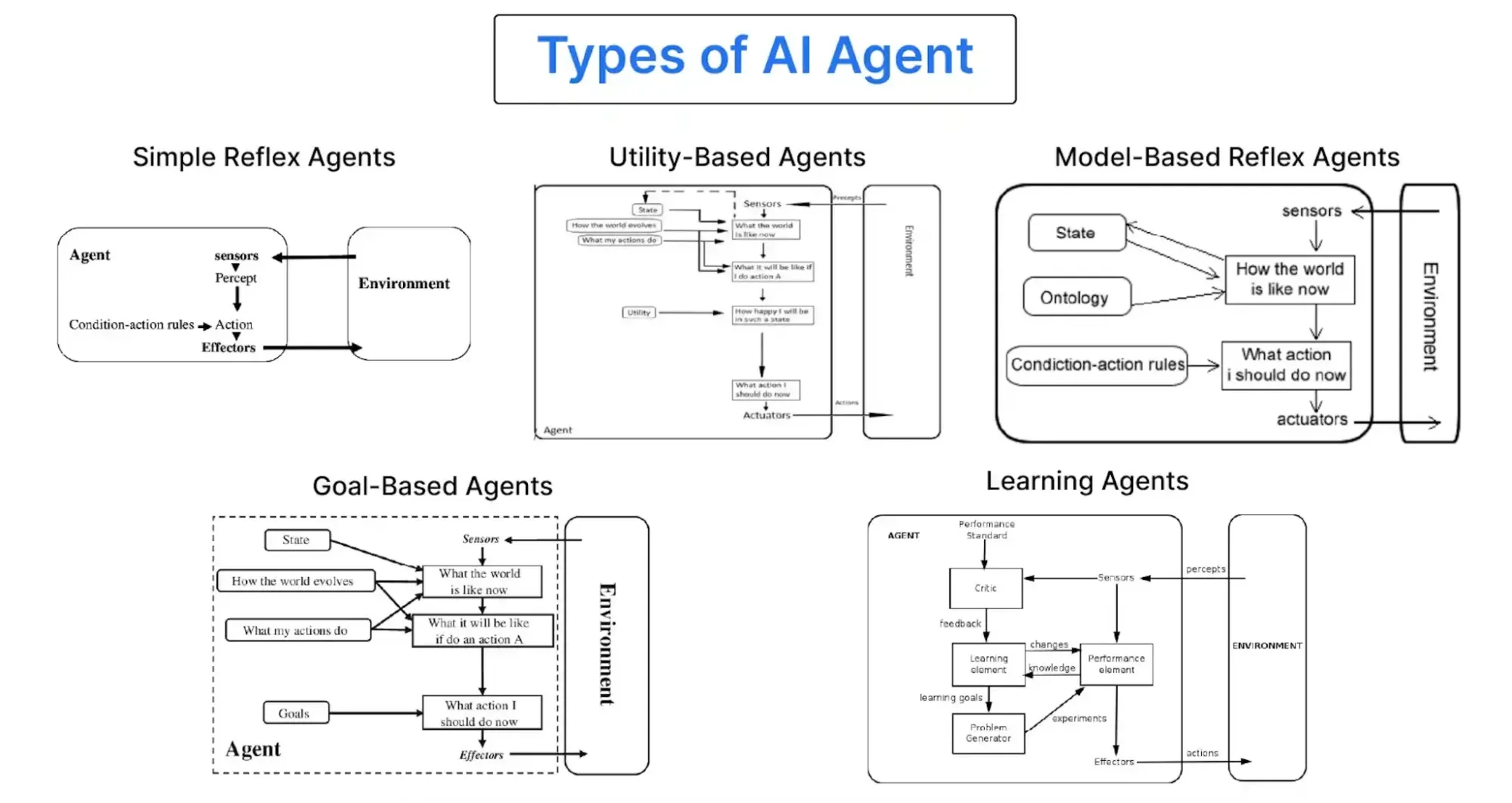
  • Simple Reflex Agents: Act on predefined condition–action rules, responding directly to current inputs without memory or understanding of past states.
  • Model-Based Reflex Agents: Maintain an internal model of the world, allowing them to track state and make decisions beyond immediate inputs.
  • Goal-Based Agents: Choose actions based on desired outcomes, evaluating different paths to reach a specific goal.
  • Utility-Based Agents: Go beyond goals by selecting actions that maximize a utility function, balancing trade-offs between multiple possible outcomes.
  • Learning Agents: Improve over time by learning from feedback, adapting their behavior based on experience and performance.
Types of AI Agents

Frameworks for building AI Agents

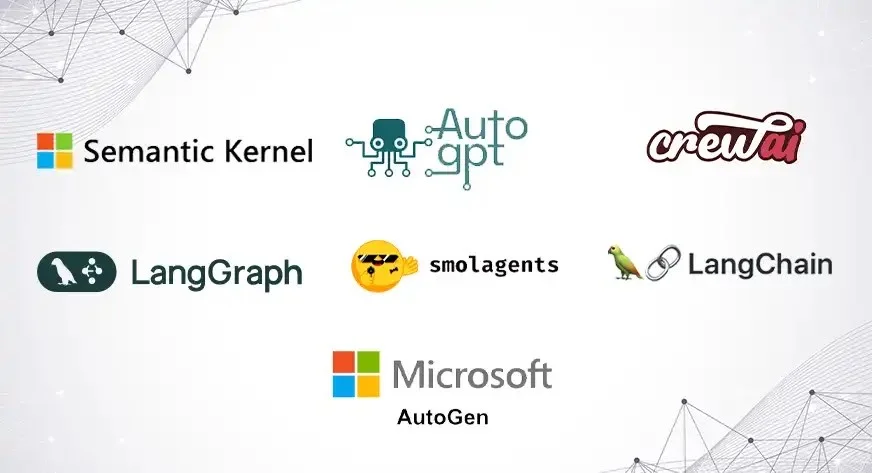
Agentic AI Frameworks

You might have heard of tools like CrewAI, LangGraph, or Microsoft AutoGen. Maybe you’ve seen viral videos of AutoGPT trying to “order a pizza” or Devin (the world’s first AI software engineer) fixing bugs autonomously. These are all frameworks used for building AI Agents.

These frameworks are not interchangeable. The choice depends on whether you need structured workflows, collaboration between agents, or experimental autonomy.

Applications of Agentic AI

Agentic AI shows up wherever tasks require multiple steps, decisions, and feedback loops:
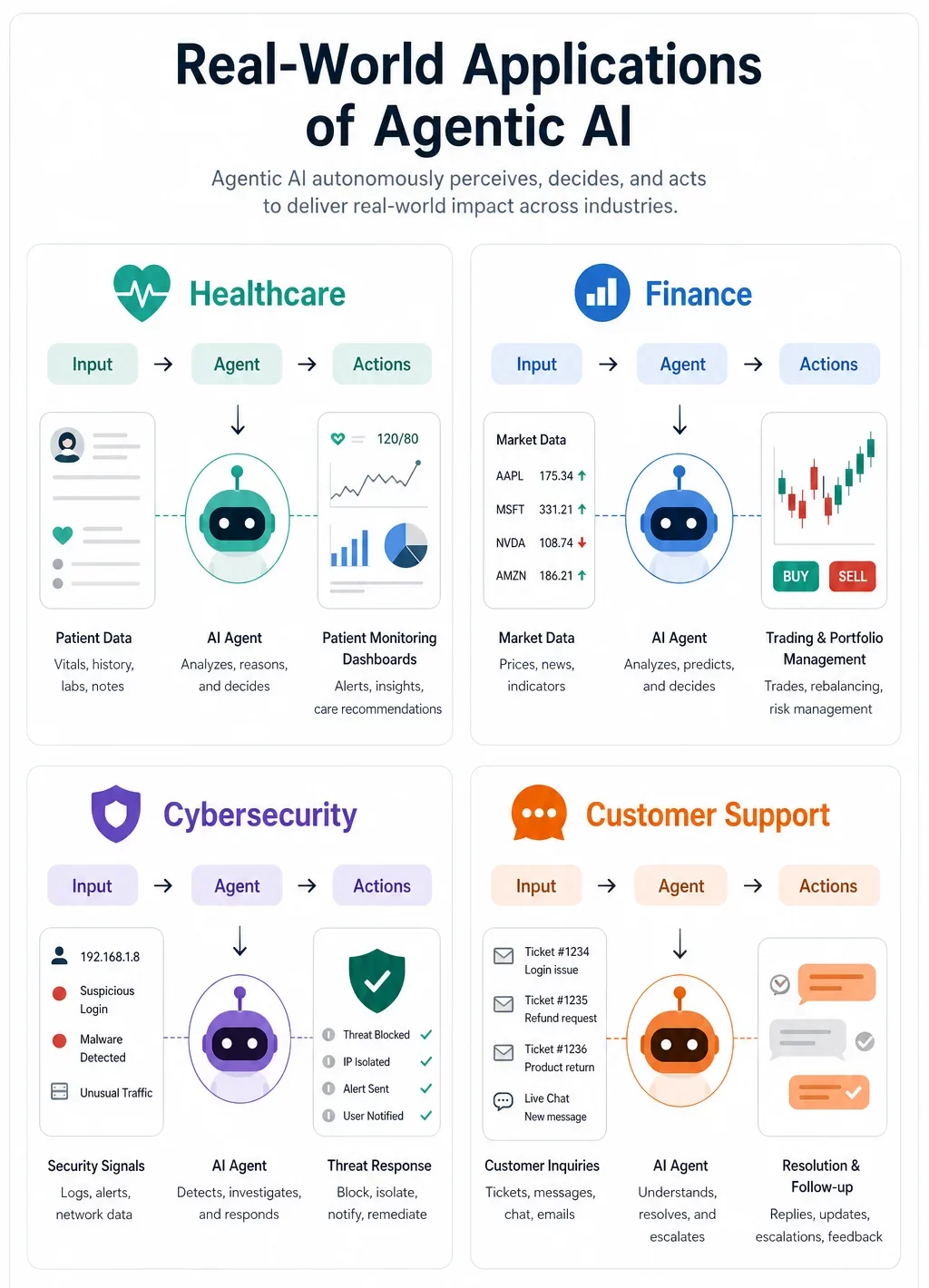
  • Healthcare: Monitoring patient vitals, updating risk scores, and adjusting treatment recommendations in real time.
  • Finance: Tracking market signals, executing trades, and adapting strategies based on performance.
  • Cybersecurity: Detecting anomalies, investigating threats, and triggering automated responses across systems.
  • Customer Support: Handling end-to-end workflows like ticket routing, resolution, escalation, and follow-ups.
Real world applications of Agentic AI

Challenges and Risks

While agentic AI brings tremendous value, there are significant risks:

  • Unintended Behaviors: Poorly designed reward functions can lead to unintended outcomes, like an agent exploiting loopholes.
  • Complexity: Managing and coordinating multiple agents can lead to bottlenecks, traffic jams, or failures in complex systems.
  • Lack of Transparency: The more autonomy an AI has, the harder it becomes to predict or explain its actions.

Getting Started with Agentic AI

Now that you have a solid understanding of what Agentic AI is, the next question is where to begin?

There isn’t a single course or fixed framework that makes you proficient in building agentic systems. Instead, it’s about following a structured learning path and gradually building intuition around how agents perceive, decide, and act.

A good starting point is this learning path for Agentic AI, which walks through the core concepts, tools, and progression you need to get hands-on with agent-based systems.
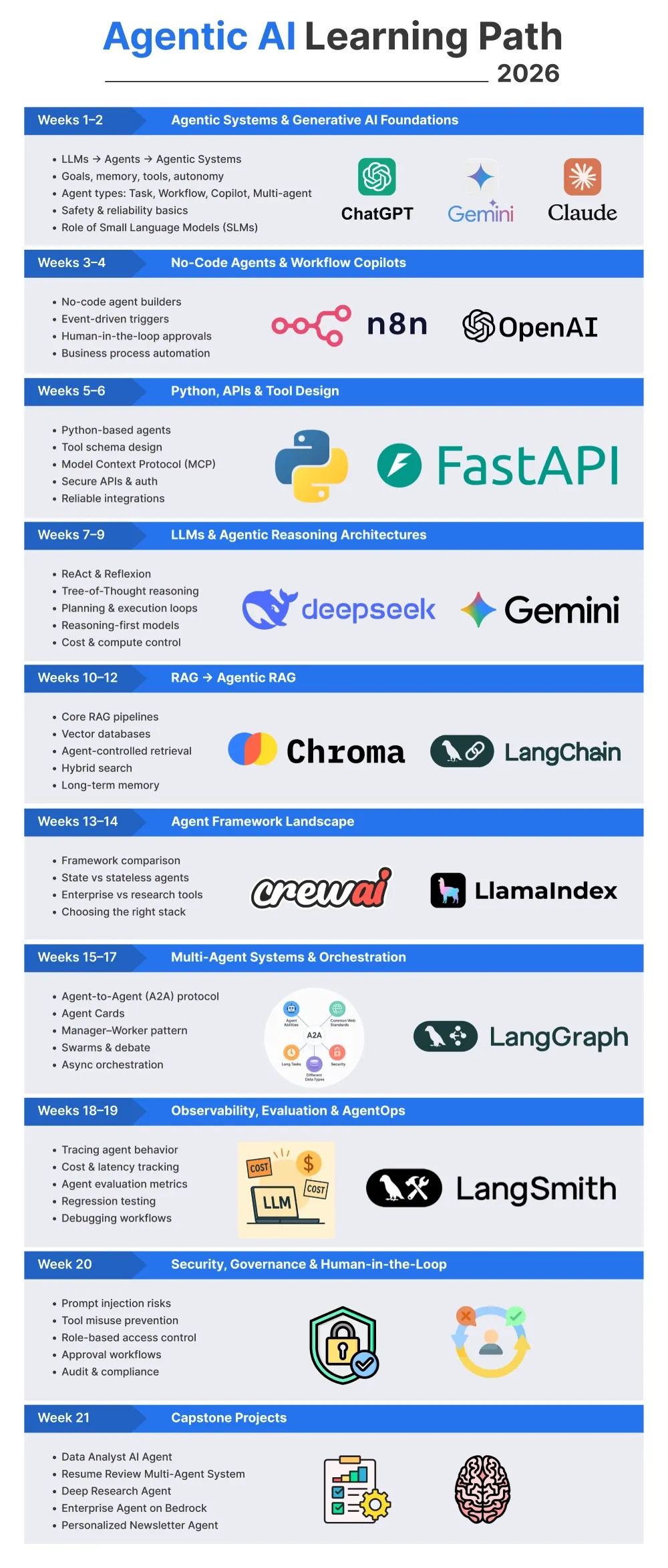
Agentic AI Learning Path

If you’re more interested in the ecosystem itself, especially the tools and frameworks powering these systems, take a look at this guide to AI agent frameworks to understand what’s out there and how to choose the right stack.

Now that you are equipped with both the knowledge of Agentic AI as well as the learning resources for it, all that’s left is for you to begin your journey. Good luck!

Frequently Asked Questions

Q1. What is Agentic AI?

A. Agentic AI is an autonomous AI system that can plan, execute, and adapt actions to achieve a specific goal with minimal supervision, unlike traditional AI which only responds to prompts. 

Q2. How is Agentic AI different from traditional AI?

A. Traditional AI provides answers to queries, while Agentic AI manages tasks end-to-end by breaking them into steps, making decisions, and adjusting actions based on changing conditions. 

Q3. How does Agentic AI work?

A. Agentic AI works through stages like perception, reasoning, goal setting, decision-making, execution, and adaptation to complete multi-step tasks efficiently and autonomously. 

I specialize in reviewing and refining AI-driven research, technical documentation, and content related to emerging AI technologies. My experience spans AI model training, data analysis, and information retrieval, allowing me to craft content that is both technically accurate and accessible.