





Join the newsletter to get the latest updates.
Great! Check your inbox and click the link.
Please enter a valid email address.
The city of Dayton, Ohio has covered its Flock automated license plate reader cameras with black trash bags in part because police there are unsure whether the cameras are still active and the city also doesn’t seem to know whether it is allowed to take the cameras down. The move comes after months of resident outrage, a scandal in which the city was sharing Flock camera data for immigration enforcement apparently on accident, and a $30,000 audit into how the cameras are being used.
Joe Parlette, the deputy city manager of Dayton, said at a city commission meeting last week that the “Dayton Police Department agreed to work with Public Works to put bags over the cameras” as a stop-gap measure until Flock cameras could be removed entirely. I spoke to multiple people in Dayton who said they had seen bagged cameras in the last few days. The Dayton Daily News first reported on the baggings.
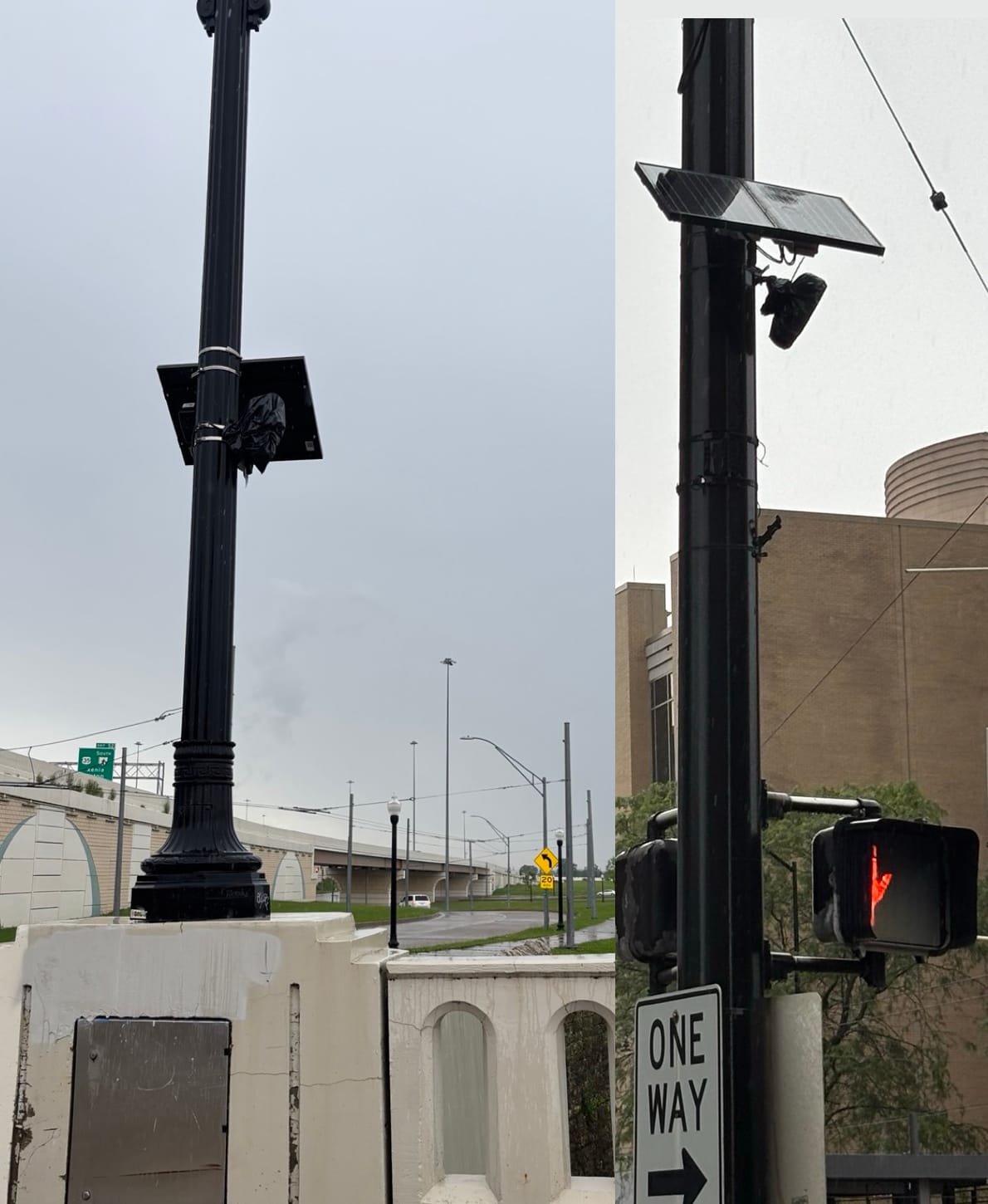
Dayton is not the first city to cover its Flock cameras with trash bags because they can’t figure out how to immediately terminate the use of the cameras. Late last year, the city of Evanston, Illinois also covered its cameras with trash bags while it was waiting for the company to remove them from the city. Cities around the country have been reconsidering their relationship with the surveillance company after reporting from 404 Media and local news outlets that showed data from the cameras was making its way to Immigration and Customs Enforcement through Flock’s national camera network.
Most cities that have reconsidered their contracts have done so via city council meetings and public debate that have played out over the course of months, and both Dayton and Evanston city officials told residents that they were not sure whether they could immediately deactivate or remove the cameras under the terms of their contracts. And so both cities decided to physically block them as a stop-gap measure, showing that cities feel that they do not have the ability to unilaterally decide when to stop using Flock surveillance cameras.
Become a paid member for unlimited ad-free access to articles, bonus podcast content, and more.
Free members get access to posts like this one along with an email round-up of our week's stories.
Already have an account? Sign in
此内容由惯性聚合(RSS阅读器)自动聚合整理,仅供阅读参考。 原文来自 — 版权归原作者所有。