









Behold! This is the largest, sharpest 3D map of the universe yet
A new map of the cosmos, including more than 47 million galaxies and other cosmic objects, represents one of the most extensive surveys of our universe ever conducted
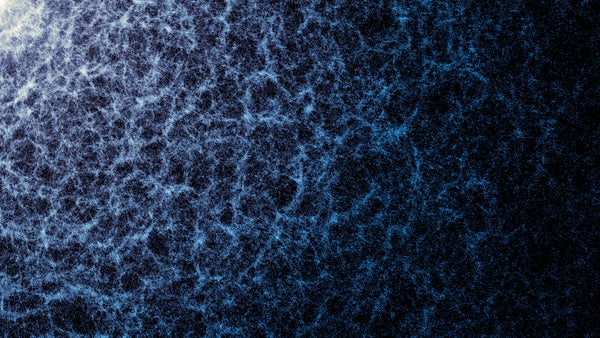
A small portion of the Dark Energy Spectroscopic Instrument’s (DESI’s) year-five map in which the large-scale structure of the universe, created by gravity, is visible. Each dot represents a galaxy.
DESI Collaboration and DESI Member Institutions/DOE/KPNO/NOIRLab/NSF/AURA/R. Proctor (image); M. Zamani/NSF NOIRLab (image processing)
Join Our Community of Science Lovers!
Astronomers have just completed the largest high-resolution three-dimensional map of the universe, including more than 47 million galaxies and other massive objects. The map could help solve the mystery of dark energy, the enigmatic stuff that dominates the cosmos.
Scientists know that dark energy is an all-pervasive something that drives the universe’s accelerating expansion. But despite the ubiquity and immensity of dark energy’s large-scale effects, no one yet knows what it actually is. Many experts suspect dark energy is simply what’s known as the “cosmological constant,” a fudge factor that Albert Einstein added to the equations of his general theory of relativity. The cosmological constant represents the energy density of “empty” space and keeps the universe in a stable state of expansion. But this explanation is only one possibility for dark energy’s true nature.
The new map was constructed by research teams using the Dark Energy Spectroscopic Instrument (DESI), which is mounted on a telescope in Arizona and has surveyed huge patches of the night sky over a five-year period. The international project is led by the U.S. Department of Energy’s Lawrence Berkeley National Laboratory (Berkeley Lab).
On supporting science journalism
If you're enjoying this article, consider supporting our award-winning journalism by subscribing. By purchasing a subscription you are helping to ensure the future of impactful stories about the discoveries and ideas shaping our world today.
DESI’s first three years of data suggested that dark energy’s influence on the cosmos might change over time—challenging some fundamental assumptions about the nature of the universe. “Ultimately, we are doing this for all humanity, to better understand our Universe and its eventual fate,” said Stéphanie Juneau, an associate astronomer at the National Science Foundation’s National Optical-Infrared Astronomy Research Laboratory (NOIRLab) and a member of the DESI collaboration, in a statement.
“After finding hints that dark energy might deviate from a [cosmological] constant, potentially altering that fate, this moment feels like sitting on the edge of my seat as we analyze the new map to see whether those hints will be confirmed. I’m also very intrigued by the many other discoveries that await in this new dataset,” she said.
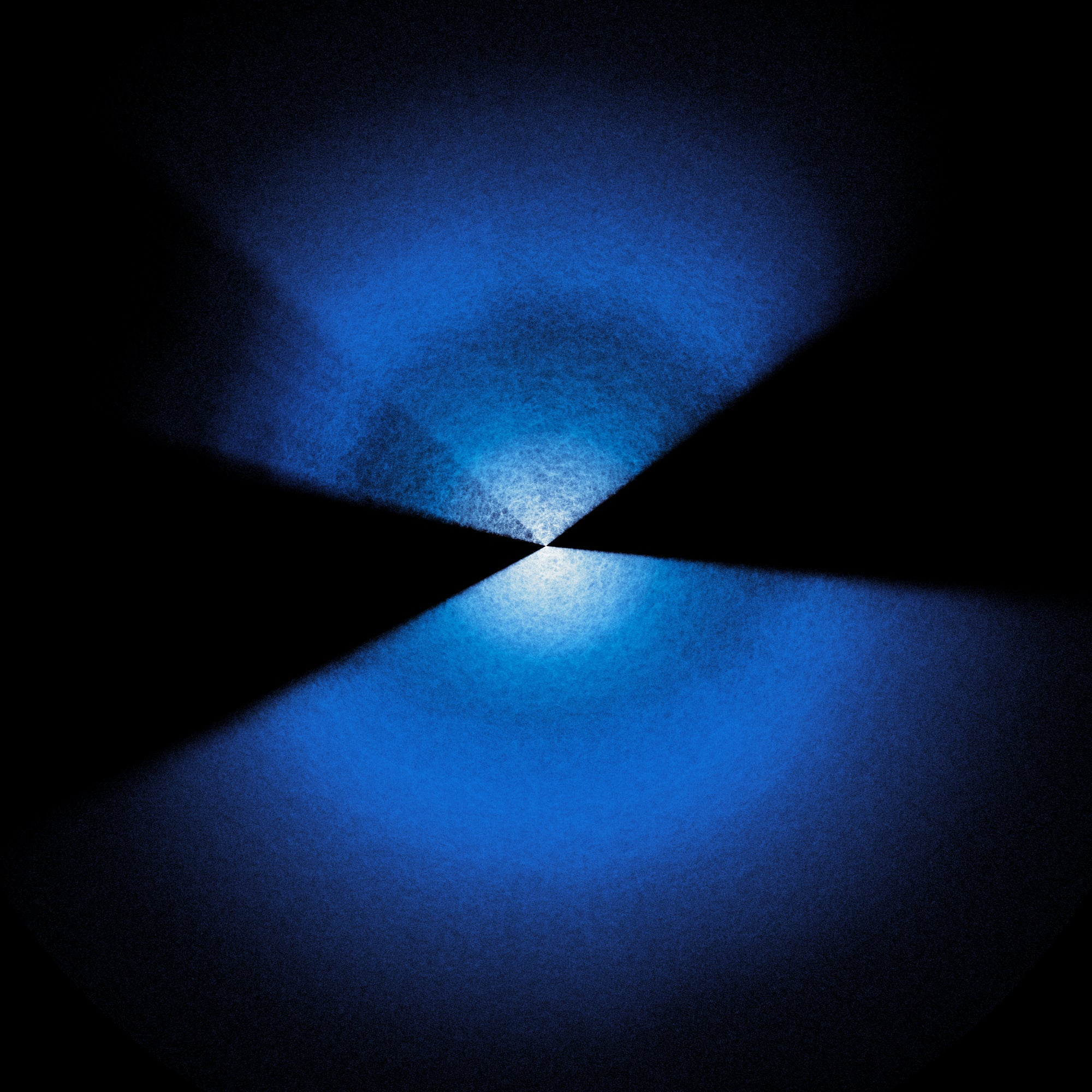
The largest ever 3D map of the universe, created by the now completed five-year DESI survey. Each dot represents a galaxy. Earth is the middle point.
DESI Collaboration and DESI Member Institutions/DOE/KPNO/NOIRLab/NSF/AURA/R. Proctor (image); M. Zamani/NSF NOIRLab (image processing)
DESI’s data includes six times as many galaxies and other cosmic objects as all previous measurements combined, according to NOIRLab. Now attention is turning to processing and analyzing all those data: the collaboration expects to have more definitive dark energy results in 2027. And although its five-year survey is complete, DESI is not done; through 2028, the project will continue observations and grow its map by another 20 percent. This next stage will focus on areas of the sky that are more tricky to observe, as well as some celestial regions where more distant and fainter objects may yet lurk.
“DESI’s five-year survey has been spectacularly successful,” said Michael Levi, director of DESI and a scientist at Berkeley Lab, in a statement. “We’re going to celebrate completion of the original survey and then get started on the work of churning through the data, because we’re all curious about what new surprises are waiting for us.”
It’s Time to Stand Up for Science
If you enjoyed this article, I’d like to ask for your support. Scientific American has served as an advocate for science and industry for 180 years, and right now may be the most critical moment in that two-century history.
I’ve been a Scientific American subscriber since I was 12 years old, and it helped shape the way I look at the world. SciAm always educates and delights me, and inspires a sense of awe for our vast, beautiful universe. I hope it does that for you, too.
If you subscribe to Scientific American, you help ensure that our coverage is centered on meaningful research and discovery; that we have the resources to report on the decisions that threaten labs across the U.S.; and that we support both budding and working scientists at a time when the value of science itself too often goes unrecognized.
In return, you get essential news, captivating podcasts, brilliant infographics, can't-miss newsletters, must-watch videos, challenging games, and the science world's best writing and reporting. You can even gift someone a subscription.
There has never been a more important time for us to stand up and show why science matters. I hope you’ll support us in that mission.