







Did you know that the famous founders of Apple, Steve Jobs and Steve Wozniak, were also among the earliest hackers?
Long before the first Apple computer was built, they were fascinated by the inner workings of telephone systems. In the early 1970s, Wozniak learned about a blue box — a device that could mimic the tones used by phone company switches to route calls. Playing the proper sound sequence could trick the system into giving you free long-distance calls, bypassing the billing entirely.
They built their own blue boxes and even sold a few devices to UC Berkeley students. The experience gave them the thrill of system control and showed them the power of combining curiosity with technology.
If it hadn’t been for the Blue Boxes, there would have been no Apple. I’m 100% sure of that.
– Steve Wozniak
The funny thing is that this blue-box story was also one of the first known acts of cybercrime. It didn’t involve computers yet, but it marked the beginning of a new era in which clever minds could bend digital systems to their will, sometimes legally, sometimes not.
According to an overview of how INTERPOL defines and responds to cybercrime:
Cybercrime includes offenses against computer data and systems, as well as the use of such systems to commit other criminal acts.
Similarly, the Council of Europe’s Budapest Convention on Cybercrime defines it as:
A set of criminal offenses against the confidentiality, integrity, and availability of computer data and systems, along with content-related and copyright crimes.
While the core concept of cybercrime is widely understood, legal definitions vary across jurisdictions. Some countries emphasize offenses against information systems, while others focus on the means or intent behind the crime.
In the early days of hacking, one common motivation was simply destruction for its own sake — a digital form of vandalism. Notable examples include the Michelangelo virus1 in the 1990s, which overwrote data on infected machines, and the CIH (Chernobyl) virus2, infamous for corrupting BIOS chips and rendering computers unusable. But while such acts once made headlines, purely destructive attacks with no purpose beyond chaos have become rare.
Today’s destructive incidents — like NotPetya3 or Shamoon4 — still cause massive damage, but they are typically driven by financial, political, or strategic objectives, not just mischief.
The motives behind cybercrime have matured, even if the tools remain just as dangerous.
Cybercrime is a global issue, but its legal definitions vary across countries and jurisdictions. While specific enforcement and terminology may vary by jurisdiction, there is a near-universal baseline for criminal liability in cyberspace. Let’s mark this baseline.
Several classification systems have emerged to aid investigation, prosecution, and international cooperation. The most prominent is defined in the Convention on Cybercrime, adopted in 2001 by the Council of Europe. It offers a structured taxonomy adopted or inspired by legislative frameworks in many countries, including EU member states, the United States, Japan, Australia, and others.
According to the Convention, cybercrime offenses fall into four primary categories:
Offenses against the confidentiality, integrity, and availability (CIA) of computer data and systems These crimes are enabled explicitly by technology and include illegal access, illegal interception, data interference, and system interference.
Computer-related offenses These are traditional crimes (e.g., fraud and forgery) committed digitally. The computer or network serves as a tool for executing otherwise conventional criminal conduct.
Content-related offenses These include the distribution of child sexual abuse material (CSAM) and other forms of prohibited content, such as incitement to violence or extremist propaganda.
Offenses related to infringements of copyright and related rights This category addresses unauthorized reproduction, distribution, and access to protected digital works.
Some interpretations5 extend this taxonomy further by introducing tiers of cybercrime:
Of course, there are many other models exists, but they are not as widely used and less prominent in the context of worldwide legislation.
The Budapest model provides a widely accepted baseline for drafting laws, structuring enforcement priorities, and framing international cooperation. The offenses described in the following section align with this structure and are recognized, in some form, across most national jurisdictions.
Accessing the whole or any part of a computer system without right, whether by bypassing security or otherwise, constitutes an offense when done intentionally. This includes unauthorized intrusion into systems, regardless of the attacker’s purpose, and may cover systems connected to other networks.
Intentionally intercepting non-public computer data transmissions without right — whether during transmission to, from, or within a computer system — is a criminal offense. This includes interception through technical means such as packet sniffing or electromagnetic capture.
Damaging, deleting, deteriorating, altering, or suppressing computer data without the right is an offense when committed intentionally. This protects the integrity and availability of data within computer systems from unauthorized tampering or sabotage.
Intentionally hindering the lawful functioning of a computer system without permission — by inputting, transmitting, deleting, or damaging data — is a punishable offense. This includes denial-of-service attacks and other acts intended to disrupt operations.
Producing, distributing, or possessing devices, including software or passwords, primarily intended to commit offenses such as illegal access, interception, or interference, constitutes a criminal act. The offense requires intent to use or enable the use of such tools unlawfully.
Inputting, altering, deleting, or suppressing computer data to create inauthentic data that appears legally valid is considered computer-related forgery. The offense applies regardless of whether the falsified data is directly readable.
Causing a loss of property to another by interfering with computer data or systems — through acts such as manipulation or suppression — to gain an unlawful economic benefit is considered fraud when committed intentionally and without right.
Producing, distributing, transmitting, offering, procuring, or possessing child sexual abuse material in digital form is criminalized. The offense includes content that visually depicts minors or persons appearing to be minors engaged in sexually explicit conduct, or realistic representations thereof.
Infringing copyright or related rights on a commercial scale and through computer systems is a criminal offense. This includes the unauthorized distribution or reproduction of protected works or performances through digital networks.
To create a complete picture, in 2003, the Budapest Convention was expanded with the First Additional Protocol (2003), requiring the criminalization of acts involving the dissemination of racist and xenophobic material through computer systems. The protocol is not as widely adopted as the original Convention, mainly because of differing national views on regulating speech online.
Initially viewed as a novelty or entertainment tool, deepfakes are now increasingly weaponized in social engineering campaigns. Fraudsters can impersonate executives, public figures, or relatives in voice or video to enhance phishing messages, manipulate conversations, or demand urgent actions. Deepfake-based phishing (also called “vishing 2.0”) has successfully deceived employees into transferring funds or disclosing sensitive credentials, bypassing traditional warning signs.
Many countries are rapidly introducing laws to regulate deepfakes and synthetic media. In the United States, federal laws like the 2025 Take It Down Act and the proposed No Fakes Act criminalize non-consensual and deceptive use of AI-generated content, with over 40 states enacting similar measures. The UK’s Online Safety Act and the EU’s AI Act introduce strict obligations on platforms and classify high-risk synthetic media for tighter scrutiny. Countries like Canada and Australia are advancing broader online harms legislation, while specific laws such as Tennessee’s ELVIS Act protect against unauthorized AI-based impersonation. This growing regulatory patchwork reflects global concern over the misuse of deepfake technologies.
Deepfakes and Information Warfare
One of the most widely reported and alarming deepfake incidents occurred in March 2024, when a deepfake video of Ukrainian President Volodymyr Zelenskyy appeared on hacked Ukrainian news websites and social media. In the video, Zelenskyy seemingly urged Ukrainian troops to lay down their arms and surrender to Russia. The video was quickly identified as fake due to poor facial synchronization and unusual body language. This event highlighted the potential of deepfakes to be used in information warfare, mainly to spread disinformation and undermine public trust during conflicts.
A deepfake of Ukrainian President Volodymyr Zelensky calling on his soldiers to lay down their weapons was reportedly uploaded to a hacked Ukrainian news website today, per @Shayan86 pic.twitter.com/tXLrYECGY4
— Mikael Thalen (@MikaelThalen) March 16, 2022
Cyberactivism — or hacktivism — has become a prominent feature of modern geopolitical conflict. State-aligned or ideologically motivated hacker groups target rival governments, institutions, or companies with defacements, data leaks, and denial-of-service attacks. The Russia–Ukraine war, for example, has seen widespread use of cyber operations by both sides and their supporters, often blurring the lines between state and civilian participation.
Hacktivism is not limited to sabotage. Campaigns often aim to disrupt narratives, leak internal documents, or retaliate against perceived injustices. These attacks may technically fall under cybercrime statutes, but enforcement is difficult when the perpetrators operate across borders and under political protection. Hacktivist groups are sometimes openly celebrated or even coordinated by states, complicating international legal responses.
Hacktivist Campaigns Amid India‑Pakistan Tensions
Following the April 2025 Pahalgam terror attack and India’s Operation Sindoor in early May, hacktivists on both sides launched coordinated digital offensives. Within 24 hours of the launches, more than 100 DDoS attacks and wide-scale website defacements targeted both countries’ government, healthcare, education, and critical infrastructure. Pro-India groups like Indian Cyber Force, AnonSec, and Kerala Cyber Xtractors claimed counterattacks on Pakistani websites. At the same time, numerous pro-Pakistani collectives, some aligned with pro-Palestinian or Iran-linked actors, struck at Indian digital services.
Modern elections are increasingly vulnerable to cyber-enabled manipulation. Threat actors may deploy coordinated disinformation campaigns, bot networks, or malicious leaks to influence public perception, sow distrust, or promote specific candidates.
One of the most recent cases took place in December 2024. Romania’s Constitutional Court annulled the result of the first round of the presidential election — initially won by far-right candidate Călin Georgescu — citing evidence of foreign interference via digital platforms, including social media manipulation. The court’s ruling mandated a complete election redo in spring 2025, resulting in a new vote held in May, won by pro‑EU candidate Nicușor Dan. This case prompts broader discussion on the influence of AI, social platforms, and cyber operations in democratic processes.
Several countries have introduced laws to counter election-specific AI manipulation, automated disinformation, deepfakes, and bot-based manipulation. In the U.S., over two dozen states have passed or proposed laws restricting deceptive synthetic media in political campaigns. The U.K.’s Online Safety Act 2023 holds platforms accountable for disinformation but lacks AI-specific election rules.
Hillary Clinton presidential campaign leak
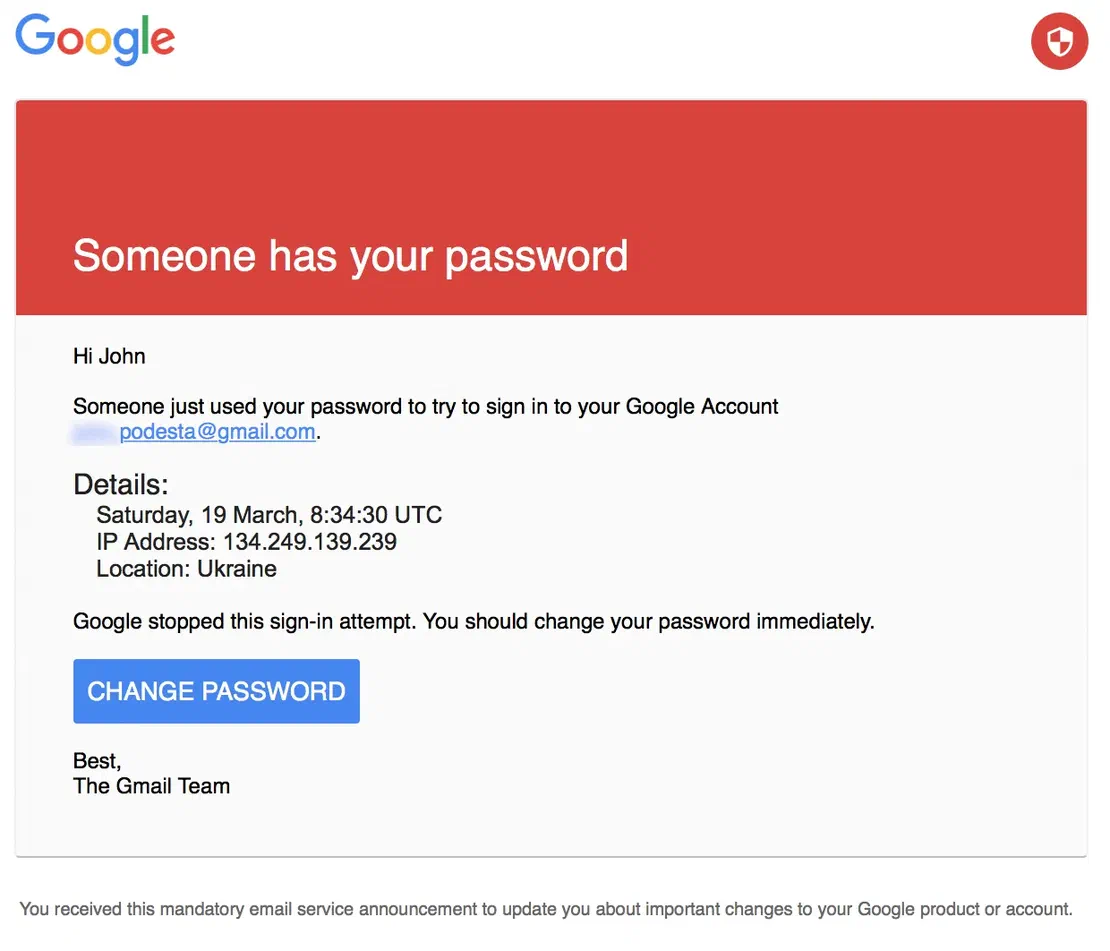
In March 2016, a coordinated phishing campaign targeted the Hillary Clinton presidential campaign and the Democratic National Committee (DNC). Attackers used spoofed emails—designed to look like Google security alerts—to trick recipients into revealing login credentials. One high-profile victim was campaign chair John Podesta. After gaining access, attackers exfiltrated thousands of internal emails and documents.
These materials were later published via platforms like DCLeaks, Guccifer 2.0, and WikiLeaks, with timed releases around key moments in the election cycle. The leaks generated widespread media coverage, disrupted the Democratic National Convention, and negatively impacted Clinton’s public image. U.S. investigations concluded the campaign was part of a broader effort to influence the 2016 U.S. election, marking one of the most prominent examples of cyber-enabled election sabotage.
Governments concerned about national security, social control, or cybercrime often introduce regulations to reduce anonymity online. These may include mandatory SIM registration, VPN usage tracking, and identity verification for social media accounts or domain ownership. While justified as tools for crime prevention, such laws often have broader implications for civil liberties and freedom of expression. In countries like China, Iran, and Russia, control over encryption, VPNs, and anonymous communication has been tightened.
Many states are enacting legislation that requires foreign technology firms to store data locally, establish legal representation within the country, and comply with content takedown orders. These “digital sovereignty” laws are framed to protect national interests and user privacy. Still, they often serve to assert control over platforms that facilitate free expression or host dissenting content. Major platforms like Google, Meta, and Apple have faced mounting pressure to follow these rules or risk fines, service restrictions, or outright bans.
U.S. Attempts to Ban TikTok Over Foreign Ownership
The U.S. has tried to ban TikTok due to concerns over its Chinese parent, ByteDance, gaining access to American user data. In 2020, the Trump administration issued executive orders requiring a forced sale or shutdown, though these were blocked in court. The Protecting Americans from Foreign Adversary Controlled Applications Act (PAFACA), passed in April 2024, set a January 19, 2025, divestiture deadline. After the Supreme Court upheld the law, TikTok briefly went offline, but President Trump’s return to office triggered multiple 75–90‑day extensions. As of June 2025, the app remains accessible in the U.S. while negotiations for a U.S.-based takeover continue.
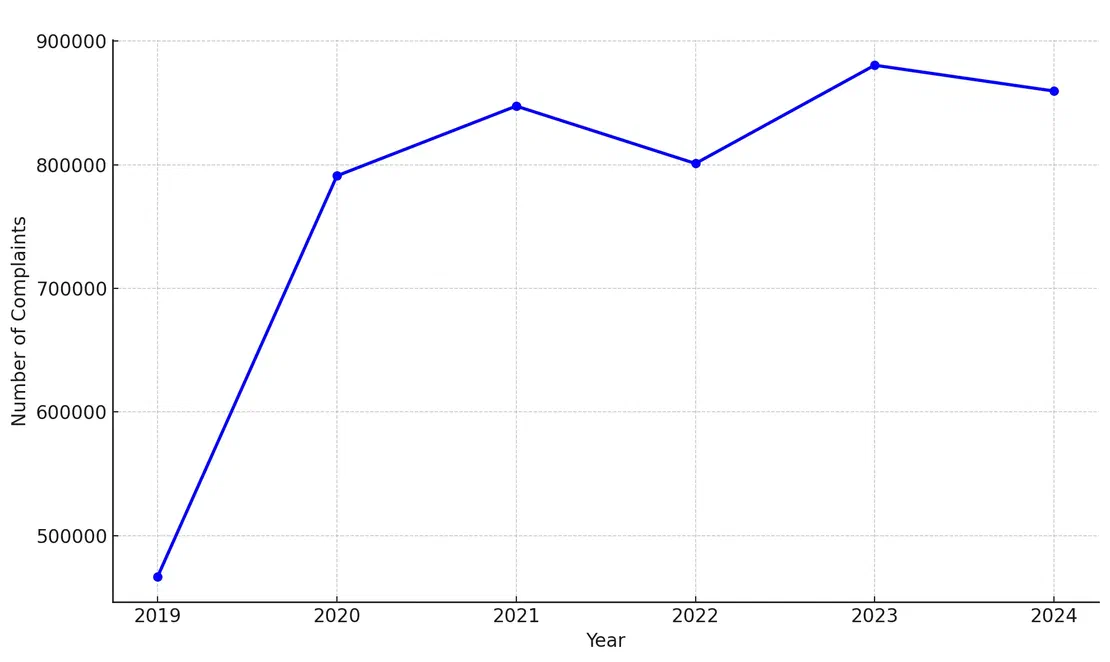
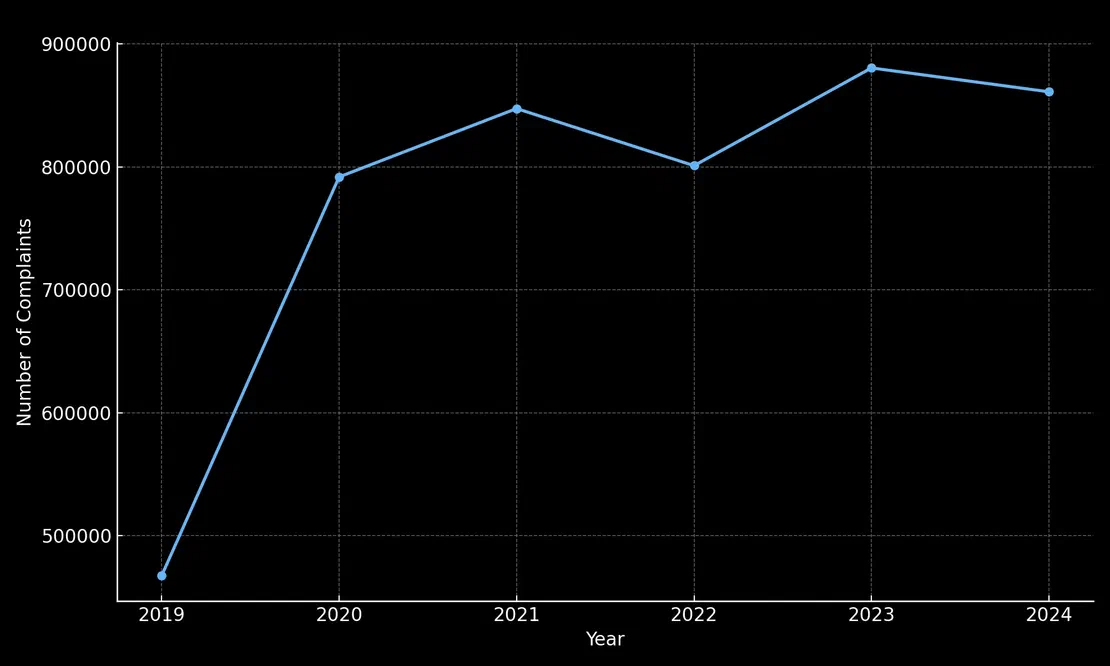
Cybercrime has surged globally from 2019 through 2024, with a sharp spike observed during the COVID-19 pandemic. As businesses and individuals moved online in 2020, threat actors pounced — one analysis noted that malware and ransomware attacks soared by over 350% and 430%, respectively. Law enforcement data echo this rise.
For example, the FBI’s Internet Crime Complaint Center (IC3) saw6 reported cybercrime complaints jump from about 467,000 in 2019 to 791,000 in 2020, an unprecedented year-over-year leap.
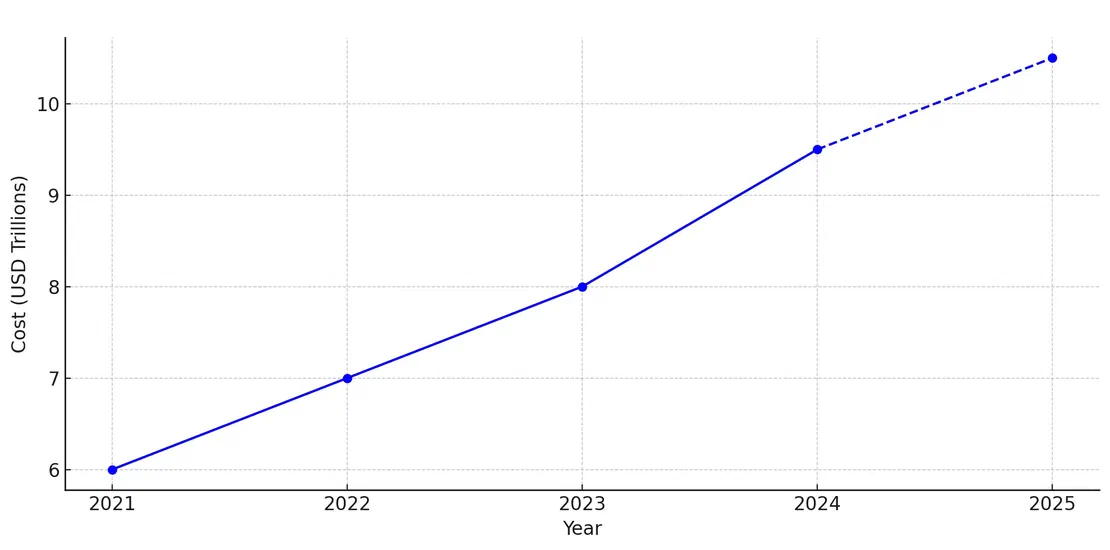
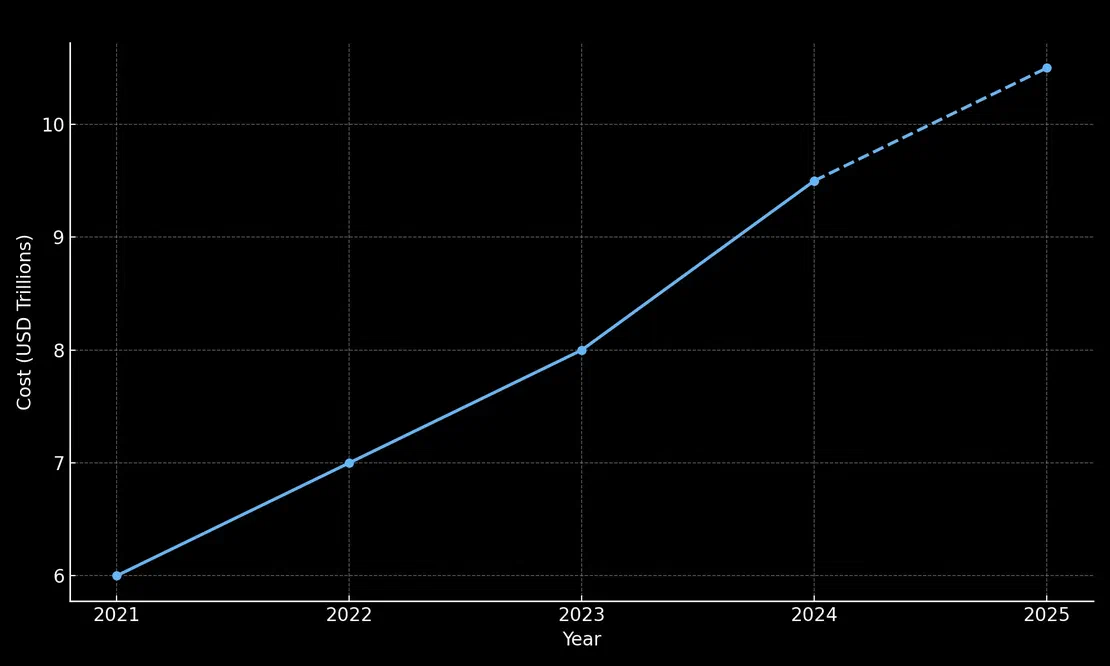
The financial impact of cybercrime has exploded alongside the rise in incidents. INTERPOL notes7 that the annual losses from cybercrime are now comparable to the GDP of major economies. Industry analyses estimate global cybercrime costs at around $6 trillion in 2021, roughly double the figure from just a few years prior, and project costs to reach $10.5 trillion annually by 2025.
| Category | 2022 | 2023 |
|---|---|---|
| Reported ransomware attacks | 1,300+ | 2,200+ |
| Value of global cyber fraud loss | $2.7 billion | $3.5 billion+ |
| National cybercrime operations | 40+ countries | 60+ countries |
| Arrests during cyber operations | ~1,200 suspects | 1,500+ suspects |
| Seized infrastructure/services | N/A | 70 servers, 1,300+ domains |
According to Cybersecurity Ventures’ annual reports and partner publications8, the global economic impact of cybercrime inflicted $6 trillion in damages in 2021, with costs rising to $9.5 trillion by 2024. The projection for 2025 reaches $10.5 trillion, reflecting a compound annual growth rate of approximately 15% from a 2020 baseline.
The European Union Agency for Cybersecurity (ENISA) regularly monitors cyber threats targeting critical infrastructure sectors. According to their 2024 Threat Landscape report9, DoS, DDoS, and RDoS attacks accounted for the largest share of cyber incidents, making up 41.1% of all reported cases. Ransomware remained the second most common threat, responsible for 25.79% of incidents — a trend driven by increasingly aggressive tactics like double extortion. Data breaches, including leaks of sensitive or personal information, comprised 19.01%. Meanwhile, phishing and social engineering attacks comprised 6.06%, and malware-based compromises accounted for 5.19%.
    pie
	    title Incidents by Threat Type
	    "DoS/DDoS/RDoS Attacks" : 41.1
	    "Ransomware" : 25.79
	    "Data Breaches" : 19.01
	    "Phishing / Social Engineering" : 6.06
	    "Malware" : 5.19
	    "Other" : 2.85
These numbers reflect only incidents reported to national or EU-level cybersecurity bodies, where the effect was considered disruptive or economically significant.
Everyone from private citizens to multinational organizations and governments has been victimized. From personal bank accounts emptied by scams to national hospitals paralyzed by ransomware, no one is spared.
Every year, hundreds of millions of individuals fall victim to cybercrime. In the United States alone, the FBI received over 880,000 individual cybercrime reports in 20236. The actual global number is far higher.
Victims often suffer:
Businesses are prime targets for ransomware groups, email fraud, and supply chain attacks. In 2023, IBM X-Force ranked10 manufacturing, finance, professional services, and healthcare among the most attacked sectors worldwide. Meanwhile, Mandiant found11 that 17.4% of all incidents globally in 2024 affected financial services, the top targeted industry.
Notable consequences include:
Critical infrastructure has become a frontline in the cyberwarfare era, with hospitals shut down, trains halted, and power grids manipulated. Attackers target essential systems for extortion, disruption, or geopolitical influence.
ICS/SCADA systems, medical devices, and legacy networks remain uniquely vulnerable and expensive to secure.
Government agencies, election systems, military infrastructure, and diplomatic networks are frequent targets of nation-state actors and APT groups. In recent years:
According to a 2023 INTERPOL report7, state-sponsored cyber operations were responsible for at least 25% of all high-complexity global incidents. Meanwhile, bot-driven misinformation and election interference tactics are now considered standard practice during major democratic events.
An Advanced Persistent Threat (APT) group is a highly skilled, well-resourced cyber adversary — often linked to a nation-state or organized cybercrime syndicate — that conducts long-term, targeted attacks to gain unauthorized access to systems, exfiltrate data, or disrupt operations. Unlike opportunistic attackers, APT groups use custom tooling, stealthy techniques, and multi-stage campaigns to infiltrate networks and maintain persistence over time. Strategic objectives, such as espionage, sabotage, or geopolitical influence, drive their operations.
Notable examples include APT29 (Cozy Bear), linked to Russian intelligence, APT41, associated with Chinese state-sponsored espionage and financially motivated activity, and Equation Group, widely believed to be related to the NSA, and offensive toolkits revealed in the Vault 7 CIA leaks.
Each year from 2019 through 2024 has seen greater scale and new tactics in cybercrime. Cybercriminal activity exploded significantly with the mass shift to remote work and digital services. On the other hand, defensive improvements and law enforcement pressure may have tempered a few threats: security firms noted a slight decline in observed ransomware cases from 2021 to 2022, and Mandiant reported11 that the median “dwell time” (the time an attacker lurks in a network before detection) dropped from over 20 days in 2020 to around 11 days in 2024, down, with the lowes value of 10 days in 2023.
Despite a few hopeful signs, the overall trend remains upward: more attacks, higher losses, and increasingly crafty adversaries each year. Cybercriminal techniques continue to evolve – from the rise of “as-a-service” criminal tools that make hacking easier, to the exploitation of global events (like the pandemic or geopolitical conflicts) to fuel new attacks.
Meanwhile, the commercialization of cybercrime has lowered barriers for entry: would-be criminals can buy stolen data, malware kits, or even access to hacked networks (backdoors) on illicit marketplaces10. All signs indicate that cybercrime will keep growing in scale and sophistication year over year without a coordinated global response, posing ever-greater economic and security challenges worldwide.
It’s clear that today’s threats require coordinated responses across sectors, borders, and disciplines. Organizations aim to cooperate to combat these threats. To understand this cooperation, let’s categorize actors and institutions by their functions and spheres of operation.
This leads us to a two-dimensional framework, defined by three Levels of Cybercrime Response — International Level, National Level, and Corporate Level — and three Functional Areas of Action — Legal and Policy Frameworks, Investigation and Threat Intelligence, and Technical Collaboration and Incident Response.
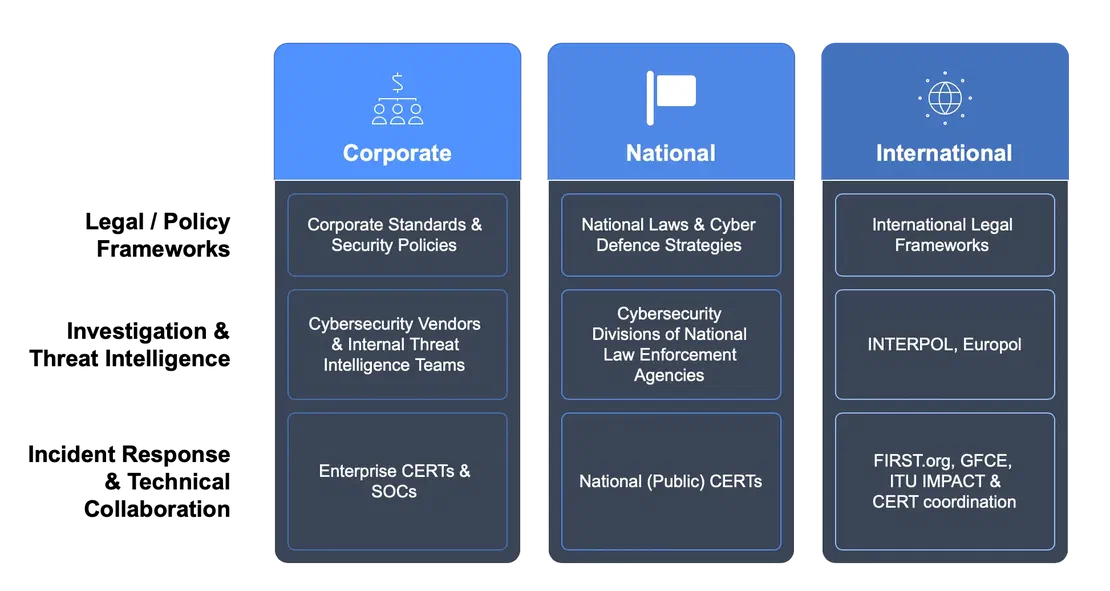
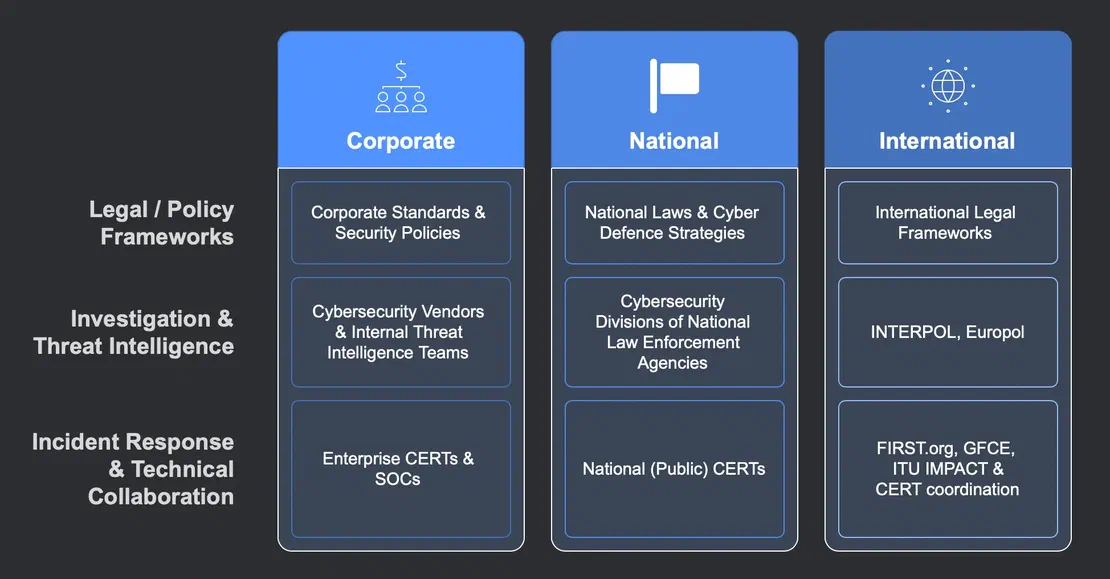
Let’s take a closer look at this structure by exploring how cybercrime is tackled at the corporate, national, and international stages.
The international level focuses on making cross-border cooperation possible: aligning laws, connecting investigators, and supporting technical response teams. Without this international collaboration layer, many cybercrimes would go unpunished simply because no single nation has full jurisdiction over the attack chain.
One of the most important steps in international cooperation is aligning the legal definitions and tools used to prosecute cybercrime. The cornerstone of this effort is the Budapest Convention on Cybercrime, adopted by the Council of Europe and open to countries worldwide. It provides a framework for defining cyber offenses and simplifying cross-border access to digital evidence. For countries that have ratified it, the convention serves as a foundation for legislative reform and international legal cooperation.
The United Nations Office on Drugs and Crime (UNODC) also plays a central role through its Cybercrime Programme, which helps member states — especially developing nations — build legislative capacity, train investigators and prosecutors, and establish mechanisms for cross-border cooperation.
INTERPOL and Europol facilitate operational coordination between national law enforcement bodies.
These institutions do not prosecute cases, but enable national agencies to work together more effectively.
Beyond legal and investigative cooperation, effective cyber defense relies on technical coordination and trust-based information sharing. Organizations such as:
While these organizations don’t chase cybercriminals directly, they enable faster detection, shared knowledge, and coordinated containment.
Individual nations have the core responsibility for fighting cybercrime. National governments are uniquely positioned to enforce laws, protect critical infrastructure, and provide incident response at scale. They act as the operational backbone of cyber defense, combining legal authority, investigative power, and public-sector cybersecurity expertise.
At the national level, laws define which cyber activities are criminal, how evidence can be collected, and what penalties apply. These laws sometimes draw from international agreements (such as the Budapest Convention) but are implemented locally through national legislation.
Many countries have also adopted national cybersecurity strategies — high-level documents outlining priorities for protecting infrastructure, managing incidents, developing talent, and engaging international partners. These strategies typically designate roles for different agencies and define the mechanisms for public-private coordination.
Investigating cybercrime falls primarily to law enforcement agencies with specialized cyber units. These units handle a wide spectrum of cases: from business email compromise and ransomware to large-scale breaches and online fraud.
Examples include:
Alongside law enforcement, intelligence and national security services play a critical role, especially when attacks are suspected to be the work of foreign states or pose a risk to national security. Agencies like the 🇺🇸 NSA, 🇬🇧 GCHQ / NCSC, and 🇩🇪 ZITiS collect and analyze threat intelligence, monitor adversarial cyber activity, and sometimes engage in offensive or defensive cyber operations.
China’s Approach to Cybercrime and Internet Control
In China, cybercrime prevention is closely integrated with broader state control over the internet. The Ministry of Public Security plays a central role in investigating cybercrime and monitoring online activity, restricting access to certain websites, and enforcing content regulations.
This centralized approach, combined with strict enforcement and infrastructure-level controls — often referred to collectively as the Great Firewall — significantly limits access to harmful content and foreign threat infrastructure. As a result, China’s model prioritizes risk reduction through control, minimizing many external cyber threats, albeit at the cost of internet openness.
Many governments operate or sponsor national-level CERTs to support detection and containment. These teams issue vulnerability alerts, coordinate incident response for public infrastructure, and serve as national points of contact in global CERT networks.
Examples include:
These public CERTs often work hand-in-hand with industry, offering technical guidance during incidents and helping disseminate threat intelligence across sectors.
CERTs can operate at various levels — within private companies, national governments, or international alliances — and often serve as trusted points of contact for sharing threat intelligence, issuing vulnerability alerts, and coordinating incident response efforts across organizations or borders.
At the corporate level, organizations are not only frequent targets of cybercrime but also essential actors in the global cyber defense ecosystem. Enterprises, service providers, and security vendors often detect threats first, respond in real time, and generate valuable intelligence that feeds into national and international response systems.
Most large organizations implement internal security policies, governance frameworks, and compliance programs aligned with standards such as ISO 27001, NIST, or GDPR. These frameworks define how the company secures assets, manages risk, and responds to incidents.
Companies must also meet national cybersecurity compliance obligations in heavily regulated industries like finance, healthcare, and critical infrastructure.
Corporate cybersecurity teams play a critical role in detecting, analyzing, and responding to cyber threats that target their infrastructure, employees, and customers. While internal teams often focus on protecting the organization itself, a broader ecosystem of security vendors and large service providers contributes to global threat intelligence.
Beyond the corporate perimeter, security vendors and large technology providers such as Mandiant, CrowdStrike, Kaspersky, and others actively track global threat actors, including APTs, criminal networks, and state-sponsored operations. These companies:
Some providers also maintain public-facing platforms (e.g., threat blogs, dashboards, feed APIs) and regularly collaborate with law enforcement and governments during takedowns or investigations of high-impact operations.
Security teams use IoCs to detect and respond to threats, often integrating them into intrusion detection systems, firewalls, or threat intelligence feeds.
Many medium and large enterprises operate Security Operations Centers (SOCs) and CERTs to monitor systems, respond to threats, and support recovery.
Corporate CERTs also participate in industry-specific information-sharing alliances. These platforms enable companies to share IOCs, response strategies, and situational awareness, increasing collective defense without requiring central control.
In summary, the corporate level represents the front line of cyber defense, where threats are detected first, damage is felt most directly, and agility is critical. While companies don’t have the authority to prosecute or legislate, they play a vital role in shaping the threat landscape through technology, intelligence, and active participation in broader cybersecurity ecosystems.
Cybercrime is no longer a niche concern — it is a global, persistent, and rapidly evolving threat that affects individuals, organizations, and nations alike. From blue-box phone phreaking in the 1970s to billion-dollar ransomware campaigns and nation-state cyber operations today, the scale and sophistication of malicious activity have grown exponentially.
Cybercrime cannot be eliminated entirely, but its impact can be managed — and in many cases, prevented — through a combination of vigilance, cooperation, and shared intelligence. As the threat landscape evolves, so must the organizations that defend against it. Strengthening connections between these layers is not just a best practice — it’s a necessity.

Book Your Netlas Demo
Chat with our team to explore how the Netlas platform can support your security research and threat analysis.
此内容由惯性聚合(RSS阅读器)自动聚合整理,仅供阅读参考。 原文来自 — 版权归原作者所有。