
Sedatives have already been detected in five products. A tort law expert explains: What is the amount of compensation, and how will it be determined?
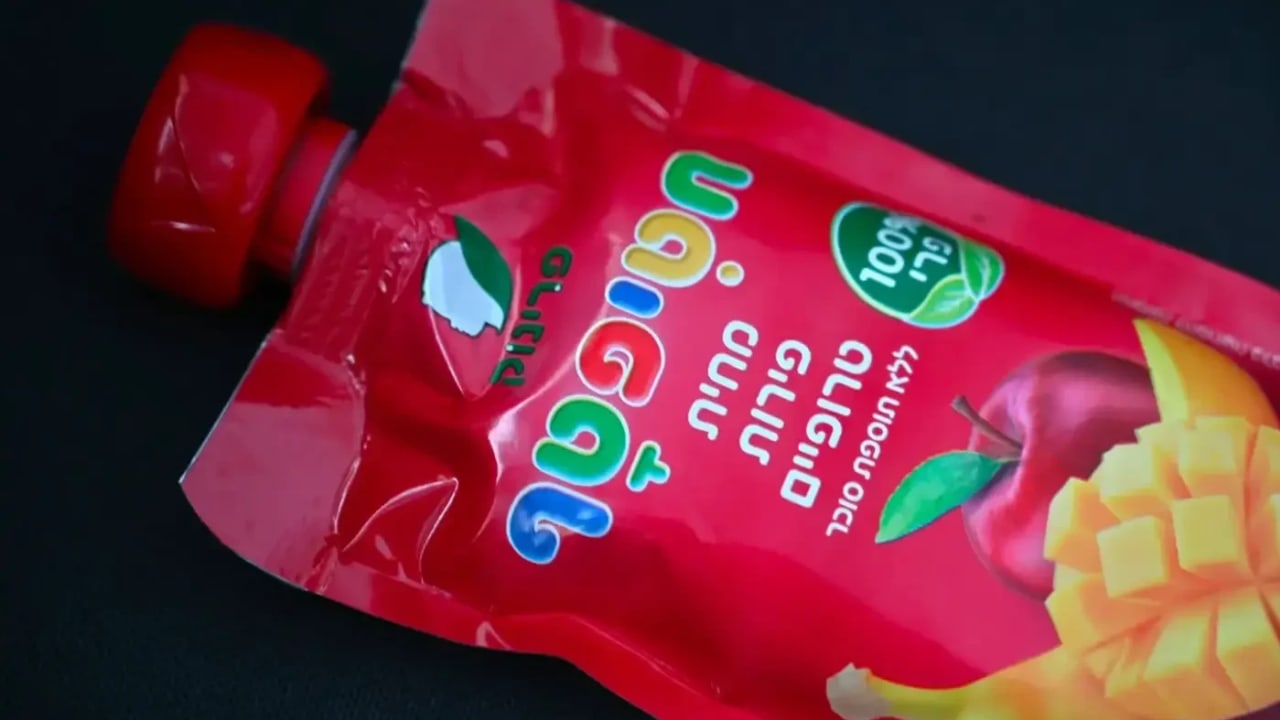





The Ministry of Health updated last week that during the investigation into the infant purees of the brand "Prinok," two additional products were located in which sedatives of the Clonazepam and Lorazepam types were found. This brings the number of products in which the pharmaceutical substances were identified to five. According to the ministry's announcement, three of the products were submitted by the families whose children were hospitalized after consuming the purees, and the two additional products were sampled directly from the shelves of the food chain in Jerusalem.
So far, two incidents have been reported in which five children were hospitalized with suspicion of exposure to substances from the benzodiazepine family – psychoactive substances used to reduce anxiety symptoms and as sleeping pills. This disturbing affair could have been uncovered about a month earlier. Already then, a first case was treated, involving two children who arrived at the Hadassah Ein Kerem emergency room with similar symptoms. The medical staff transferred the puree purchased at that same supermarket to the police, and the police requested to transfer it for examination by the Ministry of Health.
However, the Ministry of Health, for reasons that remain unclear, did not see fit to test the puree. Only after the second incident, last Thursday, in which three children were rushed to the emergency room simultaneously, did the ministry contact the police and request to receive the first jar for testing.
The new discoveries bring to the surface difficult questions regarding the regulator's failure. Will the Ministry of Health be required to compensate the families for negligence, and what is the potential psychological damage to the parents? To make sense of things, we turned to Attorney Assaf Warsha, an expert in tort law.
Does the conduct of the Ministry of Health constitute negligence under tort law?
"Negligence in Israeli tort law is proven through four cumulative elements: Duty of care, its breach, damage, and causation. The first two allegedly exist here. The duty of care is examined on two levels. On the conceptual level, the Ministry of Health is, as defined by the police itself, 'the body entrusted with testing food products,' and therefore owes a duty of care toward the consuming public, an increased duty when it comes to infant food. On the concrete level, this was not a vague suspicion but a focused report from a hospital about two children who were hospitalized after eating an identified product, whose jar was available for testing.
"A body entrusted with food safety can and should foresee that failing to test a suspect product will lead to its continued sale and harm to additional children. The breach of duty is measured against the 'reasonable person,' based on conduct and not outcome. A reasonable person in such a situation would have ordered a laboratory test, a basic and routine action, and avoiding it is the deviation from the standard. This is reinforced by the conduct of the ministry itself: After the second incident, it immediately requested the jar and tested it, thereby proving that the capability, availability, and professional need existed already in the first case. The gap between the two is the measure of the negligence."
And what about the damage?
"Even though the babies were discharged from the hospitals after a few days, and ostensibly without long-term damage, it is precisely the parents who may be the primary victims here. The anxieties and mental distress that arose following the nightmare into which they were thrust, the sight of their child collapsing before their eyes, could leave a significant psychological mark on them. Legally speaking, a parent is an 'indirect victim,' and their entitlement to compensation for their psychological damage is examined according to the Alsuha ruling, the guiding ruling on psychological damage to a family member. The ruling sets four conditions: Family proximity to the victim, direct impression of the event, proximity in place and time, and sufficient severity of psychological damage. In the first three, the parents meet the criteria. The crucial question is whether their psychological injury will reach the threshold that Alsuha requires, an open question that will be examined on its merits according to the severity of the injury, its duration, and the medical documentation."

Why, psychologically speaking, did the parents suffer trauma that could accompany them, even if their children recovered quickly?
"From a psychological perspective, the parents were exposed to an event that could leave a lasting mark on them. Research shows that the intensity of a traumatic response is determined not by the objective medical severity of the injury, but by the subjective experience, and that it is not contingent at all on a death threat. A parent who saw their child collapsing before their eyes experienced a threat to what is most precious to them, even if the child recovered quickly. These reactions, termed 'pediatric medical traumatic stress,' include intrusive thoughts, avoidance, hyper-alertness, and disturbed sleep, and sometimes develop into post-traumatic stress disorder. Although only a portion of those exposed develop the full disorder, watching a child lose consciousness places the parents in a real risk group. The child's physical recovery does not guarantee their psychological recovery."
What is the amount of compensation the parents are likely to receive?
"If the parent's psychological injury remains at the level of temporary distress without disability, the compensation may range in the tens of thousands of shekels, mainly for pain and suffering and treatment expenses. If a real and ongoing psychological disability is determined, the sum could reach hundreds of thousands of shekels and even more, depending on the percentage of disability, the parent's age, and the impact on their earning capacity."
What would have happened if a similar affair had occurred in the United States, would the court have required the American Department of Health to pay punitive damages?
"Had the event occurred in the United States, the picture regarding a government entity would be the opposite of the prevailing image of giant American compensations. The doctrine of sovereign immunity blocks lawsuits against the state, and the laws that partially waive it explicitly forbid awarding punitive damages against authorities. Thus, even if the Department of Health had been negligent exactly as described, the parents would have won, at most, compensation for the actual damage proven, but not a single NIS 1 of punitive damages.
"This is an interesting paradox: Precisely in the country considered the capital of punitive damages, a public body that is negligent is much more protected than a private manufacturer or a commercial chain. The central deterrent weapon of tort law is not drawn at all when the defendant is the state."
此内容由惯性聚合(RSS阅读器)自动聚合整理,仅供阅读参考。 原文来自 — 版权归原作者所有。