A great big welcome to our newest subscribers! You're just in time for something special. This is the first edition of Not-Ship that also lets you explore the data yourself. If you find it useful, share it with a friend.
💙 Amanda
It's summer! At least, that's what I'm told (I live in Scotland). But it must be true because every magazine, newspaper, blog and newsletter has dropped their summer reading list.
So, we're doing it, too — but with a Not-Ship twist. Why trust Vogue, or NPR or the New York Times to tell you what to read? Why put faith in a random list when, instead, we could trust the statistics.
Simply: If we collect all the summer 2026 book recommendations, then we can see which titles are recommended the most often. Here we go!
I gathered 49 summer reading lists — nearly every one I could find. They came from English-language news outlets, magazines and newsletters; publications like the Milwaukee Journal Sentinel, Country Living, Rest of World and Bibliolifestyle. Even the financial institution J.P. Morgan had some suggestions.
From those lists, I pulled 1069 book recommendations. And I started analyzing.
The titles covered a range of categories, with the literary fiction and crime/thriller genres showing up most often.
Apparently horror stories and poems aren't good beach reads
Portion of books on the Not-Ship mega-list that fall into each literary category, as determined by Claude.
It doesn't surprise me that lists for leisure reading have more thrillers than self-help books. It also doesn't surprise me that the vast majority of books were published in 2026. Only about one in ten recommendations were for literature written before 2020.
What did surprise me though, were these two ancient additions:
Not all book recommendations were from this century — or this millennium
Ultimately, I expected to see the same books over and over — the 2026 summer releases with the biggest promotional budgets. The book industry has been capitalizing on the season for over 100 years. Also, I'm still grumpy about the death of originality.
But I was wrong. Of the 1069 recommendations, 779 were different books. And of those, 137 were suggested more than once. In other words, only 18% of books appeared on more than one list. A win for literary diversity!
That said, a small group of books did manage to cut through. And ... drumroll... the most-recommended book was Ann Patchett's new novel Whistler. It made an appearance on almost one in three lists.
The most-recommended books of summer 2026
These eleven titles were on more than five lists.
Other frequent appearances included Liane Moriarty's Big Little Truths, another novel from the author of Big Little Lies; Maggie O'Farrell's Land, her first since the beloved Hamnet; and Cool Machine, the latest from two-time Pulitzer winner Colson Whitehead.
I think we can all agree, the best book recommendations come from someone who knows us well. But failing that, why not rely on the numbers? Even in summer, there's never enough time, and never enough vacation. So don't waste it on just any book. Waste it on a book that's statistically significant.
GET A RECOMMENDATION
Use the dropdown below to see all 779 books in the Not-Ship mega-list. Beneath each title you'll find a list of the publications that recommended it. Click on a publication to see what was said about that book.
This kind of thing takes a lot of work. And while I love looking at lists upon lists upon lists upon lists, it's only sustainable if you help. So, join me! Become a paying member of Not-Ship. It's only $9/month ($90/year).
A note on the data
I collected all the book titles and authors myself, but asked AI (Claude) to do two things: Assign a genre to each, and date them. I spot-checked enough to trust the broad strokes, but a date or two may be off.
READERS RESPOND
Last week I wrote about how everything feels the same, and AI is only going to make it worse. You had some wonderful responses:
I personally think it's all linked to a common trend – a trend where we just want everything so easy, even our entertainment. Genuinely new art takes you on a journey. It challenges you to think and be present. Sequels don't do that. And AI is often used in the same way. It's a way to get the things we want without having to think about or work at them too hard. Thus, we converge to easy, digestible, sameness. — Lauren, who writes a fantastic data newsletter of her own.
I watch movies to feel something — not for my eyes to be tickled by CGI explosions and glossy people. I want to know why I exist and why life is hard and beautiful and I want to see the divine in the mundane everyday — and most movies leave me bored with life. Thank you for this truly. It puts numbers and words to what I’ve felt since I was a teenager bemoaning the choices at the theater and nervous I would waste money on yet another soul-sucking movie. — Jane
A few of you also shared great related work, like this New York Times piece about AI-driven diversity collapse and a video about a melody that has been used hundreds of times over.
There was also this comment from Bob, which sent me down a delightful rabbit hole.
The iterative visual reductionism of AI reminded me of evolution's tendency to produce crabs. — Bob
And finally, a lovely response to the question: What have you seen lately that is truly unique? (A Not-Ship reader book recommendation!)
I am currently reading "When I Sing, Mountains Dance" and this beautiful novel feels genuinely new. I re-read many sections just for the joy of reading them. Each chapter is startlingly different but they weave together into the richest of tapestries. — Dave
FROM ELSEWHERE
Here's what I found interesting, important or delightful this week:
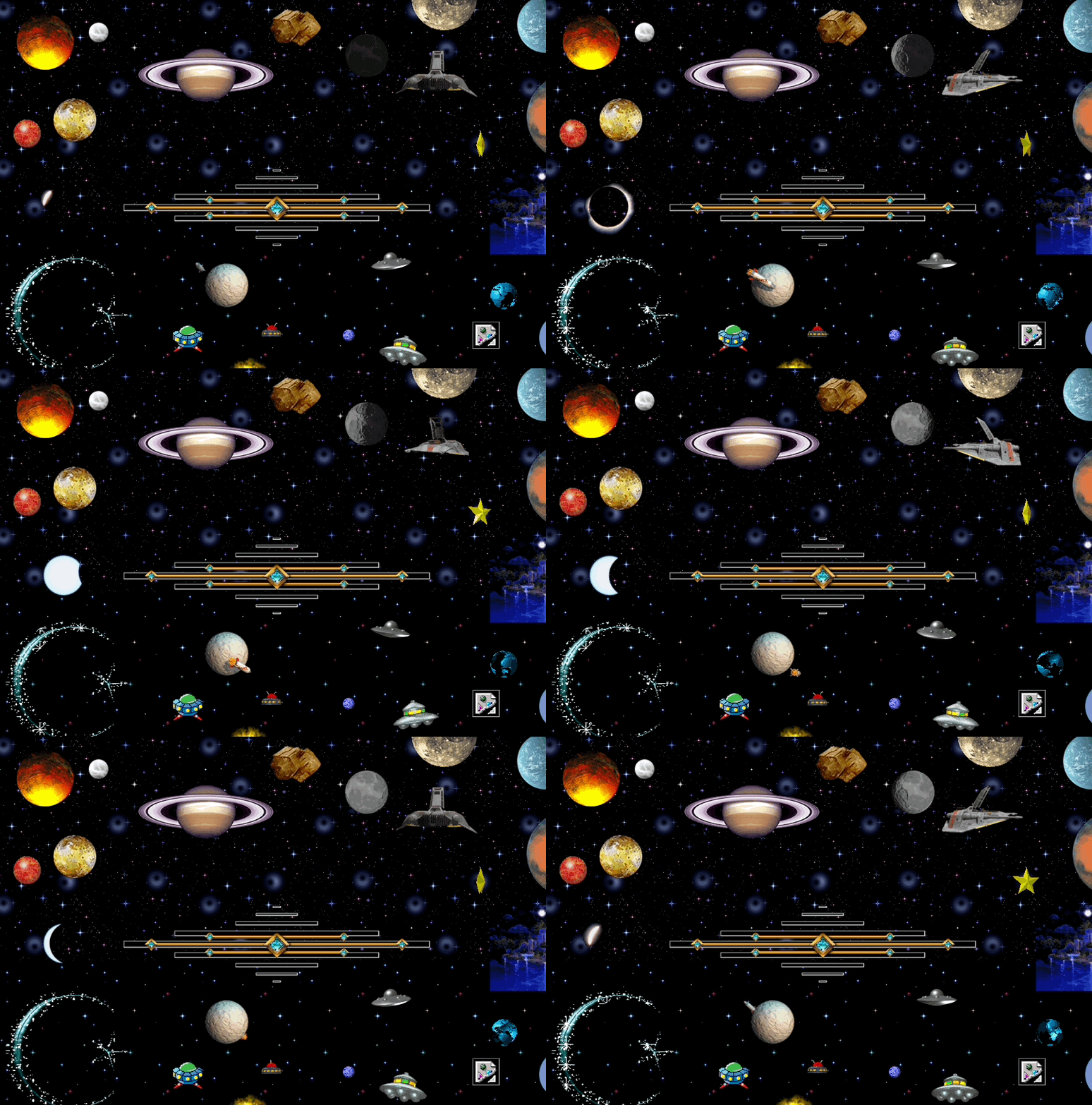
A tribute to GeoCities. A gif-tastic collage of text and images, Cameron's World's creators call it "a love letter to the internet of old." It's candy floss for the eyes.
Indices all the way down. The Baguette Index tracks the cost of a baguette across more than 5,000 bakeries in France; the Venue Index is trying to lift the veil on overpriced wedding venues by getting verified costs; and the Skyscraper Index isn't reliable, but it's an interesting theory nonetheless.
MORE NOT-SHIP
People don’t linger like they used to. It’s a problem.
In public: Walking speed is up, group gatherings are down, and we’ve lost the art of lingering.
 Amanda Shendruk
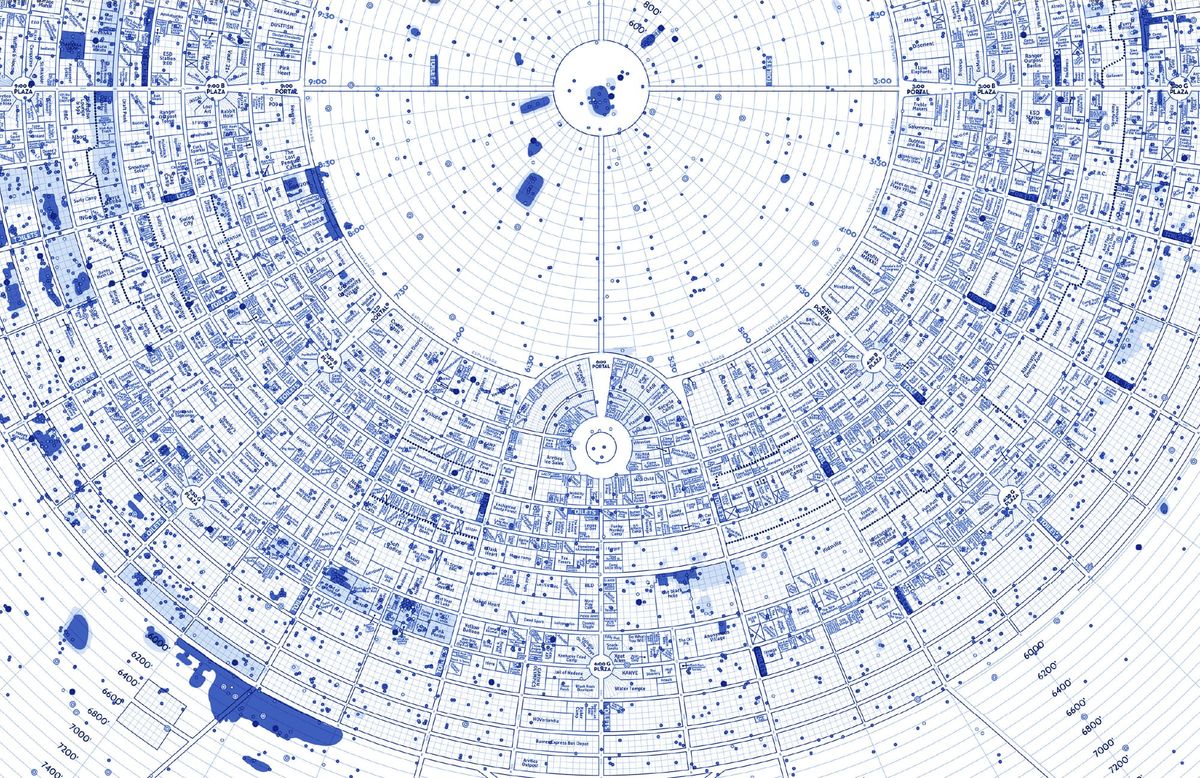
The map that keeps Burning Man honest
The event’s Leave No Trace principle isn’t just a promise — it’s measured, mapped, and made public.
 Not-ShipAmanda Shendruk
How many nukes does one nation need?
For the first time in decades, US and Russian nuclear stockpiles have no limits.
 Not-ShipAmanda Shendruk