







Pulling text from a blog to answer a user’s query, finding listings on an ecommerce website for gift ideas or performing multi-step research on complex topics: these aren’t human actions. It’s all from AI chatbots.
These examples are just some of the reasons why AI chatbots might visit your site. And, in 2026, it’s happening more, which means more sites are trying to figure out how to separate AI traffic from human traffic so they can understand the impact of both.
The problem is that not all web analytics tools can accurately measure and categorise autonomous agents. As a result, a lot of websites today don’t have the clarity they need to properly analyse traffic coming from AI sources. Luckily, there’s a way you can measure traffic from LLMs, agents and other AI sources.
In this article, we’ll cover AI chatbot traffic, the different forms it takes and why companies should be measuring it. We’ll also show you how Matomo helps companies gain a clearer view of both human and AI traffic.
In simple terms, when people use tools like ChatGPT, Google Gemini and Perplexity AI, and those tools send users to your website, that visit is counted as AI chatbot traffic.
For example, a user types a question and receives an answer from the tool. The answer can contain a source link that the user may click. This is called referral traffic in analytics. This is often handled through UTMs and referral headers.
However, note that sometimes AI chatbots may not include a link to the source or give the whole answer on their interface. When users get the information they need without visiting the website, this is known as zero-click behaviour.
Tracking AI chatbot traffic is still in its early stages. Distinguishing AI systems from human users or traditional bots can be challenging because AI assistants do not always clearly identify themselves through referrer data or user-agent metadata. This lack of consistent identification increases the complexity of accurately measuring AI-driven traffic.
AI chatbot traffic isn’t a single category, but it is actually just one part of a broader ecosystem of AI-driven website visits.
Different AI systems interact with websites in different ways.

To properly measure performance and optimise visibility, it’s important to understand the different types of AI traffic other than AI chatbot traffic and how each contributes to website discovery and engagement.
These are best described as “data harvesters” used to build and update LLMs. These crawlers consume the information your website provides to improve their core data processing pipeline.
AI scrapers typically perform broad, deep sweeps of your entire directory to ingest text, images and structured data. This traffic is high-volume and resource-intensive, often hitting your server in massive bursts.
Identifying these scrapers is the first step in deciding whether you want your proprietary data to be part of a model’s foundational knowledge or if you’d rather block access.
RAG traffic occurs when an external AI system fetches specific parts of your website in real-time to ground its claims in fresh facts. This is common in enterprise chatbots or specialised research tools that don’t want to rely on outdated training data.
When a query is made, the system sends a request to your site to pull the most relevant paragraph or data point. This traffic is usually triggered by a specific end-user question and is highly focused.
Though RAG can overlap with AI referrals mentioned earlier, if the sources are credited, it’s unique because the AI is treating your website as a live data store to ensure its current output is accurate and up-to-date.
AI agents are autonomous or semi-autonomous programs that are designed to execute specific tasks on behalf of a user. For example, an agent might visit your site to book a reservation, find the lowest price on a specific SKU or summarise a specific article.
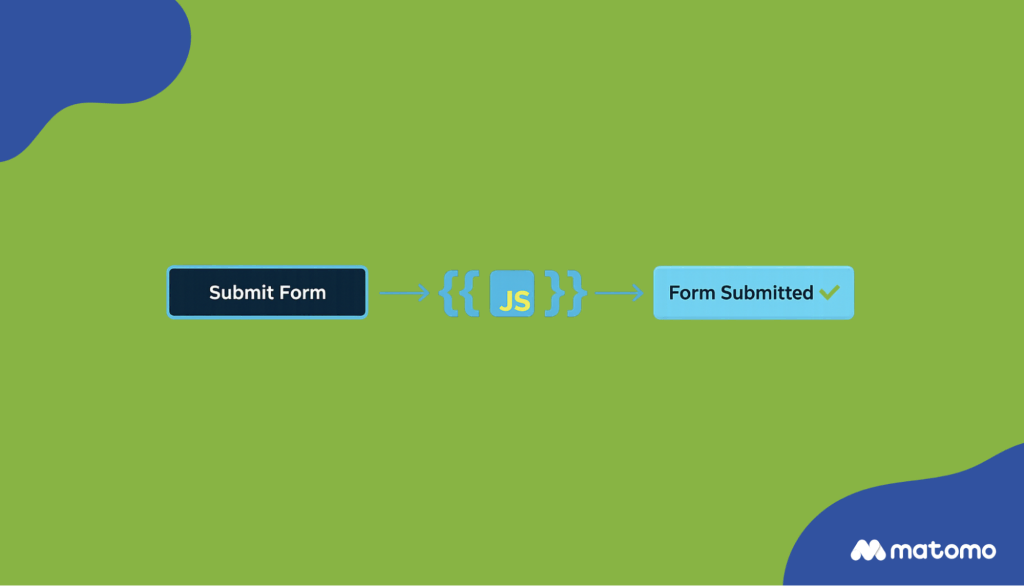
Unlike scrapers that scan everything, agents perform actions more surgically. They go directly to the page they need and interact with the elements (buttons, forms or APIs) to complete their objective. These actions are performed through headless browsers (like Playwright or Selenium) executing JavaScript.
AI agent traffic is highly functional and acts as a proxy user, a system acting as a human would, which creates new challenges for traditional session tracking and conversion attribution.
Measuring AI chatbot traffic clarifies how users and automated systems interact with your website as search behaviours change. While AI traffic is still a small share of total visits, tracking AI chatbot traffic does provide immediate, practical value.
As of late March 2026, getting concrete numbers on AI traffic is difficult as different organisations report different findings.
For example, a mid-2025 Pew Research study found that users are actually less likely to click on links when an AI summary is present, with click-through rates dropping from 15% to 8%. This is contrasted by Google claiming that it is encouraging high-quality clicks due to AI summarisations while also maintaining stable year-over-year click through rates.
While the exact volume is highly debatable, the growth trajectory is undeniable. A March 2026 study by WebFX analysing 2.3 billion site sessions found that while generative AI traffic currently accounts for just 0.18% of total web visits, it has experienced a massive 796% growth year-over-year.
Tracking AI referrals and helpful AI agents gives website owners more information on the modern user journey. According to the WebFX report cited earlier, visitors coming from AI chatbots and other AI-enabled sources have much higher intent and often convert faster.
By monitoring these users, companies can see exactly which pages are being cited by AI. This helps you better understand AI-assisted conversions, user engagement and how your content performs when an AI summarises it for a user, capturing a segment of the audience that traditional SEO would miss.
You might ask yourself how AI agents differ from AI chatbots. The difference is that AI chatbots require user prompts for each step, while AI agents can act autonomously once given an initial instruction. Matomo bridges this gap by providing dedicated, out-of-the-box reporting for both the human and AI.
To understand how automated systems interact with your website, Matomo offers dedicated AI Chatbot tracking and AI Agent tracking. Logically grouped together in your reporting menu, these tools provide a unified view of machine-driven activity.
You can immediately see which AI crawlers are consuming your site for training data, and which autonomous agents are executing tasks on your pages. This direct visibility simplifies monitoring server load and identifying exactly which bots are interacting with your architecture.
To measure actual humans arriving through AI services, Matomo introduced AI Assistant tracking in version 5.5.0. This has a specialised purpose compared to the agent reports as this feature functions as a specialised acquisition channel.
By separating the high-intent AI referrals, you gain a clear picture of how AI platforms are actively driving real people to your content.
Many analytics platforms currently gate this level of specialised, reliable AI tracking behind expensive premium tiers, if they offer it reliably at all.
With Matomo, all of these AI reporting capabilities are completely free for on-premise use, and they are fully included right out of the gate in the Matomo Cloud Plan.
AI-driven tools now regularly send traffic to websites. To manage this, you need to track, classify and analyse AI‑generated visits or LLM traffic the same way you do for search, social or paid channels.
Here’s how you can do that, and how Matomo makes it easier.
This method tracks humans who come to your site by clicking a link generated within an AI interface, tracking them similarly to standard search engine visitors.

Matomo treats AI‑driven referrals as a dedicated acquisition channel. When a visit comes from an AI assistant, Matomo can label it under an “AI Assistant” channel, such as ChatGPT referral traffic, instead of leaving it as “Direct” or burying it in generic search.
This lets you see how much traffic and conversion value is coming specifically from AI‑style referrals, alongside other channels like Google or social. You can understand how traffic is growing or do visitors convert differently from traditional search visitors.
Instead of tracking humans this method tracks the AI systems (like data scrapers, RAG bots and autonomous agents) that are pinging your server to read your content.
Modern analytics platforms can auto‑detect and group AI‑related traffic.
Matomo offers a purpose‑built AI Assistants ecosystem that automatically detects and categorises traffic from major AI tools like ChatGPT, Copilot, Gemini, Claude, Perplexity and others.
Key features include:
Matomo adds an “AI Assistant” channel in the Acquisition section. Visits that come from recognised AI assistants are grouped under this channel, so you can quickly compare AI‑driven traffic against search, social and paid campaigns.
To gain visibility into non‑human visits and make informed decisions about them, use Matomo’s dedicated area of reports for both AI chatbots and AI agents.
AI chatbots report
This report includes several sub‑reports that let you answer questions such as:
AI agents report
This report goes beyond just counting AI traffic and lets you compare it with human‑driven visits. It offers two main sub‑reports that help you understand:
Many analytics platforms currently gate this level of specialised, reliable AI tracking behind expensive premium tiers, if they offer it reliably at all.
As search behaviour shifts towards generative answer engines, understanding how your content is consumed by both humans as well as AI gives you insight to optimise for these channels.
Matomo tracks both AI chatbot and agent traffic. It automatically categorises non-human LLM visits and cleanly isolates high-intent human referrals from AI assistants into dedicated reports.
Furthermore, Matomo is a privacy-first analytics platform that ensures full data ownership. You get completely unsampled and accurate data without relying on workarounds that compromise user trust or security.
Try Matomo On-Premise for free or get started with a 21-day free trial.
Referrer headers can be the easiest way to detect AI referral traffic, but apps often strip them. Manually adding UTM parameters to your links or using dedicated AI tracking software detects most AI referrals coming to your sites.
After identifying AI visitors (referrals and agents), you can track their behaviour against your standard goals (like signups).
Yes. A report by First Page Sage notes that ChatGPT now captures roughly 17% of digital queries.
Using Generative Engine Optimization (GEO), you can make it easier for LLMs to parse and cite your content as a credible source.
Chatbot traffic includes humans clicking citations in an AI interface and bulk crawlers harvesting training data. Agent traffic consists of autonomous programs using headless browsers to perform specific actions on a user’s behalf.
此内容由惯性聚合(RSS阅读器)自动聚合整理,仅供阅读参考。 原文来自 — 版权归原作者所有。