

惯性聚合 高效追踪和阅读你感兴趣的博客、新闻、科技资讯
阅读原文 在惯性聚合中打开

推荐订阅源

Apple Machine Learning Research
J
Java Code Geeks
让小产品的独立变现更简单 - ezindie.com
freeCodeCamp Programming Tutorials: Python, JavaScript, Git & More
Last Week in AI
Last Week in AI
雷峰网
雷峰网
博客园_首页
小众软件
小众软件
美团技术团队
奇客Solidot–传递最新科技情报
奇客Solidot–传递最新科技情报
腾讯CDC
P
Proofpoint News Feed
MongoDB | Blog
MongoDB | Blog
Google DeepMind News
MyScale Blog
MyScale Blog
U
Unit 42
The Cloudflare Blog
钛媒体:引领未来商业与生活新知
钛媒体:引领未来商业与生活新知
Microsoft Security Blog
大猫的无限游戏
大猫的无限游戏
Engineering at Meta
Engineering at Meta
N
Netflix TechBlog - Medium
Microsoft Azure Blog
博客园 - 叶小钗

VnExpress English

Chinese robotics chip founder Wang Xinyang becomes billionaire as shares jump 144% post IPO Apple's Tim Cook to step down as CEO in September Canada Research Chair Janusz Pawliszyn, one of the world’s top analytical science figures, joins Chinese university Why Terence Tao is seen as one of the world’s greatest living mathematicians China builds ‘big science’ model to foster self-reliance Which is the only Asian country with two universities in the global top 5 for data science and AI? MIT named world’s best for mathematics for nine straight years Humanoid robots race past humans in Beijing half-marathon, showing rapid advances Meet Chris Espinosa, the only Apple employee still with the company since its founding 50 years ago Faulty wireless call buttons at Hanoi cafe disrupt car, motorbike smart keys ViTrox cofounder Chu Jenn Weng returns to Malaysia’s richest list as shares climb ondemand for chip inspection equipment Unitree humanoid robot goes viral after chasing wild boars on Warsaw street Over 300 humanoid robots race in China half-marathon Agibot humanoid robots conduct world-first tablet testing on live factory line Hanoi to add 53 electric buses from April 18 Thousands of mathematicians threaten boycott of US congress where Fields Medal is awarded Khan Academy to launch AI degree under $10,000 to rival Harvard, Stanford US scientists build spring-powered computer that runs without electricity Meet the only two female mathematicians to win Fields Medal in its nearly century-long history China deploys world’s largest all-electric container ship China develops world's first crystal enabling GPS-free navigation for submarines AI reshapes software development as firms adopt more iterative models Unitree starts selling cheapest humanoid robot from $6,800 Vietnam ramps up push for self-reliant semiconductor industry Why world's leading biologist Zhang Kai leaves Yale for China’s university at the height of career Nearly half of US college students consider changing majors over AI’s impact on jobs AI adoption faces hurdles as firms seek practical business value Vietnam's richest man Pham Nhat Vuong’s aerospace firm to launch satellite in 2027 China develops next-generation 2D chip with 1,000-fold faster production speed Chinese AI autonomously solves decade-old math problem in hours
Nobel laureate biochemist Hartmut Michel joins China's Ji...
2026-04-29 · via VnExpress English

By Phong Ngo   April 28, 2026 | 03:40 pm PT

German biochemist Hartmut Michel, 77, winner of the 1988 Nobel Prize in Chemistry, has taken a full-time professorship at Jilin University in northeastern China, according to the university.

Michel has joined the university’s First Hospital as "a flagship hire" under its talent recruitment strategy, according to the South China Morning Post, citing the university’s announcement last week.

First Hospital, also known as the First Bethune Hospital, was founded in 1949 and is one of northeastern China’s leading teaching hospitals, known for clinical care, medical training, and research.

During a meeting last week with the university’s Communist Party chief Tian Hui, Michel said he looked forward to working with university teams to advance research in structural biology, drug development, and translational medicine, while helping train young scientists and develop world-class research programs.

Tian said the university would fully support Michel and hoped he would help drive research breakthroughs and strengthen international collaboration, particularly between China and Germany.

He added that the university is committed to building a world-class institution by recruiting and nurturing leading scientists under a broader talent development strategy.
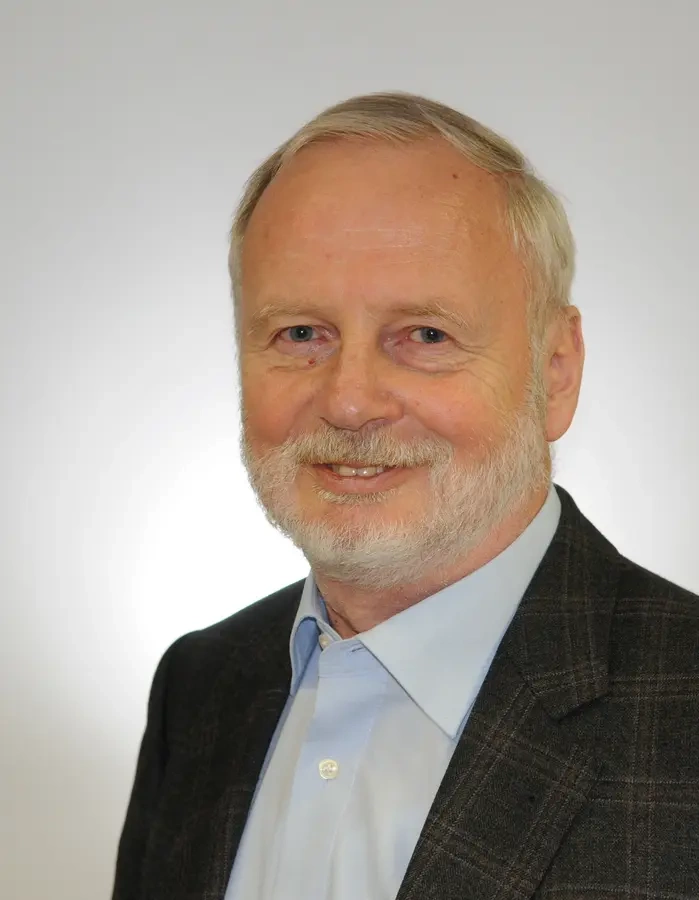
German biochemist Hartmut Michel, 77, winner of the 1988 Nobel Prize in Chemistry. Photo courtesy of the Max Planck Institute of Biophysics

German biochemist Hartmut Michel, 77, winner of the 1988 Nobel Prize in Chemistry. Photo courtesy of the Max Planck Institute of Biophysics

Michel spent much of his career at the Max Planck Institute of Biophysics in Germany where he served as director from 1987 until his retirement in 2007. There, he led one of the world’s leading research centers for membrane proteins, molecules embedded in cell membranes that regulate how cells absorb nutrients, transmit signals, and produce energy.

In 1988, Michel shared the Nobel Prize in Chemistry with Johann Deisenhofer and Robert Huber for "the determination of the three-dimensional structure of a photosynthetic reaction center."

According to the Nobel Prize, Michel studied a bacterium that carries out photosynthesis in a way similar to green plants. The energy conversion happens through the transport of electrons via proteins attached to special membranes inside the cell.

In 1982, Michel succeeded in crystallizing these proteins. The following year, he and his collaborators Deisenhofer and Huber determined the structure of the photosynthetic reaction center.

Michel has longstanding ties with China, having given lectures and worked with students at Tsinghua University, Tongji University, Sichuan University, and Jilin University, among others.

Since the early 1980s, he has promoted biological research in China and has visited the country more than 30 times, according to the University of Science and Technology of China.

He was elected a foreign member of the Chinese Academy of Sciences in 2000. He is also a foreign member of the Royal Society and the U.S. National Academy of Sciences, and a member of the German National Academy of Sciences Leopoldina.