







In a market where full fibre broadband now passes 82% of UK premises and mobile connections outnumber people, acquiring genuinely new customers is hard. Most acquisition growth today comes from switching, not from bringing net new subscribers into the market. Every customer an operator wins is one another operator has lost. In such an environment, retention is no longer a secondary concern.
One of the less-discussed challenges in the UK is that a large share of consumers already believe they have fibre, even when they don’t. FTTC (fibre-to-the-cabinet), FTTP (fibre-to-the-premise), FTTH (fibre-to-the-home), full fiber, superfast: the terminology has been used interchangeably in marketing for years, and customers have absorbed the confusion. When genuine full fibre arrives in a street, it often doesn’t land with the impact operators expect. Take-up of full fibre where it’s available sits at just 42%, according to Ofcom’s Connected Nations 2025 report.
Part of the experience gap is in-home. A customer on a full fibre connection with inadequate Wi-Fi equipment will still have a poor experience, and operators who can’t distinguish network performance from in-home equipment issues can’t fix the right problem. Operators are therefore left with a multi-layered conundrum: how to educate consumers about what they actually have access to, while also ensuring those same consumers take the right actions to receive the full promise of the network.
At Opensignal, we measure network experience from the consumer’s perspective, capturing “lived,” what actually happens when you stream, video call, or work from home.
Even though I’ve spent 20 years analyzing telecoms data, when I’m on a Zoom call or trying to video call my mum, I am not thinking about what technology powers my connection. I care whether it allows me to do what I need to do, when I need it. Most people are the same. We compare notes and complain about the moments when connectivity lets us down: the dropped call, the frozen screen, the meeting where audio kept cutting out. That’s what customers remember, and that’s what they act on when it’s time to renew.
Opensignal’s Subscriber Analytics product tracks switching patterns at the sub-regional level, giving operators a view of where churn risk is building before it shows up in their quarterly numbers. It also shows where the opportunity is: markets where penetration of converged customers sits well below what the network footprint would suggest. Paired with visibility of competitor performance, operators can see not just where they’re losing customers, but to whom and on which metrics.
The data shows that retention risk is concentrated where altnet FTTP experience is genuinely strong and customers have a credible alternative. This is not a low-end market problem. We are seeing the premium end of the market switching to altnets and Mobile Virtual Network Operators (MVNOs) too. Ofcom estimates 23% of UK households, around 5.3 million, struggle to afford their communications services. But even customers who can afford to pay a premium are shopping for the best combination of price and experience, and they move when they find it.
The case for bundling is clearer than operators tend to act on it. Consider Vodafone: nearly half its broadband customers already use Vodafone for mobile, yet the other half don’t, despite being reachable within the same commercial relationship. Opensignal’s Subscriber Analytics shows that customers who do bundle churn at a fraction of the rate of those who don’t, and the effect holds consistently across the major UK players. Bundled customers are harder to lose, and they give operators more to work with: more experience data, more touchpoints, more insights into what’s working and what isn’t.
So, what’s the path to closing that gap? It starts with treating the broadband–mobile relationship as an experience question before a pricing one. Operators who target cross-sell based on where the experience is strong, rather than on the basis of promotional timing, convert better and retain longer.
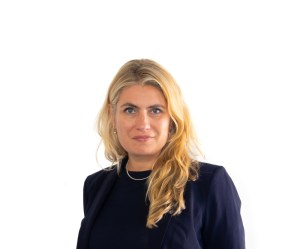 Sylwia Kechiche is VP Industry Analysis at Opensignal and will be speaking on the Customer Strategy panel at Connected Britain 2026, 10 September, 12:40, Keynote Theatre.
Speakers include:
此内容由惯性聚合(RSS阅读器)自动聚合整理,仅供阅读参考。 原文来自 — 版权归原作者所有。