









DataCore Swarm Backup
Protect DataCore Swarm buckets with independent object storage backup. Use Swarm as S3 backup storage for DPX archive copies.
DataCore Swarm provides scalable S3 object storage with native controls such as S3 Object Lock, versioning, replication, and erasure coding. Application errors, accidental deletion, and compromised credentials can still affect production data. DataCore Swarm Backup with DPX adds an independent recovery copy outside the production buckets and keeps its protection under the same operations model as other DPX workloads.
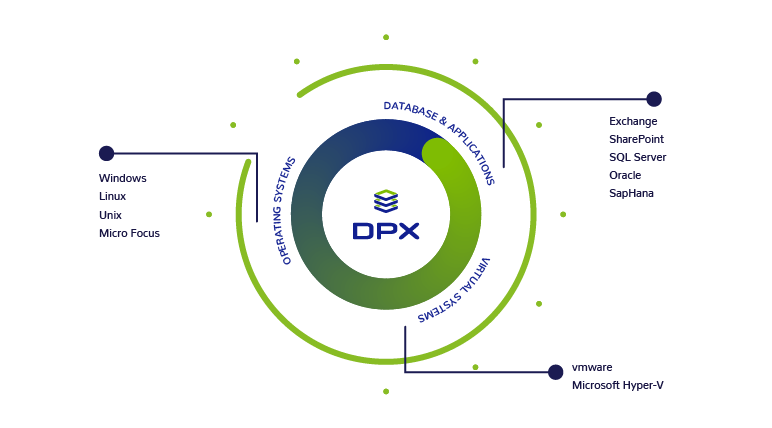
DPX uses the S3 API to create an independent copy of data held in Swarm buckets. Full and incremental jobs write to vStor, which creates a dedicated volume for each protected bucket. The result is a DataCore Swarm backup workflow that sits outside the production object store.
Recovery Readiness
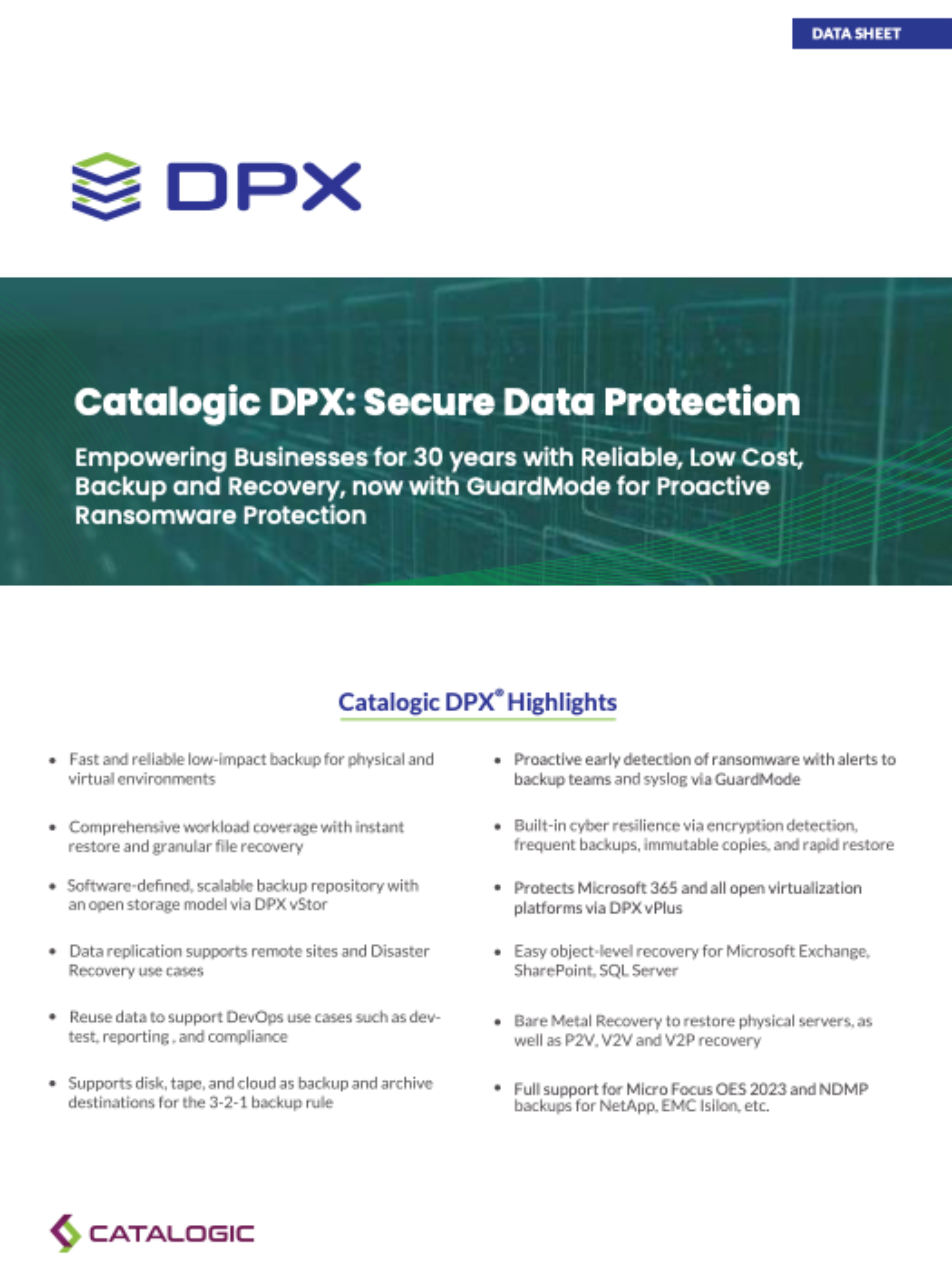
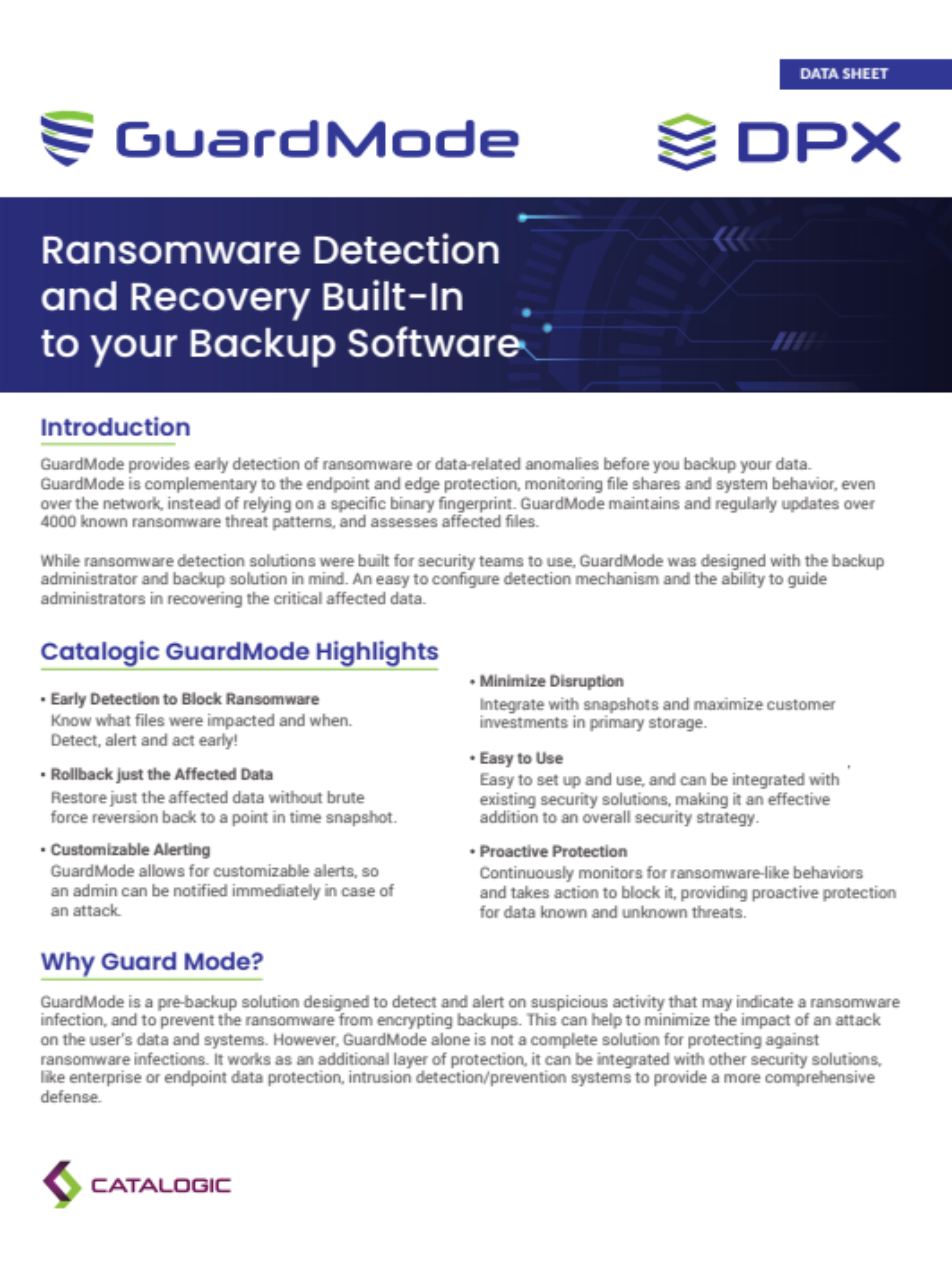
DPX restores S3 backup data at bucket level through the web interface. When a team needs a specific backed-up object, vStor's embedded MinIO service can expose the protected volume. vStor also supports volume deletion lock and fixed protection for snapshots. GuardMode Scan can examine a mounted protected filesystem snapshot for suspicious encryption, helping administrators select an earlier recovery point before restoring.
Swarm gives teams a local, scalable object-storage tier for copies that must remain under their control. It can support data-sovereignty requirements, complement tape, and keep archived data available through an S3 API. S3 Object Lock provides retention controls at the archive-bucket level.
DPX 4.16 lists DataCore as a supported cloud provider for archive jobs. DPX sends archive copies of protected Block and VMware Agentless data to Swarm through its S3 API. This is a distinct workflow from protecting Swarm buckets as an S3 backup source.
A sound archive design combines the right retention policy with the right placement for a secondary copy. Use Swarm's local S3 archive storage capabilities in the way that fits your data-residency and recovery requirements.
Place archive copies on infrastructure your organization owns and operates when local control matters.
Keep governed copies in the required geography while using the standard S3 API for storage access.
Configure Swarm S3 Object Lock for the archive bucket when its retention model meets your policy.
Place Swarm in a separate failure domain when the archive copy is part of a 3-2-1 design.
Compatibility reviewed against DPX 4.16 and vStor 4.16 documentation on August 29, 2026. Confirm the exact Swarm, DPX, and vStor versions against the current compatibility documentation before deployment.
| Topic | Correct positioning |
|---|---|
| Supported Swarm versions | DPX 4.16 supports S3-compatible data protection for DataCore Swarm 17.0.2 and 16. |
| Backup types | Full and incremental object backup of Swarm buckets. |
| Restore and object access | DPX restores S3 backup data at bucket level. vStor's embedded MinIO service can expose the protected volume when access to an individual object is needed. |
| Object versioning | The 5 most recent versions of each object are included by default, configurable up to 10. Older versions are ignored. |
| Backup storage | vStor 4.12 or later is required as the backup storage target, with a separate volume per protected bucket. |
| Bucket addressing | DataCore may require path-style addressing. Choose virtual host-style or path-style when adding the node. |
| Secure communication | A trusted certificate is required. Import it if it is not signed by a recognized authority. |
| Clock synchronization | Swarm and DPX Master Server clocks must be synchronized or incremental backups may miss bucket changes. |
| Swarm as archive target | DPX 4.16 lists DataCore as a supported cloud provider for archive jobs using protected Block and VMware Agentless data. |
S3 Object Storage backup and bucket-level restore are managed through the DPX web interface. vStor's embedded MinIO service provides access to individual backed-up objects.
A trusted certificate is required for secure communication between the DPX Master Server and Swarm; unencrypted communication is not supported.
DPX 4.16 lists DataCore as a supported archive provider. Archive jobs support protected Block and VMware Agentless data.
Documentation and product resources for teams planning or operating DPX protection for DataCore Swarm object storage.
Yes. DPX 4.16 supports full and incremental S3-compatible backup for DataCore Swarm 17.0.2 and 16. DPX stores the protected bucket data on vStor and manages bucket-level restores through the web interface.
As of DPX 4.16, S3-compatible data protection supports DataCore Swarm versions 17.0.2 and 16. Always confirm the exact version against the current DPX Compatibility Guide before deployment.
DPX performs S3 restores at bucket level. When access to a specific backed-up object is needed, vStor can expose the protected volume through its embedded MinIO service.
Yes. DPX supports both full and incremental object backup for Swarm. Object versioning covers the 5 most recent versions of each object by default and is configurable up to 10; older versions are ignored. Keep the Swarm and DPX Master Server clocks synchronized so incremental backups reliably capture bucket changes.
DPX requires vStor 4.12 or later as the backup storage target for S3 Object Storage backup. vStor creates a separate volume for each protected bucket. Administrators can enable volume deletion lock and apply fixed protection to snapshots.
Yes. DPX 4.16 lists DataCore as a supported cloud provider for archive jobs using protected Block and VMware Agentless data. Register DataCore as cloud storage, create the associated media pool, and then configure the archive job.
To protect Swarm as a source, add an S3 Object Storage node in the DPX web interface and provide the endpoint, credentials, region, and addressing style. The DPX Master Server requires a trusted certificate because unencrypted communication is not supported. The archive-target workflow instead uses a cloud device cluster and media pool.
Swarm bucket backups land on vStor, where administrators can enable volume deletion lock and fixed snapshot protection. GuardMode Scan can examine a mounted protected filesystem snapshot for suspicious encryption and help administrators choose an earlier recovery point.
Talk to Catalogic about protecting Swarm buckets with DPX, accessing backed-up objects through vStor, and retaining Block or VMware Agentless archive copies on DataCore Swarm.
Protect production Swarm buckets with independent DPX backup, then recover at bucket level or access objects through vStor's embedded MinIO service. You can also use Swarm as local, scalable S3 backup storage for DPX archive copies.
此内容由惯性聚合(RSS阅读器)自动聚合整理,仅供阅读参考。 原文来自 — 版权归原作者所有。