惯性聚合 高效追踪和阅读你感兴趣的博客、新闻、科技资讯
阅读原文 在惯性聚合中打开

推荐订阅源

Stack Overflow Blog
Stack Overflow Blog
D
Darknet – Hacking Tools, Hacker News & Cyber Security
爱范儿
爱范儿
奇客Solidot–传递最新科技情报
奇客Solidot–传递最新科技情报
有赞技术团队
有赞技术团队
罗磊的独立博客
博客园 - 三生石上(FineUI控件)
小众软件
小众软件
L
LINUX DO - 最新话题
T
Troy Hunt's Blog
博客园_首页
量子位
Jina AI
Jina AI
S
SegmentFault 最新的问题
IT之家
IT之家
Hacker News - Newest:
Hacker News - Newest: "LLM"
大猫的无限游戏
大猫的无限游戏
N
News | PayPal Newsroom
P
Proofpoint News Feed
Cyberwarzone
Cyberwarzone
S
Securelist
Google Online Security Blog
P
Privacy International News Feed
博客园 - Franky
美团技术团队
钛媒体:引领未来商业与生活新知
钛媒体:引领未来商业与生活新知
NISL@THU
NISL@THU
C
Cisco Blogs
V
Vulnerabilities – Threatpost
腾讯CDC
The Hacker News
The Hacker News
K
Kaspersky official blog
C
Cyber Attacks, Cyber Crime and Cyber Security
雷峰网
雷峰网
CTFtime.org: upcoming CTF events
Security Archives - TechRepublic
A
About on SuperTechFans
Webroot Blog
Webroot Blog
The Register - Security
Scott Helme
Scott Helme
B
Blog
Security Latest
Security Latest
Last Week in AI
Last Week in AI
Google DeepMind News
W
WeLiveSecurity
freeCodeCamp Programming Tutorials: Python, JavaScript, Git & More
T
Tenable Blog
Blog — PlanetScale
Blog — PlanetScale
让小产品的独立变现更简单 - ezindie.com
S
Schneier on Security

Tenable Blog

Oracle July 2026 Critical Patch Update 1235 CVEs | Tenable® AI agent config attacks: How attackers turn trusted Dev harness files into payloads wp2shell: WordPress Core Pre-Auth RCE FAQ | Tenable® SharePoint CVEs FAQ: CVE-2026-56164, CVE-2026-32201, CVE-2026-45659 | Tenable® Build agentic AI security at Tenable Swarm, Black Hat 2026 SonicWall CVE-2026-15409 and CVE-2026-15410 zero-day exploited | Tenable® Understanding Anthropic’s new AI agent Claude Tag’s access model in Slack 5 reasons to integrate AppSec data with your exposure management platform July 2026 Patch Tuesday: Largest Patch Tuesday 569 CVEs FedRAMP High, IL5, and zero trust: How federal agencies can secure cloud environments OMB M-26-14: Why federal agencies must fix asset visibility first CISO’s guide to CISA BOD 26-04 and risk-based security metrics for vulnerability management How much cyber risk does AI create for organizations? 457 million security issues. Here’s what you can do about it. The Developer Credential Economy: An inside look at the Miasma worm campaign Oracle Critical Security Patch Update June 2026 | Tenable® How Tenable helps federal agencies comply with CISA BOD 26-04 Get critical cyber risk context: Understanding control validation, CTEM & Tenable One CISA BOD 26-04: Frequently asked questions about the new risk-based patching directive Microsoft’s June 2026 Patch Tuesday Addresses 198 CVEs ( CVE-2026-49160, CVE-2026-50507) The June 2026 AI Executive Order: What federal agencies need to know and how Tenable can help Tenable joins Anthropic’s Project Glasswing to advance AI-era cyber defense Tenable CTO Vlad Korsunsky Q&A: Countering AI threat multipliers with AI-powered exposure management | Tenable CTO Q&A: C-suite views AI as massive threat, as cyber teams adopt exposure management to counter AI attacks Oracle May 2026 Critical Security Patch Update Addresses 35 CVEs Download pumping: New npm deception technique for supply chain attacks Inside the customer environment: Where threat actors, vulnerabilities, and exposed assets intersect EXPOSURE 2026 prepares cybersecurity professionals for the AI era Mini Shai-Hulud: Frequently asked questions about the TeamPCP npm and PyPI supply chain campaign CVE-2026-9082: Highly Critical SQL Injection Vulnerability in Drupal Core (SA-CORE-2026-004) Tenable One deepens third-party integrations with new Open Connector for unified risk visibility Implement agentic AI in cybersecurity with Tenable Hexa AI: Reduce cyber risk at machine speed Key findings from the Verizon DBIR 2026: Slower vulnerability remediation meets faster exploitation Frequently asked questions about the continued exploitation of Cisco Catalyst SD-WAN vulnerabilities (CVE-2026-20182) Bring out your dead: How agentic AI for cybersecurity helps you rid your cloud of forgotten, risky assets Fragnesia (CVE-2026-46300): Frequently asked questions about new Linux Kernel XFRM ESP-in-TCP privilege escalation Securing data centers in the agentic AI era Microsoft’s May 2026 Patch Tuesday Addresses 118 CVEs (CVE-2026-41103) Dirty Frag (CVE-2026-43284, CVE-2026-43500): Frequently asked questions about this Linux kernel privilege escalation vulnerability chain Why the approaching flood of vulnerabilities changes everything — and what to do about it The AI-vs-AI battle is already happening. Watch it live at EXPOSURE 2026. Anthropic’s CEO warns the “moment of danger” is real. But most are looking in the wrong place. Security for AI: A strategic framework for closing the AI exposure gap Vulnerability remediation: Match CVEs to asset owners in seconds with Tenable Hexa AI Bridging the gap: How to integrate Claude Security into the Tenable One Exposure Management Platform Copy Fail (CVE-2026-31431): Frequently asked questions about Linux kernel privilege escalation vulnerability Mastering agentic AI security through exposure management As the NVD scales back CVE enrichment, here’s what Tenable customers need to know Five steps to become Mythos ready Oracle April 2026 Critical Patch Update Addresses 241 CVEs Beating the Mythos clock: Using Tenable Hexa AI custom agents for automated patching Unlocking foundational visibility for cyber-physical systems with OT vulnerability management Claude Mythos: Prepare for your board’s cybersecurity questions about the latest AI model from Anthropic Microsoft’s April 2026 Patch Tuesday Addresses 163 CVEs (CVE-2026-32201) Crushing the Axios supply chain threat with Tenable Hexa AI: Use cases for agentic AI What to Know About CyberAv3ngers: The IRGC-Linked Group Targeting Critical Infrastructure The developer credential economy: Why exposure data is the new front line in the supply chain war Frequently Asked Questions About the Axios npm Supply Chain Attack by North Korea-Nexus Threat Actor UNC1069 Supply chain attack on Axios npm package: Scope, impact, and remediations What’s new in Tenable Cloud Security: Custom policies, AWS ABAC, and research-driven protection Uncover prompt injection, insider threats with the Tenable One Model Refusal Detection Security for AI: A guide to managing the risks of vibe coding and AI in software development Meet Tenable Hexa AI: Agentic AI for exposure management
CVE-2026-35616: Fortinet FortiClientEMS improper access control vulnerability exploited in the wild
2026-04-06 · via Tenable Blog

Exploitation has been observed for CVE-2026-35616, a critical improper access control zero-day vulnerability affecting Fortinet FortiClientEMS devices.

Key takeaways:

  1. CVE-2026-35616, an improper access control vulnerability, has been exploited in the wild as a zero-day.
     
  2. Public exploit code has been identified and Fortinet products have a long history of targeting by malicious actors.
     
  3. Hotfixes have been released by Fortinet and should be applied as soon as possible to protect from this threat.

Change log

Update April 6: The blog has been updated to include that CVE-2026-35616 has been added to the CISA KEV.

Click here to review the change history

April 6:The blog has been updated to include that CVE-2026-35616 has been added to the CISA KEV.

 

Background

On April 4, Fortinet published a security advisory (FG-IR-26-099) for CVE-2026-35616, a critical improper access control vulnerability affecting Fortinet FortiClientEMS.

CVEDescriptionCVSSv3
CVE-2026-35616Fortinet FortiClientEMS Improper Access Control Vulnerability9.1

Analysis

CVE-2026-35616 is a critical improper access control vulnerability affecting Fortinet FortiClientEMS. A remote, unauthenticated attacker can exploit this flaw to execute arbitrary code using specially crafted requests which bypass API authentication.

While no attribution has been provided as of the time this blog was published, the advisory from Fortinet confirms that exploitation has been observed. The advisory credits Simo Kohonen from Defused and Nguyen Duc Anh, who reported the vulnerability to Fortinet. On April 4, Defused released a Linkedin post confirming their observations of zero-day exploitation of this flaw.

At the time this blog was published, Tenable Research has classified this flaw as a Vulnerability of Interest according to our Vulnerability Watch classification system.

Historical Exploitation of Fortinet Devices

Fortinet vulnerabilities have historically been common targets for cyber attackers, with 24 Fortinet CVEs currently on the Cybersecurity and Infrastructure Security Agency’s (CISA) Known Exploited Vulnerabilities (KEV) list, with 13 of those being linked to ransomware campaigns. Targeting of Fortinet flaws have been attributed to a number of threat actors, including Salt Typhoon.

Just over a week ago, Defused reported exploitation in the wild for CVE-2026-21643, SQL injection vulnerability affecting FortiClientEMS. Fortinet’s advisory now reflects that exploitation has been observed but as of April 6, the flaw has not yet been added to the KEV.

🚨 Fortinet Forticlient EMS CVE-2026-21643 - currently marked as not exploited on CISA and other Known Exploited Vulnerabilities (KEV) lists - has seen first exploitation already 4 days ago according to our data

Attackers can smuggle SQL statements through the "Site"-header… pic.twitter.com/pHwl2qMVsj

— Defused (@DefusedCyber) March 28, 2026

At the time this blog was published on April 6, CVE-2026-35616 had not been added to the KEV, however shortly after publication, the KEV was updated to include CVE-2026-35616.

As Fortinet devices have been popular targets for attackers, the Tenable Research Special Operations Team (RSO) has authored several blogs about vulnerabilities affecting these devices. The following table outlines some of the most impactful Fortinet vulnerabilities in recent years.

CVEDescriptionPublishedTenable Blog
CVE-2025-64155Fortinet FortiSIEM Command Injection VulnerabilityJanuary 2026CVE-2025-64155: Exploit Code Released for Critical Fortinet FortiSIEM Command Injection Vulnerability
CVE-2025-64446Fortinet FortiWeb Path Traversal VulnerabilityNovember 2025CVE-2025-64446: Fortinet FortiWeb Zero-Day Path Traversal Vulnerability Exploited in the Wild
CVE-2025-25256Fortinet FortiSIEM Command Injection VulnerabilityAugust 2025CVE-2025-25256: Proof of Concept Released for Critical Fortinet FortiSIEM Command Injection Vulnerability
CVE-2025-32756Fortinet FortiVoice, FortiMail, FortiNDR, FortiRecorder and FortiCamera Arbitrary Code Execution VulnerabilityMay 2025CVE-2025-32756: Zero-Day Vulnerability in Multiple Fortinet Products Exploited in the Wild
CVE-2024-55591Fortinet Authentication Bypass in FortiOS and FortiProxyJanuary 2025CVE-2024-55591: Fortinet Authentication Bypass Zero-Day Vulnerability Exploited in the Wild
CVE-2024-21762Fortinet FortiOS Out-of-bound Write Vulnerability in sslvpndFebruary 2024CVE-2024-21762: Critical Fortinet FortiOS Out-of-Bound Write SSL VPN Vulnerability
CVE-2023-27997FortiOS and FortiProxy Heap-Based Buffer Overflow VulnerabilityJune 2023CVE-2023-27997: Heap-Based Buffer Overflow in Fortinet FortiOS and FortiProxy SSL-VPN (XORtigate)
CVE-2022-42475FortiOS and FortiProxy Heap-Based Buffer Overflow VulnerabilityDecember 2022CVE-2022-42475: Fortinet Patches Zero Day in FortiOS SSL VPNsAA23-250A: Multiple Nation-State Threat Actors Exploit CVE-2022-47966 and CVE-2022-42475
CVE-2022-40684FortiOS and FortiProxy Authentication Bypass VulnerabilityOctober 2022CVE-2022-40684: Critical Authentication Bypass in FortiOS and FortiProxy

Proof of concept

As of April 6, a public proof-of-concept has been identified on GitHub, however Tenable Research has not yet verified the exploit. Given the past exploitation of Fortinet devices and published exploit code for several past vulnerabilities, we anticipate that exploitation will continue to increase as additional exploits are released.

Solution

The following table details the affected and fixed versions of Fortinet FortiClientEMS devices for CVE-2026-35616:

Product VersionAffected RangeFixed Version
FortiClientEMS 7.2Not affectedN/A
FortiClientEMS 7.47.4.5 through 7.4.67.4.7 or above

As of April 6, Fortinet has provided a hotfix for FortiClient EMS 7.4.5 and 7.4.6 to address this vulnerability. Version 7.4.7 has not yet been released, but will be an upcoming release that addresses this vulnerability. Until that release, the hotfix must be applied to be protected against this vulnerability. We recommend reviewing the security advisory as Fortinet may make future updates to the document.

Identifying affected systems

A list of Tenable plugins for this vulnerability can be found on the individual CVE page for CVE-2026-35616 as they’re released. This link will display all available plugins for this vulnerability, including upcoming plugins in our Plugins Pipeline.

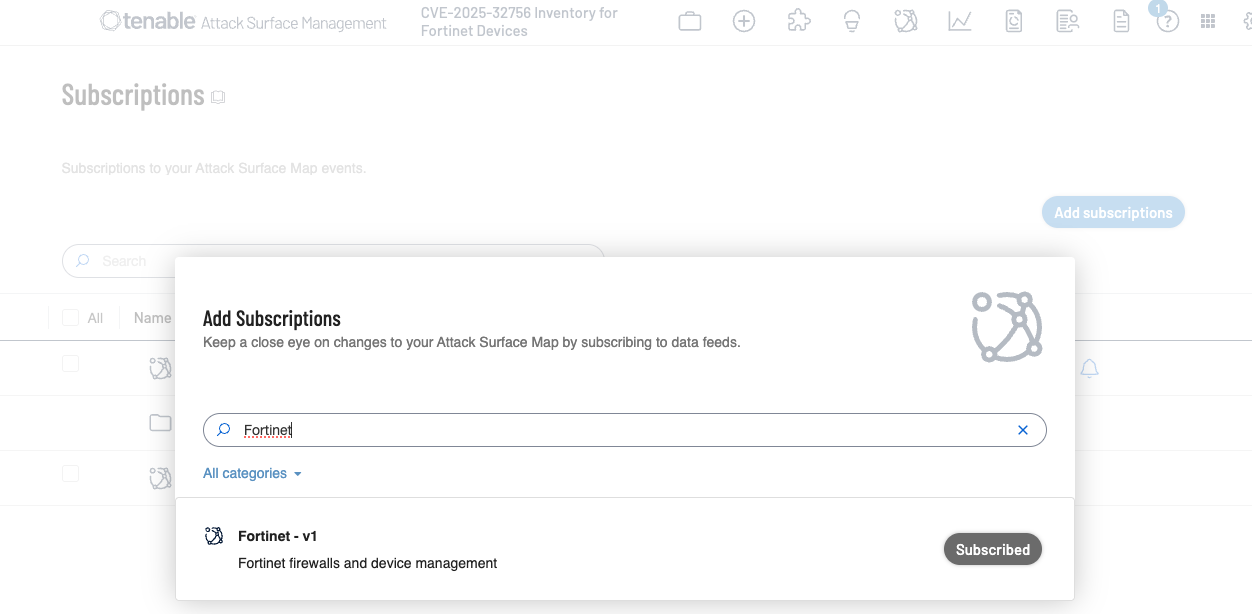
Additionally, customers can utilize Tenable Attack Surface Management to identify public facing assets running Fortinet devices by using the following subscription:
Get more information

Join Tenable's Research Special Operations (RSO) Team on the Tenable Community.

Learn more about Tenable One, the Exposure Management Platform for the modern attack surface.

Scott Caveza

Scott Caveza

Senior Staff Research Engineer, Research Special Operations

Scott joined Tenable in 2012 as a Research Engineer on the Nessus Plugins team. Over the years, he has written hundreds of plugins for Nessus, and reviewed code for even more from his time being a team lead and manager of the Plugins team. Previously leading the Security Response team and the Zero Day Research team, Scott is currently a member of the Research Special Operations team, helping the research organization respond to the latest threats. He has over a decade of experience in the industry with previous work in the Security Operations Center (SOC) for a major domain registrar and web hosting provider. Scott is a current CISSP and actively maintains his GIAC GWAPT Web Application Penetration Tester certification.

Interests outside of work: Scott enjoys spending time with his family, camping, fishing and being outdoors. He also enjoys finding ways to break web applications and home renovation projects.
