









The mechanics are structured for long-term success, not short-term coverage. And Hampton’s tale of genuine impact — of building things that went into customers’ hands — is not unusual for Futureforce graduates.
Take Raymond Dinh, a Technical Product Marketing Manager on the Agentforce team who came through Futureforce in 2024. Within months, he had built a Lightning web component for Agentforce’s chat interface that became an internal hit. He also created Agentforce Consultations, popularized at Dreamforce, which are customer-facing activations that showcase Agentforce Builder and native Agent Script language. (These activations have touched thousands of customers worldwide and the underlying work has been used as the standard for learning Agentforce.) Another project, Buildify, is a demo-planning tool used by demo engineers across the company. In March 2026, Dinh co-demoed a live Agentforce build in front of the entire company at the FY27 Company Kickoff.
“Instead of doing manual tasks, interns are shadowing teams, working in front of customers, and building real things,” said Alex Murray, Senior Director of Programs and Marketing for Global Futureforce. What emerges from that experience is a cohort that leads with story and empathy, uses AI to streamline and supercharge their work, and brings a hunger that tends to reenergize the colleagues around them.
Indeed, emerging talent is four times more likely to use AI daily, and building that talent internally is one-third the cost of hiring experienced workers externally. Given that math, Futureforce reframes entry-level hiring as a talent strategy with measurable returns. Graduates’ early success also highlights lessons for other companies. “The entry-level worker of today probably looks like somebody who was three, four, five years into their role just a few years ago,” said Murray. “They learn, unlearn, and relearn as fast as our technology is changing, and that velocity is exactly what we need.”

“As I was explaining things, I questioned myself — why do we do it that way? Isn’t there a way that AI can help us do this better?” – Rebecca Hampton, Software Engineering Associate Member, Technical Staff (AMTS) 
“Everyone wants to create, wants to build. We’ve entered a world where you don’t need to depend on somebody else to do it for you.” – Raymond Dinh, Technical Product Marketing Manager, Agentforce 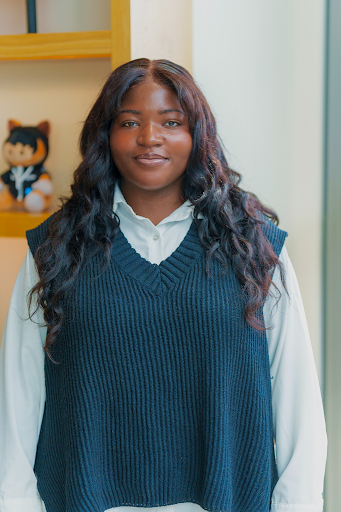
“When you’re early in your career, you want to try absolutely everything. And when you want to try absolutely everything, you’re willing to learn anything.” – Ireoluwa Bayo-Tofowomo, Associate Account Solutions Engineer 
“Salesforce was home right from the beginning.” – Liz Awad, Senior Product Manager
They’re hungry and they’re storytellers
Dinh’s rapid success isn’t something he takes for granted. “I’m still fighting,” he said. “I don’t think I’ll stop fighting anytime soon.” He also sees his role — and the role of his generation — in explicitly strategic terms: “Let’s be little Davids inside this massive Goliath of a company. We’re standing on the shoulders of giants, but we can build small things that help us stay relevant.” For Dinh, the most powerful tool in that effort isn’t the technology — it’s the story you tell with it.
Ireoluwa Bayo-Tofowomo, an Associate Account Solutions Engineer, lives by that instinct, too. When she was assigned to the McLaren Automotive account with no customer history to draw from, she started with a story: A 10-year-old builds a model McLaren, grows up following the F1 team, becomes a high-net-worth individual, and walks into a dealership to buy the car they’ve loved their whole life. Meanwhile, McLaren, without a connected data strategy, has no idea who they are.
Bayo-Tofowomo mapped the entire journey: the F1 fan app, the configurator, the dealership experience, the loyalty loop going untracked. Then she used AI to bring it to life as an infographic. The principal solutions engineer she sought out for feedback was completely shocked. But for Bayo-Tofowomo, it was simply an extension of what she already knows. “I am the ideas,” she said. “AI is the painter.”
Liz Awad, a Senior Product Manager on the Agentforce team, who came through Futureforce, describes the same dynamic in her own role. “I’m not just handing off requirements,” she said. “With AI, I’m synthesizing customer feedback, drafting technical specs, and prototyping in a single flow that collapses weeks of back and forth into hours.” For this generation, AI is less a destination than a medium. It’s the means by which their ideas find form.
They want to learn, and they’re happy to teach
An eagerness to soak up information fuels how Futureforce graduates approach the relentless pace of change. Hampton, for instance, has built deliberate habits around staying current. She listens to AI-focused podcasts while walking to work every day, in part because it’s a casual setting for encountering new concepts, and she can familiarize herself before they come up in a meeting. “The hardest part is the initial discomfort of hearing something unfamiliar for the first time,” she said. “But the more you get exposed to an idea, the more comfortable you feel with it.” It’s a small habit with an outsize effect: Show up curious, and the work takes care of itself.
We were energized. We were thinking about things in a new light.
Alex Murray, Senior Director of Programs and Marketing for Global Futureforce
Futureforce hires arrive ready to absorb everything around them. What their senior colleagues don’t always expect is how much flows back the other way. When Murray met Dinh for the first time and wanted to discuss building a similar tool for recruiting, she brought two colleagues, neither of whom had met Dinh before. What happened next surprised all three of them.
“We agreed it was probably the best call we’d been on all month,” Murray said. “We were energized. We were thinking about things in a new light. He thought even bigger than how we were thinking.” She left the call with “a pep in her step,” she said, and the kind of renewed energy that can be rare when you’ve been doing this for 10 years.
Dinh is deliberate about sharing ideas and encouragement with senior colleagues. He urged one executive to start building her own apps after they worked together and she watched him code at speed. “If I can do something like this, then so can my senior colleagues,” he said. “Go out there and learn it yourself. Be curious.” That same open and willing engagement, he added, runs both ways. For all of his contributions, he described humility as the most important thing he’s learned since joining Salesforce — the willingness to say he doesn’t always have the answers and is eager to learn more. “You have to be humble enough to understand that you don’t know things as much as you think you do,” he said.
That curiosity, flowing in both directions, is what Murray saw crystallized at a senior leadership offsite, where a panel of interns and new graduates were fielding questions from executives for an hour straight. “There was not a more engaging panel at the entire offsite,” Murray recalled. “For the rest of the week, every session, people were saying, ‘Well, the intern yesterday told us that …’”
What companies can learn
That dynamic doesn’t happen by accident. The Salesforce Emerging Talent Playbook translates the actions that lead to this success and codifies the framework:
- Attract: Engage students before graduation through campus events and Agentforce hackathons.
- Assess: Evaluate interns for AI fluency and cognitive adaptability, not just pedigree.
- Activate: Give interns real projects with real accountability and create structured reverse mentorships.
For executives building a similar pipeline, Quinn’s advice starts before the first requisition opens:
- Connect with leadership to understand long-range organizational needs and hire accordingly.
- Stay close with faculty, deans, and students — university AI curriculum is constantly evolving, and you can bring those learnings back to your own company.
Dinh believes leaders should be unafraid to throw new employees into the deep end. “Hammer into them what the company is about, then give them the challenge of going into the wild and being hunted by wolves,” he said. “Life after Futureforce can feel a little bit daunting, so that taste of independence will give people the experience and autonomy they need to be successful after they come out of the program.”
Murray’s advice to skeptical managers is simpler: Spend an hour with them. “Have them show you how they use AI,” she said. “You’re going to come off that conversation reenergized.” The Emerging Talent Playbook offers a starting framework, but Murray argues that the best evidence is sitting two floors down from her in Salesforce Tower, building something people don’t even know they want yet.
The employees of the future are already here
Quinn underscored the need for a different perspective. “I use the phrase ‘change jobs’ versus ‘take jobs,’” she said, “AI is augmenting jobs at all levels.” Murray concurred: “The entry-level role of today does not look like the entry-level role of yesterday. AI is the great equalizer. It has upleveled all of us.” Hampton, a year and a half in, is acquiring the institutional knowledge she arrived without — the lessons that come only from being inside an organization long enough to make mistakes; see things break; and, at the end of the day, know who to call. Being who to call is, after all, exactly what Salesforce hired her to eventually become.
Read more:
- U.S. workers are more wary of AI than their global peers; here’s how leaders can help
- How Salesforce is closing the AI skills gap
- Beastly complicated: How Colin Sanders solved the Million Dollar Puzzle