



惯性聚合 高效追踪和阅读你感兴趣的博客、新闻、科技资讯
阅读原文 在惯性聚合中打开

推荐订阅源

Security Archives - TechRepublic
罗磊的独立博客
T
The Blog of Author Tim Ferriss
The GitHub Blog
The GitHub Blog
Apple Machine Learning Research
The Register - Security
J
Java Code Geeks
V2EX - 技术
V2EX - 技术
Vercel News
Vercel News
N
News and Events Feed by Topic
腾讯CDC
P
Proofpoint News Feed
N
News | PayPal Newsroom
www.infosecurity-magazine.com
爱范儿
爱范儿
O
OpenAI News
酷 壳 – CoolShell
酷 壳 – CoolShell
月光博客
月光博客
Martin Fowler
Martin Fowler
Engineering at Meta
Engineering at Meta
D
Docker
Y
Y Combinator Blog
博客园 - 聂微东
G
Google Developers Blog
S
Security @ Cisco Blogs
Simon Willison's Weblog
S
Schneier on Security
H
Hackread – Cybersecurity News, Data Breaches, AI and More
S
SegmentFault 最新的问题
云风的 BLOG
云风的 BLOG
阮一峰的网络日志
阮一峰的网络日志
C
CXSECURITY Database RSS Feed - CXSecurity.com
CTFtime.org: upcoming CTF events
C
CERT Recently Published Vulnerability Notes
I
Intezer
G
GRAHAM CLULEY
有赞技术团队
有赞技术团队
Attack and Defense Labs
V
Visual Studio Blog
博客园 - Franky
博客园 - 三生石上(FineUI控件)
W
WeLiveSecurity
钛媒体:引领未来商业与生活新知
钛媒体:引领未来商业与生活新知
让小产品的独立变现更简单 - ezindie.com
Hugging Face - Blog
Hugging Face - Blog
Scott Helme
Scott Helme
T
Troy Hunt's Blog
Hacker News - Newest:
Hacker News - Newest: "LLM"
L
LINUX DO - 最新话题
C
Cybersecurity and Infrastructure Security Agency CISA

Threat Intelligence Blog | Flashpoint

Understanding Illicit Ecosystems: How Dark Web Forums Structure Cybercrime AI, Trust, and the Future of Threat Intelligence Remus Stealer: A New, Not-So-New Infostealer America250 Fourth of July Threat Assessment Unmasking the Digital Trail: Essential Techniques for Vetting AI-Generated Content The Shift to Threat-Informed Prioritization: Operationalizing CISA BOD 26-04 Identity Is the New Attack Surface: How Infostealers Are Reshaping Enterprise Risk Understanding Illicit Ecosystems: Weaponizing Mainstream Apps and Social Infrastructure Connecting Vulnerability Intelligence to Real-World Exposure With Flashpoint EASM Understanding Illicit Ecosystems: XSS and the Current State of the Russian-Speaking Underground How to Align and Measure Threat Intelligence Operations: Flashpoint Priority Intelligence Requirements The Mini Shai-Hulud Worm and the New Era of CI/CD Exploitation Understanding Illicit Ecosystems: The Hybrid Threat of “The Com” AI Threat Report: How Artificial Intelligence Is Used Across Illicit Communities How Mergers and Acquisitions Expand Your Attack Surface Overnight The Evolution of the Geotag: How AI is Bridging the Gap in Location-Based OSINT Navigating the Threat Landscape of the 2026 FIFA World Cup Inside the 2026 Cyber Threat Landscape: Data-Driven Security Priorities Flashpoint MCP Server: Operationalizing Cyber Threat Data for Agentic AI Security Workflows 2026 Gartner® Magic Quadrant™ for Cyber Threat Intelligence: Key Takeaways for Security Leaders Escalation in the Middle East: Tracking “Operation Epic Fury” Across Military and Cyber Domains How to Build and Operationalize Priority Intelligence Requirements National Vulnerability Database (NVD) Shifts to Selective Enrichment as CVE Volume Surges Flashpoint Surpasses Cataloging 7,000 Known Exploited Vulnerabilities as Disclosure Volume Accelerates The Phishing-as-a-Service Pipeline: How a Scalable Fraud Ecosystem Is Driving Global Attacks Tax Refund Fraud in 2026: How Threat Actors Exploit Identity, Verification, and Cash-Out Channels The Language of Emojis in Threat Intelligence: How Adversaries Signal, Obfuscate, and Coordinate Online What the NVD ‘Slowdown’ Means For You: How to Stay Ahead in Vulnerability Management Forrester Threat Intelligence Landscape: Key Takeaways for Security Leaders Connecting Threat Intelligence to Decision-Making: How Flashpoint Is Operationalizing Intelligence in 2026 Iran-Aligned Militias Signal Expanded Regional Risk Amid US–Israel–Iran Conflict Destructive Activity Targeting Stryker Highlights Emerging Supply Chain Risks Navigating 2026’s Converged Threats: Insights from Flashpoint’s Global Threat Intelligence Report What to Know About the Notepad++ Supply-Chain Attack Cyber Threat Intelligence Index: Q3 2023 Edition Beyond Hamas: Militant and Terrorist Groups Involved in the October 7 Attack on Israel The First 72 Hours of the Israel-Hamas War: Hamas and PIJ Activity on Telegram About Us Qakbot Takedown: A Brief Victory in the Fight Against Resilient Malware Unmasking the Attacker and Decoding Threat Actor Patterns The Flashpoint Firehose: 5 Questions With Michael Raypold, VP of Engineering The Seven Phases of a Ransomware Attack: A Step-by-Step Breakdown of the Attack Lifecycle Lost in Transition: A Timeline of Failed Successors to Breach and Raid Forums Days of Chaos: How OSINT Helps Us Understand the Putin-Prigozhin Schism Lessons From Clop: Combating Ransomware and Cyber Extortion Events How to Combat Check Fraud: Leveraging Intelligence to Prevent Financial Loss Beyond Gates and Alarms: The Scope and Impact of Physical Security Intelligence Why We Built Flashpoint Ignite: Unity, Power, and Performance The Risk-Reducing Power of Flashpoint Video Search Card Shop Threat Landscape: BidenCash Dumps 2.1M Stolen Credit Cards Flashpoint in 2023: A Note From Our CEO 5 Reasons Taiwan Is a Growing Source of US-China Tension Why We Acquired Echosec Systems: The OSINT Revolution Open Source Intelligence
Why Intelligence Requirements Fall Flat and How to Fix Them with a Practical Priority Intelligence Requirements Framework
Flashpoint · 2026-04-14 · via Threat Intelligence Blog | Flashpoint

In modern security operations, the “more is better” approach to threat intelligence has failed. Teams are drowning in alerts, not because the tools aren’t working, but because they lack a defined “North Star” to tell them which signals actually matter. 

To move from reactive monitoring to proactive defense, you need Priority Intelligence Requirements (PIRs)

What is a Priority Intelligence Requirement (PIR)?
Definition: A Priority Intelligence Requirement is a decision-support question that identifies a critical knowledge gap. It defines what an organization needs to know, why it matters, and which specific business decision the information will support.

What Are the Biggest Challenges in Implementing PIRs?

Most teams buy intelligence tools, connect their sources, and immediately hit a wall: What should we actually be looking for?

Without a requirements-driven intelligence model, programs typically suffer from three critical points of friction that teams face every day: 

  1. Alert Parity: A low-level credential leak on a forum is treated with the same urgency as a targeted ransomware threat.
  2. The “So What?” Gap: Analysts produce reports that leadership finds “interesting” but not “actionable”.
  3. Analyst Burnout: Teams spend the majority of their time chasing “exploratory” data rather than defending the business. 

Requirements-driven intelligence changes the starting point. It moves the focus from “What data can we get?” to “What decisions do we need to make?”
The 3-Tier Intelligence Requirements Model: GIR, PIR, and SIR

To operationalize intelligence, you must understand its hierarchy. A PIR is the bridge between executive strategy and technical execution. We recommend structuring requirements across these three tiers:

  1. General Intelligence Requirements (GIRs): The “Why”)

These are the big-picture risks that keep your CISO or Board up at night. They focus on trends and long-term posture.

Example: “How is the ransomware landscape evolving for the healthcare sector in 2026?”

Outcome: Informs budgeting and annual security priorities.

  1. Priority Intelligence Requirements (PIRs): The “What”

This is the operational heart of your program. PIRs turn strategic concerns into specific, high-impact scenarios.

Example: “Which ransomware groups are actively targeting our specific supply chain partners?”

Outcome: Defines daily monitoring and escalation triggers.

  1. Specific Intelligence Requirements (SIRs): The “How”

SIRs are the tactical “boots on the ground” that power your PIRs with granular data.

Example: “Monitor for [Specific Malware Family] indicators or [Specific Actor] infrastructure associated with Group X.”Outcome: Drives threat hunting and automated detection logic.

Why Should You Focus on Building at the PIR Level?

While you need the full hierarchy, your primary effort should live at the PIR layer.

General IRs are often too high-level to automate, and SIRs (technical indicators) change too quickly to manage manually. PIRs are the “Stable Middle.” They are broad enough to capture business risk but specific enough to map to a workflow. By building your program around a library of PIRs, you create a system that is:

  • Machine-Readable: Easy to translate into platform automation.
  • Stakeholder-Aligned: Written in language that leadership understands.

Action-Oriented: Designed to trigger a specific response every time they are “answered.”

How To Audit Your PIRs (The Stress Test)

Before you commit resources to monitoring, run each requirement through this three-point filter:

  1. Is it tied to a decision? If we learn the answer today, what specifically changes in our defense?
  2. Does it have an owner? Which specific stakeholder is accountable for acting on this information?
  3. Is it time-bound? Is this requirement evergreen, or active during a defined risk window?

For a more comprehensive view of your full threat intelligence picture, take the Threat Intelligence Capability Assessment.

Key Characteristics of Effective PIRs

  • Directly Aligned to Mission-Critical Decisions: PIRs must be fundamentally mapped to an organization’s core business or security objectives, such as safeguarding critical assets, avoiding financial fraud loss, or protecting executive lives. They translate broad data collections into strategic operational support.
  • Context-Aware and Organization-Specific: Rather than focusing on flat, generic technical indicators, high-quality PIRs are customized to the specific characteristics of the organization, its unique risk surface, industry sector, or technology stack.
  • Adversary and Threat-Actor Focused: PIRs emphasize understanding the specific motivations, patterns, and evolving tactics, techniques, and procedures (TTPs) of threat actors operating within illicit online spaces and specialized discussion communities.
  • Frictionless and Integration-Ready: Effective requirements are structured to easily integrate into existing security workflows, analytical tools, or custom technical pipelines to allow security operations teams to move rapidly from a raw alert to a decisive remediation action.
  • Dynamic and Requirements-Driven: PIRs are not static and must continuously evolve as the broader threat landscape changes or as new malicious communication channels, marketplaces, and underground networks emerge.

Frequently Asked Questions About Priority Intelligence Requirements

What is the difference between PIRs and general monitoring goals?
PIRs are decision-driven requirements tied to specific risks. Monitoring goals (like “watch the dark web”) describe activities without defining a clear outcome.

How often should PIRs be updated?
PIRs should be revisited when decisions are made, risks shift, incidents occur, or strategic priorities change.

Can small security teams implement PIR frameworks?
Yes. In fact, smaller teams often benefit most because requirements help prioritize limited resources.

How do you measure PIR effectiveness?
Indicators include reduced alert noise, clearer reporting alignment, faster investigations, and improved stakeholder satisfaction.

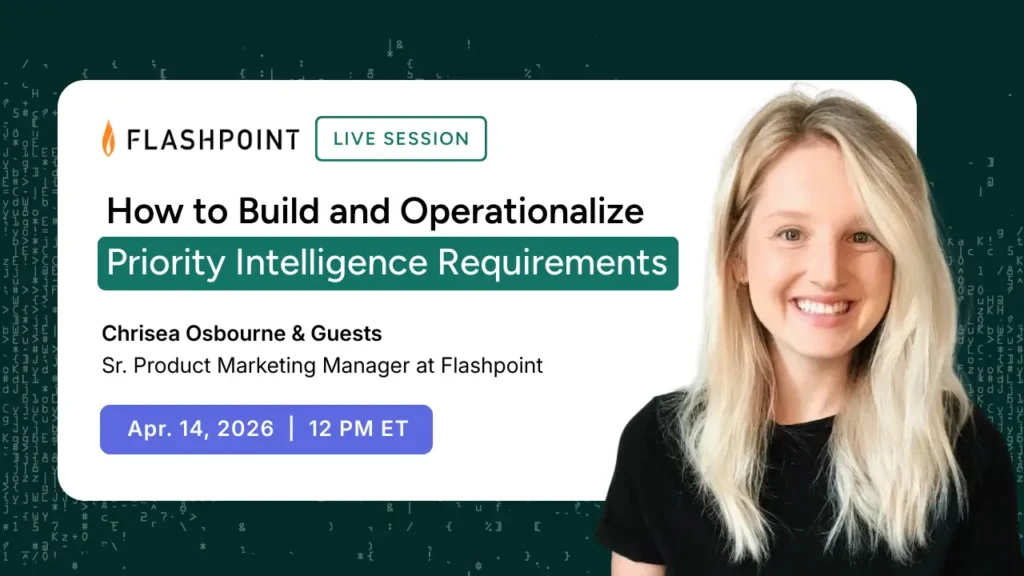
Join the Webinar: How to Build and Operationalize Priority Intelligence Requirements

Register to learn how to define actionable PIRs that stakeholders actually care about and align intelligence to real business decisions.

Register now for the webinar.

Note: Attendees will receive our exclusive “Priority Intelligence Requirements Starter Kit,” which features a practical workbook and a PIR library.