



惯性聚合 高效追踪和阅读你感兴趣的博客、新闻、科技资讯
阅读原文 在惯性聚合中打开

推荐订阅源

美团技术团队
奇客Solidot–传递最新科技情报
奇客Solidot–传递最新科技情报
博客园 - Franky
有赞技术团队
有赞技术团队
博客园 - 司徒正美
量子位
N
News and Events Feed by Topic
T
Threatpost
Last Week in AI
Last Week in AI
D
Darknet – Hacking Tools, Hacker News & Cyber Security
酷 壳 – CoolShell
酷 壳 – CoolShell
C
CERT Recently Published Vulnerability Notes
freeCodeCamp Programming Tutorials: Python, JavaScript, Git & More
I
Intezer
人人都是产品经理
人人都是产品经理
T
Tenable Blog
IT之家
IT之家
雷峰网
雷峰网
腾讯CDC
博客园 - 聂微东
V
Visual Studio Blog
S
SegmentFault 最新的问题
Scott Helme
Scott Helme
Spread Privacy
Spread Privacy
月光博客
月光博客
让小产品的独立变现更简单 - ezindie.com
V
V2EX
大猫的无限游戏
大猫的无限游戏
Apple Machine Learning Research
爱范儿
爱范儿
T
Tailwind CSS Blog
OSCHINA 社区最新新闻
OSCHINA 社区最新新闻
罗磊的独立博客
N
Netflix TechBlog - Medium
J
Java Code Geeks
宝玉的分享
宝玉的分享
F
Full Disclosure
WordPress大学
WordPress大学
A
Arctic Wolf
小众软件
小众软件
AWS News Blog
AWS News Blog
Attack and Defense Labs
NISL@THU
NISL@THU
AI
AI
Hugging Face - Blog
Hugging Face - Blog
F
Fortinet All Blogs
云风的 BLOG
云风的 BLOG
N
News | PayPal Newsroom
Cyber Security Advisories - MS-ISAC
cs.AI updates on arXiv.org

Threat Intelligence Blog | Flashpoint

Understanding Illicit Ecosystems: How Dark Web Forums Structure Cybercrime AI, Trust, and the Future of Threat Intelligence Remus Stealer: A New, Not-So-New Infostealer America250 Fourth of July Threat Assessment Unmasking the Digital Trail: Essential Techniques for Vetting AI-Generated Content The Shift to Threat-Informed Prioritization: Operationalizing CISA BOD 26-04 Identity Is the New Attack Surface: How Infostealers Are Reshaping Enterprise Risk Understanding Illicit Ecosystems: Weaponizing Mainstream Apps and Social Infrastructure Connecting Vulnerability Intelligence to Real-World Exposure With Flashpoint EASM Understanding Illicit Ecosystems: XSS and the Current State of the Russian-Speaking Underground How to Align and Measure Threat Intelligence Operations: Flashpoint Priority Intelligence Requirements The Mini Shai-Hulud Worm and the New Era of CI/CD Exploitation Understanding Illicit Ecosystems: The Hybrid Threat of “The Com” AI Threat Report: How Artificial Intelligence Is Used Across Illicit Communities How Mergers and Acquisitions Expand Your Attack Surface Overnight The Evolution of the Geotag: How AI is Bridging the Gap in Location-Based OSINT Navigating the Threat Landscape of the 2026 FIFA World Cup Inside the 2026 Cyber Threat Landscape: Data-Driven Security Priorities Flashpoint MCP Server: Operationalizing Cyber Threat Data for Agentic AI Security Workflows 2026 Gartner® Magic Quadrant™ for Cyber Threat Intelligence: Key Takeaways for Security Leaders Escalation in the Middle East: Tracking “Operation Epic Fury” Across Military and Cyber Domains How to Build and Operationalize Priority Intelligence Requirements National Vulnerability Database (NVD) Shifts to Selective Enrichment as CVE Volume Surges Flashpoint Surpasses Cataloging 7,000 Known Exploited Vulnerabilities as Disclosure Volume Accelerates Why Intelligence Requirements Fall Flat and How to Fix Them with a Practical Priority Intelligence Requirements Framework The Phishing-as-a-Service Pipeline: How a Scalable Fraud Ecosystem Is Driving Global Attacks Tax Refund Fraud in 2026: How Threat Actors Exploit Identity, Verification, and Cash-Out Channels The Language of Emojis in Threat Intelligence: How Adversaries Signal, Obfuscate, and Coordinate Online What the NVD ‘Slowdown’ Means For You: How to Stay Ahead in Vulnerability Management Forrester Threat Intelligence Landscape: Key Takeaways for Security Leaders Connecting Threat Intelligence to Decision-Making: How Flashpoint Is Operationalizing Intelligence in 2026 Iran-Aligned Militias Signal Expanded Regional Risk Amid US–Israel–Iran Conflict Destructive Activity Targeting Stryker Highlights Emerging Supply Chain Risks Navigating 2026’s Converged Threats: Insights from Flashpoint’s Global Threat Intelligence Report What to Know About the Notepad++ Supply-Chain Attack Cyber Threat Intelligence Index: Q3 2023 Edition Beyond Hamas: Militant and Terrorist Groups Involved in the October 7 Attack on Israel The First 72 Hours of the Israel-Hamas War: Hamas and PIJ Activity on Telegram About Us Qakbot Takedown: A Brief Victory in the Fight Against Resilient Malware Unmasking the Attacker and Decoding Threat Actor Patterns The Flashpoint Firehose: 5 Questions With Michael Raypold, VP of Engineering The Seven Phases of a Ransomware Attack: A Step-by-Step Breakdown of the Attack Lifecycle Lost in Transition: A Timeline of Failed Successors to Breach and Raid Forums Days of Chaos: How OSINT Helps Us Understand the Putin-Prigozhin Schism Lessons From Clop: Combating Ransomware and Cyber Extortion Events How to Combat Check Fraud: Leveraging Intelligence to Prevent Financial Loss Beyond Gates and Alarms: The Scope and Impact of Physical Security Intelligence Why We Built Flashpoint Ignite: Unity, Power, and Performance The Risk-Reducing Power of Flashpoint Video Search Card Shop Threat Landscape: BidenCash Dumps 2.1M Stolen Credit Cards Flashpoint in 2023: A Note From Our CEO Why We Acquired Echosec Systems: The OSINT Revolution Open Source Intelligence
5 Reasons Taiwan Is a Growing Source of US-China Tension
Flashpoint · 2022-09-15 · via Threat Intelligence Blog | Flashpoint

Introduction

At the end of last year, Flashpoint correctly forecasted that Taiwan would prove critical to US-China relations. In the same way its asserted authority over Hong Kong, recovering Taiwan, we wrote, would also continue to be a primary pillar of China’s geopolitical strategy.
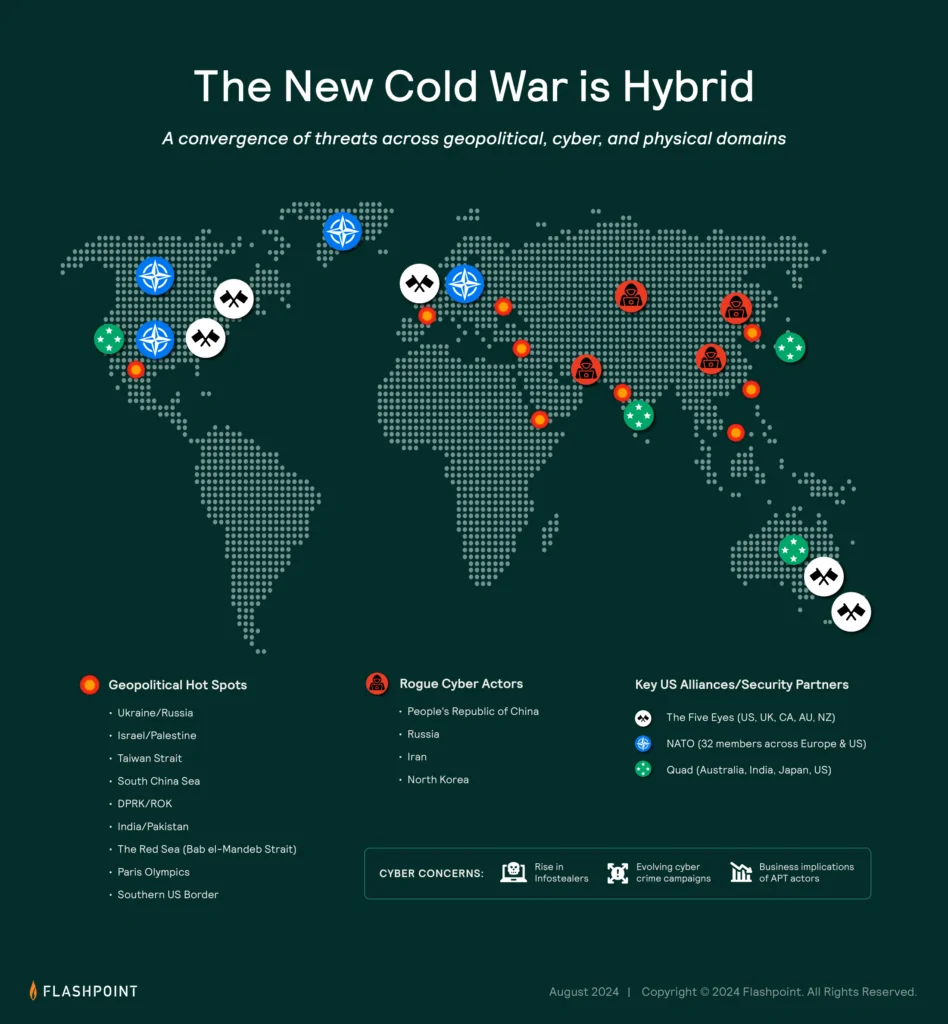
The new Cold War is characterized by Flashpoint as the use of cyber operations as tools of statecraft by major global powers

Fast forward to the present-day, as US-China tensions around the Taiwan Strait are elevated—buttressed by observed trends that may indicate that an increase in Chinese aggression around the Taiwan Strait is likely within the next 6-12 months. 

Here are five key indicators that may represent current and future escalations in US-China tensions related to Taiwan. 

1) Xi’s Third Term and the NPC

China’s National People’s Congress (NPC), scheduled for October 16, is held by the Chinese Communist Party every 5 years. It is considered to be the largest and most important time period for the CCP—this is when it typically announces political priorities as well as senior leadership appointments. This year’s NPC will be the 20th conference since the Party’s founding in 1921; without a planned successor, President Xi will take a third term—a first in CCP history since term limits were officially abolished by President Xi himself.

President Xi has remained vocal about his desire to complete reunification with Taiwan, which was most recently outlined in China’s most recent whitepaper, “The Taiwan Question and China’s Reunification in the New Era.” Notably, this is the first whitepaper that omits China’s desire to reunify with Taiwan peacefully, suggesting that an attempt to forcefully reunify is possible.

2) China’s Show of Might in the Taiwan Strait

Directly following the Speaker Pelosi’s August trip to Taipei, China’s military, the PLA, scheduled a series of live-fire drills around Taiwan, the most impactful particularly occurring from August 4-7 that included short, unprecedented incursions into the “median line” dividing Taiwan from China.

China’s air and sea exercises included several frigates, fighter jets, drones, and cyber attacks, and from the Chinese perspective, demonstrated China’s ability to encircle Taiwan swiftly and effectively on the world stage. The 22 ballistic missiles fired around Taiwan—five of which landed in Japan’s Exclusive Economic Zone (EEZ)—were the first launched near Taiwan since 1996. Additional military exercises around Taiwan occured on August 15, coinciding with the visit of five senior lawmakers from the US Congress.

3) US-Taiwan Economic Partnership

On August 17, the US government announced its intention to begin formal trade negotiations with Taiwan to support US trade facilitation, including its support of state-owned small to medium enterprises in Taiwan. Though the US has maintained that its policy towards Taiwan remains unchanged, the Biden administration has unveiled new initiatives like these to suggest a deepening of the US-Taiwan partnership due to mutually perceived threats to democracy in the Indo-Pacific region. 

On August 30, the Biden administration introduced another lever to its cooperation with Taiwan, announcing a planned $1B arms package with the island nation that will reportedly include “60 anti-ship missiles and 100 air-to-air missiles.” The package, officially approved by Congress on September 2, signals a commitment by the US to help Taiwan defend itself in the event of conflict with China. 

Related Resource

Great Cyber Power’ China and Its Influence Across APAC: Analysis and Timeline

Read now

4) Taiwan Ups Fefense Spending

Taiwan continues to prepare its military for an increased likelihood of conflict with China, including a sharp increase in its announced FY2023 defense budget. On August 25, Taiwan said that it will increase its military budget by 13.9 percent—approximately triple its usual four-to-five percent increase year over year. Several aspects of Taiwan’s military are set to be modernized as well, including its naval capabilities, which will be a key component in any kinetic conflict with China.

5) China Cutting Key Diplomatic Channels with US 

China has made a handful of quiet, diplomatic moves that signal its unhappiness with the current state of US-China relations, including severing cooperation with the US on key mutually beneficial touchpoints, such climate change and counternarcotics. 

On August 25, US Deputy Secretary of State Wendy Sherman met with China’s Ambassador to the US, Qin Gang, to discuss China’s moves to cut diplomatic communication with the US. According to Chinese officials in Beijing, these moves were a series of “demarches” made by China regarding several recent US CODEL visits to Taiwan, including US Indiana Governor Holcomb’s August visit to Taiwan to discuss US-Taiwan semiconductor cooperation.

APAC Intelligence that Drives Decision-Making

To ​see firsthand how Flashpoint can help your organization leverage APAC-centric intelligence to protect critical assets and stakeholders, sign up for a free trial today.