


惯性聚合 高效追踪和阅读你感兴趣的博客、新闻、科技资讯
阅读原文 在惯性聚合中打开

推荐订阅源

B
Blog RSS Feed
Google DeepMind News
罗磊的独立博客
Martin Fowler
Martin Fowler
博客园_首页
Stack Overflow Blog
Stack Overflow Blog
Last Week in AI
Last Week in AI
The GitHub Blog
The GitHub Blog
B
Blog
C
Check Point Blog
WordPress大学
WordPress大学
G
Google Developers Blog
CTFtime.org: upcoming CTF events
量子位
月光博客
月光博客
U
Unit 42
Engineering at Meta
Engineering at Meta
有赞技术团队
有赞技术团队
钛媒体:引领未来商业与生活新知
钛媒体:引领未来商业与生活新知
奇客Solidot–传递最新科技情报
奇客Solidot–传递最新科技情报
大猫的无限游戏
大猫的无限游戏
博客园 - 聂微东
让小产品的独立变现更简单 - ezindie.com
OSCHINA 社区最新新闻
OSCHINA 社区最新新闻
Y
Y Combinator Blog
freeCodeCamp Programming Tutorials: Python, JavaScript, Git & More
Cyber Security Advisories - MS-ISAC
Vercel News
Vercel News
Application and Cybersecurity Blog
博客园 - 【当耐特】
cs.CV updates on arXiv.org
cs.AI updates on arXiv.org
Jina AI
Jina AI
S
Secure Thoughts
aimingoo的专栏
aimingoo的专栏
D
Darknet – Hacking Tools, Hacker News & Cyber Security
I
Intezer
Latest news
Latest news
V
Vulnerabilities – Threatpost
D
Docker
Attack and Defense Labs
Help Net Security
Help Net Security
S
Security @ Cisco Blogs
Forbes - Security
Forbes - Security
MongoDB | Blog
MongoDB | Blog
云风的 BLOG
云风的 BLOG
L
LINUX DO - 热门话题
P
Palo Alto Networks Blog
Cloudbric
Cloudbric
Spread Privacy
Spread Privacy

Help Net Security

Your work apps are quietly handing 19 data points to someone ChatGPT advanced account security adds passkeys and hardware keys Week in review: High-severity LPE vulnerability in the Linux kernel, cPanel 0-day exploited for months Automating Pentest Delivery: A Step-by-Step Guide - PlexTrac Open-source privacy proxy masks PII before prompts reach external AI services Shadow AI risks deepen as 31% of users get no employer training Identity is the control plane for distributed infrastructure AI traffic is getting bigger, louder, and less predictable New infosec products of the month: April 2026 cPanel zero-day exploited for months before patch release (CVE-2026-41940) Cisco releases open-source toolkit for verifying AI model lineage Met Police face criticism for using AI to spy on their own officers Nine-year-old Linux kernel flaw enables reliable local privilege escalation (CVE-2026-31431) Hacker with a special interest in breaching sports institutions ends behind bars - Help Net Security IP Fabric MCP server adds governance and control to enterprise AIOps workflows - Help Net Security Aqua Compass MCP server enables real-time investigation and containment of runtime threats - Help Net Security Google brings instant email verification to Android, no OTP needed - Help Net Security If cyber espionage via HDMI worries you, NCSC built a device to stop it - Help Net Security Apple fixes iPhone bug that let FBI retrieve deleted Signal messages(CVE-2026-28950) - Help Net Security GopherWhisper APT group hides command and control traffic in Slack and Discord - Help Net Security OpenAI tackles a bad habit people have when interacting with AI - Help Net Security A year in, Zoom's CISO reflects on balancing security and business - Help Net Security Scenario: Open-source framework for automated AI app red-teaming - Help Net Security GDPR works, but only where someone enforces it - Help Net Security Ransomware, fraud, and lawsuits drive cyber insurance claims to new peaks - Help Net Security Google’s Workspace Intelligence promises privacy while running on your data - Help Net Security Cyberattack on French government agency triggers phishing alert - Help Net Security Claude Mythos finds 271 Firefox flaws, Mozilla believes zero-days are numbered - Help Net Security Prove Identity Platform connects verification, authentication, and fraud prevention - Help Net Security New Mirai variants target routers and DVRs in parallel campaigns - Help Net Security Acronis GenAI Protection gives MSPs control over AI usage and data risks - Help Net Security Elastic MCP Apps bring security and observability workflows into AI tools - Help Net Security Progress Software fixes sneaky WAF bypass vulnerability (CVE-2026-21876) - Help Net Security Tencent's QClaw AI agent app arrives on Windows and macOS - Help Net Security Phishing reclaims the top initial access spot, attackers experiment with AI tools - Help Net Security OneDrive updates focus on AI, access control, and compliance - Help Net Security PentAGI: Open-source autonomous AI penetration testing system - Help Net Security Apple Intelligence flaw kept stolen tokens reusable on another device - Help Net Security Shadow AI, deepfakes, and supply chain compromise are rewriting the financial sector threat playbook - Help Net Security Thunderbird 150 arrives with encrypted message search and OpenPGP improvements - Help Net Security VirtualBox 7.2.8 is out with Linux kernel 7.0 support and crash fixes - Help Net Security Ransomware negotiator admits role in attacks he was hired to resolve - Help Net Security Scattered Spider hacker pleads guilty to stealing $8 million in cryptocurrency Ivanti Neurons AI automates IT operations, reducing manual work and security risk Silobreaker Mimir adds agentic AI to intelligence workflows with governance and transparency - Help Net Security OpenAI’s Chronicle feature lets Codex read your screen, raising privacy concerns CISA flags another Cisco Catalyst SD-WAN Manager bug as exploited (CVE-2026-20133) A single platform powers SIM farm proxy networks across 17 countries - Help Net Security NGate NFC malware targets Android users through trojanized payment app - Help Net Security Meta and PortSwigger drive offensive security further to find what others miss - Help Net Security EU pushes for stronger cloud sovereignty, awards €180 million to four providers - Help Net Security SmokedMeat: Open-source tool shows what attackers do inside CI/CD pipelines - Help Net Security How to spot a North Korean fake in a job interview - Help Net Security Product showcase: Syncthing for secure, private file synchronization - Help Net Security Week in review: Acrobat Reader flaw exploited, Claude Mythos offensive capabilities and limits Google wipes out 602 million scam ads with Gemini on duty Researcher drops two more Microsoft Defender zero-days, all three now exploited in the wild GitLab 18.11 brings agentic AI to security fixes, CI pipelines, and delivery analytics Liongard upgrades LiongardIQ with AI access, live asset data, and deeper discovery Mozilla challenges enterprise AI providers with Thunderbolt, open-source AI client under your control Codex can now operate between apps. Where are the boundaries? Android 17 Beta 4 arrives with post-quantum cryptography and new memory limits Apple AirTag tracking can be misled by replayed Bluetooth signals Social media bans might steer kids into riskier corners of the internet Workplace stress in 2026 is still worse than before the pandemic New infosec products of the week: April 17, 2026 - Help Net Security ImmuniWeb brings AI upgrades, post-quantum detection and more in Q1 2026 NIST admits defeat on NVD backlog, will enrich only highest-risk CVEs going forward Anthropic releases Claude Opus 4.7 with automated cybersecurity safeguards - Help Net Security Fortinet fixes critical FortiSandbox vulnerabilities (CVE-2026-39813, CVE-2026-39808) - Help Net Security Google Play is changing how Android apps access your contacts and location Tails 7.6.2 patches vulnerability that could expose saved files Cargo theft malware actor spent a month inside a decoy network before researchers pulled the plug Two US nationals jailed over scheme that generated $5 million for the North Korean regime Product showcase: Ente Auth encrypts, backs up, and syncs 2FA Wi-Fi roaming security practices for access network providers and identity providers European AI spending set to hit $290 billion by 2029 Windows is getting stronger RDP file protections to fight phishing attacks Capsule Security debuts with $7 million funding to secure AI agent behavior Hackers hijacked CPUID downloads, served STX RAT to victims $12 million frozen, 20,000 victims identified in crypto scam crackdown Rockstar Games receives “pay or leak” warning after cyberattack Google makes it harder to exploit Pixel 10 modem firmware Siemens expands Industrial Automation DataCenter with edge AI and cybersecurity Adobe issues emergency fix for Acrobat Reader flaw exploited in the wild (CVE-2026-34621) Seized VerifTools servers expose 915,655 fake IDs, 8 arrested Fixing vulnerability data quality requires fixing the architecture first ZeroID: Open-source identity platform for autonomous AI agents MITRE releases a shared fraud-cyber framework built from real attack data The fully free Linux OS Trisquel gets a major update with version 12.0 Ecne Week in review: Windows zero-day exploit leaked, Patch Tuesday forecast ClickFix campaign delivers Mac malware via fake Apple page Poisoned “Office 365” search results lead to stolen paychecks Gmail’s end-to-end encryption comes to mobile, no extra apps required To counter cookie theft, Chrome ships device-bound session credentials Little Snitch for Linux shows what your apps are connecting to - Help Net Security Apiiro CLI turns AI coding assistants into full-stack security engineers - Help Net Security April 2026 Patch Tuesday forecast: Spring-cleaning of a preview - Help Net Security What vibe hunting gets right about AI threat hunting, and where it breaks down - Help Net Security Health insurance lead sites sell personal data within seconds of form submission - Help Net Security
Product showcase: Session, a messenger without phone numbers or metadata
Anamarija Pogorelec · 2026-04-10 · via Help Net Security

Instant messaging has been around for decades, but it became widely adopted with the emergence of smartphones. Earlier, communication was limited to basic text messages. Messaging expanded to include photos, videos, and video calls without relying on telecom networks, as long as there is a reliable data connection.

Privacy and metadata concerns

With the growth of communication, privacy and security concerns became more prominent. Companies responded by encrypting message content to protect user data. End-to-end encryption improved privacy, but it does not address metadata collection by companies or state-level actors. Metadata can include IP addresses, phone numbers, timestamps, message frequency, and relationships between users.

Session focuses on reducing metadata exposure and does not require a phone number, email address, or any personal identifier when creating an account. Users are assigned a random ID and can choose pseudonyms. The app uses onion routing, which makes it difficult to link IP addresses to accounts or trace sent and received messages.
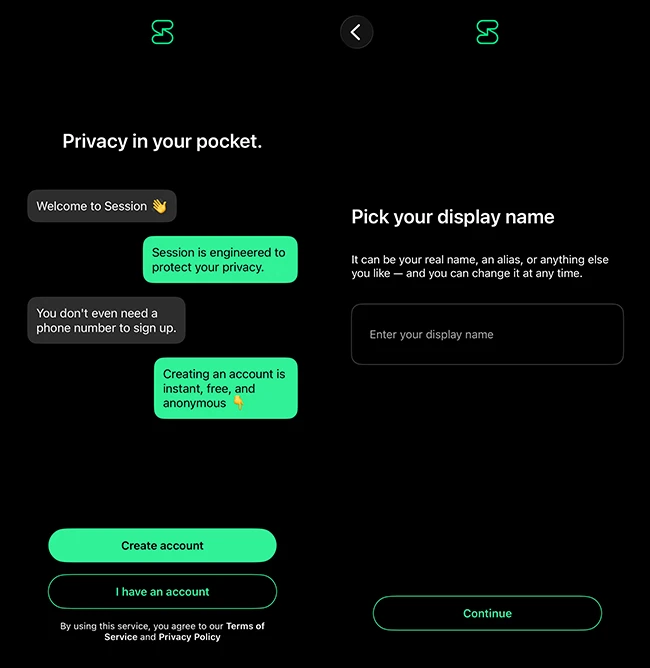
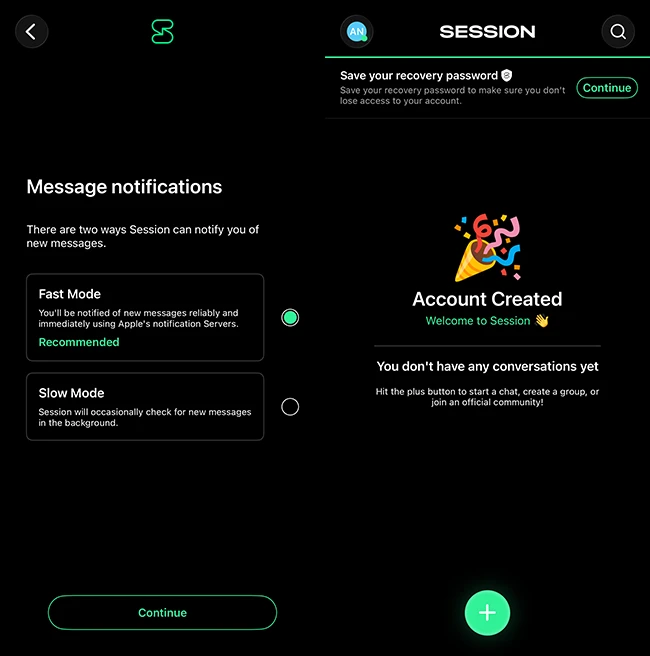
Session messenger

Session messenger

Decentralized network and message handling

The platform does not rely on central servers and uses a decentralized network of incentivized nodes to handle message routing and temporary storage. For features that are harder to decentralize, such as large file transfers or large group channels, users can host infrastructure themselves. Encryption and metadata protection remain in place in these cases. Session also supports disappearing messages, giving users control over how long conversations are kept.
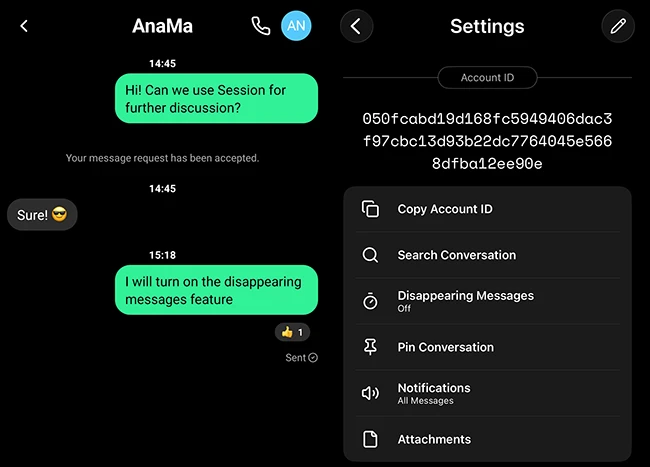
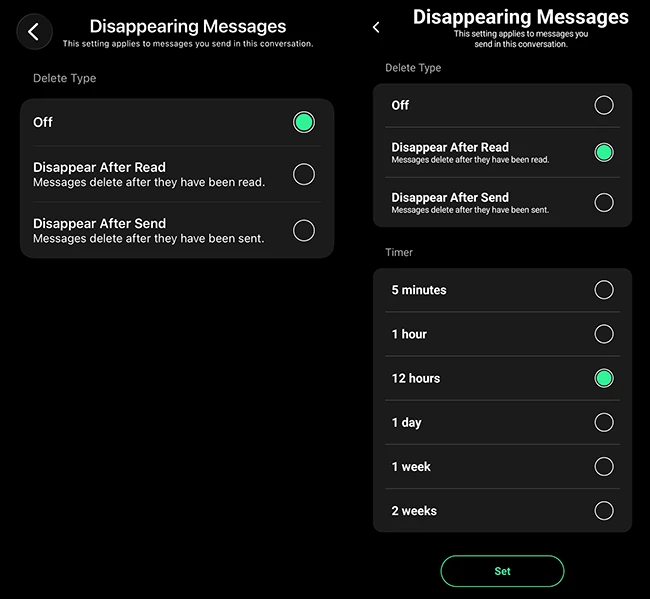
Session messenger

Session messenger

Session is an open-source, free messaging application based on public-key cryptography. It includes standard messaging features such as group chats, multi-device syncing, offline message storage, and support for voice and video calls.

The application runs on both mobile and desktop devices across major platforms. Users can connect by sharing their Session ID or scanning a QR code.

Session messenger

The first message or group invitation will be interpreted as a message request and sorted into a separate folder so users can decide if they will accept or deny further messages. If accepted, conversation moves to main conversations screen.

Account restoration

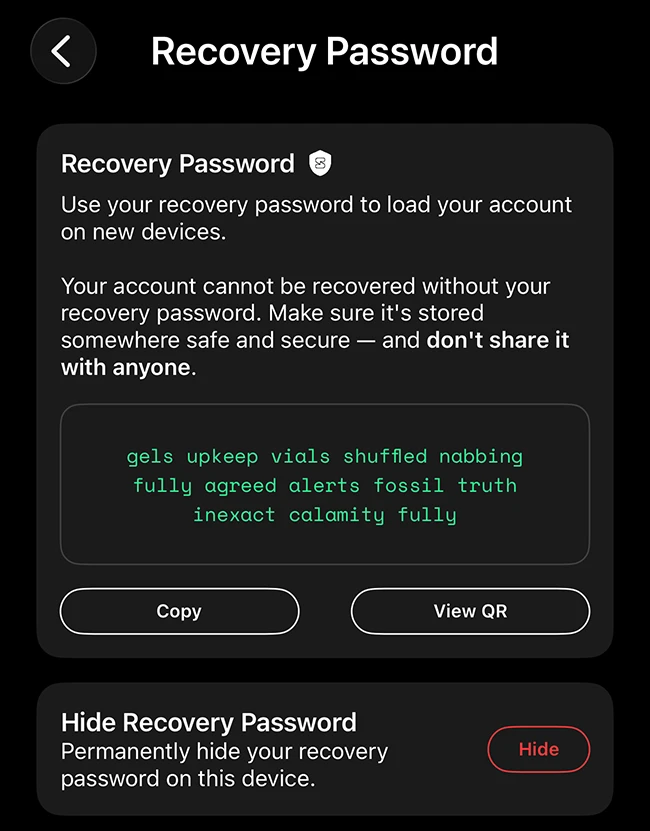
Since there is no central server storing account data, users are responsible for saving their account credentials. During setup, Session provides a mnemonic seed phrase that represents the user’s private key. This phrase can also be viewed as a QR code and is required to restore access to the account.
Session messenger

Final thoughts

Session is intended for users who require private communication without linking activity to personal identifiers. Its decentralized design, custom protocol, and metadata protections define its approach. The product focuses on delivering standard messaging capabilities within a network that reduces data collection and distributes control across its participants.