






In an effort to diversify and generate more cash from subscriptions, apps are turning toward premium tiers. Dating apps such as Tinder, Match and Bumble are leading the way by introducing premium tiers that could run as high as $500 a month.
Earlier this month, Tinder announced that it was to launch premium tiers for its membership subscriptions. And it’s far from the only one.
Notable dating platforms such as Match and Bumble are actively seeking ways to sustain their revenue growth, as they’ve seen users opting for paid features flatline.
- Advertisement -

The gap between a 65% and 90%+ privacy opt-in rate can mean $525,000 in lost revenue annually for a 100K DAU app — and most teams have no idea where they stand.
This guide breaks down the true cost of consent debt, why the average app sits at just 80% opt-in, and the exact tactics top performers use to consistently hit 90%+: prompt timing, banner design, vendor list optimization, and more.
According to Bloomberg, a tactic that’s gaining traction involves the introduction of weekly subscription plans in order to attract a larger audience towards paid offerings.
Match Group saw robust interest in its recently unveiled weekly subscription models. In the UK, there’s been a noteworthy 73% upswing in the adoption of paid plans by Gen Z women on Tinder ever since its introduction in April. A similar trend was observed on Hinge, another app within the Match Group umbrella as well as Bumble.
Bumble app paying users and revenues per user
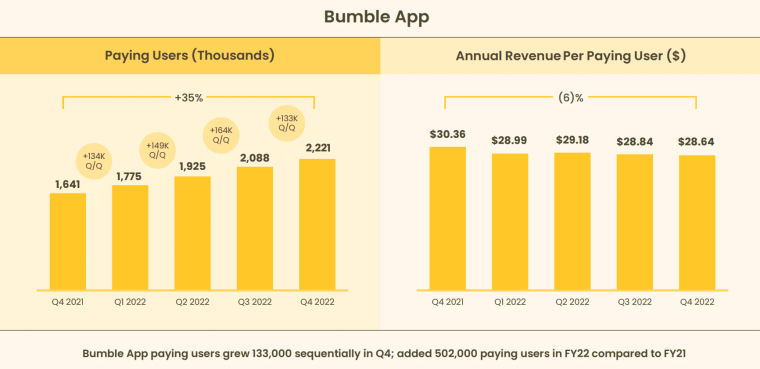
Source: Bumble
There’s just one problem: weekly subscriptions often result in less predictable revenue as users may subscribe for short periods and then cancel.
To address this issue, companies are exploring premium tiers at higher price points. Match Group, for instance, is preparing to launch a subscription tier priced at $500 per month in the upcoming months. Bumble, which already offers weekly subscription options, intends to test a premium tier later this year, alongside a more budget-friendly choice specifically tailored for Gen Z users. Grindr is also seeing favourable results from its new weekly subscription option and is contemplating the introduction of more affordable choices as well as a premium tier.
These premium tiers cater to individuals seeking a more personalised and precise matchmaking experience. Whitney Wolfe Herd, CEO of Bumble, noted during a recent earnings call that some users consider spending $40 to $50 per month to find a meaningful connection as a worthwhile investment.
While introducing these high-priced tiers, both Bumble and Grindr are also exploring the possibility of offering new tiers at lower costs compared to their current subscription plans.
Dating apps aren’t the only companies striving to adapt to the preferences of Gen Z users. In April, YouTube announced two new advertising alternatives aimed at making it easier for advertisers to connect with this demographic.
此内容由惯性聚合(RSS阅读器)自动聚合整理,仅供阅读参考。 原文来自 — 版权归原作者所有。