





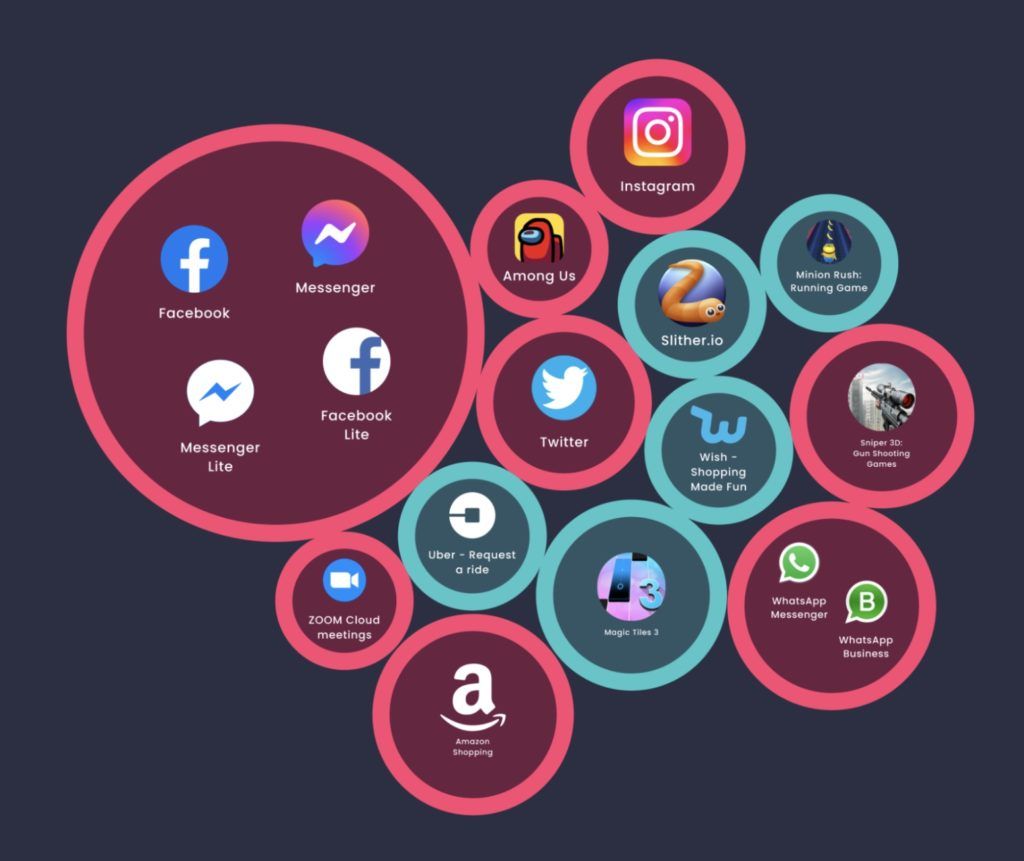
Most mobile users are well aware that app developers and companies collect their data. But given the greater focus on enhanced app privacy and security, how much data is being shared exactly? Data removal company Incogni took a closer look at Google Play Store’s data section and the results are shocking. More than half of apps openly share user data.
Incogni examined 500 free and 500 paid apps and found that 55.2% of apps admitted to sharing user data. After all, user data is gold and trading it has been common practice for many years. However, certain types of apps share data more freely than others. These include shopping, business and food and drinks apps. Social media and business apps shared the most data.
Google Play apps collecting the most data points
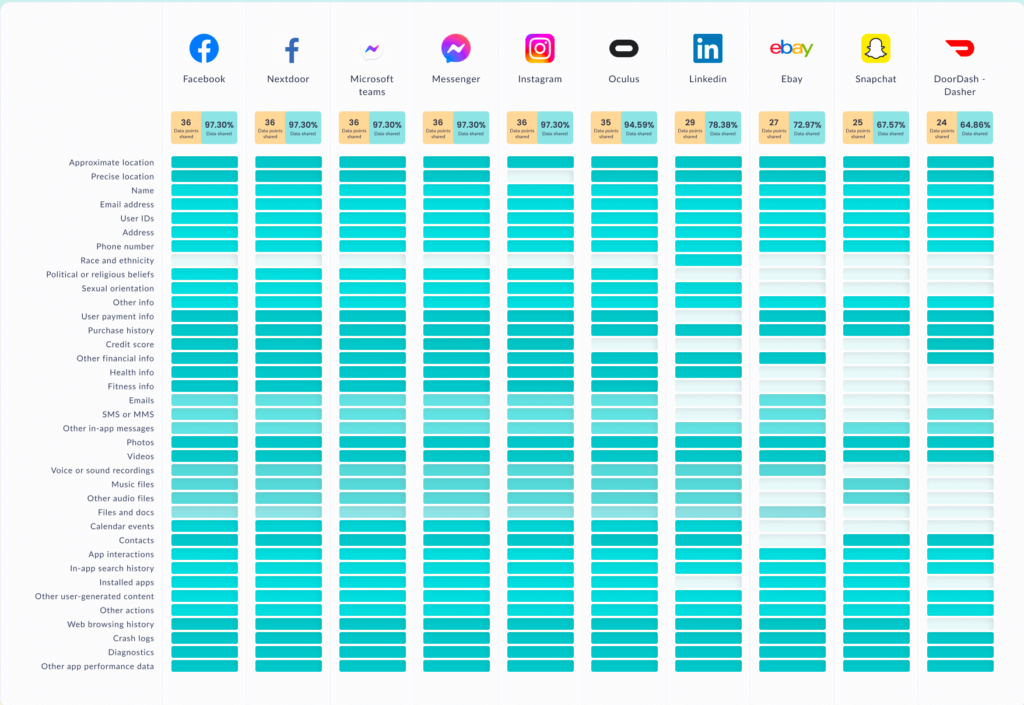
Source: Incogni
Interestingly, free apps shared 7x more data than paid ones which means users are “paying” for their downloads after all. And apps with over 500k downloads shared data an average 6.15x more often than less popular apps.
- Advertisement -

The gap between a 65% and 90%+ privacy opt-in rate can mean $525,000 in lost revenue annually for a 100K DAU app — and most teams have no idea where they stand.
This guide breaks down the true cost of consent debt, why the average app sits at just 80% opt-in, and the exact tactics top performers use to consistently hit 90%+: prompt timing, banner design, vendor list optimization, and more.
While it’s common practice for app developers to share data such as crash logs and app interactions or even shopping histories to improve marketing, Incogni found that a small percentage apps shared far more sensitive user information including location history (13.4%), email address (6.7%), names (4.7%), addresses and precise locations (3.8%), photos (3.2%) and even in-app messages (1.8%).
Most shared data points across all apps
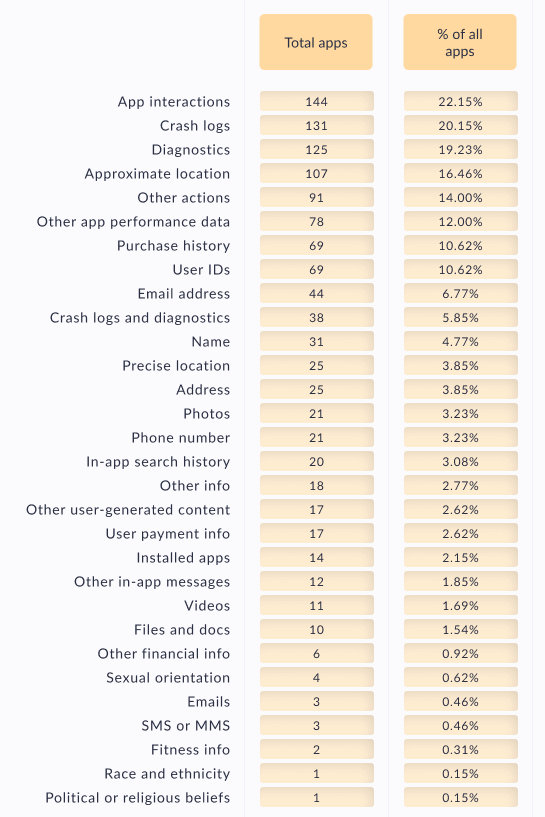
Source: Incogni
But who is the data shared with? Typically, the anonymised data is shared with third parties such as marketers or data brokers, but in theory such data could be shared with anyone. What’s more worrying is that there are ways to re-identify even anonymised data.
此内容由惯性聚合(RSS阅读器)自动聚合整理,仅供阅读参考。 原文来自 — 版权归原作者所有。