






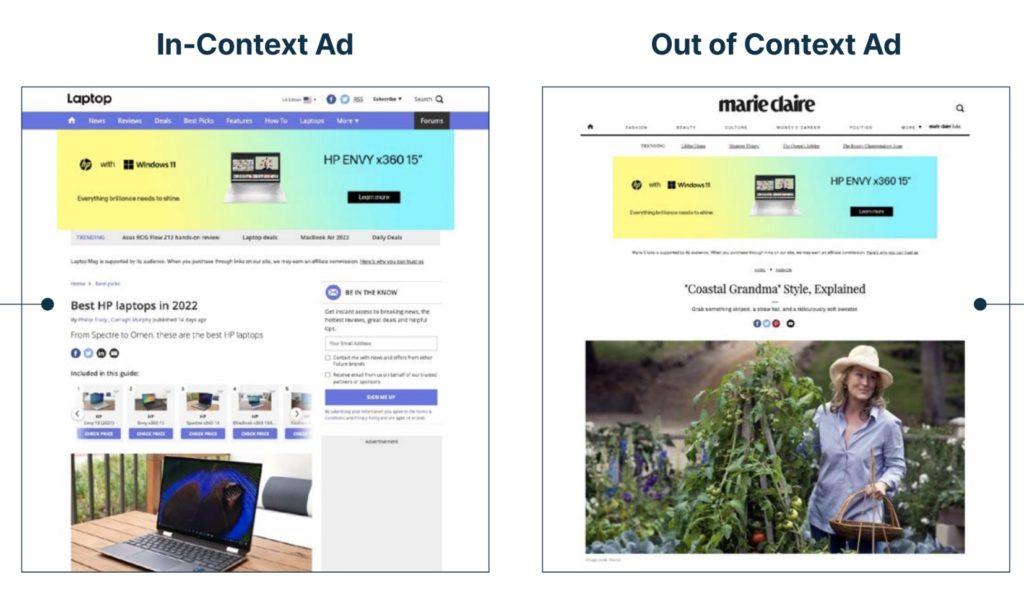
Contextually relevant ads drive significantly better outcomes and improve brand favourability and consumer purchasing intent, according to the latest results of a study by Integral Ad Science.
In collaboration with eye-tracking firm Tobii, the digital media expert examined how display ads performed in and out of context.
The findings show that contextual targeting strategies result in greater consumer attention.
- Advertisement -

The gap between a 65% and 90%+ privacy opt-in rate can mean $525,000 in lost revenue annually for a 100K DAU app — and most teams have no idea where they stand.
This guide breaks down the true cost of consent debt, why the average app sits at just 80% opt-in, and the exact tactics top performers use to consistently hit 90%+: prompt timing, banner design, vendor list optimization, and more.
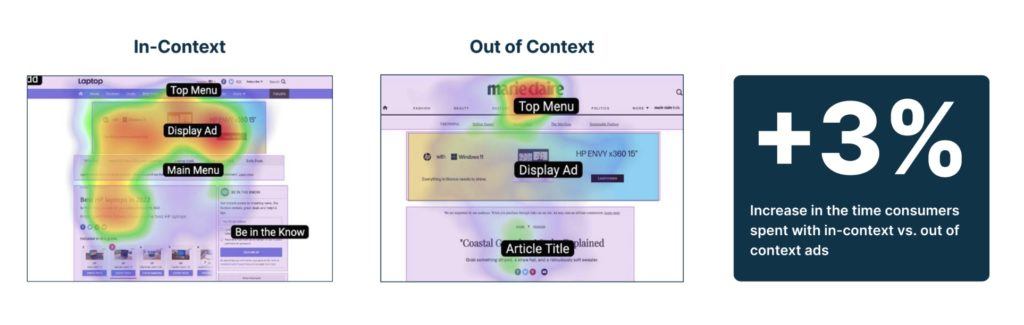
The in-context advert was the first-page element consumers noticed.
On average it took just 4 seconds for consumers to notice the in-context ad while out-of-context ads took 10 seconds to notice.
Purchase intent was 14% higher in those viewing in-context ads and brand favourability increased 5% compared to consumers viewing out-of-context ads.
“With a cookieless future on the horizon, marketers are seeking alternatives to maintain and improve their advertising ROI. Our new report shows that desired outcomes can be significantly influenced through contextually relevant ad placements, which have the capacity to influence audience recall and overall response,” said Tony Marlow, CMO, IAS. “There is a massive opportunity for brands to use tools like IAS’s Context Control to amp up the power of their campaigns and affect the bottom line.”
The study also showed that in-context ads were more memorable and boosted brand recall and awareness among consumers.
Consumers were 4x more likely to remember a brands after seeing an in-context ad.
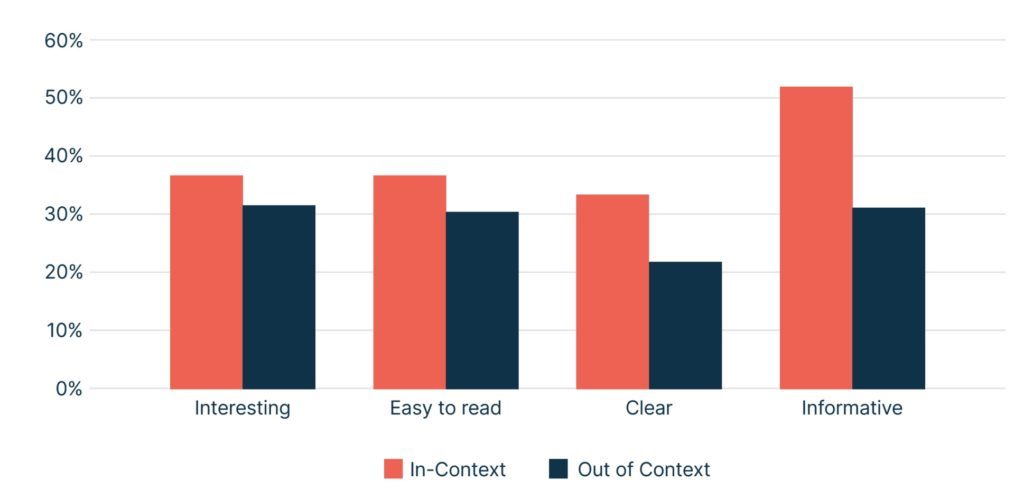
The ads were also considered to be more interesting and easier to read.
此内容由惯性聚合(RSS阅读器)自动聚合整理,仅供阅读参考。 原文来自 — 版权归原作者所有。