








For many years, app stores were the go-to places for finding, selling, and making money from apps. But today, game and content creators want more flexibility and options. They’re looking for ways to sell their content in a more versatile manner that can reach a broader audience while giving them direct feedback from customers. New research from content monetisation solutions expert Coda and Niko Partners sheds light on what’s happening.
The report highlights the increasing importance of digital distribution and monetisation methods for mobile game publishers. To meet growing demand, developers are turning to different approaches.
One is first-party web stores, where creators sell directly on their own websites. Another is third-party web stores, where they team up with other online marketplaces. These new methods are not only cheaper than using traditional app stores but also open up exciting opportunities to make money outside of those familiar platforms.
- Advertisement -

The gap between a 65% and 90%+ privacy opt-in rate can mean $525,000 in lost revenue annually for a 100K DAU app — and most teams have no idea where they stand.
This guide breaks down the true cost of consent debt, why the average app sits at just 80% opt-in, and the exact tactics top performers use to consistently hit 90%+: prompt timing, banner design, vendor list optimization, and more.
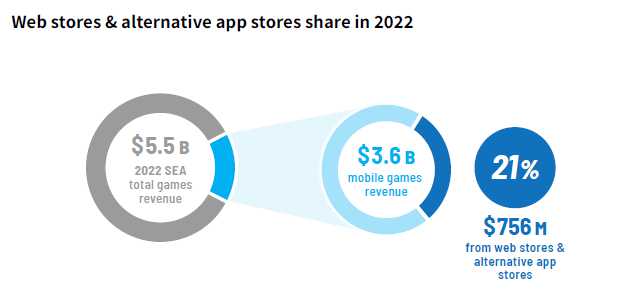
The report also points out the growing trend of out-of-app monetisation, particularly through web stores. This trend is gaining traction in regions with limited credit card access, such as Southeast Asia, which accounts for 21% of global mobile game revenue. In certain markets, like China, third-party distribution contributes to 53% of app monetisation.
“Out-of-app monetisation helps to unlock revenue in markets where gamers have different options compared to Western markets, from alternative payment methods to tighter budgets for game spending,” said Lisa Hanson, President and CEO of Niko Partners.
Web and alternative app stores
Source: Coda
Recognising the diverse payment options in various markets, the report emphasises the importance of adapting payment methods, including e-wallets and phone carrier billing. In Asia, first and third-party web stores have been the norm for over a decade.
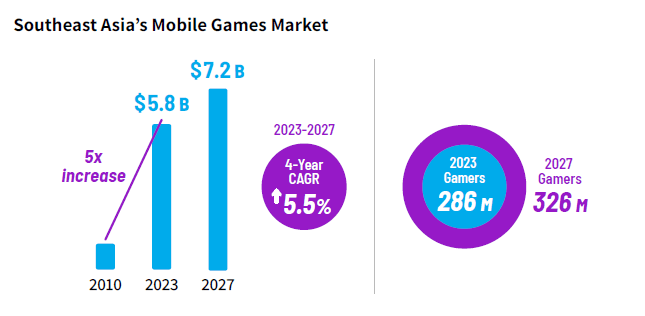
With the Southeast Asian games market generating $5.8 billion in revenue in 2023 and expected growth, Coda plans to expand its global reach through partnerships with publishers. The report predicts an increase in mobile gamers from 286 million in 2023 to 326 million in 2027.
Despite challenges posed by a significant “unbanked” adult population, around 40-50%, and over 100 payment methods and providers, the report advocates for diverse payment options. Collaboration with partners who have local expertise, diverse marketing channels, and influencer networks is highlighted to unlock the potential of Southeast Asian markets.
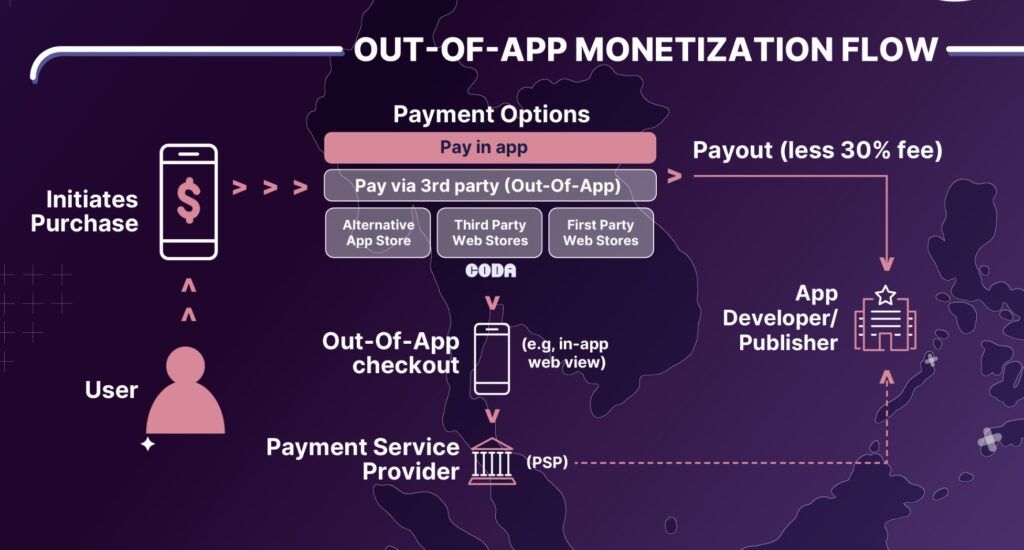
How out-of-app monetisation works
Source: Coda
To make the most of this chance, it’s vital to create a campaign that convinces users to start shopping on a web store.
At the same time, gamers also win when they buy things outside of the app because publishers offer them enticing incentives. These perks can include exclusive bonuses, one-of-a-kind in-game items, cashback deals, special promo codes, and more – all designed to make customers more engaged and excited about their purchases.
此内容由惯性聚合(RSS阅读器)自动聚合整理,仅供阅读参考。 原文来自 — 版权归原作者所有。