












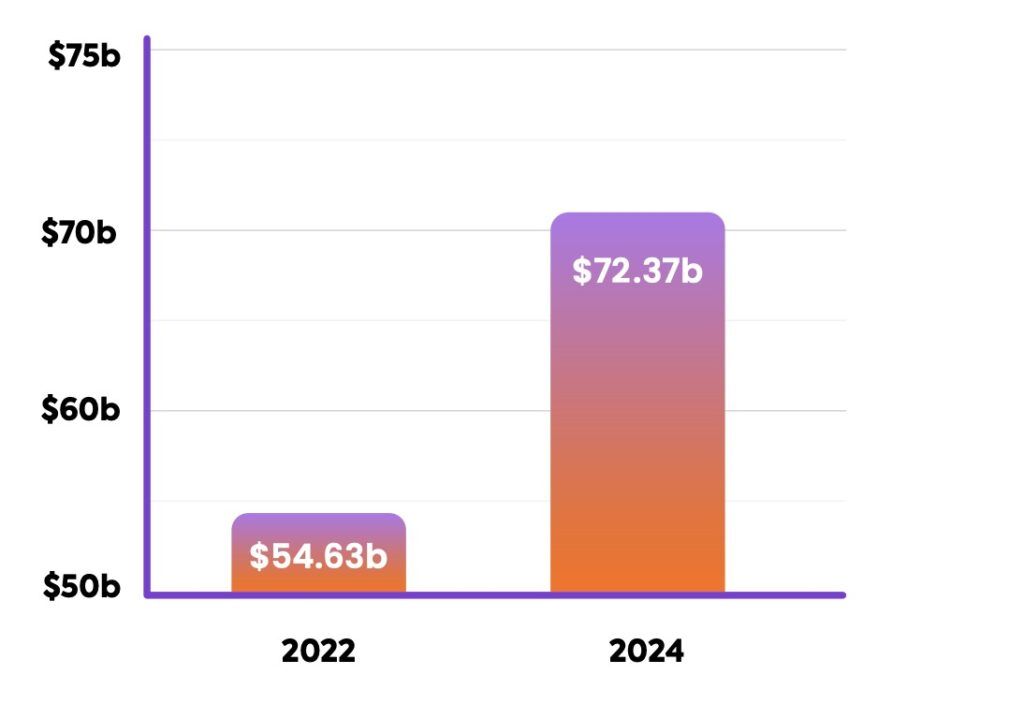
The advertising world is facing some tough challenges as its growth slows down by 5.3%. One big problem on the horizon is something called “invalid traffic” or IVT. Let’s take a closer look at the impact of IVT on ad waste and efficiency.
According to Lunio, a company that helps advertisers be more efficient, in 2024, advertisers might waste more than $71 billion on fake or invalid traffic. That’s a whopping 33% increase from 2022.
Lunio studied 2.6 billion paid ad clicks and 104 billion impressions on major platforms like Google, Meta (formerly Facebook), LinkedIn, X (used to be Twitter), and TikTok. They found that 8.5% of all paid traffic is fake. So, basically, one out of every 12 visits to a website is not real.
- Advertisement -

The gap between a 65% and 90%+ privacy opt-in rate can mean $525,000 in lost revenue annually for a 100K DAU app — and most teams have no idea where they stand.
This guide breaks down the true cost of consent debt, why the average app sits at just 80% opt-in, and the exact tactics top performers use to consistently hit 90%+: prompt timing, banner design, vendor list optimization, and more.
This is a big problem not just because it’s a waste of money, but it also messes up how advertisers plan their budgets and predict how much money they’ll make. Lunio says that in 2024, this could lead to a staggering $204.8 billion in lost revenue.
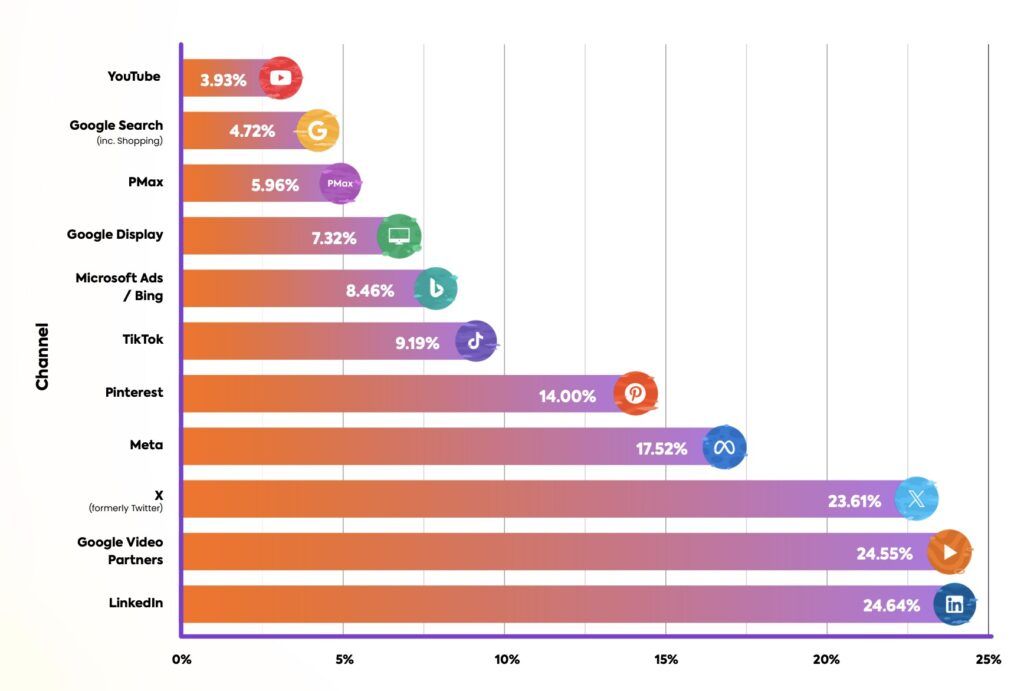
Invalid traffic by channel
Source: Lunio
Meanwhile, annual viewability averages on mobile and desktop web and video worldwide have risen 9% between 2019 and 2022. The upward trend has pushed average viewability levels to hover between 70% and 75% for several years, with the global average reaching 73.6% in H2 2022.
One surprising finding is that LinkedIn has the highest fake traffic rate at 25%, which means over $1.43 billion of ad spending could be a waste. Other platforms like Meta, Bing, X, and Pinterest also have high fake traffic rates, costing around $54.8 billion.
On the other hand, Google’s platforms have a lower fake traffic rate of 5.5%, which is still a significant $16.6 billion.
If we add up the money wasted on fake traffic for Google and non-Google platforms, it’s a massive $71 billion.
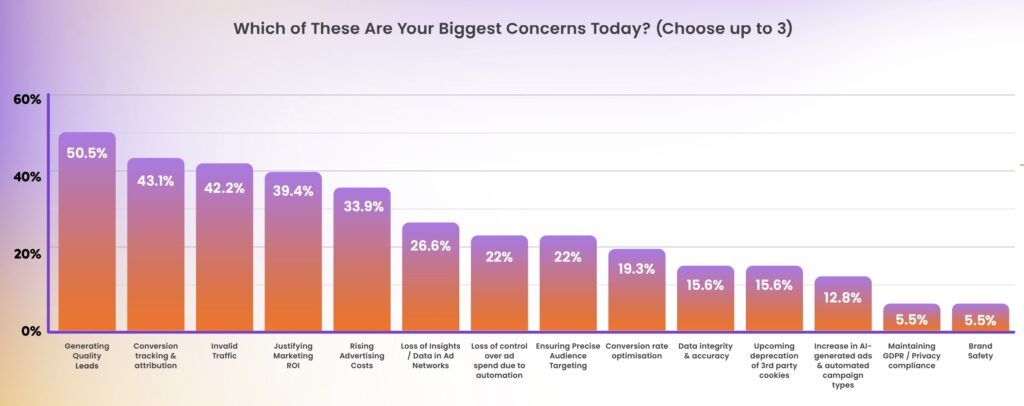
Some 65% of advertisers said they actively reduced wasted ad spend by applying exclusion audiences to campaign types while 69.7% acknowledge that there are issues with spam or fake lead submissions.
Advertiser concerns
Source: Lunio
So, in this tough advertising landscape, one of the most important things for advertisers is to fight against fake traffic and minimise its impact.
Marketers need to prioritise addressing this issue in their campaign strategies across all channels.
此内容由惯性聚合(RSS阅读器)自动聚合整理,仅供阅读参考。 原文来自 — 版权归原作者所有。