

惯性聚合 高效追踪和阅读你感兴趣的博客、新闻、科技资讯
阅读原文 在惯性聚合中打开

推荐订阅源

T
The Blog of Author Tim Ferriss
WordPress大学
WordPress大学
博客园 - Franky
The Cloudflare Blog
T
Tailwind CSS Blog
宝玉的分享
宝玉的分享
小众软件
小众软件
让小产品的独立变现更简单 - ezindie.com
Apple Machine Learning Research
月光博客
月光博客
B
Blog
Y
Y Combinator Blog
V
V2EX
有赞技术团队
有赞技术团队
M
MIT News - Artificial intelligence
博客园 - 司徒正美
IT之家
IT之家
G
Google Developers Blog
C
Check Point Blog
Engineering at Meta
Engineering at Meta
Microsoft Security Blog
freeCodeCamp Programming Tutorials: Python, JavaScript, Git & More
GbyAI
GbyAI
OSCHINA 社区最新新闻
OSCHINA 社区最新新闻

Latest Daily News Lessons | PBS News Hour Classroom

Student Reporting Labs: USWNT legend Briana Scurry on the future of women's soccer Student Reporting Labs: Celebrating everyday life in D.C. Thomas Jefferson's complicated legacy 250 years after the Declaration of Independence Breakthroughs in Chinese AI models threaten U.S. lead in tech race America at a Crossroads: A look at America's founding from the room where independence was declared America at a Crossroads: What political satire can reveal about the strength of a democracy Police say Flock cameras help solve crimes, but critics call them an invasion of privacy The health risks of wildfire smoke across the Midwest and Mid-Atlantic National Youth Poet Laureate Daniel Umemezie on using his words to bridge worlds 'Post-literate age': Why fewer Americans are reading for pleasure Ousted Election Assistance Commission chair on Trump's effort to control voting What we know about the cyclosporiasis outbreak linked to produce Dry winter leaves farmers along Colorado River facing greater water shortages Lindsey Graham's career and influence on American politics Trump fires election commission members in latest attempt to control voting process A look at the new regulations and incentives in the housing bill set to become law Some Medicare beneficiaries eligible for weight loss drug discounts Immigration judge says Trump administration's firings and policies are 'disheartening' How hospitals are using the arts to help patients recover Recovery efforts underway in Venezuela following earthquakes The growing dangers of record heat waves like the one engulfing July 4th celebrations How climate change and rising seas endanger historic sites like Jamestown, Virginia America 250: A student series on a nation in progress Supreme Court transforms campaign finance rules, lifting limits on party spending How the birthright citizenship decision impacts Trump's immigration agenda Walter Isaacson on what he calls 'The Greatest Sentence Ever Written' What the Supreme Court rulings mean for presidential power Anti-ICE protesters sentenced to decades in prison in latest crackdown on dissent Why more school districts are limiting screen time for students Black Opera Project celebrates resilience and richness of the Black American experience
Why Viktor Orbán's defeat in Hungary has global impact
2026-04-15 · via Latest Daily News Lessons | PBS News Hour Classroom

SUMMARY

The incoming prime minister of Hungary struck a hopeful tone on Monday. Peter Magyar called for a swift transition of power and began to chart an ambitious course to reverse central pillars of Viktor Orbán’s rule. Stephanie Sy discussed how the results could reverberate around the globe with Kim Lane Scheppele, a professor at Princeton University who lived and worked in Hungary.

View the transcript of the story.

NOTE: If you are short on time, watch the video and complete this See, Think, Wonder activity: What did you notice? What did the story make you think about? What would you want to learn more about?

Timestamp: Watch from the START of the video above to 4m:15s for a summary of the election. The remainder of the segment explores the impact of this election on global politics.

News alternative: Check out recent segments from the News Hour, and choose the story you’re most interested in watching. You can make a Google doc copy of discussion questions that work for any of the stories here.

WARM-UP QUESTIONS

  1. When did Viktor Orbán first come to power in Hungary?
  2. Who is Peter Magyar, and what is his background?
  3. How will Magyar seek to redirect the future of Hungary? What changes has he promised to make?
  4. What are some of the actions Orbán took to increase his power and control over Hungary?
  5. Why might the Hungarian election impact the global political right, according to this segment?

ESSENTIAL QUESTIONS

  • In this segment, professor Kim Lane Scheppele says, "I think the Trump administration has lost a friend and an ally." What evidence does she use to explain how Orbán was a key ally of President Trump's? Why do you think this alliance might have been important to Trump?
  • How do you think Orbán's loss might impact U.S. relations with Europe in the future?

Media literacy: What else would you like to know about the connections between European political movements and the Trump administration? How could you find out more?

WHAT STUDENTS CAN DO

This segment suggests that Hungary became less democratic and less free during the leadership of Viktor Orbán. But what does it mean to be less democratic or free? Explore some of the places in the world that have shown democratic backsliding and discuss what links them. (Teachers, this activity is adapted from a Classroom lesson on Viktor Orbán.)
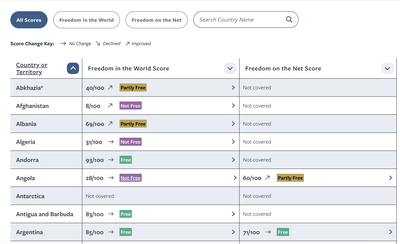
  1. Follow this link to Freedom House's complete list of countries, along with their "global freedom score."
  2. Choose any country you want that is described as "partly free" and do 5-10 minutes of internet research about that nation. Then answer the following questions:
    1. Who is the current president/prime minister/leader of your country? How long have they been in power?
    2. Why is this country in Freedom House's in-between category of "partly free"? Has it gotten more democratic (i.e. a dictatorship that has become a more stable democracy) or less democratic (i.e. a strong democracy that has become unstable) over time?
    3. Do a quick search for news stories about this nation and its democracy. Do you expect it to get more or less democratic over time?
  3. As a class, discuss — what are some common features of countries described as "partly free"?