








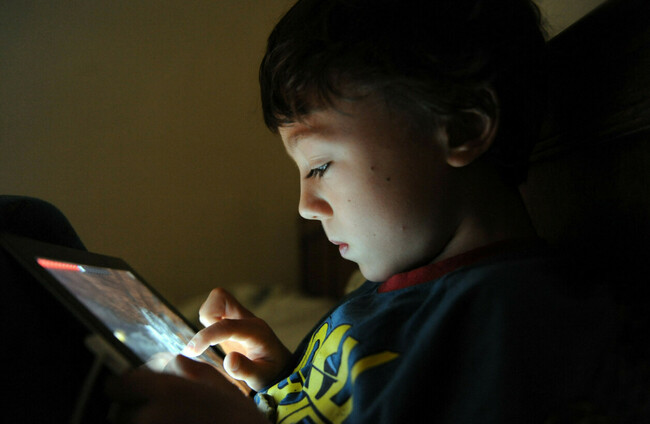
PARENTS IN IRELAND are the least likely among their EU counterparts to believe their children are spending too much time on screens, according to a new report published by the European Commission.
The Eurobarometer poll also reveals that Irish parents hold some of the most positive views about the impact of screen use on the lives of young people.
The report highlights how a majority of Irish adults believe their children spend “about the right amount” of time daily on electronic devices with one third claiming their screen time is “too much.”
It also showed that 53% of Irish parents claimed social media has a positive effect on their child’s mental well-being – more than twice the EU average of 21%.
Many stated it helped their children to feel connected to others and to express themselves as well as feeling they were in a better mood and less stressed when using social media.
Similar views were shared among Irish teenagers, although 42% admitted social media often made them feel anxious and 52% said it affected their ability to concentrate.
Only 23% of Irish parents felt social media had a negative impact on their children in terms of mood, stress levels and self-esteem compared to the EU average of 36%.
The report revealed 60% of parents in Ireland said the amount of time their child spends on various devices like computers, mobile phones, TV, tablets and gaming consoles is about right – the highest rate within the EU where the average was 41%.
Similar figures were found when Irish parents were asked about the level of time spent by their children on social media.
Another 34% of Irish parents felt the number of hours their children spent on screens was too much – the lowest rate among adults in any of the 27 EU member states where the average was 44%.
Irish children themselves are also more critical of the amount of time they spend on screens with 46% claiming it is “too much”.
The report showed that screen time is a major part of daily life for EU adolescents who average 4.5 hours on a school day and 6.1 hours daily at weekends.
It also highlighted how parents systematically underestimated their child’s screen time.
The report was commissioned by the European Commission’s directorate general for health and food safety to assess the impact of excessive screen time and social media on the mental health of young people.
It surveyed the views of around 26,300 teenagers aged 13-18 as well as 12,750 parents across the 27 EU member states, including approximately 1,000 teenagers and 500 parents in the Republic.
The report followed publication of research by the European Commission last year which showed that 15-year-olds who spend more than three hours per day on social media are around 10 percentage points more likely to report depression or anxiety than those who spend less than one hour per day.
More than half of Irish parents (52%) estimated that their children spend 2–4 hours on screens on a typical school day, with 23% claiming they spend 4–6 hours on various electronic devices – figures just above the EU average.
In addition, 5% said their children spend in excess of 6 hours per day on screens, including 2% who estimated the figure at over 12 hours per day.
On the other hand, 23% of Irish teenagers themselves claimed they spend at least six hours per day on screens, with 2% claiming the amount of time exceeded 12 hours daily.
However, approximately half say 1–3 hours of daily time on screens is related to school work.
According to parents, the proportion of Irish children spending more than 6 hours per day on screens at weekends rises to 28% at weekends which is below the EU average of 36%. However, 45% of Irish children stated they spend that amount at weekends.
The report revealed mixed views among Irish adults about the impact of screen use on young people.
It highlighted how 40% believe the impact is positive, while 28% claimed it was negative.
Across the EU overall, in contrast, only 17% of parents hold a positive view of screen use by their children with 51% claiming it has a negative impact.
At the same time, however, Irish parents showed they had similar levels of concerns as most Europeans about various risks associated with screen use.
The report found 70% of Irish parents said they were concerned about their children being exposed to harmful or inappropriate content online, while 51% admitted being worried that it was affecting their sleep.
The report also showed 55% were concerned that their child’s screen use was impacting on their performance in school.
Irish teenagers were also somewhat divided about the impact of screens on their lives with 38% believing it is positive, while 30% held a negative view.
They claimed entertainment and staying in contact with friends and family were the most important reasons why they used social media.
The report showed Irish teenagers are more likely to experience negative impacts of social media like cyberbullying, pressure to share intimate pictures and exposure to unwanted sexual content than most of their European counterparts.
Approximately nine out of 10 had encountered at least one harmful or distressing piece of content online in the previous three months led by AI-generated content that was hard to recognise (41%); false or misleading information (37%) and pressure on how to look or what to buy (28%).
A majority of Irish teenagers (53%) stated their belief that social media platforms are not doing enough to protect young people’s wellbeing online, but the figure was only 39% for their parents.
The European Commission said the report’s findings would inform policy debate on the intersection of public health, online safety and digital regulation which was increasingly being treated as a priority at EU level.