


LAST UPDATE | 14 Apr
CONSIDER CONTEMPORARY LIFE in Ireland: The three-hour commute because the train doesn’t exist. The GP list that’s been closed for two years. The €2,200 rent for a one-bed that would cost €900 in Vienna. The 14-month wait for an MRI on the public list, or five days if you can pay. The schools with no places, the buses that don’t come, the €12 sandwiches.
And then you’re told that Ireland is the second richest country in Europe, that the government ran a €23 billion surplus last year, that unemployment is at record lows, and that if you’re not happy with this arrangement, you should be grateful for what you have and stop complaining.
Both of these things are true, and the distance between Ireland’s wealth and Ireland’s infrastructure, I suspect, is what the fuel protests are actually about. Fuel just happened to be the thing that broke the surface in the last week, but the distance has been there for a decade, and it is growing.
Why doesn’t Ireland work?
Ireland has 43 per cent fewer hospital beds per capita than the EU average, and over 75 per cent of GP practices have closed their lists to new patients. The rail network has halved since 1920, while the motorway network per capita has grown to three times the UK’s, because we built roads for cars and forgot that other countries built trains for people. The IMF found last year that Ireland’s infrastructure lags competitor economies by 32 per cent, and the country remains the only EU member state with no gas storage at all. As rich as Denmark, but delivering less than Poland.
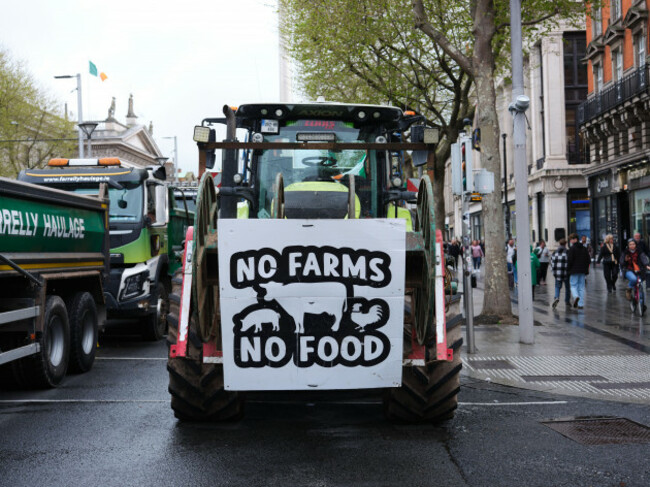 Haulage, farming and other protester brought the country to its knees in the past week. Alamy Stock Photo
Alamy Stock Photo
Haulage, farming and other protester brought the country to its knees in the past week. Alamy Stock Photo
Alamy Stock Photo
The reason comes down to what the money becomes. Corporation tax reached €28 billion last year, with 46 per cent coming from just three American companies. And yet the IMF found in 2025 that Ireland’s infrastructure lags competitor economies by 32%, with a quality gap of 27%. The money is there, but the outcomes are not. €450 energy credits cover one winter and disappear. €525 million a year goes to private landlords through HAP rather than building houses that would still exist in 50 years. Whatever Ireland is spending, it is not translating into the physical infrastructure that every comparable European country has built. The question is not how much Ireland invests — it is why the investment produces so little.
Drastically different to either European countries, only 15 per cent goes on things that last: hospitals, rail lines, energy infrastructure, the things you build once and use for a generation. In Ireland, the money flows in and gets consumed, but is never invested in the long-term.
So when nothing inevitably accumulates, the services that should exist simply don’t — which is why it was so jarring to watch the protesters get blamed this week for cancer patients missing appointments, for carers unable to reach vulnerable people and for children with disabilities losing home care services. These are real and serious consequences, but they are consequences that the Irish health system produces entirely on its own, every single day, without anyone blockading anything.
The hospital waiting list is over 900,000 people, emergency departments had 14,000 patients on trolleys in January alone, and cancer patients miss appointments every week that have nothing to do with tractors on O’Connell Bridge and everything to do with decades of spending the money once and building nothing that lasts. The fuel protests made these failures visible and immediate, while the health system makes the same failures invisible and chronic. But only one of them gets blamed.
Political ineptitude
The government’s response to all of this was to refuse to engage with the protesters for seven days, to attribute the movement to far-right agitation and to threaten to send in the army. The Taoiseach and senior ministers would not meet the people on the bridge because, they said, the movement lacked legitimacy.
But that is not how legitimacy works, and a country that spent 30 years telling the British this should know better than most.
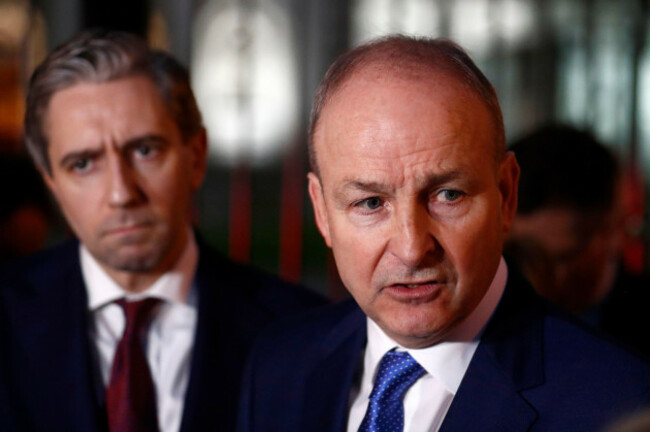 The Tanaiste and Taoiseach said the protesters were unrepresented and their actions illegitimate. Alamy Stock Photo
Alamy Stock Photo
The Tanaiste and Taoiseach said the protesters were unrepresented and their actions illegitimate. Alamy Stock Photo
Alamy Stock Photo
The liberal democratic assumption is that legitimacy flows downward, from elections and constitutions and institutions, and that if the system hasn’t recognised your demand, then your demand has no standing.
Complaints that travel through recognised channels — unions, professional bodies, letters to TDs, the opinion pages of the newspapers — are understood by the system, and the system can read them and respond. But when a haulier in Kildare can’t afford to fill his truck, there is no recognised channel. The system doesn’t hear him because the system wasn’t built to hear him — and when he makes himself heard the only way he can, he is condemned for it.
But legitimacy can also be earned laterally, not in the presence of a minister or an institution, but by the tens of thousands of people who share your grievance, who joined the same WhatsApp groups, who drove their tractors to the same bridge, who recognised their own lives in yours. When that happens, it doesn’t matter whether the system recognises it or not. The legitimacy is already established by the people who conferred it.
In every case where this has happened — Trump, Brexit, the Gilets Jaunes — ignoring that legitimacy did not make it disappear. It meant the people holding it went looking for someone who would recognise it, which is why UK right wing figure, Tommy Robinson took an interest in events in Ireland in the last week. Not because he caused the protest, but because the government created a vacuum by refusing to engage, then of course, someone else sought to fill it. Pointing to the person who filled the vacuum as proof that the movement was illegitimate is the final stage of the cycle that produced the crisis in the first place.
 Justice Minister Jim O'Callaghan suggested the protests were being 'manipulated by outside actors' such as Tommy Robinson. Alamy Stock Photo
Alamy Stock Photo
Justice Minister Jim O'Callaghan suggested the protests were being 'manipulated by outside actors' such as Tommy Robinson. Alamy Stock Photo
Alamy Stock Photo
Ireland’s former ambassador to the United States, Daniel Mulhall, tweeted this week that there is a need for calm discussion but that it “cannot happen while the country is being brought to a halt and the law being broken.”
This is the precise formulation that Ireland told Britain was wrong for 30 years. The Good Friday Agreement did not happen because the IRA stopped first — it happened because enough people recognised that the legitimacy of a grievance does not depend on the respectability of its expression. A country whose own diplomats brokered that insight and cannot apply it to a dispute over diesel has not learned from its own history.
This crisis will pass, and the fuel will flow again. But the distance between what Ireland can afford and what it actually delivers to its people will still be there, growing wider, felt by everyone, and addressed by no one.
And until something fundamental changes, every future crisis will arrive in the same institutional vacuum and produce the same response: a cheque, the army, someone to blame, and nothing learned.
Sinéad O’Sullivan is a business economist, formerly at Harvard Business School. More on Twitter at @sineados1.