






SO IT GOES.
As it was in Belfast this week, so it was in Dublin in 2023, Southport in 2024, Ballymena last year, and Southampton last month.
We are living in an era of regular rioting fuelled by social media, where algorithm-infused outrage can turn to street violence at lightning speed.
The unrest in Northern Ireland was so blatantly choreographed online that police and politicians were appealing for calm hours before anyone took to the streets on Tuesday.
The incident that sparked it all was a horrific stabbing incident on Monday night that left a man, Stephen Ogilvie, in a coma and with injuries including the loss of sight in one eye.
But social media was the catalyst for subsequent violence on the streets of Belfast and elsewhere, after video footage appearing to show the stabbing went viral alongside unverified claims that it was an “attempted beheading” – a word with a particular anti-Muslim connotation.
We’ve seen this routine so often in the past couple of years that it’s extremely easy to spot it unfolding in real time.
It was so obvious when it was happening that I began saving posts on Facebook and X as examples from early on Tuesday in the knowledge that I would be writing this column days later about how the playbook works.
The pattern always begins with an isolated incident of violent crime by a non-white person against a white person. Things escalate far more quickly if there are female or child victims, or if there’s video footage of the crime.
It isn’t that the attack on Stephen Ogilvie wasn’t horrific – it was – but to repeat a point made by many others this week, it’s telling that there was no rioting when white men killed Natalie McNally, Katie Simpson or any other woman in Northern Ireland in recent years.
When an incident like the stabbing of Stephen Ogilvie happens, loud and angry racists will take to social media and turn the victim into a cause célèbre, calling for protests while whipping up anger dressed in the language of ‘genuine concerns’ and ‘legitimate grievances’.
As early as 10am on Tuesday morning – just hours after the attack – far-right and anti-immigrant accounts on Facebook and X were willing the disorder into being by claiming that Belfast would go into “lockdown” that evening.
Lists of “reported road closures” began circulating on WhatsApp and X before lunchtime, without any indication of who was planning the closures.
“All major roads going in and out of Belfast are to be blocked and all shops and businesses have been ordered to close by 5pm,” one account posted. “I’m telling you, it is about to go down.”
In these scenarios, online outrage and planned protests against non-white people eventually become contagious, drawing in top-tier racists and other bad actors to pour petrol on the flames.
There is always misinformation and questionable claims, like the anonymous account that posted on Tuesday to say that “Irish nationalists” would travel from Dublin to “stand with British unionists” in protests.
Others usually inflame things further with incendiary calls for violence, like those who took to X the same afternoon to say “you know why these savages would be lynched in America” and “fuck deporting, start shooting”.
Eventually, the likes of Tommy Robinson (“Give us all a voice tonight Northern Ireland”), Conor McGregor (“Get them out, stop them coming”) and Elon Musk (“enough”) will give their takes, attracting more racist commentary on social media so the situation spirals further.
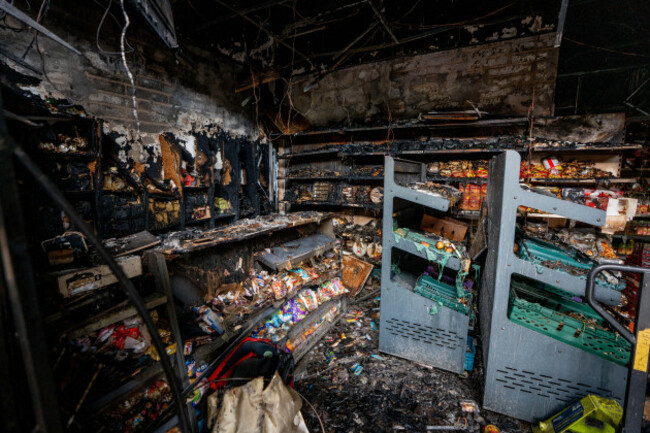
This will go on for a few hours and eventually people will take to the streets and set fire to things, attack police officers and threaten innocent people for not being white enough, all with the ostensible aim of making their city a safer place.
Anti-immigrant unrest like this has become an annual event in Ireland and the United Kingdom, and the role of platforms in this kind of disorder has become too obvious for prominent figures to ignore.
Naomi Long, Northern Ireland’s Justice Minister, this week criticised social media users who “would have struggled to find Belfast on a map” but who were “weaponising the fear that people genuinely have about what happened”.
The PSNI has said it is assessing posts online, while Britain’s communications regulator Ofcom has contacted X about content on the platform that is potentially linked to scenes of violence.
But we heard similar criticisms from TDs and of reported meetings between big tech platforms and Ireland’s regulator, Coimisiún na Meán, when the Dublin riots happened two-and-a-half years ago.
To date, there has been no concrete action against big tech companies for facilitating content that leads to violence, like calls for migrants to be shot or groups where the addresses of immigrants are shared so that their homes can be targeted.
The existence of the platforms does not cause unrest, and not every person who takes to the streets has been hypnotised by a feed.
At the same time, social media enabled outrage and rumours to spread at speed and helped galvanise people into rioting.
We’re told that those who committed crimes during the disorder will face prosecution, but what will happen to the platforms where misinformation and hateful rhetoric inflamed tensions in the build-up?
Those companies have no incentive to change, particularly when they have owners who believe that no force in the world is greater at connecting people than the power of free speech, even if it occasionally causes families to be burned out of their homes.
Until an incentive exists, we’ll be left sweeping the ashes again and again. So it goes.