


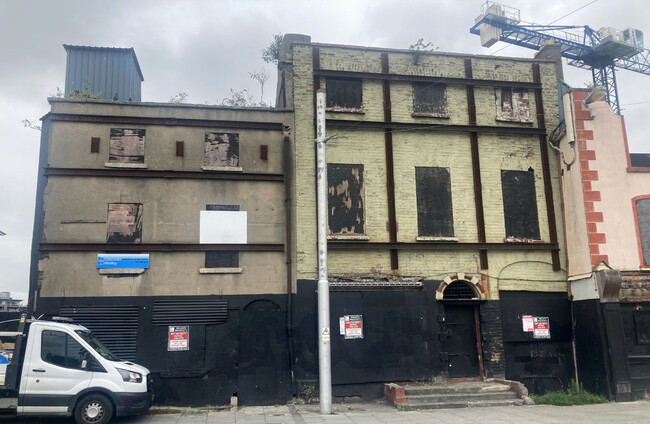
IS THERE ANYTHING to be said for another housing measure?
The government will this week hear about a plan to bring in a new Derelict Property Tax, a move that’s intended to bring some of the tens of thousands of vacant housing units sitting around Ireland back into stock.
Tánaiste and Finance Minister Simon Harris will bring the proposal to cabinet tomorrow, after it was announced last October as part of Budget 2026.
But a similar measure to tackle the scourge of dereliction already exists: the derelict sites levy. So what’s so different about this new tax?
A new sheriff in town
The key difference between the old levy and the new tax – which is intended to replace it – is who’ll be responsible for collecting money from derelict site owners.
The task currently falls to individual local authorities where derelict sites are located.
Each of these local authorities maintains their own Derelict Sites Register, which includes information about where the site is located, when it was put on the register and, usually, the council’s valuation of the site.
The levy is charged at 7% of a property’s market value, which continues to apply until the site is no longer deemed derelict, and unpaid levies attract interest of 1.25% per month.
City and county councils are required to chase the owners of properties to collect that money from them.
The idea is that the financial penalty imposed will encourage owners to either sell their derelict site or to bring it back into use themselves.
The problem is that most councils don’t actually collect the money that’s owed, with unpaid levies totalling around €32 million at the start of the year, which kind of renders the levy useless.
The reason for this depends on who you ask: local authorities argue that they lack staff and resources to deal with issues around dereliction when it comes to identifying owners who owe money; the government insists that councils have what they need to tackle the problem.
When the new tax is introduced, the job will instead be taken away from local authorities and become the responsibility of the Revenue Commissioners instead.
This has more consequences than who money will be owed to.
Last year, then Finance minster Paschal Donohoe told The Journal that property owners who fail to pay the Derelict Property Tax could find themselves on Revenue’s annual tax defaulter list.
It’s also expected that the tax won’t be lower than the current 7% levy.
However, derelict sites levies won’t just be wiped when the new tax comes in: any money owed will still be outstanding if charges remain on a property, and local authorities will still be responsible for collecting this.
Any other changes?
Yes.
The tax will be introduced on a phased basis, starting with properties located in urban areas where 4,000 or more people live, followed by towns with populations of 2,000 or more.
On top of this, preliminary registers listing derelict properties are expected to be published from 2027.
Latest estimates from address data firm GeoDirectory suggest there were almost 19,500 residential derelict properties across the State at the end of 2025, although only around 2,100 are currently listed on official derelict property registers.
It may be that the new registers are a lot more detailed than what’s currently available.