




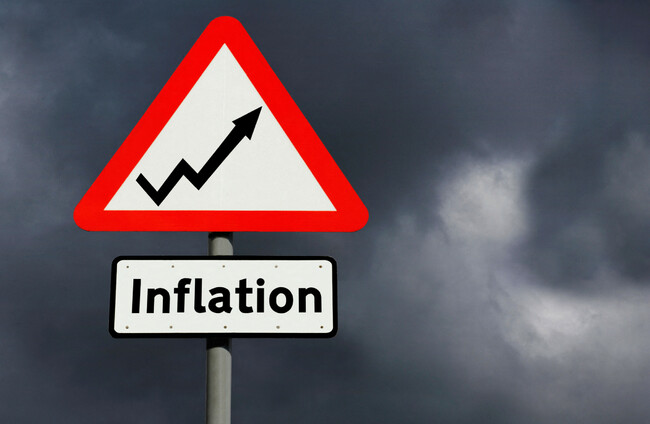
THE RATE OF inflation could reach 5% in 2027 if the conflict in the Middle East continues, and it severely impacts the global economy.
The Central Bank says inflation forecasts have been revised upward since the first quarter, with the price of energy being the main driver.
The US-Israeli war against Iran began on 28 February with the killing of supreme leader Ayatollah Ali Khamenei and other top officials.
Talks to end the conflict are set to begin on Friday.
Oil prices dropped below $80 (€69) a barrel on Tuesday based on optimism over the promised reopening of the Strait of Hormuz.
Robert Kelly, the Central Bank’s director of economics, said that despite news of a resolution, it could take time to restore supply chains and resolve knock-on effects to production costs.
He said that a balance must be struck between “supporting those most vulnerable and enabling households and firms build resilience to these shocks”.
Modified domestic demand (MDD) growth, which takes in consumer spending, government spending, and modified domestic investment, increased in the second quarter of this year and should continue to grow, although at a slower pace.
This is despite rising energy costs eroding real household incomes.
Multinational investment, particularly in artificial intelligence and data centres, has heavily influenced MDD, the Central Bank says.
GDP contracted sharply last quarter, partly due to volatile swings in exports of polypeptide hormones, also known as GLP-1s.
Export activity in the industry came in waves last year. While demand for the weight-loss injections is expected to continue, year-on-year growth should drop off.
Possible scenarios
The Central Bank’s baseline projections are 3.5% inflation for 2026 and 2.9% for 2027. It also laid out what better and worse outcomes would look like.
A milder scenario would involve a swift resolution to the conflict in the Middle East, leading to lower oil and gas prices and increased consumer spending. Inflation would end up being lower than the 2.9% baseline forecast for 2027.
In an “adverse” scenario, oil and gas prices rise by 10% and 14% above the baseline and stay high until the end of 2028. Inflation would increase by 0.3 percentage points above the baseline projection.
In the event of a protracted conflict, oil and gas prices could rise above the 2026 baseline by as much as 32% and 63%.
“Persistently higher energy and food commodity prices could push inflation toward 5% in 2027 while significantly slowing growth,” the report said.
It also said there could be broader supply chain disruptions, such as sharp price increases in fertilisers and helium, a critical semiconductor input. These knock-on effects aren’t captured in the scenarios laid out by the Central Bank.
It said, however, that indirect effects from higher energy costs could be felt by workers.
Workers may seek nominal wage increases to compensate for real income losses, and firms could pass the higher labour costs onto consumers by raising prices.
“While no widespread evidence of such effects has emerged, the risk remains significant,” the report said.
The seasonally-adjusted unemployment rate in the first three months of 2026 was 5%, up from 4.6% in the last quarter of 2025. It’s the highest it’s been since the end of 2021.