



ALMOST HALF OF all the speeding prosecutions that came before Ireland’s courts did not proceed any further, analysis by The Journal Investigates has found.
Figures obtained from the Courts Service show that between 2021 and 2024, a total of 38,594 speeding offences came before District Courts nationwide. Of those, 18,397 were withdrawn, struck out, dismissed or otherwise failed to proceed.
The data – gathered from almost 80 different court offices right across the country – equates to almost one-in-every-two speeding cases not proceeding to conviction.
To better understand what is currently unfolding before the courts, The Journal Investigates also undertook a month-long monitoring exercise of speeding prosecutions before some district courts around the country.
The analysis focused on regional and rural district courts across Ireland to paint a picture of what’s happening across the country.
Working with a network of local court reporters, journalists monitored and recorded the outcome of speeding cases in three courts, while a reporter from The Journal Investigates attended proceedings in a fourth court.
Across those courts many cases did not proceed because of notification failures, paperwork problems, ownership disputes and evidential issues, rather than disputes over whether a motorist had been speeding.
Our analysis also includes instances where some evidence was heard but the case was ultimately dismissed.
A large number were also struck out after defendants paid Fixed Penalty Charge Notices (FPCN) shortly after being notified their cases had been referred to court via a summons.
The national figures also reveal significant regional variation in the outcome of speeding prosecutions. In some local courts, almost 70% of cases were withdrawn, struck out or dismissed.
Other courts recorded comparatively low levels of cases failing to proceed, with medium to high rates of convictions.
The findings emerge against a backdrop of continued concern over excessive speed on Irish roads.
Research carried out by the Road Safety Authority (RSA) found that one-in-four drivers killed in fatal crashes here were exceeding a safe speed immediately before the collision.
The agency said international evidence consistently shows that motorists are less likely to speed if they believe they are likely to be detected and swiftly sanctioned.
Yet the figures examined by The Journal Investigates suggest there is significant variation in speeding prosecution outcomes across court districts, reflecting a range of procedural, evidential and administrative factors.
Investigations like this don’t happen without your support… Impactful investigative reporting is powered by people like you.
Over 630% increase in offences in one area
Nationally, speeding offences before District Courts increased from 8,740 in 2021 to 10,219 in 2024.
During the same period, the proportion of cases withdrawn, dismissed or struck out also increased, reaching more than half of all speeding cases before the courts in 2024.
Following detection of an alleged speeding offence, a Fixed Charge Penalty Notice (FCPN) will issue, allowing 28 days for the recipient to pay €160.
However, if that payment period elapses, the recipient of the FCPN has another 28 days in which to pay €240.
If that period also elapses, a summons is likely to follow, although at that point there is still a third payment option, typically of €320, that would mean the recipient avoiding having to appear in court.
In general terms, a prosecution is withdrawn when the State decides not to proceed; dismissed when the court declines to proceed or the offence is not established; and struck out where a case falls due to a procedural or administrative issue rather than a determination on its merits.
The figures alone do not show why each individual case failed, or indicate whether motorists were found not guilty of the offence – but they do reveal regional variations.
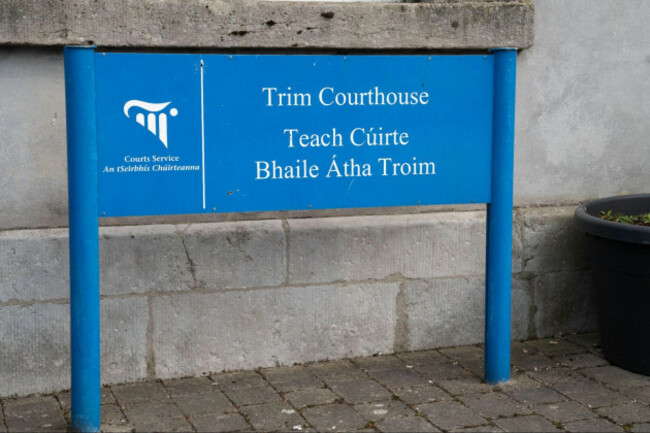
In Co Meath, 814 speeding offences came before Trim District Court in 2024. Of those, 557 were categorised as withdrawn, dismissed or struck out, meaning more than two-thirds of cases did not proceed.
The figure marked a sharp increase on previous years. The number of speeding offences coming before the court rose from 111 in 2023 to 814 in 2024 – an increase of 633%. The Courts Service explained that a large backlog of road traffic prosecutions had accumulated during the Covid period and were dealt with subsequently, leading to the spike in cases.
Yet despite the increase in case volume, data provided by the Courts Service showed the proportion of cases failing to proceed remained relatively high.
In Co Tipperary, Nenagh District Court experienced a similar trend. The data shows that speeding offences rose from 86 in 2021 to 451 in 2024.
During the same period, the number of cases withdrawn, struck out or dismissed increased from 37 to 279. By 2024, almost 62% of speeding prosecutions in the district did not proceed.
Meanwhile, in Ennis District Court, Co Clare, the proportion of speeding cases failing to proceed rose steadily each year, while the overall number of speeding offences fell significantly between 2021 and 2024.
In 2021, just over a third of speeding prosecutions were withdrawn or otherwise disposed of. By 2024, that figure had risen to more than 58%.
Notably, the number of cases which did not proceed in 2024 exceeded the figure recorded three years earlier, with substantially fewer prosecutions coming before the court.
A spokesperson for the Courts Service told The Journal Investigates it does not comment on factors that contribute to differences in outcomes of speeding prosecutions between districts.
“There are too many factors that can play a role in the outcome of court cases so it would be purely speculative on our behalf to assign reasons for different outcomes,” they said.
The Journal Investigates also contacted gardaí for comment. However, at the time of publication we had received no response.
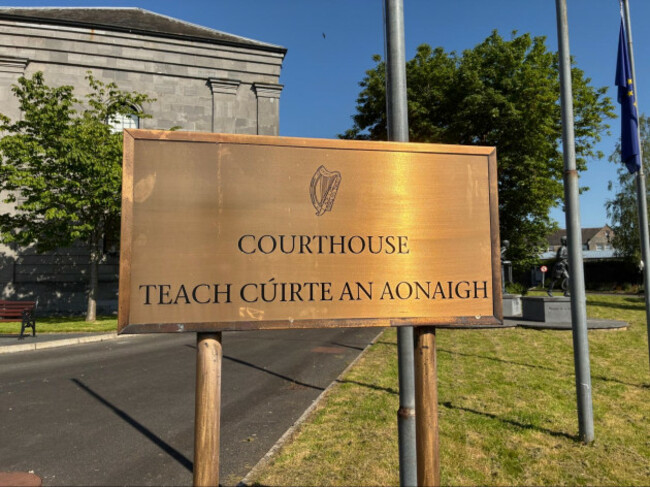
Summons issues and driver disputes
The Journal Investigates worked alongside three local newspapers covering counties Meath, Tipperary and Clare, where we examined proceedings over a one-month period in courts selected for closer examination following analysis of the national data.
The monitoring exercise provides a snapshot of court activity and should not be viewed as representative of annual outcomes. Rather, it offers insight into the types of issues that can prevent speeding prosecutions from proceeding.
Our findings were compared with Letterkenny District Court, selected as a comparator court as its case outcomes broadly reflected average national trends.
Between 2021 and 2024 Letterkenny District Court dealt with 639 speeding offences. Of those, 223 did not proceed – equating to approximately 35%.
While the court experienced fluctuations over the four-year period, including a rise to 57% of cases not proceeding in 2024, its overall rate differed from those recorded in the other courts examined as part of this investigation.
Monitoring of this court, across three dates last month, The Journal Investigates observed 18 speeding cases with a recorded outcome before the court. Eleven of those resulted in convictions.
Cases that failed to proceed generally did so for reasons similar to those observed elsewhere, including summons issues, disputes over who was driving and claims that FCPNs had not been received.

Trim District Court experienced a staggering 633% rise in speeding cases coming through its doors between 2021 and 2024.
In 2023, 111 offences came before the court compared to 814 in 2024 alone. At the same time, the number of cases that did not proceed surged from 59 (2023) to 557 (2024).
As a result, more than two-thirds of speeding cases before the court in 2024 – 68.4% – did not continue through to a successful prosecution.
Even before the sharp rise in case volumes, a substantial proportion of speeding prosecutions before the Trim court were being withdrawn, dismissed or struck out.
In 2021, 71.9% of speeding offences before the court did not proceed. In 2022, the figure was 60.4%, while in 2023, it was 53.2%.
As part of this investigation, funded by Coimisiún na Meán, the Meath Chronicle monitored three sittings of Trim District Court during May.
Of the 65 speeding cases observed, 35 resulted in convictions, with the average fine imposed on speeding offenders being €151.43.
The monitoring exercise also provided insight into why some prosecutions did not progress.
Among the cases struck out were matters where defendants said they had not received FCPNs, disputes over who had been driving a vehicle and procedural difficulties involving documentation.
Last month in Trim, eight cases were struck out after it emerged that the fine had already been paid. The overwhelming majority of offences observed in Trim originated from automated enforcement systems rather than direct garda detections.
A Judge’s view on what works – and what doesn’t
Just last month the High Court ruled that a District Court judge’s refusal to convict more than 30 drivers speeding in what he described as an “unjust” 60km/h zone on a road in Co Kildare was invalid and breached fair procedures.
In a High Court ruling Mr Justice Cian Ferriter also said Judge Andrew Cody’s approach to the cases was “wrong” in law and “manifestly inappropriate” for a judge.
There are issues for judges in court. One District Court judge, who spoke to The Journal Investigates anonymously about the operation of speeding prosecutions, said claims that motorists never received FCPNs had become one of the most common reasons cases failed to proceed.
“The vast majority of people have latched onto saying that they did not receive the penalty notice,” the judge said.
And if they go into the witness box and say they didn’t receive it, you have to let them off.
The judge also questioned why FCPNs are sent by ordinary post rather than registered delivery and queried if cost might be a consideration.
They suggested that a trial scheme or agreement with An Post could help establish whether notification failures are contributing to cases collapsing.
They also pointed to practical difficulties serving summonses in apartment developments and multi-unit housing complexes, where access restrictions can create problems for postal deliveries.
“Multi-unit developments are a huge problem,” they said.
The judge said they had encountered cases where questions arose about whether a summons had reached the intended recipient, despite a declaration of service having been completed.
They said similar difficulties could arise where a summons – sent by registered post – was signed for by a relative or another occupant of a property but the court later heard it had not been passed on to the person due to appear before the court.
According to the District Judge, these issues can create significant difficulties when questions later arise in court over whether a defendant was properly notified of proceedings.
Nenagh follows similar pattern
Nenagh District Court experienced a similar pattern of dealing with an increasing number of cases. Speeding offences increased from 86 in 2021 to 451 in 2024, while the proportion of cases failing to proceed rose to almost 62%.
Monitoring of three court sittings last month found 34 convictions arising from 52 cases.
Most offences arose from average-speed camera detections on the M7, while unsuccessful prosecutions frequently involved disputes over notices, paperwork issues and driver identification. The average fine imposed was €504.41.
Eighteen cases did not proceed, including eight dismissals, five strikeouts and five withdrawals. Some defendants successfully argued they never received a Fixed Charge Penalty Notice, while others pointed to paperwork issues.
One case involved cloned registration plates. Another involved a discrepancy between the person nominated as the driver and the person shown in photographic evidence.
Ennis tells a different story
Unlike courts in Trim and Nenagh, speeding offences in Ennis actually declined between 2021 and 2024. However, the proportion of cases that did not proceed rose steadily throughout that same period.
In 2021, 36.9% of speeding cases before Ennis District Court did not proceed. By 2024, that figure had increased to 58.2%.
In fact, while Ennis recorded 371 speeding offences in 2021 and 239 in 2024, the number of cases which did not proceed was slightly higher in 2024 than it had been three years earlier.
Monitoring carried out by The Clare Champion across three court sittings in May recorded 13 speeding cases. Seven resulted in convictions, five were struck out and one had no recorded outcome.
During the monitoring period, all seven convictions followed guilty pleas. Cases in which not guilty pleas were entered were struck out for a variety of reasons recorded by the court. The average fine imposed on those convicted was approximately €364.
Among the cases that did not proceed were matters involving FCPN postal difficulties, vehicle ownership issues, alleged technical difficulties when attempting to pay fines and instances where the State offered no evidence.

Link between speed and road deaths
Commenting on the findings, a RSA spokesperson said speeding remains a “significant road safety issue” in Ireland.
“While the RSA is not in a position to comment in detail on The Journal’s findings in relation to speeding prosecutions, we can assert that enforcement (supported by public awareness activity to support the enforcement), detection and the swift administration of appropriate sanctions are key to deterring engagement in dangerous behaviours such as speeding,” they said.
The RSA said it was also aware that the recently published safety camera strategy outlines key measures, including the harnessing of new technology, to enforce road safety laws, including speeding violations.
It also pointed to recent RSA analysis of driver deaths in Ireland that found one in four (26%) were exceeding a safe speed in the lead-up to the fatal crash.
A spokesperson for the Courts Service said: “Judges decide cases on the facts argued before them by the parties involved in the cases and a decision to convict or otherwise is solely one for judges after hearing the facts of cases.
The Courts Service spokesperson also said that An Garda Siochana was responsible for the cases brought before court and was therefore best placed to address trends in case volume.
“They are the prosecutors and we take the prosecutions they provide without questioning the reasons why,” the spokesperson said, adding that the courts have no role in applying penalty points.
*The project is supported by the Courts Reporting Scheme.
The Journal Investigates
Reporter: Patricia Devlin • Additional Reporting: Sharon Dolan D’Arcy, Ronan Dodd, Simon O’Duffy, Terry Conlon, and Paul Murphy • Editor: Noel Baker • Video: Nicky Ryan • Social Media: Cliodhna Travers • Main Image Design: Lorcan O’Reilly