


惯性聚合 高效追踪和阅读你感兴趣的博客、新闻、科技资讯
阅读原文 在惯性聚合中打开

推荐订阅源

W
WeLiveSecurity
B
Blog RSS Feed
Y
Y Combinator Blog
T
The Blog of Author Tim Ferriss
D
Docker
Forbes - Security
Forbes - Security
H
Hacker News: Front Page
T
Tailwind CSS Blog
V
Visual Studio Blog
Help Net Security
Help Net Security
Recent Announcements
S
Secure Thoughts
The Hacker News
The Hacker News
博客园 - 叶小钗
让小产品的独立变现更简单 - ezindie.com
宝玉的分享
宝玉的分享
N
News | PayPal Newsroom
MongoDB | Blog
MongoDB | Blog
博客园_首页
M
MIT News - Artificial intelligence
T
Tenable Blog
博客园 - 聂微东
O
OpenAI News
Jina AI
Jina AI
L
LINUX DO - 热门话题
博客园 - 司徒正美
Application and Cybersecurity Blog
云风的 BLOG
云风的 BLOG
奇客Solidot–传递最新科技情报
奇客Solidot–传递最新科技情报
H
Heimdal Security Blog
P
Proofpoint News Feed
S
Schneier on Security
Martin Fowler
Martin Fowler
T
Threat Research - Cisco Blogs
Hacker News: Ask HN
Hacker News: Ask HN
Engineering at Meta
Engineering at Meta
The Register - Security
Last Week in AI
Last Week in AI
Recent Commits to openclaw:main
U
Unit 42
cs.AI updates on arXiv.org
腾讯CDC
阮一峰的网络日志
阮一峰的网络日志
P
Privacy & Cybersecurity Law Blog
The Last Watchdog
The Last Watchdog
Hacker News - Newest:
Hacker News - Newest: "LLM"
月光博客
月光博客
Cisco Talos Blog
Cisco Talos Blog
Spread Privacy
Spread Privacy
E
Exploit-DB.com RSS Feed

TheJournal.ie

Court told Eleanor Donaldson placed bugging device in her husband’s car over fears of affair TD says she's been left with 20cm scar after skin cancer diagnosis Homelessness: Record number in emergency accommodation, including new high for children Blue Origin rocket explodes during test launch John Gibbons: The planet is burning, but Ireland still isn't taking climate change seriously 'Truly devastating': Tributes paid to Masuma Sohrabi after stabbing in Clifden Mother and carer: You don't appreciate public services until your child needs them to survive Left or right? Sinn Féin's fence-sitting may be about playing the long game Gavan Reilly: Gerry Hutch and his 30% vote in Dublin Central's best-heeled area Gavan Reilly: The Gerry Hutch 37.1% share of the vote in the shadow of the IFSC Ebola on the rise: Why the latest outbreak should concern all of us Ireland's data centre energy drain: How Big Tech added €1.4bn to household electricity bills Living with myeloma: 'I chose not to fight this blood cancer, but to instead live alongside it' Alberta’s separation bid: How Canada’s next political crisis could come from within Kelly Earley: Militarism might be Ireland’s next economic disaster Raising them right: Ireland has a dog poo problem, and we parents are sick of stepping in it Money Diaries: A recently graduated digital journalist on €35K living in Dublin Global tech job losses: Is ‘AI-washing’ the new trend nobody wants to call out? Down on the farm with a difference: This is what happens when animals are allowed to feel safe Surrealing in the Years: Some shameful Irish attitudes take a leaf out of Israel's book Motoring: Should we trust self-driving cars? The physio is in: Ireland is growing older, but are we moving enough to age well? Tech dubbed 'creepy': AI smart glasses are here, but our privacy laws have not caught up Larry Donnelly: The polls point one way for Friday but byelections rarely follow the script The war on human thought: Educational institutions must take back control from AI The Bee Guy: World Bee Day won't save our little bee friends Kelly Earley: Could Mountjoy Square be Dublin’s most important park? Money Diaries: How is your spending and saving going? Would you like to keep a diary for us? Rearing them right: Should modern parents bring back ‘the man’? Ireland's energy future: What if the real failure here is that we stopped thinking bigger? Barry Cummins: I shudder to think I sat in Tina Satchwell’s home while her body lay buried there Richard Boyd Barrett: Sanction Israel now, the way we did Russia An Spidéal in a byelection: We're caught between dereliction, development and a lack of vision Growing old disgracefully: The older I get, the more I understand my granny Surrealing in the Years: How is Bertie Ahern still finding new ways to disappoint us? Drink-driving: If your chance of being caught is 1 in 77, where is the deterrent? Navigating an uncertain world: The adults are panicking, but the kids are alright Lynn Ruane: The evidence clearly shows that the 'war on drugs' was a failed experiment The Bezos Ball: This year's Met Gala sold its soul to billionaires, did anyone notice? Labour's long knives: Starmer may be weak, but his opponents are not strong Life on the road: Our shared MS diagnoses forced us to finally start living How are you dealing with the cost of living? Would you like to keep a Money Diary for us? Kelly Earley: Should we scrap HAP? Ireland urgently needs an alternative Loss of a parent: I spent 50 years preparing for my father's death, but it still came as a shock Body of Evidence: Why your body starts storing fat in your 50s — and how it affects your brain Hear me out: Every new school building site should also be a classroom Money Diaries: A software engineer on €100K living in Dublin Life with a stoma: My worst nightmare became a reality, but this has given me my life back Summer festival supports: At PsyCare, we aim to be the calm in the chaos Surrealing in the Years: Come on guys, we don't have it in the locker to pull off nuclear energy Car love: I have that strange affliction of seeing cars as having personalities and souls David Attenborough turns 100: He brought the natural world into focus for us, we owe him so much Leavitt steps away, DJ Rubio wings it: Trump’s White House looks increasingly chaotic Time to act: Animal cruelty still happens every day in Ireland – our laws must catch up The housing crisis: Like wildfire, we need to abandon the delusion it’ll burn itself out United Ireland: On the contrary, Northern Ireland is not a burden, it brings fresh opportunities Dr Catherine Conlon: Hantavirus at sea triggers a global health response — what is this virus? Ireland, an electrostate: 100 years after Ardnacrusha, we now face the same energy challenges Good Vibrations: The Cork choir helping cancer survivors to reclaim their voice Money Diaries: An apprentice mechanic on €22K living in the Midlands Opinion: Women over 40 have been sidelined for too long. Now we push back Neurodivergence: The phrases people with ADHD are tired of hearing Surrealing in the Years: I'm not a government minister and AI didn't help me write this article The people carrier: Why have they almost disappeared from Irish roads? AI not so ready: The government's new tech literacy platform needs some improvement From Gaza to Iran: Israel's regional conflict expands with little accountability Stephen's Green Shopping Centre: Jaded Dubliners have had enough of bland, soulless buildings Noeline Blackwell: Character witnesses expose a legal system that fails victims Minister for nature: We need to work together to protect against biodiversity loss Kelly Earley: Don’t fall for the idea that Dublin is dangerous Irishwoman living abroad: Like many of my generation, the 'bailout babies', I chose emigration Gender-based violence: It’s time to recognise survivors as experts by experience Money Diaries: A compliance officer on €45K living in the Midlands Blood donation: Ireland's stocks are a lifeline for patients, but the system is under strain An Irish conundrum: Why do 125 people a year buy a convertible in this country? When morality becomes law: The parallels between modern oppressive Iran and Ireland’s past Surrealing in the Years: Housing plans will have us living like Bosco, if Bosco had roommates Fail to prepare: Recent fuel protests have exposed Ireland’s lack of future climate planning Larry Donnelly back from Boston: The recent fuel protests have struck a chord in Irish America Caroline Foran's new book: I wish I'd known sooner that self-compassion changes everything The Spring Economic Statement: Ireland is no longer forecasting the future, it’s bracing for it Soccer academies: Football can unite Ireland, but the hard work to build its future starts here The physio is in: The rise of fitness wearables is changing how and why we move Pirate queens, powerbrokers & public servants: Anne Chambers on her life as an Irish biographer Dublin's screen-free school: We have no tablets, no screens and no regrets Money Diaries: A man receiving invalidity pension living in the west of the country Office vacancy rates: Dublin's busy office market isn't broken, the interpretation of data is The money dial: How we manage our finances best to protect what we care about the most Opinion: Carbon tax may be the tax we love to hate, but it's the one we can't afford to scrap From Idaho to Ireland: I chose to leave the US behind, and now I love my new home Maria Walsh: Hungary's election result shows the centre can still hold in Europe Opinion: With a 'looksmaxxing' influencer rushed to hospital, is the war on ageing getting ugly? Opinion: The protests aren't just about fuel, they're a revolt against a hollow state The Pontiff vs the President: Trump, Pope Leo and the Catholic contradiction Harm reduction drugs policy: Compassion for some cannot become a risk to all Women and the Catholic Church: Reform has long been promised, but real change has been denied Motoring: How we can all get a bit more from our fuel Surrealing in the Years: 'Fuel protests' are bad news for a society that's given up on nuance Some very creative accounting was needed to greenlight the Galway ring road It's his menu, not ours: Let's not rush to criticise Rory McIlroy's choice of dinner
Beyond burial and cremation: How Ireland is rethinking remembrance
Dr Brian Casey · 2026-06-14 · via TheJournal.ie

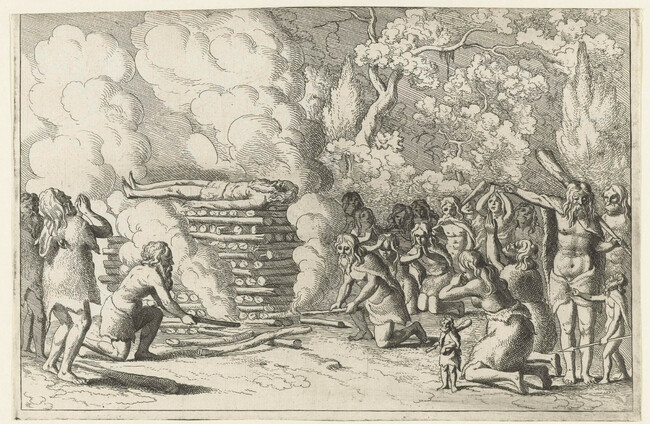
Amsterdam 1660 Cremation, part of eight illustrations by Johan Picardt.

what to do after death

As cremation becomes increasingly common, new questions are emerging about where and how we honour the dead, writes Dr Brian Casey.

THERE IS NO escaping the inevitability of our collective end. Death and taxes remain life’s only true certainties.

Given that, it’s surprising that we don’t discuss more about what to do after we finally depart. These tend to be questions left for the remaining loved ones to answer once someone has gone. 

Humanity has always approached death in varying ways. Burial and cremation have been the prevailing approaches. In the late nineteenth century, advocates of cremation argued its benefits from a public health and sanitary perspective, asserting that Britain’s cemeteries and graveyards were not properly maintained.
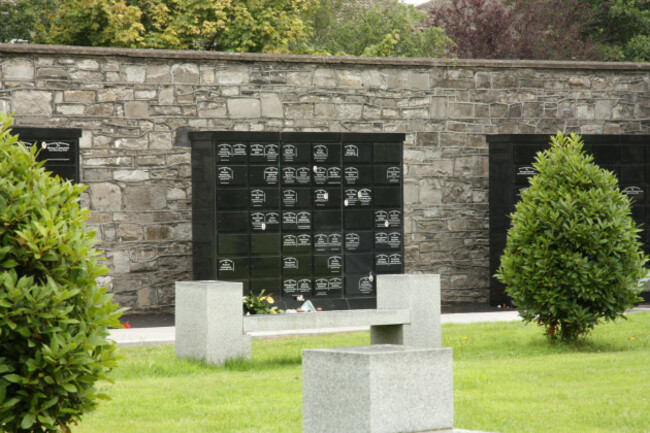
columbarium wall Columbarium wall. Dublin Cemeteries Trust Dublin Cemeteries Trust

They claimed that these burial grounds were sources of disease because bodies were not buried properly.

The cremation advocate, William Robinson, wrote a book in 1889 called Cremation and Urn-Burial, or The Cemeteries of the Future. In it, he said that the small cemeteries then in existence in London would disappear over time because land would become valuable and used for development. 

Robinson argued that when cemeteries closed, graves ran into disuse and decay, which offended the living. Urn burials were less likely to offend the living, as the same space could be repurposed.

139 Glasnevin Cemetery Dublin Cemeteries Trust Dublin Cemeteries Trust

Robinson’s advocacy for urn burials was premised on the belief that such cemeteries would never have to close. Vaults, walls and passages could also be repurposed for the internment of ashes.

A modern send off

The location of a person’s body carries significant value in terms of their life and the interests of the deceased person. For many people, the physical remains of a person, placed in a coffin and buried in a grave, are the carrier of memories, images and desires. Cremation is another way of carrying these memories in a different way.
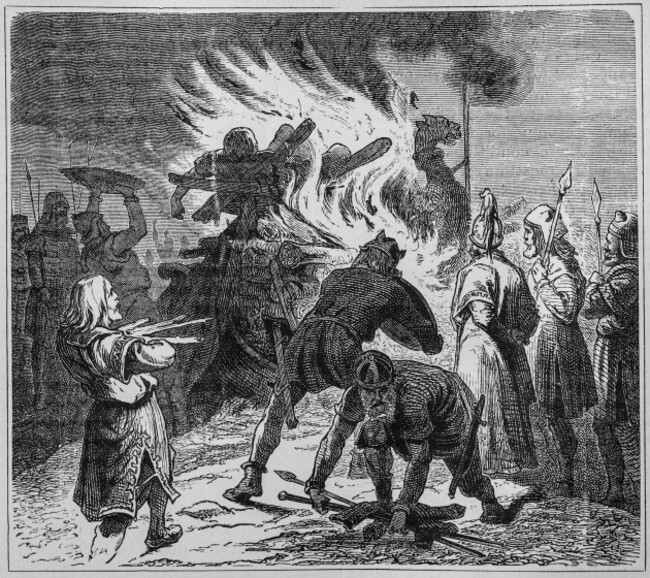
ritual-cremation-of-a-viking-chief-on-a-dragon-ship-in-9th-century-england Ritual cremation of a Viking Chief on a Dragon Ship, In 9th Century England. Alamy Stock Photo Alamy Stock Photo

There are a number of informal activities associated with cremation. For example, facilitating the disposal of ashes at a sports ground is common practice in the United Kingdom. There are crematoria in England that have 10-year renewable leases for niches and memorials.

The scattering of ashes is regulated in several countries. In France, it is only permitted in specific areas, such as a designated scattering area in a cemetery. In Germany, each state has different laws about the scattering of ashes, and it is generally not allowed. In Ireland, the permission of the landowner is required, but there is no legislation governing the management of cremated remains.

Ashes can be distributed amongst family, especially if they are no longer living in the same country, but having a place to come and visit and remember their loved one, such as a memorial garden, is an important part of the grieving process. Conversations about cremated remains are relatively muted in Ireland.

Yet, there is an awareness that options beyond traditional family graves are necessary. For example, Ennis Cathedral provided a columbarium wall for the internment of ashes in 2021, which has been extended. Across the country, cemeteries are now offering space for the internment of ashes.
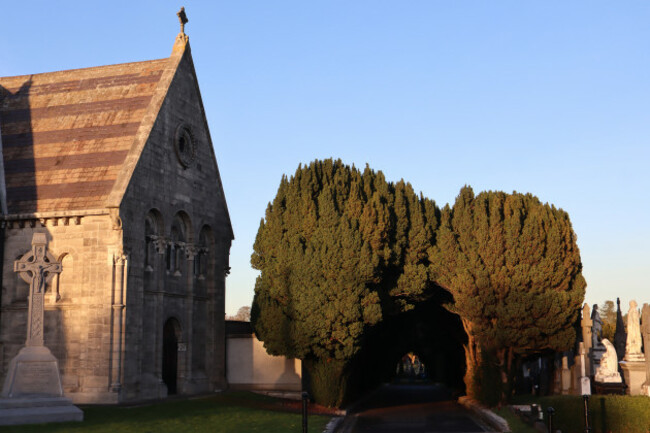
Chapel & Yew Trees Glasnevin Cemetery Dublin Cemeteries Trust Dublin Cemeteries Trust

The growth of single-person households and smaller, dispersed family units, as well as blended families present a variety of challenges in maintaining traditional family graves. In Japan, there has been a profound shift in the memorialisation of cremated remains over the past half-century.

One revolutionary manifestation of this has been through the development of automated graves, also known as urban or ‘robotic’ columbaria. These use similar automated retrieval systems to those of industrial warehouses to manage urns. They tend to be in city centres, near train stations that allow families to visit with ease. They are also a place where those who have no families to tend to the grave can be cared for in perpetuity. This represents a significant shift away from traditional funeral practices where ashes are interned in a family plot in a rural cemetery.

Automated graves and leases for niches are not being discussed in Ireland, though discussions about the respectful memorialisation of cremated remains continue as more people choose cremation over burial. People often struggle to figure out the next step once they receive ashes. Indeed, there are families that keep ashes at home for many years, and others never collect them. In Britain, there are over 300,000 urns that have not been collected from funeral directors since the 1950s.

Ireland’s crematorium

Since the opening of the first crematorium in Ireland in Glasnevin Cemetery in 1982, Dublin Cemeteries Trust has led the way in the memorialisation of cremated remains in Ireland.

It has been an active cemetery since 1832, and seventy per cent of all funerals are cremations. The Garden of Remembrance in Glasnevin Cemetery is the first in Ireland.

Since then, the Trust has opened crematoria in Dardistown and Newlands Cross, and there are a variety of memorial gardens and columbarium walls built for families to have a place to inter the ashes of their loved ones, and others to bury them in a family grave.

many-colored-funerary-urns Funerary urns. Alamy Stock Photo Alamy Stock Photo

Dublin Cemeteries Trust continues the ethos of Daniel O’Connell since it was founded in the 1820s of treating people of all faiths and none with dignity and respect.

Dublin Cemeteries Trust leads the way in continuing this core value as more and more people are choosing cremation. The variety of memorialisation options in Glasnevin, Dardistown and Newlands Cross Cemeteries shows how Dublin Cemeteries Trust is the thought leader in the memorialisation of cremated remains in Ireland.

Dr Brian Casey is Historian and Archives Manager for Dublin Cemeteries Trust.

Readers like you are keeping these stories free for everyone...

A mix of advertising and supporting contributions helps keep paywalls away from valuable information like this article. Over 5,000 readers like you have already stepped up and support us with a monthly payment or a once-off donation.