







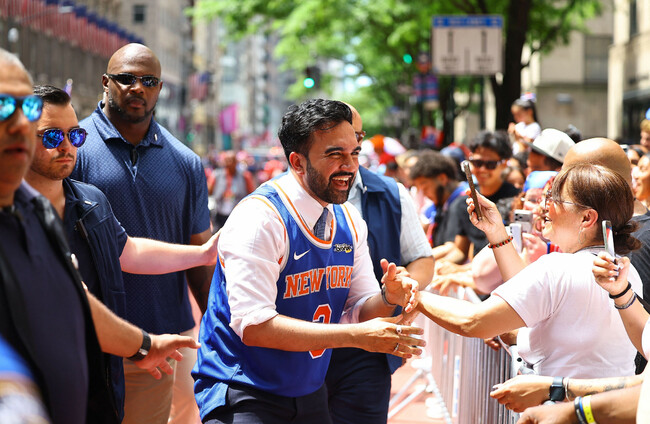

FOR SUCH A sports-obsessed city – you’d be hard-pressed to find a New York bar without a game of some sort playing in the background – the city’s beloved sports teams are a notoriously poor bet when it comes to winning titles.
The Knicks haven’t won a championship since Nixon was in the White House. The New York Jets last won the baseball World Series in 1986. And their three NFL teams haven’t fared much better; between them the Giants, the Jets and the Buffalo Bills have won five Super Bowls in six decades. The Buffalo Bills’ contribution to that tally is zero.
Despite or because of their extensive droughts between victories, New Yorkers stick with their teams through thick and thin. And since sporting success has been pretty thin on the ground over the past half century, they’re no slouches when it comes to celebrating their hard-fought victories.
“Remember when Ireland got to the (World Cup) quarter-finals in 1994? Now imagine if they’d won the whole damn championship,” a Manhattan friend counselled when trying to describe the off-the-charts celebrations that followed the Knicks spectacular victory.
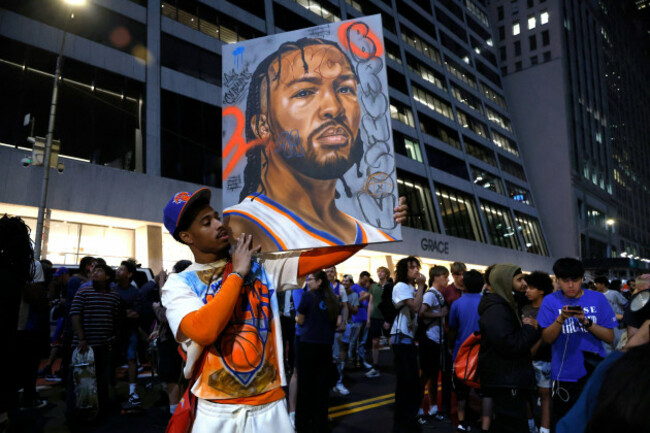
Weeks of anticipation and celebrations culminated in the mother of all parties on Saturday night as the previous weeks’ watch parties and block parties morphed into one giant party that enveloped the entire city in a boozy, joyous gathering hosted by their ebullient new Mayor. The morning after the night the Knicks won the Championship received a further boost from the World Cup fever that has gripped the city.
The Mamdani effect
The revelry that has left the rest of the world suffering a bad case of FOMO is a reminder of the enduring power of sports. The Knicks gave New Yorkers a yearned-for chance to rediscover the bonds that still connect them in the thrilling weeks that led to Saturday night’s epic victory.
Neighbourhood bars rediscovered their pre-Covid, pre-smartphone mojo, stuffed to the gills with raucous crowds that spilt out onto the streets. Manhattan organised massive watch parties in parks and around Madison Square Gardens.
In the Bronx and Queens, fans gathered at local block parties where the games were projected onto walls, jerry-rigged rooftop screens and the sides of bus shelters. Millions of New Yorkers, from newly-arrived transplants to families who set up shop generations ago, celebrated a shared sense of belonging.
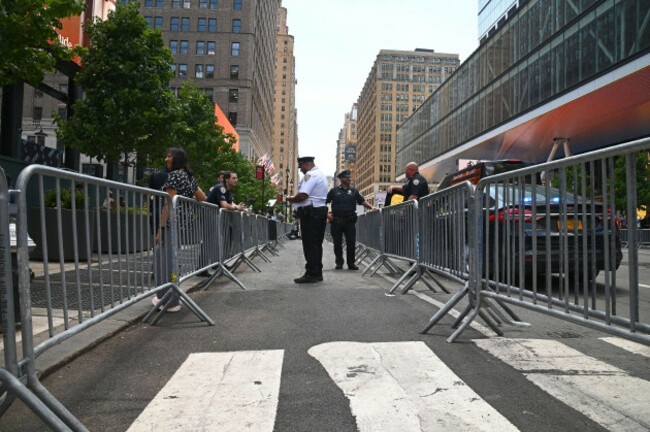
“This would never have happened if Cuomo was Mayor”, one Zohran Mamdani’s campaign advisers posted on X, and indeed, it’s difficult to imagine the taciturn former Governor plunging into a city-wide free-for-all with such gusto.
In politics, timing is everything. Mamdani, New York’s newly minted Mayor, is riding the crest of a wave for which he is both catalyst and beneficiary. He’s become an avatar for the city that never sleeps, casting off the anomie and disgruntlement that sapped the energy of this most vibrant of cities.
New Yorkers are a tough crowd; their Mayors don’t maintain stratospheric approval ratings by glad-handling locals and eating at food trucks instead of Michelin-starred restaurants. A city doesn’t run on good vibes alone, and Mamdani knows that the road to reelection is paved with concrete measures that improve the lives of ordinary New Yorkers.
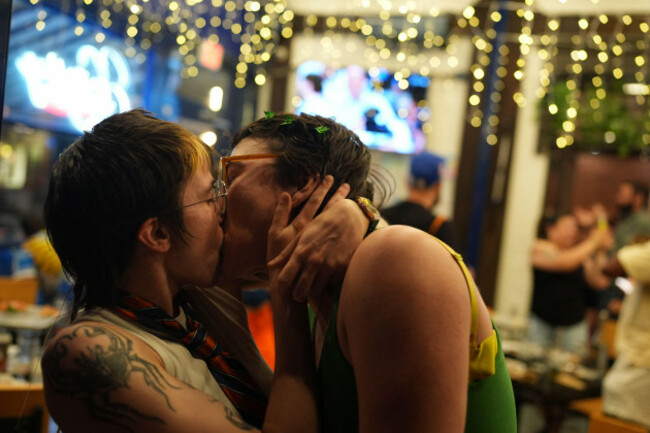
The clarity and discipline that propelled the 33-year-old Muslim into Gracie Mansion against improbable odds has delivered an unusually productive start to his tenure as Mayor. Well aware of the importance of early wins, Mamdani balanced the city’s budget, secured $1.2 billion (€1.04 billion) for child care and filled 100,000 potholes in his first 100 days.
Filling potholes may not seem like a big deal, but for millions of New Yorkers who get to work or school on scooters, bikes and skateboards, not to mention those who hop from bar to bar in five-inch heels, preempting thousands of broken ankles and buckled bicycle wheels is tangible evidence of a Mayor who is aware of the everyday irritations and exasperations of poorly maintained infrastructure.
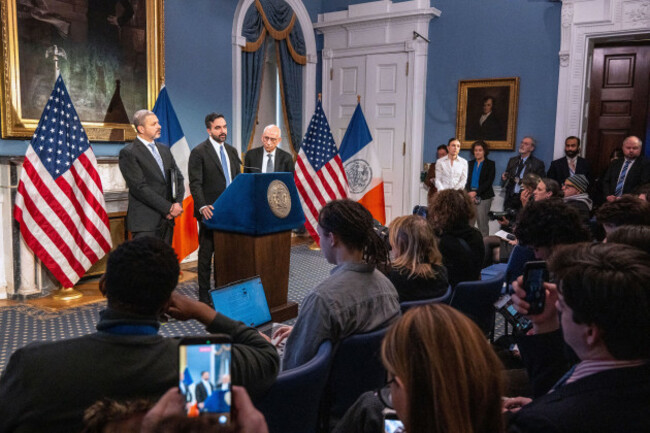
There have been other quick wins – so obvious you wonder why they eluded previous incumbents. Few things turn the stomachs of New York residents like the sight – and smell – of mountains of black plastic bags thrown onto curbsides, bursting with rotting food and teeming with rodents. Installing thousands of transit van-sized rat-proof bins throughout all five boroughs will clean up New York’s streets and reduce its rodent population.
Likewise, sprucing up playgrounds, extending library opening hours and forcing landlords to maintain rentals to a decent standard bring the sort of tangible improvements that voters remember at election time.
Then there are the little touches of political genius: watching the Knicks triumph from the cheap seats, wrestling 1000 World Cup tickets from FIFA and dispensing them via lottery for $50 a pop, presiding over the graduation of Riker’s inmates who have earned college degrees and graduated from school while incarcerated.
Mamdani is the most naturally gifted politician to emerge since Obama took to the stage of the Democratic National Convention in 2004. But for the fact that his birth in Uganda disqualifies him from running for the presidency, Republicans would be even more exercised by his arrival on the political scene.
There have been missteps and rookie errors. Shooting a video outside billionaire Ken Griffin’s $253 million (€218.27 million) penthouse to announce a tax on pied-à-terre residences was an ill-conceived and reckless stunt.
But the growing list of accomplishments has silenced the critics who warned that electing a socialist Muslim Mayor would plunge New York into chaos, smother investment and trigger the greatest flight of wealth the city has ever seen.
Economic success
Manhattan may have more millionaires and billionaires than any other city in the US, but just one in eight New Yorkers makes more than $200,000 (€173,000) a year. Three million of the city’s inhabitants are classified as low income and 2.3 million live at or below the poverty line.
Focusing on fixes that make the city better for the middle-and-low income majority that relies on public transport, rental accommodation and free local schools isn’t just politically savvy. It makes the city more attractive to investors and high earners, while FOMO and good vibes are luring back the artists, musicians and writers who decamped to Los Angeles in droves when former Mayor Mike Bloomberg’s effective but technocratic tenure priced them out of even the outer fringes of the outer boroughs. If sports teams are the beating heart of New York City, the cutting-edge creative energy for which the city is famous has long fed its soul.
For several months, normally sceptical New Yorkers, mesmerised by their dashing and surprisingly effective mayor, looked like they were going to spring for a twofer in the form of another handsome, charismatic thirty-something with a megawatt smile.
As John F. Kennedy’s only grandson, Jack Schlossberg was the obvious heir to the Camelot throne, and a New York Congressional seat was the obvious first step towards rehabilitating the Kennedy brand. Good hair, good teeth and the Kennedy genes were enough to catapult him ahead of his Democratic rivals straight out of the starting blocks.
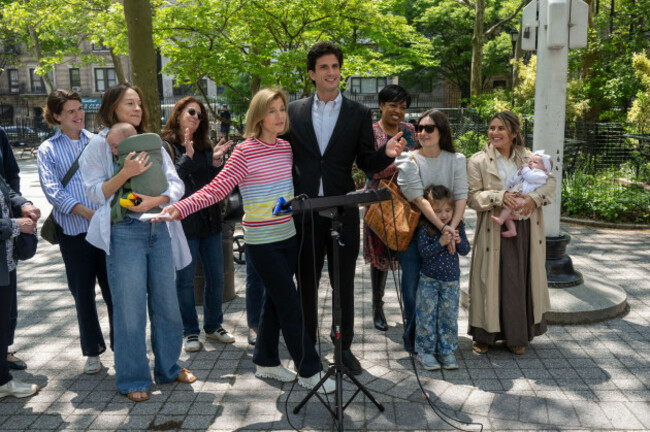
New Yorkers were, initially at least, charmed by Schlossberg. Until last month, he was polling well ahead of the New York State Assembly members Micah Lasher and Alex Bores and George Conway, a Never Trumper Republican turned Democrat.
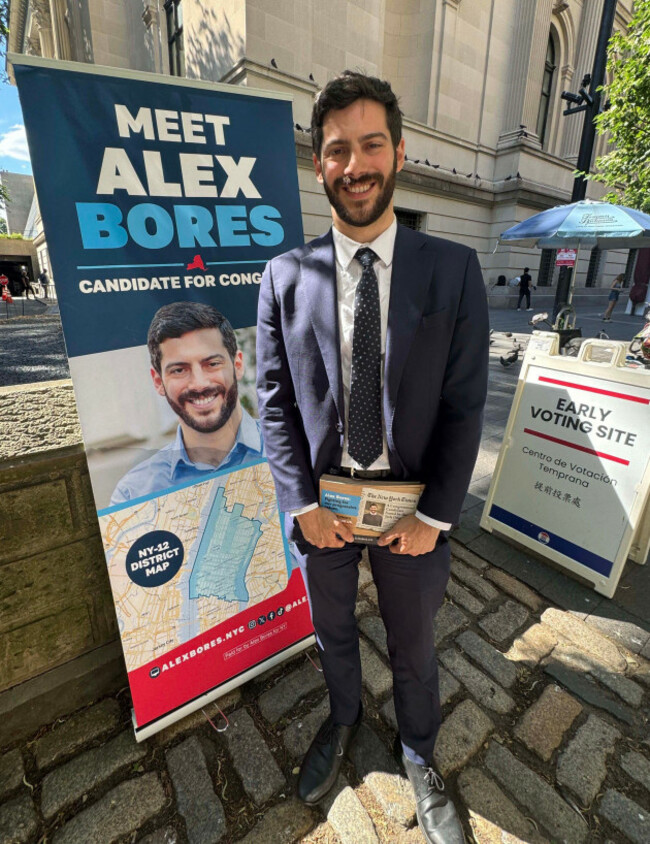
Bores, a software engineer who spent four years at Palantir before resigning in protest at Peter Thiel and Alex Karp’s willingness to facilitate ICE’s excesses during Trump’s first term, has been the main beneficiary of Kennedy’s faltering campaign.
Arguably, Bores is exactly what a geriatric Congress that is hopelessly behind the AI race needs – a 35-year-old software engineer who would have some idea how to draft Congressional legislation to regulate the runaway AI train.
While one-third of New Yorkers are still undecided, Kennedy’s precariously slender CV is unlikely to carry him over the finishing line. Until last month, he enjoyed a double-digit lead over his Democratic primary rivals, but with the primary just days away, that lead has evaporated.
At 32, he has yet to hold down a real job. A short stint as a political writer at Vogue, a handful of speeches at political fundraisers and turns volunteering on the Biden and Harris presidential campaigns haven’t helped shake off his image as a TikTok and Instagram dilettante who spends a considerable portion of his time posting online videos that range between the quirky and the irksome.
Mamdani, showing a glimmer of steel behind the smile, decided not to expend his political capital on an endorsement, even though Kennedy was an early champion of Mamdani’s. Instead, he focused on endorsing his preferred choices in other races ahead of the November mid-terms, seeking to nudge out incumbents with progressive disruptors.
If Kennedy is serious about a career in politics, he’d be well advised to develop a similar mix of ebullience and ruthlessness, optimism and organisational skills before his next foray into the political arena.
Marion McKeone is an award-winning journalist, writer and documentary maker.