


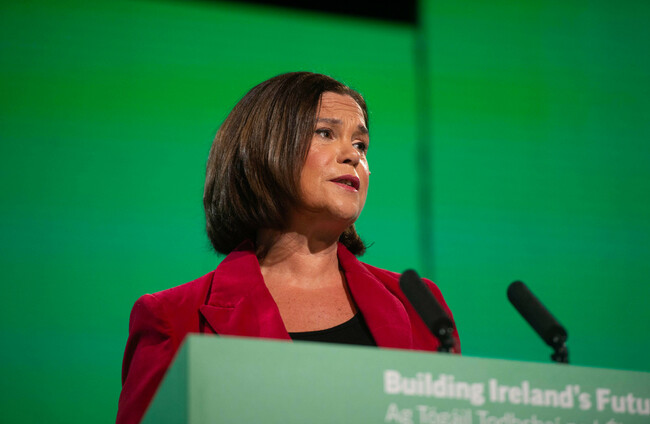
IT’S RARE FOR unity to be seen among political parties in the Dáil, and it is even rarer that it is over the issue of abortion.
However, this week we see that the Taoiseach, Tánaiste and many within the government parties plan to support a Sinn Féin bill to remove the mandatory three-day wait for women who need an abortion.
Proposing her party’s bill in the Dáil on Tuesday, Mary Lou McDonald said to force a woman to wait for three days is just wrong. She said every TD will have an opportunity to right that wrong when the Dáil votes on the proposed legislation tonight.
“We said then that we would trust women, and that is what we must do, not just with words or promises but with delivery,” said McDonald who noted that, in her view, the three-day waiting period should never have been introduced.
Responding, the Taoiseach said he intends to vote for it to go through to committee stage, where he expects there will be a need for “consequential amendments”.
He said government TDs will be given a free vote on the proposed legislation.
The vote will take place later this evening, with a number of government TDs expected to vote against the Sinn Féin bill, despite their party leaders voting in favour.
So, how did we get here?
Well, firstly, the issue of abortion has never been an easy topic of discussion for politicians in this country.
However, on 25 May 2018 over two million votes were cast in the Repeal the Eighth referendum, with the country voting by 66.4% to 33.6% to remove the amendment, which gave equal status to the life of the mother and the life of the unborn.
Once the legislation was passed, such was the political upheaval it caused, many politicians were wary of revisiting it.
The referendum campaign was divisive among some, in particular the Fianna Fáil party, where a number of high-profile members campaigned for a no vote.
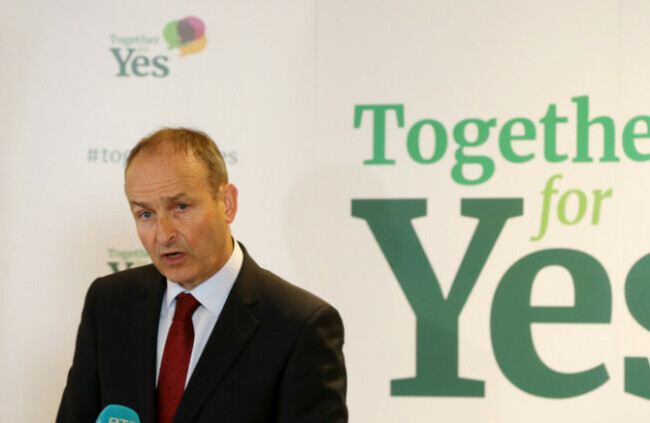
Back in 2018, Fianna Fáil leader Micheal Martin said the decision-making process of backing a Yes vote in the referendum had been “long and challenging”.
He said a No vote will mean that Ireland will continue to be a “cold place for women in the most terrible circumstances”.
There was a review of the legislation, right?
The legislation was passed, but it contained a clause that the law would be reviewed after a period of five years.
That review, which was carried out by barrister Marie O’Shea, was published in 2023, and recommended significant changes to Ireland’s abortion legislation.
However, since the review was published, no action has been taken by subsequent governments to address the concerns raised.
One of the recommendations, which is being voted on tonight, is to scrap the mandatory three-day waiting period to access a termination.
At the time the review was published, both Varadkar and Martin expressed caution around moving to significantly change the legal framework.
Appearing before the Oireachtas Health Committee at the time, O’Shea described their comments as “disconcerting”.
“Based on the comments of the Tánaiste and the Taoiseach and their perceived reluctance, as I found it, to interfere with the legislation or amend the legislation, I think that a bit of courage wouldn’t go amiss,” she said.

Why is abortion back on the political agenda now?
Well, one could ask why it has taken this long for it to be put back on the agenda.
It has been three years since the review was published, but none of the recommendations have been acted upon, and no expert committee group has been established to look at the review.
After the general election, Harris and Martin said the incoming government would consider making changes to Ireland’s abortion legislation.
A year after those remarks, the Taoiseach said the government would examine the recommendations of the review.
However, it took a bill put forward by the Social Democrats for the issue to get some political traction this year.
What was in the Social Democrats’ bill, and why did it get voted down?
The bill proposed to scrap the three-day waiting period and change rules around fatal foetal abnormality cases
The 2023 review into the law also identified a lack of sufficient clarity in legislation on how certain sections of the Act should be applied, and requested new ministerial guidelines regarding fatal foetal abnormalities.
Terminations can be carried out where there is a risk to the life, or of serious harm, to the pregnant woman, or where there is a condition present that is likely to lead to the death of the foetus either before or within 28 days of birth.
While the woman is decriminalised under the Act, it criminalises anyone who assists a pregnant person to obtain an abortion outside the provisions of the Act, with a prison sentence of up to 14 years.
A number of women who have experienced a fatal foetal abnormality have recounted how they still have to travel to the UK.
Sinn Féin did not support the Social Democrats’ bill, which included a further provision around widening access to abortions in the cases of fatal foetal abnormalities.
Speaking to reporters at Leinster House on Tuesday, Sinn Féin’s health spokesperson, David Cullinane, said his party did not support the Social Democrats’ bill because it had concerns around the proposed definition relating to fatal foetal abnormalities and provisions around decriminalisation for doctors.
The government parties also highlighted legal issues with the Social Democrats’ bill, and ultimately, the bill was voted down.
Why are the government supporting the Sinn Féin bill?
It is a lot more straightforward than the Social Democrats’ bill as it is only dealing with the three-day mandatory wait time.
Health Minister Jennifer Carroll MacNeill is also on the Dáil record as saying she personally does not oppose removing the three-day wait, so there is political weight behind the move.
“I personally do not see any difficulty with the requirement. That is my personal position,” she has said.
Speaking in the Dáil on Wednesday, ahead of the vote, the Taoiseach also cited evidence from a study commissioned as part of the review into the abortion legislation.
The findings indicate the mandatory three-day waiting period was a recurring feature of discussions across the majority of interviews conducted, with some participants viewing it as a barrier or deterrent to accessing care.
“Very few participants considered the waiting period to have been beneficial to their own decision-making process,” the Taoiseach said today.
Ultimately, the government has committed to addressing some of the concerns in the review, and this area is one of them.
What happens if the bill passes?
If the Dáil votes to pass the Sinn Féin bill, it will then go to the committee stage, and will go before the Oireachtas Health Committee, where it can be teased out further by politicians.
Amendments can also be suggested to refine the proposed legislation, but the bill could become law in the future.
With the support of the left-wing parties, and with members of the government parties likely to back the bill, it’s believed the proposed legislation will pass to the next stage.