








(Seo alt ónár bhfoireann Gaeltachta. Is féidir an bunleagan as Gaeilge a léamh anseo)
AN ORGANISATION IN Corca Dhuibhne is hoping that an innovative new housing project may secure the future of summer courses in that part of Kerry.
Coláistí Chorca Dhuibhne, which is under the umbrella of Comharchumann Forbartha Chorca Dhuibhne, runs five Irish language summer courses each year and accommodates around 1,200 students annually.
However, despite having five courses throughout the summer, the organisation cannot meet demand because it does not have enough beds to accommodate additional students.
According to Páidí Ó Sé, manager of Comharchumann Chorca Dhuibhne, almost 1,600 people are on waiting lists for places this year.
A shortage of host families is a major reason for this, and that shortage is largely linked to the housing crisis in the area, he said.
“The difficulty in Munster, especially, is that there are only two summer colleges operating on a full-time basis — one here and one in Waterford.”
“We carried out a study in 2018 and it showed that the number of beds would fall from about 550 to 370 within five years,” he continued.
Eight years later, in 2026, the college has only 370 beds to house students. There were 700 beds available in 2000.
“If things continue as they are, most mná tí are already over 50 years of age. They will leave the system within five or ten years, and bed capacity could fall to 289 or even 159.”
Houses for mná and fear tí
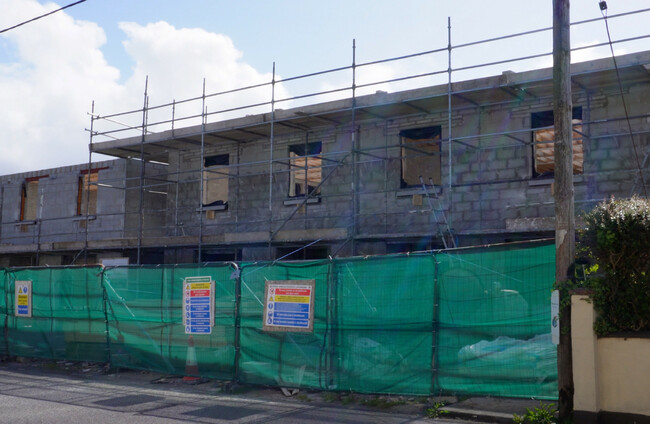
To tackle this problem, the Comharchumann has launched a new housing project. Four houses are being built locally and the families who move into them will be required to act as host families for students during the summer.
The Comharchumann received a grant of €274,500 from Údarás na Gaeltachta to build these houses. The agency has no power over housing but acts as a funder and supporter of the Gaeltacht co-operatives and the summer colleges are part of their business.
The houses will be finished by the end of this year and up to 15 people have already expressed interest and applied for the housing.
The Journal / YouTube
Each house will be capable of accommodating between 12 and 16 students, increasing summer course capacity by between 48 and 64 students per course. Ó Sé said:
“There are people willing to be host families and, if you look at the population, there are people of the right age to do it. If you build the houses, the people will come.”
Not only that but the Comharchumann has plans to build more houses if this pilot scheme is successful, which Ó Sé believes is important for the future of the area.
“It gives something extra to the locals,” he said. “People are working here [in the area] in the summer and there are up to 20 young people working in the summer colleges.”
“People think that this is a good project that helps the local economy, and they feel they have something important that belongs to them.”
Why are there so few mná tí entering the tradition?
Angela Uí Grífín hosts students during the summer for Coláistí Chorca Dhuibne. She also works full-time as a special needs assistant at Coláiste Íde (an Irish-language residential school in Corca Dhuibhne) during the school year.
She has been a bean an tí for the past 25 years and her mother worked in the sector around 60 or 70 years ago, meaning that Uí Grífín grew up surrounded by students every summer.
As a result, Uí Grífín grew up surrounded by the summer college tradition.
“I love young people and they bring a certain energy into the house. There’s companionship in it,” she said, adding that it was a great help when her own four children were young.
“My children got to know the students who came to stay with us and it was a good experience for them. They’re grown up now and it’s just myself and my husband left, and I love having that liveliness in the house.”
However, she believes it is becoming increasingly difficult for host families to accommodate young people due to rising costs and the fact that health and safety requirements are much stricter than they were 25 years ago.
“I’m not saying it’s not worthwhile, but the profit isn’t that great. It should be higher because there are many additional costs involved, such as heating oil and insurance.”
The Journal / YouTube
“Food costs have gone up as well. I’ve seen it myself; a loaf of bread that cost 95 cent a few years ago now costs €2.30.”
She also said that there is a shortage of mná and fir tí because people are retiring from the tradition and very few younger people are taking their place because they might already have full-time jobs.
“This is part-time job and you need something else to keep yourself going,” she said, “and I think most young people already have careers. They don’t want to leave a full-time job to take on part-time work.”
“We’re reaching an age where people are leaving the system, and we’re short of host families. Because of that, there’s a danger that there won’t be any host families left in 20 years.”
Response from the Department of the Gaeltacht
According to figures from the Department of Rural and Community Development and the Gaeltacht, there were 533 active host families under the Irish Language Learners Scheme in 2025. These are the families that actively host students during the summer.
35 new families registered in 2025, although the net increase in the sector was only 11 families.
A further 31 families have registered to date in 2026.
In response to a request from The Journal, a spokesperson for the department said that the Irish-language college sector is primarily a commercial sector and that the main responsibility for the operation of Irish-language colleges rests with the colleges themselves.
“The Department supports colleges in attracting families into the sector through grants and overnight subsidies for approved families under the scheme,” the spokesperson said.
“A recent increase of €1.50 per night was announced this year, raising the department’s subsidy from €14.50 to €16 per night for approved host families.”
“The grant paid to approved residential colleges providing accommodation under the scheme was also increased by €1.50, from €10.50 to €12 per night.”
The increase came into effect on 30 May 2026. This was the fifth increase since 2022, amounting to a 60% increase in payments to host families and a 140% increase for hostels and residential colleges, the spokesperson said.
The Journal’s Gaeltacht initiative is supported by the Local Democracy Reporting Scheme