



惯性聚合 高效追踪和阅读你感兴趣的博客、新闻、科技资讯
阅读原文 在惯性聚合中打开

推荐订阅源

V
Vulnerabilities – Threatpost
博客园 - 司徒正美
奇客Solidot–传递最新科技情报
奇客Solidot–传递最新科技情报
大猫的无限游戏
大猫的无限游戏
酷 壳 – CoolShell
酷 壳 – CoolShell
Forbes - Security
Forbes - Security
D
Darknet – Hacking Tools, Hacker News & Cyber Security
小众软件
小众软件
人人都是产品经理
人人都是产品经理
Know Your Adversary
Know Your Adversary
Security Latest
Security Latest
雷峰网
雷峰网
Cisco Talos Blog
Cisco Talos Blog
Latest news
Latest news
GbyAI
GbyAI
Last Week in AI
Last Week in AI
Hacker News: Ask HN
Hacker News: Ask HN
U
Unit 42
S
SegmentFault 最新的问题
月光博客
月光博客
Security Archives - TechRepublic
Attack and Defense Labs
S
Secure Thoughts
N
News and Events Feed by Topic
Exploit-DB.com RSS Feed
A
Arctic Wolf
Schneier on Security
C
CERT Recently Published Vulnerability Notes
I
Intezer
V
Visual Studio Blog
Microsoft Security Blog
SecWiki News
SecWiki News
Google Online Security Blog
N
Netflix TechBlog - Medium
I
InfoQ
T
Tor Project blog
腾讯CDC
T
Tenable Blog
Webroot Blog
Webroot Blog
Y
Y Combinator Blog
TaoSecurity Blog
TaoSecurity Blog
Google DeepMind News
AI
AI
C
Cisco Blogs
OSCHINA 社区最新新闻
OSCHINA 社区最新新闻
V2EX - 技术
V2EX - 技术
PCI Perspectives
PCI Perspectives
C
CXSECURITY Database RSS Feed - CXSecurity.com
G
GRAHAM CLULEY
S
Schneier on Security

Sanity.io

A Board Game agent built using Sanity Context and Vercel's AI SDK | Sanity Build a prototype with Claude Code that your whole team can edit | Sanity What’s New - May 2026 | Sanity I built a London pub guide with v0 and the Sanity MCP in six hours. Here's what I learned. | Sanity Build a conference concierge with Agent Context and Anthropic | Sanity Build a content-aware Telegram agent with Vercel AI SDK and Chat SDK | Sanity How I used Agent API to generate photos for my family’s recipes | Sanity What’s New April - 2026 | Sanity Better context, better matches: An AI love story (for dogs) | Sanity How to write for an agent | Sanity Content Agent, meet Slack: AI content operations in your workflow | Sanity Structure powers intelligence | Sanity Your agent needs better content. Here's how to give it. | Sanity How to serve content to agents (a field guide) | Sanity Sanity TypeGen GA: Automatic TypeScript types for content and GROQ | Sanity Sanity is now available on the Vercel Marketplace | Sanity The logo soup problem (and how to solve it) | Sanity Content Releases: From scattered updates to coordinated publishing | Sanity What's New - February 2026 | Sanity How we solved the agent memory problem | Sanity v0 Builder Challenge: The winners | Sanity Introducing: Sanity Agent Skills | Sanity Content Agent: Days of work in one conversation | Sanity Our Sanity Values | Sanity Open Source Pledge 2025: Stepping up when it matters | Sanity v0 builder challenge: $3000 in prizes | Sanity Why AI Breaks Without Structured Content Operations | Sanity What’s New January - 2026 | Sanity BFCM 2025: What teams built when infrastructure stopped being the problem | Sanity How AI shaped holiday shopping and what it means for content in 2026 | Sanity Sanity Studio v5: Embracing React 19 | Sanity You’ll need a CMS eventually. Let your agent set it up. | Sanity “You should never build a CMS” | Sanity AI Content Operations: A 30-Day Implementation Guide | Sanity What’s New December - 2025 | Sanity Scheduled Drafts: Stop manually publishing content at midnight | Sanity What’s New November - 2025 | Sanity Everything *[NYC] 2025 recap: A day of AI, Content Operations, and Culture | Sanity Clankers and content operations | Sanity Content Agent: AI that understands your structured content is here | Sanity Why design-driven content modeling creates technical debt, not velocity | Sanity What's New October - 2025 | Sanity From studio to inbox: How Kevin Green eliminated email campaign friction | Sanity The content editor's guide to content operations [E-commerce edition] | Sanity styled-components maintenance mode: A 40% faster fork | Sanity From zero code to a live website in 7 hours (thanks, Cursor!) | Sanity First attempt will be 95% garbage: A staff engineer's 6-week journey with Claude Code | Sanity Internationalization is more than translating words | Sanity What's New - September 2025 | Sanity We just deleted our 35k-member community Slack | Sanity What's New - August 2025 | Sanity The engineer's guide to content operations [E-commerce edition] | Sanity SEO for AI: Evolving from Web Pages to the Content Lake | Sanity What's New - July 2025 | Sanity Sanity Studio v4: A major version bump for a minor reason | Sanity What's New - June 2025 | Sanity Dashboard and Insights: Your New Content HQ | Sanity Canvas: AI-accelerated, context-aware, freeform authoring | Sanity Agent Actions: AI building blocks for structured content | Sanity Functions: Life beyond pressing publish | Sanity A new era for content applications with Sanity App SDK | Sanity The end of CMS era and our $85M Series C. | Sanity What's New – May 2025 | Sanity Introducing the Sanity Model Context Protocol (MCP) server | Sanity What's New – April 2025 | Sanity Pushing all the envelopes with ambitious content | Sanity Self-hosting is only free if your time is worth nothing | Sanity Content that lasts: Scaling beyond your frontend | Sanity The Live Content API is now Generally Available | Sanity The future beyond AI chat bots | Sanity Learning the new skill of working with AI | Sanity What's New - March 2025 | Sanity Give it in plain text: Making your content AI-Ready | Sanity No More 'DO NOT PUBLISH': Introducing Content Releases | Sanity React in 2025, what's next? | Sanity The final boss of front-end: block editors | Sanity Introducing Sanity for Startups | Sanity A block content editor that loves you back | Sanity A Black Friday Snooze Fest: Massive Traffic, No Drama | Sanity How to make a recipe site that scales well | Sanity The Sanity Winter Release 2024 | Sanity AVIF Arrives, Sanity’s Promise Fulfilled | Sanity Sanity joins the Open Source Pledge | Sanity Your content is now Live by default | Sanity Begin Team to Join Sanity | Sanity Sanity Digest - September '24 Edition | Sanity Sanity partners with Google. Now live on the Google Cloud Marketplace. | Sanity Sanity Digest - August ‘24 Edition | Sanity Now playing: the latest Mux Video Input plugin for Sanity | Sanity Community Digest - June ‘24 Edition | Sanity Community Digest - May ‘24 Edition | Sanity Guide to Sanity's newest product announcements | Sanity AI and Content Creation: A Leader's Guide | Sanity Of course, you should be able to type your content quickly! | Sanity New to AI Assist: translation, reference suggestions, image generation | Sanity Speak the language of your editors: Sanity Studio UI localization | Sanity Introducing the new Sanity Growth plan to serve collaborative teams | Sanity Presentation: Work faster than ever with structured content | Sanity Goodbye Feedback Frenzy, Hello Sanity Studio Comments! | Sanity Easing into the App Router with the Sanity Toolkit for Next.js | Sanity
How Sanity helps you build delightful editorial experiences | Sanity
Marcus Sarmento · 2021-12-11 · via Sanity.io

Earlier this week we hosted Delightful Editorial Experiences, a Sanity Open House event where we explored what makes a great editorial experience and why it matters. 300 guests stopped by to hear from our team and from partners and customers like Shopify, Figma, Loom, and Fnatic. As part of the festivities, we also announced a number of new features and closed a long-standing and highly anticipated GitHub issue. In this blog, we’ll walk you through the new features and functionality that we released to help empower developers to build great editorial experiences.

Upgrading the foundation: Sanity UI

The Sanity Studio is the main interface where editorial teams collaborate on structured content. And it’s the application where developers can configure great editorial experiences and define exactly what shape the content should have in the APIs. The Studio has multiple extension points to make it easily customizable whenever the need arises. We’re thrilled to announce that we’ve completed a major overhaul of the Studio interface by fully migrating to Sanity UI.
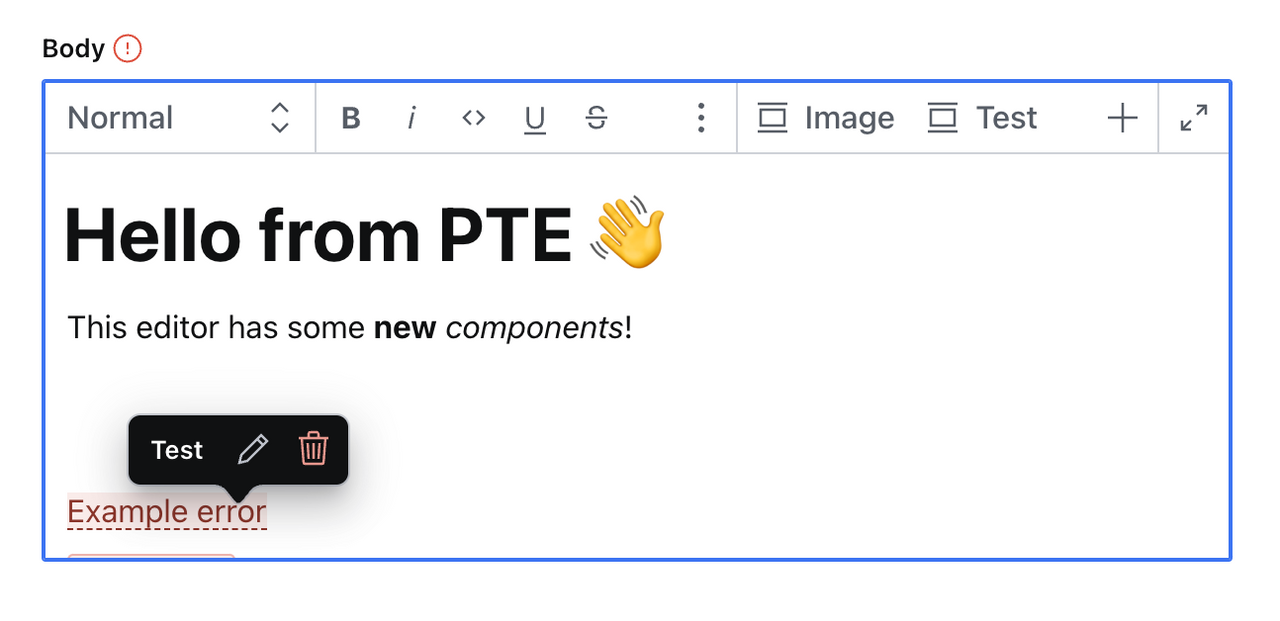
Portable Text Editor using Sanity UI

Sanity UI is a carefully designed component library. It was made to make our apps more accessible, resilient, and consistent. It has a companion Figma library to make the transition from prototype to code even faster. For the last year, the team has battle-tested the library while rebuilding the whole project management interface from scratch, and replacing all the visual parts of the Studio with new components. It’s important groundwork for the editorial experiences that are built on our platform.

Mobile layout using Sanity UI

Reduce context switching: References in Place

Connecting documents and different content types with references is foundational for structured content. References in Place makes the editorial experience more efficient and flexible by reducing context switching for editors. In the past, if you wanted to update a product page and reference a brand new partner on that page, you’d need to back out of the product page you were working in, navigate to the partner content type, create the new partner document and publish it, then navigate back to the product page you started at and reference the newly created partner. That process wasn’t as smooth and straightforward as it could be, and that is precisely what References in Place fixes.

References in Place is a way for you to edit and create a new reference to a document without needing to navigate away from the document you are working in. This lets your content teams stay on the same screen without getting distracted, which streamlines workflows to improve productivity and efficiency.
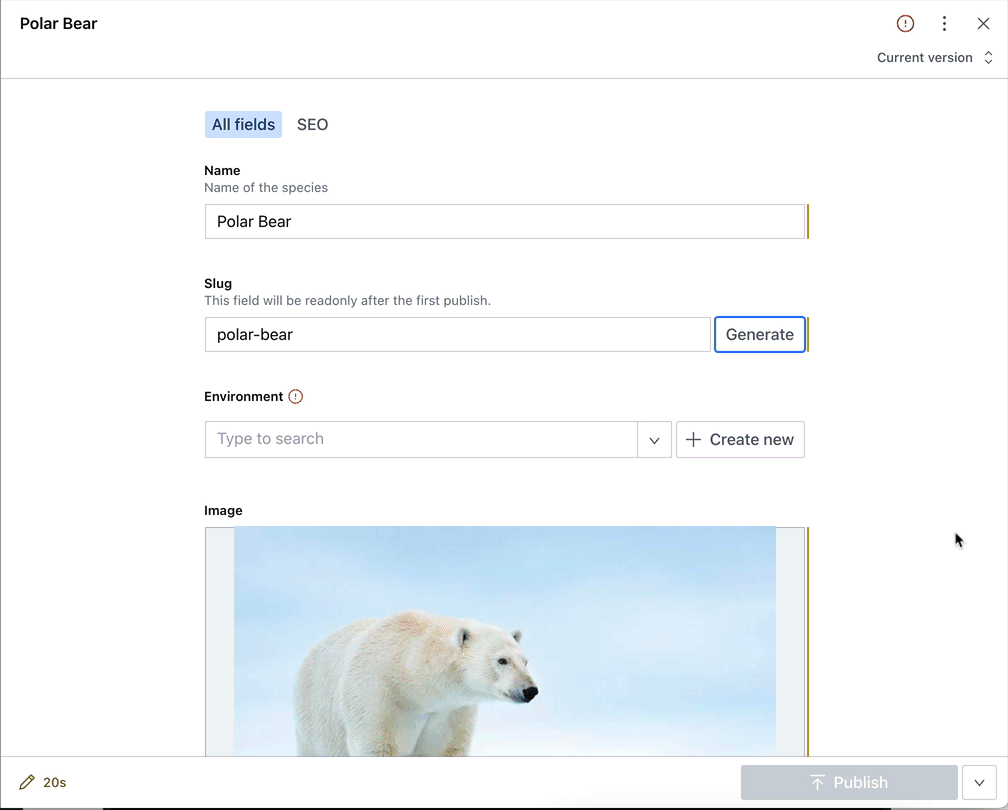
References in Place
References in Place

We’ve also implemented the ability for References in Place to honor initial value templates so you can create new documents inline with precisely the fields and default information you want for that content type. And we now treat arrays of references just like document lists, letting you easily see your list of references at a glance.

You’ll get the new References in Place functionality by upgrading the studio (`sanity upgrade`). We have also published a new article on how to use and think about references that we encourage you to check out.

Easier parsing of information: Conditional Fields & Field Groups

A key way to make the lives of content teams better is to display relevant information – and only relevant information – in the interface they use to create, edit, and manage content. That reduces the cognitive load and makes it easier to accomplish what you are trying to do. Sanity has two new features that help with that – Conditional Fields and Field Groups.

Conditional Fields is a way for you to add arbitrary logic to the interface so you can show or hide Sanity Studio fields depending on what your content teams are trying to accomplish. Selling a virtual good? Hide physical dimensions (width, length, height) in the interface. Make websites for realtors? Automatically show a ‘sales price’ field once a property has been marked as sold. And we’ve just added the ability to apply conditional logic to fieldsets and a field’s read-only property.

Field Groups is a way you can organize the information in a logical way and filter the document view by different sections you define. This lets you display information in more bite-sized chunks and give editors control over what form information they want to view and interact with.

Nuggets of delight: Other improvements

Just as a tool can have papercuts, it can also have small nice things that individually don't feel like much, but together make for a great user experience. We regularly make these types of improvements, in fact, we’ve recently shipped the following:

  • A way to provide contextual info with the validation API that doesn’t block publishing or appear as a warning.
  • When refactoring the block content editor for Portable Text, we changed how annotations work, giving you a small popup where you can choose to edit or delete it. This lets you point your cursor inside a marked word without triggering the annotation editing.
  • Performance enhancements for the block content editor so that it handles large documents better.
  • The size of annotation modals can now be configured.
  • You can configure if spell check for the block content editor should be on or off.
  • Improved “the intent resolver” so that documents are opened in their correct structure instead of on the root.
  • We tweaked the width of panes and improved the collapsing behavior.
  • We improved the Studio’s responsiveness, including automatically collapsing toolbars and better navigation affordances.
  • …and some bugs that snuck in.

We’ll continue trying to strike the fine balance between including the things most editors need to do their work, and making it easy to add anything else that makes sense for your particular use cases. After all, that’s the point of having a decoupled editing environment: You shouldn’t be burdened with functionality that you don’t need, and we shouldn’t stand in the way of you providing the best tool for your team. We should empower you to do that.

2022 will be a great year for everyone who works with structured content. We have some interesting plans lined up. One of them is to organize a conference. If you’re interested, you can sign up for conference news on www.structuredcontent.live. See you there!